



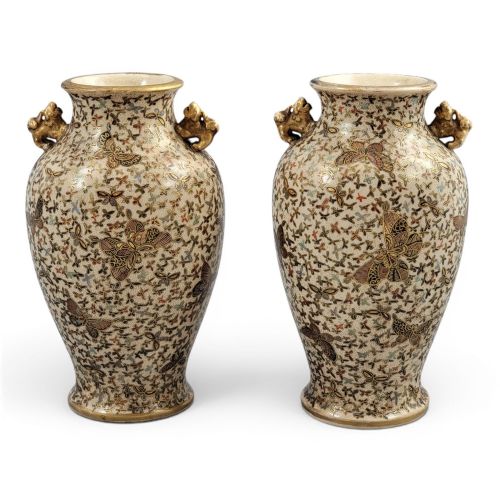


Oriental Gilded Pottery Urn
These oriental gilded pottery urn pieces combine intricate earthenware forms with rich surface gilding, offering collectors striking centrepieces rooted in Meiji and late Qing traditions.
Oriental Gilded Pottery Urn
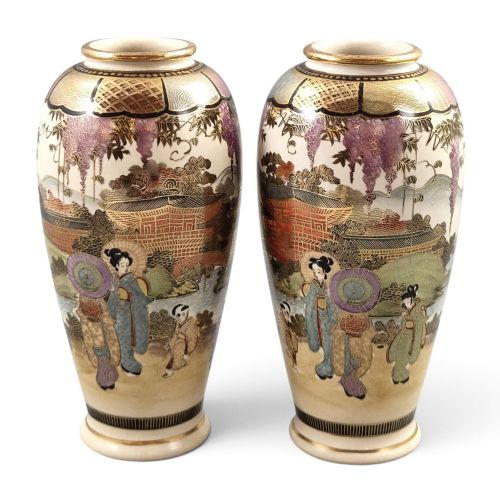
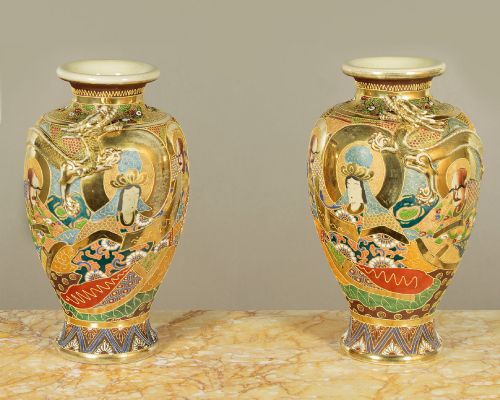
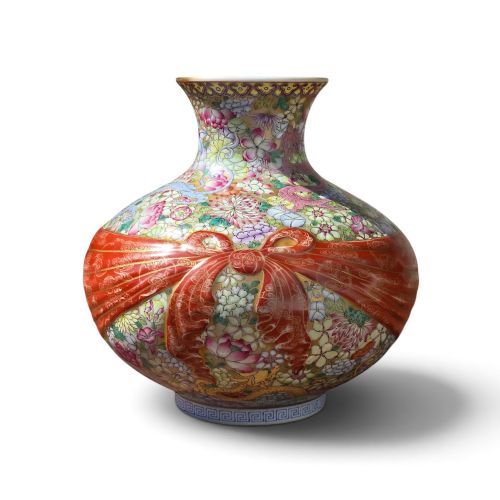
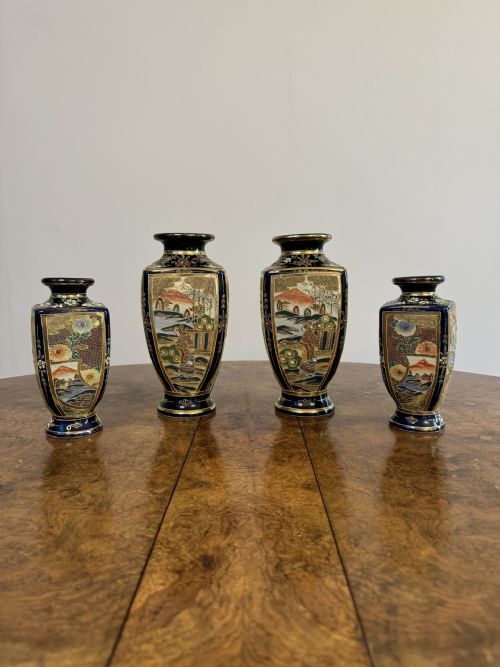
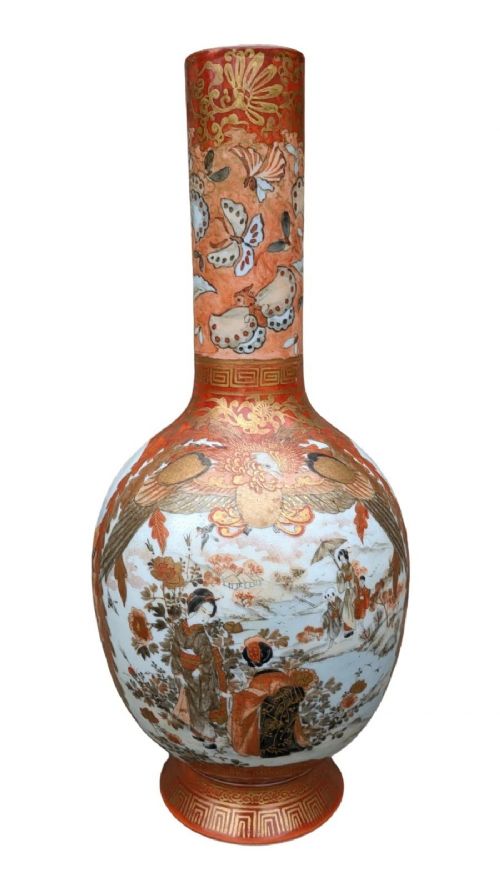
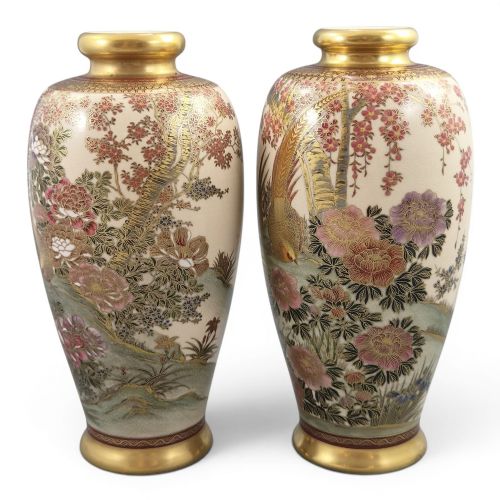
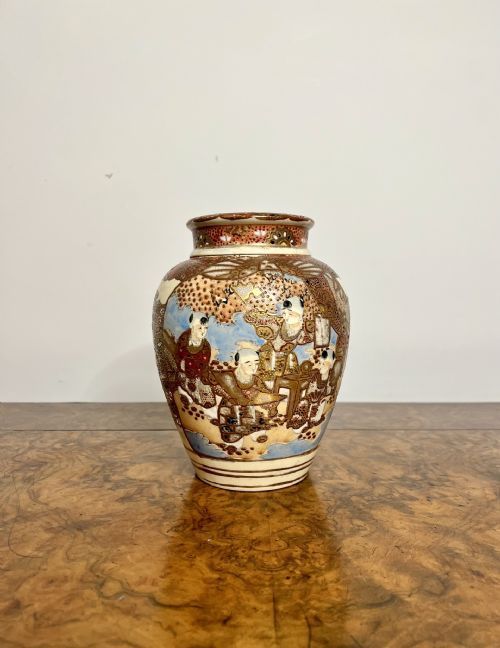
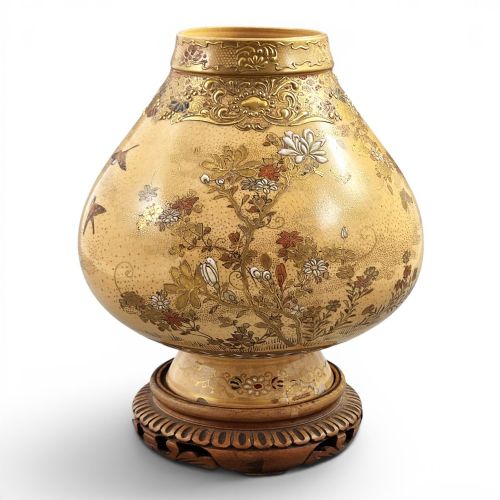
Forms vary considerably from lidded jars and ginger jars to large garnitures, table lamps, and decorative vases. Many pieces display traditional motifs such as court figures, dragons, Arhats, and landscapes framed by intricate border patterns.
Originating predominantly from Kyoto, Kobe, and other ceramic centres in Japan and China, these objects range from miniature cabinet pieces to monumental display items intended for prominent placement in a room.
Factors of Quality
The distinction between standard production and top-tier examples lies in the precision of the hand-painted detail and the density of the gilding. Master workshops employed finer brushwork, more complex figural compositions, and heavier gold application that remains crisp and intact across the ceramic surface.
Signature marks from recognised makers and kilns elevate a piece significantly, as does the structural integrity of large garnitures and lidded jars remaining together as a matched set.
Materials recorded across the available inventory include earthenware, porcelain, enamel, and gold leaf.
Shozan·Manpei·Kinkōzan·Hotoda·Kinzan·Chosei·Seiko-en Chokei·Tashiro·Hattori
The Oriental Gilded Pottery Urn Glossary
- Satsuma
- A type of Japanese earthenware featuring a crackled ivory glaze decorated with polychrome enamels and gilt. It originated in Satsuma Province and became widely produced in Kyoto and Kobe for export.
- Moriage
- A decorative ceramic technique using piped clay to create raised relief patterns on the vessel body. This method adds tactile depth beneath the enamel and gilding.
- Imari
- A style of Japanese porcelain characterised by underglaze blue and overglaze red, green, and gold designs. Pieces often display dense floral and geometric panels.
- Gilt
- Gold leaf or powdered gold applied to the surface of pottery for ornamentation. It provides the metallic highlights characteristic of these export wares.
- Garniture
- A set of matching vases or jars designed to be displayed together on a mantelpiece or sideboard. They typically comprise three, four, or five coordinated vessels.
Oriental Gilded Pottery Urn: Frequently Asked Questions
How do I identify a Satsuma vase?
Look for a characteristically warm, ivory-coloured earthenware body covered in a fine, web-like crackle glaze. These pieces almost universally feature elaborate hand-painted scenes enriched with heavy gold leaf.
Examine the base for artist signatures or workshop marks, which frequently point to major production centres like Kyoto during the Meiji period.
Were these pieces made for export?
The vast majority of nineteenth and early twentieth-century Satsuma and Kutani wares were produced specifically for Western export markets following the opening of Japan. Makers tailored the scale, complexity, and decorative subjects to suit European and American tastes.
Consequently, you often find grand garnitures, table lamps, and heavily gilded decorative vases designed to suit Victorian and Edwardian drawing rooms.
How should I clean gilded pottery?
Dust these delicate ceramic surfaces gently with a soft, dry brush to prevent accumulation in the intricate moriage crevices. Avoid using any liquid cleaners, abrasive cloths, or chemical solvents, as these can easily damage the delicate enamel and gold leaf.
Keep the pieces away from direct, strong sunlight to preserve the vibrancy of the hand-painted polychrome pigments over time.
What is the difference between Satsuma and Kutani?
Satsuma wares are built upon an earthenware body with a characteristic crackled glaze, serving as a canvas for dense figural painting and raised gold work. Kutani wares typically utilise a porcelain or sturdier ceramic body with distinct colour palettes dominated by greens, blues, and iron-reds.
While both styles embrace rich ornamentation, their underlying clay bodies and primary glaze textures remain distinct upon close inspection.