



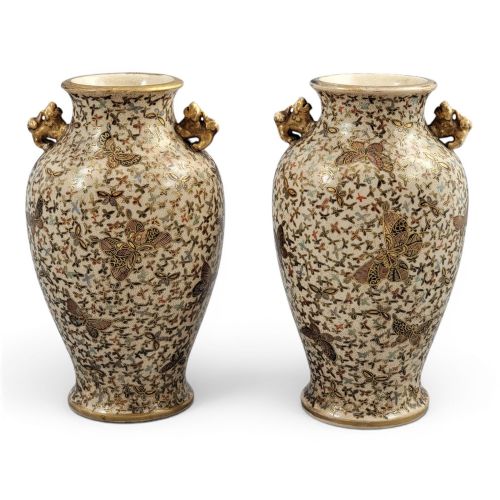


Gold Satsuma Vase Pair
A gold satsuma vase pair brings together intricate Japanese ceramic artistry and rich metallic detailing to anchor a room.
Gold Satsuma Vase Pair
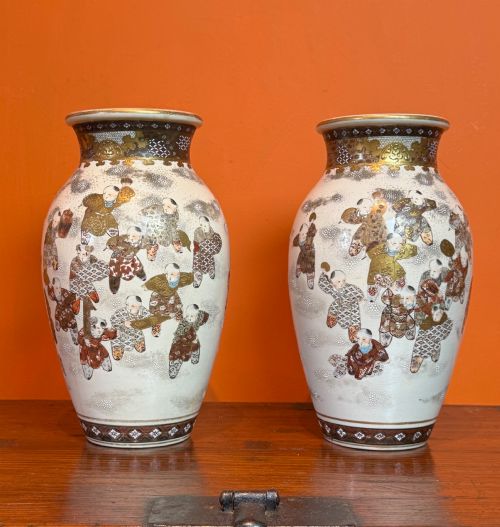
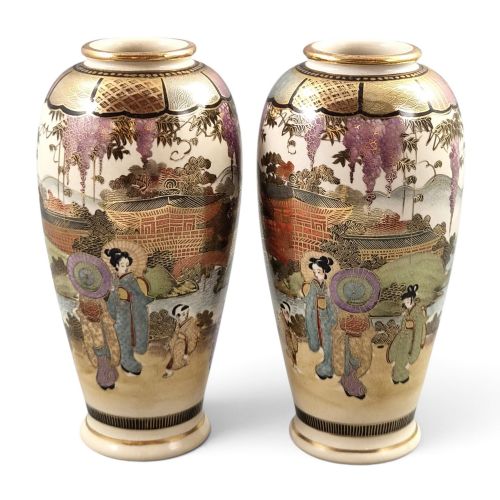
A gold satsuma vase pair consists of matching earthenware vessels created in distinct Japanese styles across the Meiji, Taisho, and Showa periods. The most common versions on this page are baluster and hexagonal vases decorated with figural panels, landscapes, or motifs such as wisteria and butterflies.
These pairs showcase traditional craftsmanship from historic centres such as Kyoto and Kobe, often featuring prominent maker signatures or mon crests. Collectors encounter works ranging from compact cabinet pieces to large exhibition examples produced around the turn of the twentieth century.
Materials and construction
Potters shaped these vessels from earthenware and porcelain bodies, applying a characteristic crackle glaze as the foundation for subsequent decoration. Artisans then built up surface designs using enamel pigments alongside gold leaf and heavy gilt highlights.
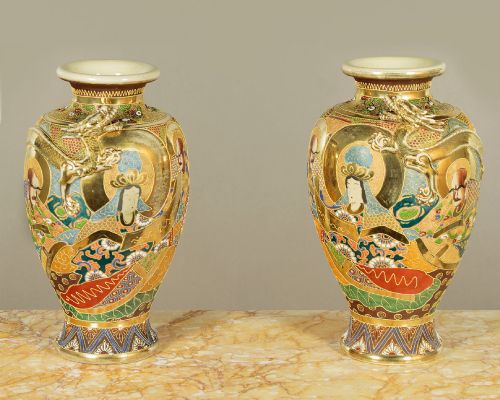
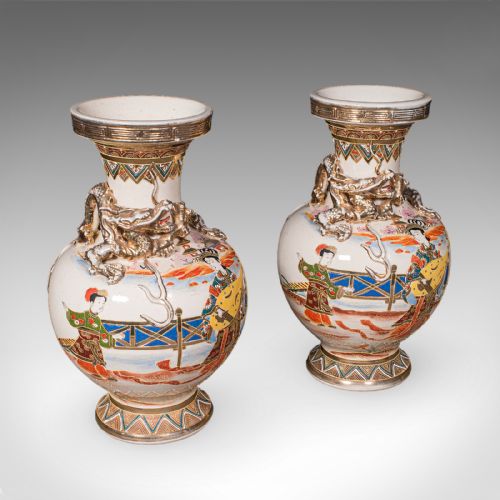
Makers utilised specialised techniques including moriage work, where raised slip creates tactile relief details across the body of the vase. Skilled painters added minute figures, arhats, and dragons before firing the pieces to set the metallic and coloured glazes.
Gold Satsuma Vase Pair Retail Price Guide 2026
Typical asking prices for gold satsuma vase pair among the pieces listed under this phrase on Sellingantiques today, from the lower quarter to the upper quarter. They describe what is for sale here now, not the wider market.
Listings incorporate pieces spanning from the late nineteenth century through the Edwardian, Taisho, and Showa periods.
Assessing craftsmanship and finish
The precision of the hand-painted brushwork distinguishes exceptional examples from standard production, particularly in the rendering of facial expressions on figures and the symmetry of complex borders. Finer pairs display meticulous control over gold gilt and enamel application without crowding the pictorial space.
The weight and stability of the ceramic body, alongside the crispness of moulded elements like hexagonal facets or moriage relief, indicate the skill of the workshop. Recognised signatures and imperial or family mon marks further elevate the standing of a piece.
Shozan·Manpei·Kinkōzan·Kinzan·Hododa·Hakusan
The Gold Satsuma Vase Pair Glossary
- Satsuma ware
- A type of Japanese earthenware traditionally characterised by an ivory-coloured crackle glaze and elaborate overglaze polychrome and gilt decoration. It expanded significantly during the Meiji period for export markets.
- Moriage
- A decorative ceramic technique involving the application of liquid clay in dots or lines to create raised patterns. This method adds a distinct three-dimensional texture beneath the gilding.
- Baluster
- A vase form featuring a rounded body that tapers toward the base and swells gracefully before rising to a narrow neck. This shape provides a balanced canvas for panoramic landscape scenes.
- Mon
- A Japanese heraldic badge or crest used to identify families, clans, or institutions. These symbols frequently appear on high-quality Satsuma pieces to denote provenance or patronage.
- Meiji Period
- The era in Japanese history spanning from 1868 to 1912, marked by opening trade with the West. Many of the most detailed and ambitious decorative ceramic pairs originate from this time.
Gold Satsuma Vase Pair: Frequently Asked Questions
What is satsuma ware?
Satsuma ware is a distinct style of Japanese pottery known for its pale crackle-glazed earthenware body. Artisans decorate these surfaces with detailed enamel paintings and rich gold highlights.
Historically produced for both domestic use and international export, these ceramics reflect traditional artistic motifs ranging from serene landscapes to dense figural compositions.
How were these vases displayed?
Pairs of vases traditionally anchored mantelpieces, sideboards, or display cabinets in formal reception rooms. Their balanced proportions allowed them to frame larger decorative arrangements.
In both Japanese interiors and Western Victorian homes, matching pairs provided symmetry and a focal point for architectural wall panels.
How do I identify the maker?
Makers and studios often applied painted, impressed, or gold-scripted signatures to the base of the ceramic body. These marks frequently include individual artist names alongside the producing district, such as Kyoto or Kobe.
Family crests or exhibition seals also appear on the surface, helping to connect specific pieces to known historical workshops.
What motifs appear on them?
Common subjects include human figures such as arhats, robed women, and children engaged in daily or spiritual pursuits. Artisans also incorporated natural elements like wisteria gardens, butterflies, dragons, and traditional architectural landscapes.
These scenes are usually framed by geometric borders and dense brocade patterns executed in gold and vibrant enamel colours.