





Satsuma Ware Pair Vases
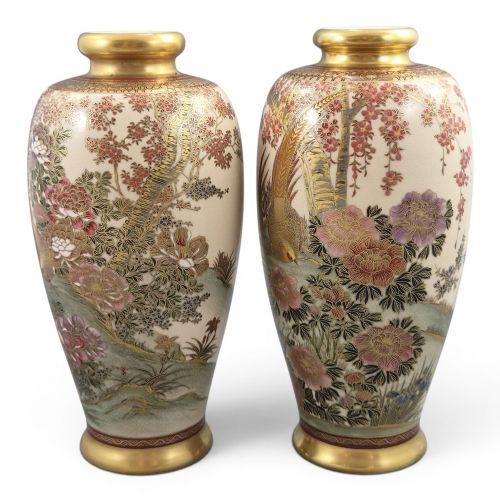
These satsuma ware pair vases bring vibrant Japanese artistry into a room, offering matching proportions and intricate hand-painted detail.
Satsuma Ware Pair Vases
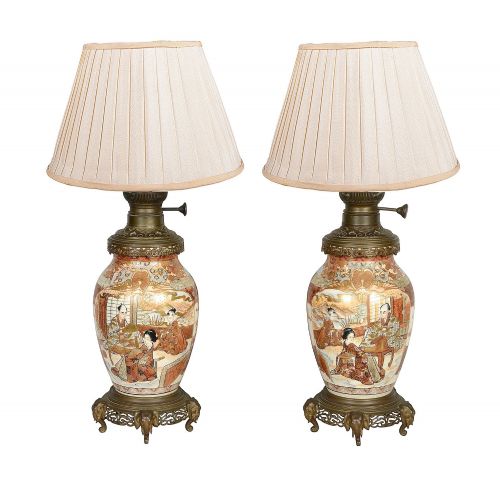
When you search for satsuma ware pair vases, you are looking at symmetrical pairs of ceramic vessels created primarily during the Meiji and Showa periods. These pieces range from compact decorative vases to large table lamps adapted from traditional forms.
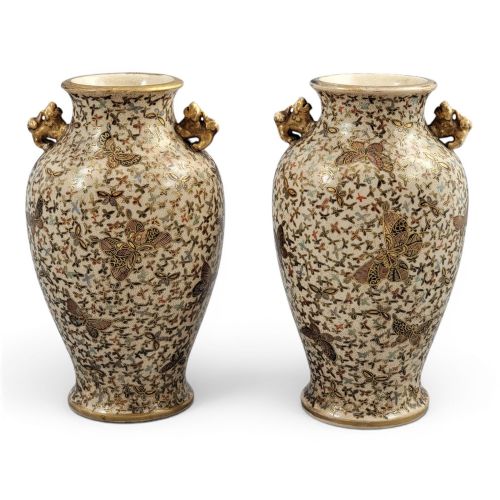
The most common examples on this page date from the nineteenth century through the early twentieth century. They frequently feature intricate depictions of figures such as Rakan and Arhats, alongside natural motifs like wisteria gardens and butterflies.
Originating in Japan, these matched pairs reflect both traditional Japanese aesthetics and the export tastes of the Victorian and Edwardian eras. Buyers encounter standard decorative vases as well as pieces bearing the mark of notable Kyoto workshops.
How they were made
Makers shaped these vessels from earthenware and ceramic bodies before applying detailed enamel decoration by hand. The resulting surface often carries a characteristic fine network of craquelure across the glaze.
Gold leaf and rich gilt decoration form a central component of the technique, highlighting borders, figures, and motifs. Wood, brass, and fabric elements appear on examples converted into table lamps.
Satsuma Ware Pair Vases Retail Price Guide 2026
Typical asking prices for satsuma ware pair vases among the pieces listed under this phrase on Sellingantiques today, from the lower quarter to the upper quarter. They describe what is for sale here now, not the wider market.
Form variations include standard decorative vases, polygon shapes, and pieces adapted into table lamps with silk and fabric elements.
What varies in quality
The distinction between standard production and exhibition quality lies in the precision and density of the hand-painted brushwork. Superior examples display finely rendered facial expressions on figures and deeply saturated cobalt grounds paired with heavy gilding.
Form and proportion also divide the range, with hexagonal or polygon shapes requiring greater technical control from the potter. Signed pieces from celebrated kilns command attention through superior signature panels and refined enamel control.
Manpei, Kobe·Kinkōzan, Kyoto·Kinzan·Hakusan·Tagawa, Kyoto·Hododa
The Satsuma Ware Pair Vases Glossary
- Meiji Period
- The era in Japanese history spanning from 1868 to 1912, known for opening trade with the West and producing highly detailed decorative arts. Many of the finest Satsuma pieces originate from this time.
- Rakan
- The enlightened followers of Buddha, frequently depicted in groupings on nineteenth-century Japanese ceramics. Their expressive faces and robes provide focal points for intricate hand-painting.
- Shimazu Mon
- The crest of the Shimazu clan, featuring a cross within a circle, which appears on the base or body of Satsuma pottery produced under their patronage. Its presence indicates a direct connection to the traditional seat of Satsuma province.
- Gilt
- A thin layer of gold applied to the ceramic surface to accent patterns, borders, and figural details. Rich gilt decoration defines the more opulent examples on this page.
- Craquelure
- The fine network of hairline cracks purposely created in the glaze of earthenware. This characteristic feature gives Satsuma ware its aged texture.
Satsuma Ware Pair Vases: Frequently Asked Questions
What is satsuma ware?
Satsuma ware is a type of Japanese earthenware traditionally characterised by an ivory-coloured, crackled glaze and elaborate hand-painted enamel and gilt decoration.
Originally produced in Satsuma province on the island of Kyushu, production later expanded to major urban centres like Kyoto, where master workshops created pieces specifically for Western export.
How do I date satsuma vases?
Dating relies on stylistic clues, kiln marks, and the historical periods associated with the piece, such as the Meiji or Showa eras. Nineteenth-century examples often feature denser, finer hand-painting and distinct signature panels.
Later pieces from the early twentieth century may incorporate Western-influenced forms or show adaptations into lighting, such as table lamps fitted with silk shades.
Were these vases made for export?
The vast majority of Satsuma vases found today were created specifically for international markets during the late Victorian and Edwardian periods. Makers responded to Western demand by producing decorative pairs designed for prominent display in European and American homes.
This export focus accounts for the elaborate narrative scenes and rich use of gold leaf intended to appeal to contemporary collectors.