



Gilded Earthenware Pottery Vase
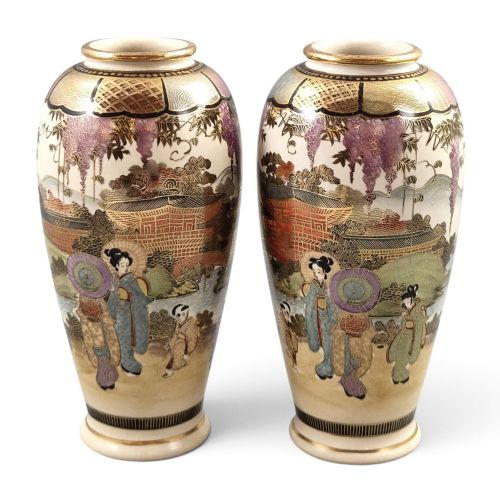
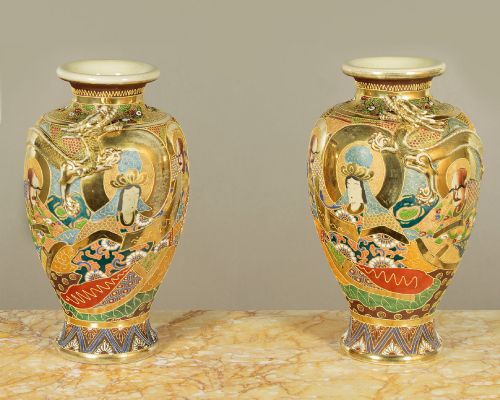
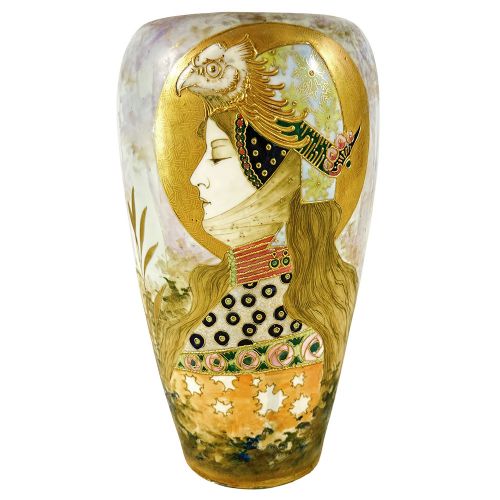
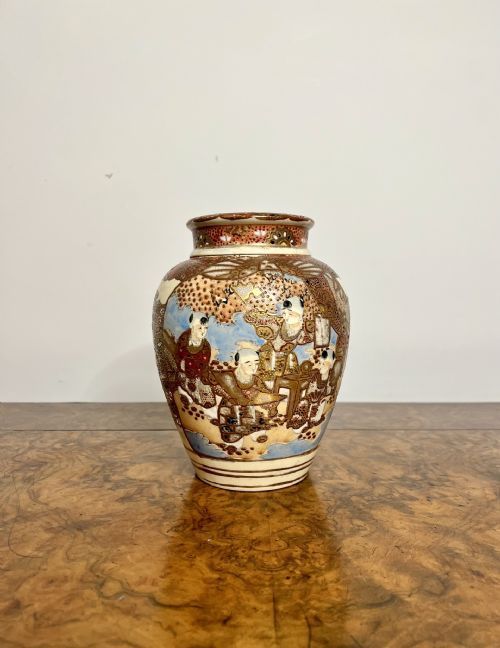
These gilded earthenware pottery vases bring together complex hand-painted scenes and rich metallic leaf from Japanese workshops and European potteries.
Gilded Earthenware Pottery Vase
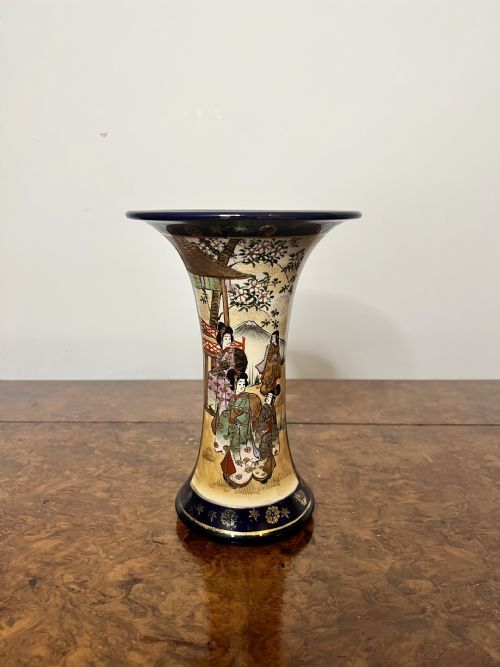
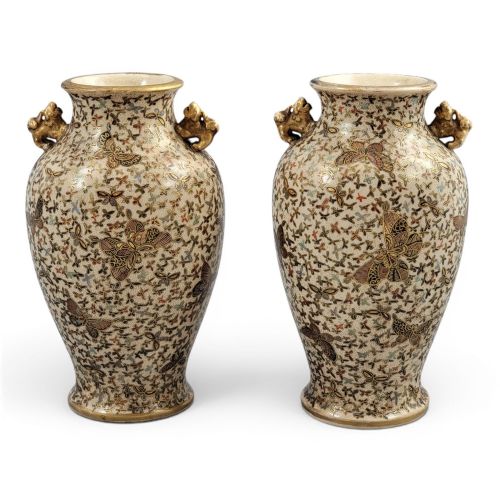
A gilded earthenware pottery vase is typically a Japanese Satsuma ware vessel decorated with intricate hand-painted figures, landscapes, or thousand butterfly motifs. These pieces originate predominantly from the Meiji period, the Victorian era, and the early twentieth century.
How they were made
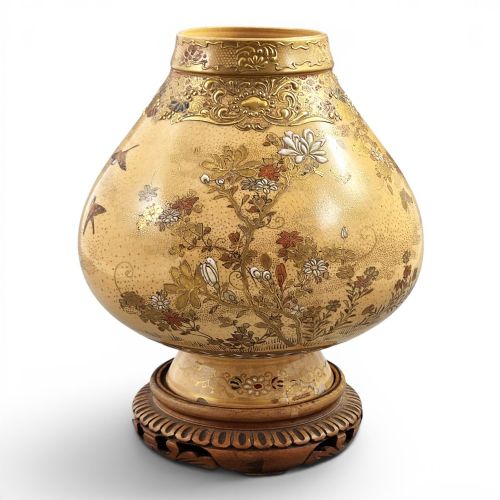
The foundation relies on porous earthenware pottery shaped into various vase and jar profiles before receiving a fine glaze. Artisans then apply detailed enamel paints and intricate gold leaf or gilt highlights across the surface.
Many examples incorporate moriage technique, building up raised dots and lines of slip to give figures and borders a tangible, three-dimensional texture beneath the gilding.
The inventory records diverse forms such as ginger jars, garlic head vases, table lamps, and monumental lidded vessels.
What varies in quality
Quality rests upon the precision of the brushwork in the figures and the density of the gold leaf applied across the panels. Master workshops achieve exceptional depth through fine detailing in the facial expressions of court figures and deities.
The weight and balance of the earthenware body, alongside the crispness of the raised moriage work, separate standard decorative items from exhibition pieces bearing notable signatures.
Kinkōzan·Hotoda·Kinzan·Nicholas Kannhauser·Reissner, Stellmacher and Kessel
The Gilded Earthenware Pottery Vase Glossary
- Satsuma ware
- Earthenware pottery originating from the Satsuma province in Japan, known for a cream-coloured, crackle-glazed body and elaborate polychrome and gilt decoration. It became widely exported during the Meiji period.
- Moriage
- A ceramic technique where slip is piped onto the surface of a pot to create raised relief designs before firing and painting. This adds tactile dimension beneath the enamel and gold leaf.
- Gilt
- A thin layer of gold applied to the surface of the pottery to accentuate borders, garments, and backgrounds. It catches the light and adds a rich metallic contrast to the painted scenes.
- Meiji Period
- The era in Japanese history spanning from 1868 to 1912, characterised by the opening of trade with the West and a massive expansion in decorative arts production. Works from this time often show extraordinary technical precision.
- Earthenware
- Porous clay pottery fired at relatively low temperatures, forming the primary body material for these traditional decorated vessels. It requires glazing to become impervious to liquids.
Gilded Earthenware Pottery Vase: Frequently Asked Questions
How do I identify Satsuma ware?
Satsuma ware is recognised by its characteristic ivory-coloured earthenware body covered in a fine network of crackled glaze. The surfaces are densely painted with traditional Japanese motifs and highlighted with heavy gold leaf.
Many pieces also feature artist signatures or studio marks on the base, indicating the workshop of origin.
What is the Meiji period?
The Meiji period spans the reign of the Emperor Meiji from 1868 to 1912, marking a time of rapid modernization and international trade in Japan. Ceramics produced during these decades are celebrated for exceptional technical mastery and intricate detail.
Items from this era often cater to Western aesthetic tastes while retaining traditional Japanese iconography.
How should I display these vases?
These vases suit stable surfaces away from direct sunlight, which can fade delicate enamel colours over time. Placing them where ambient light catches the gold leaf will highlight the raised textures and painted scenes.
Because many examples are earthenware, they are best kept safe from moisture and heavy vibrations.
What does moriage mean?
Moriage refers to a decorative method where liquid clay is piped onto the pottery body to create raised dots, lines, and borders. This technique gives the finished vessel a distinct, textured relief that stands proud of the smooth glaze.
Painters then apply gilding and vibrant enamels directly over this raised foundation.