






Oriental Decorative Pottery
Oriental decorative pottery brings together centuries of ceramic tradition, offering intricate hand-painted detail and rich cultural history for display.
Oriental Decorative Pottery
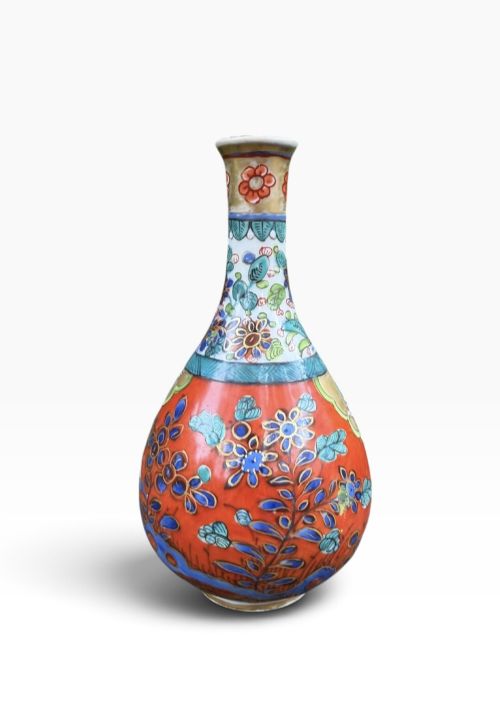
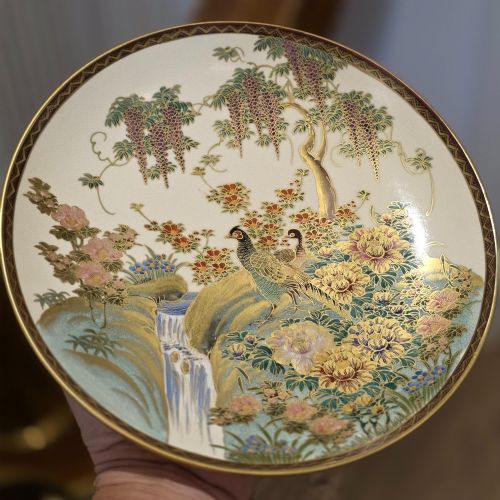
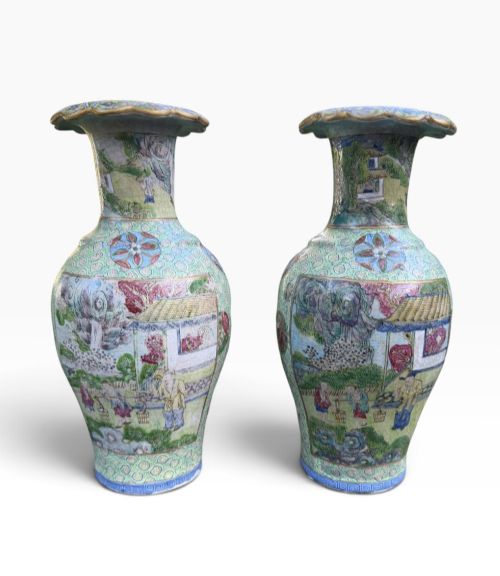
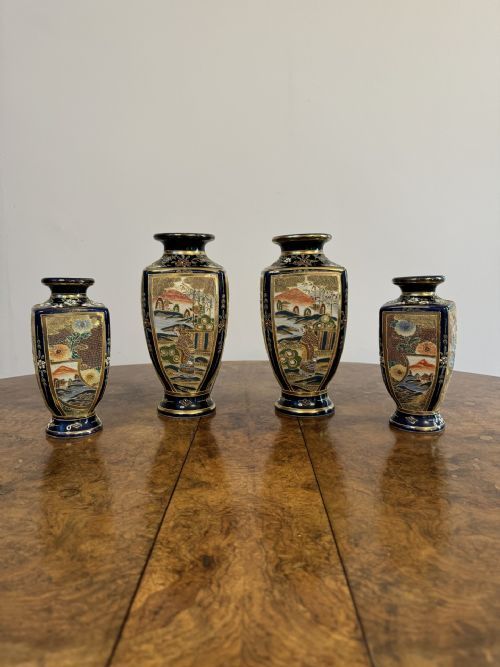
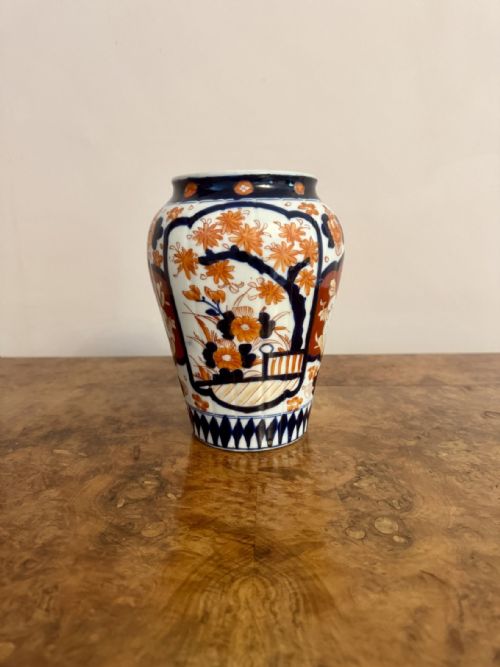
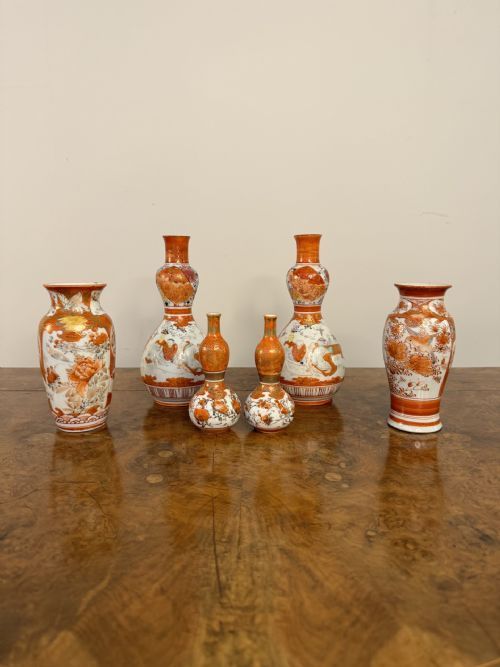
When searching for oriental decorative pottery, collectors encounter a diverse array of ceramic forms originating from Asian traditions, most notably Japanese Satsuma, Imari, and Chinese export wares. These pieces range from large floor vases and balanced garnitures to delicate bowls, chargers, and moon flasks created for decorative display rather than utility.
The objects most frequently met on this page date from the late nineteenth and early twentieth centuries, spanning the Meiji period through the Edwardian era and into the nineteen-twenties and thirties. Makers utilise traditional shapes such as baluster vases, garlic-head vessels, and scalloped plates to showcase dense pictorial scenes, floral motifs, and abstract patterns.
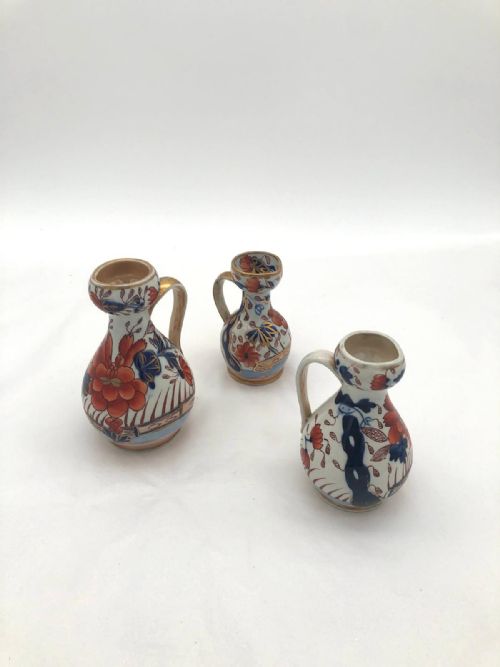
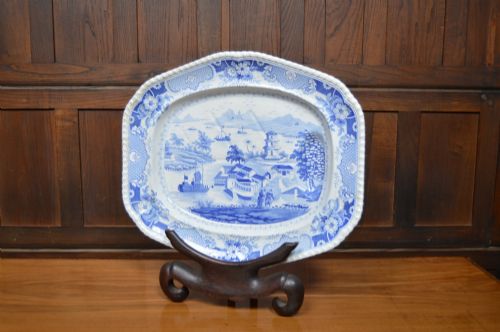
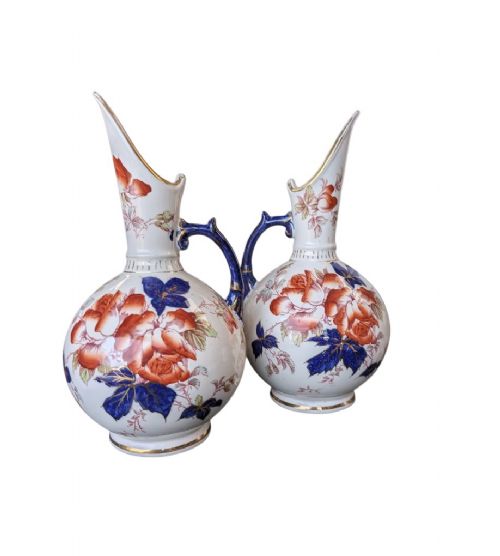
Beyond Japanese and Chinese examples, the selection includes British interpretations of Eastern aesthetics, such as transferware chargers and ironstone jugs decorated with distant temple motifs. These historical cross-cultural pieces demonstrate the enduring fascination with oriental design across different European ceramic manufactories.
Materials and Technique
Makers shaped these items from ceramic bodies, porcelain, and earthenware, applying lustrous glazes and ironstone formulas to achieve durable, smooth surfaces. The foundational clay or porcelain dictated the weight and resonance of each vase, bowl, or pitcher before decoration began.
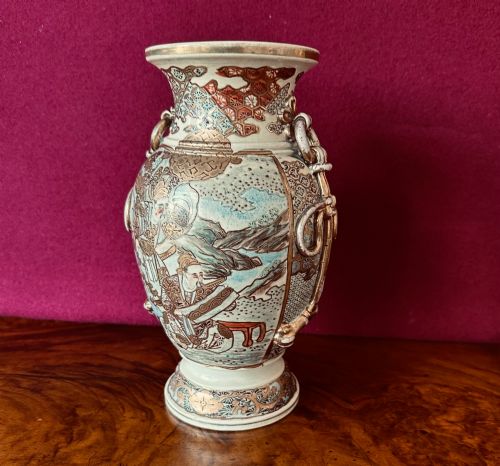
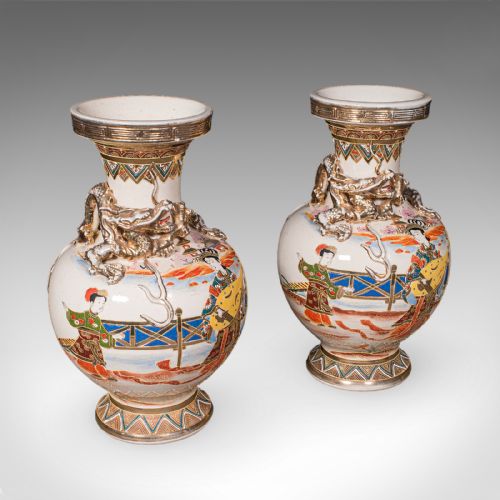
Artisans applied polychrome enamels, cobalt blue pigments, and gold leaf highlights, often building up raised moriage details to give the surface tactile depth. Skilled painters executed minute figural scenes and botanical patterns by hand, relying on precise kiln firings to fuse the metallic accents and vitreous colours permanently.
Oriental Decorative Pottery Retail Price Guide 2026
Typical asking prices for oriental decorative pottery among the pieces listed under this phrase on Sellingantiques today, from the lower quarter to the upper quarter. They describe what is for sale here now, not the wider market.
Among the stoic scholars and tranquil landscapes, a mischievous ceramic duck and an immortal deity make sudden appearances.
Judging Quality and Execution
The distinction between ordinary production and superior craftsmanship rests in the precision of the brushwork and the delicacy of the gilding. Master painters working for renowned Kyoto workshops or Chinese imperial kilns achieved facial expressions, subtle shading, and compositional balance that lesser commercial pieces lack.
Material refinement and firing control separate fine porcelain and earthenware from utilitarian wares. Thin-walled bodies, even glaze distribution, and crisp application of gold leaf and enamel without pooling or blurring indicate the hand of a master artisan.
Kinkozan·Koshida·Manpei·Toshozan·Ryuzan
The Oriental Decorative Pottery Glossary
- Satsuma
- A type of Japanese earthenware featuring a crackled ivory glaze decorated with polychrome enamels and gilt. It originated in the Satsuma Province and became immensely popular for export during the Meiji period.
- Imari
- A style of Japanese porcelain named after the port from which it was shipped, traditionally characterised by a palette of underglaze blue, iron red, and gold. These wares often display complex floral and brocade patterns.
- Moriage
- A decorative technique where slip is piped onto the ceramic surface before firing to create raised, beaded, or textured relief patterns. Artisans frequently highlight these raised elements with gold leaf.
- Garniture
- A set of matching vases or vessels designed to be displayed together on a mantelpiece, sideboard, or shelf. They typically consist of three to five pieces varying in height and form.
- Transferware
- A pottery decoration method where an engraved copper plate transfers a printed design onto paper, which is then stamped onto the ceramic body before glazing. This technique allowed for intricate blue and white scenic depictions.
Oriental Decorative Pottery: Frequently Asked Questions
What is Satsuma ware?
Satsuma ware is a distinct style of Japanese earthenware identifiable by its characteristic crackled cream-coloured glaze and detailed polychrome enamel painting. Artisans enhanced these pieces using abundant gold leaf and raised relief work.
Most surviving examples date from the Meiji period when production expanded specifically for Western export markets. They range from miniature cabinet vases to large ceremonial bowls and decorative table lamps.
How do I identify Imari pottery?
Imari pottery is recognised by its striking palette, which traditionally combines deep cobalt blue underglaze with iron red and abundant gilding over the glaze. The designs frequently incorporate geometric panels, flowers, and landscapes.
Originating in Japan, this style influenced European ceramic manufactories throughout the eighteenth and nineteenth centuries. Authentic pieces display crisp painted lines and a smooth porcelain body beneath the rich decoration.
What is a garniture set?
A garniture set is an arranged group of matching vases or vessels intended for symmetrical display on architectural surfaces like mantelpieces. These sets usually comprise three or five matching pieces of varying proportions.
Originating to adorn stately homes, they provide a unified decorative theme across a room. Each vessel in the set shares identical motifs, glaze treatments, and stylistic signatures from the maker.
How do I care for antique porcelain?
Antique porcelain and earthenware require gentle handling and stable environmental conditions away from direct sunlight and rapid temperature fluctuations. Dust them softly with a dry, lint-free cloth rather than using liquid cleaning agents.
Avoid submerging pieces with delicate overglaze enamels or gold leaf in water, as moisture can degrade historical pigments. Secure larger items like vases and chargers on stable surfaces to prevent accidental tipping.