
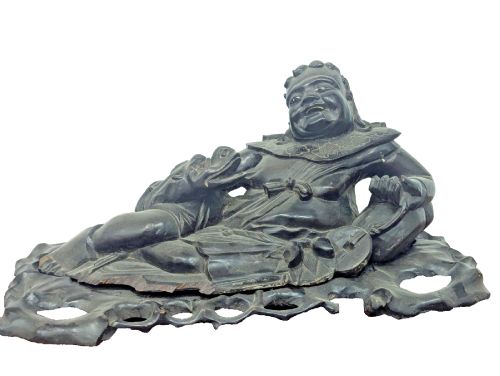
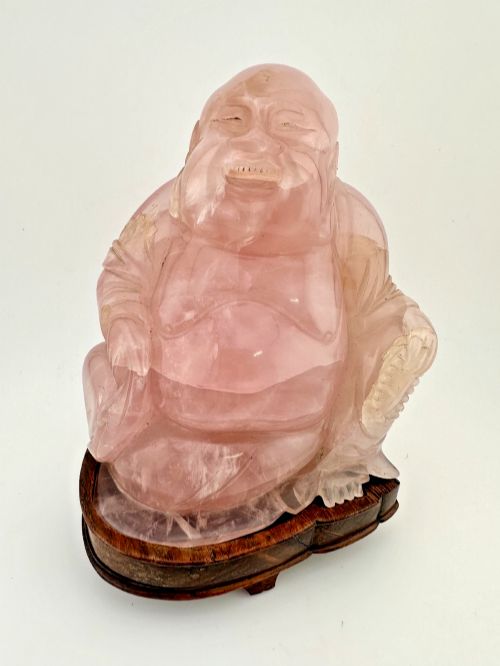
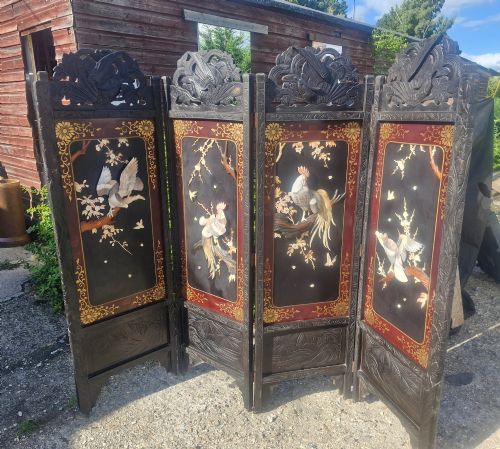
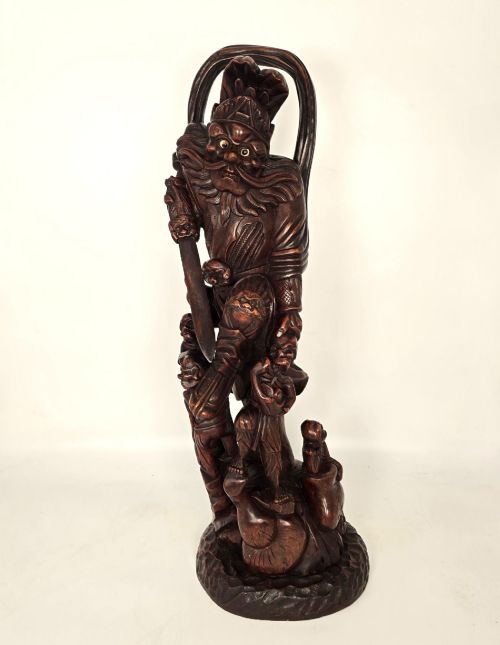

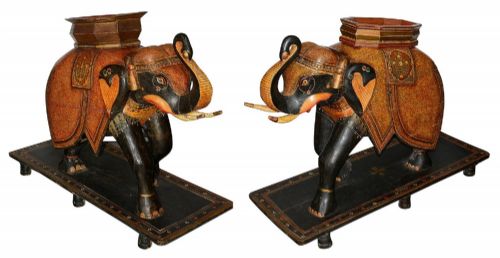


Oriental Carved Wooden Figure
An oriental carved wooden figure brings centuries of craftsmanship into a room, spanning delicate deities and monumental temple guardians.
Oriental Carved Wooden Figure
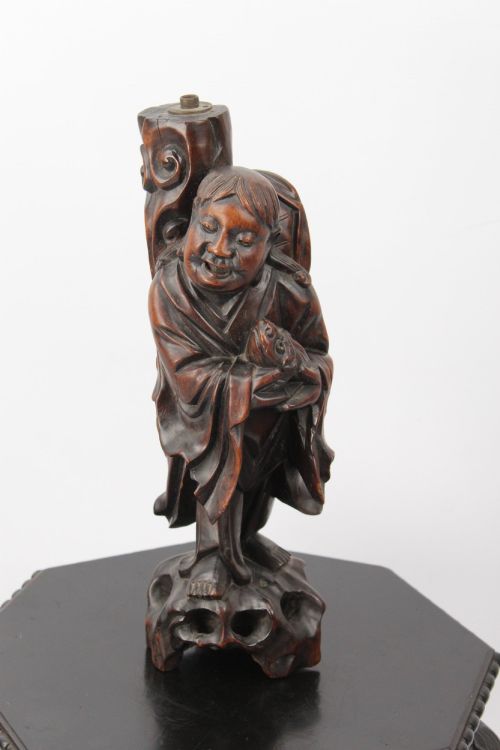
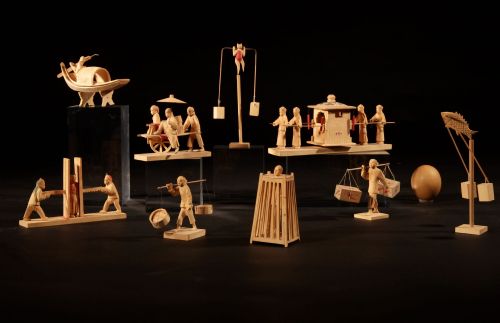
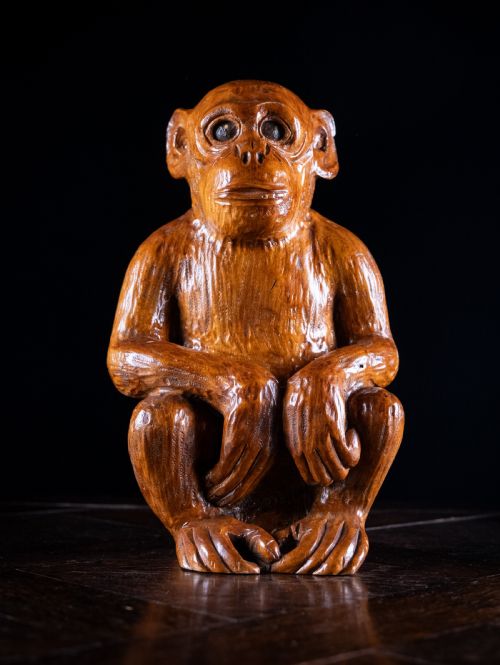
An oriental carved wooden figure encompasses a broad array of devotional, mythical, and secular representations originating primarily from Chinese and Japanese traditions. Buyers searching this phrase meet everything from small boxwood netsuke and okimono to large temple guardians and root wood scholars.
The material record on this page leans heavily toward hardwood, boxwood, and root wood, often finished with lacquer, gold leaf, or polychrome paint. Pieces frequently date from the nineteenth century through the early twentieth century, reflecting both Qing Dynasty and Meiji Period aesthetics.
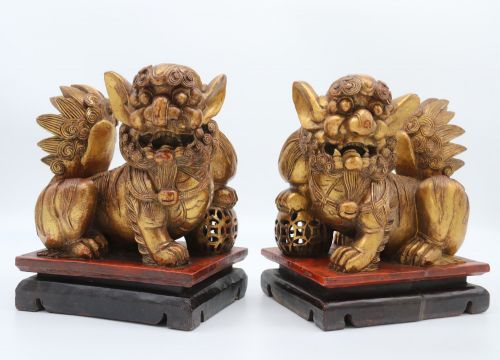
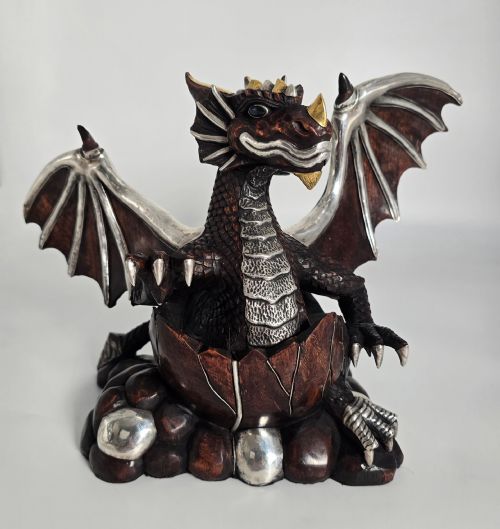
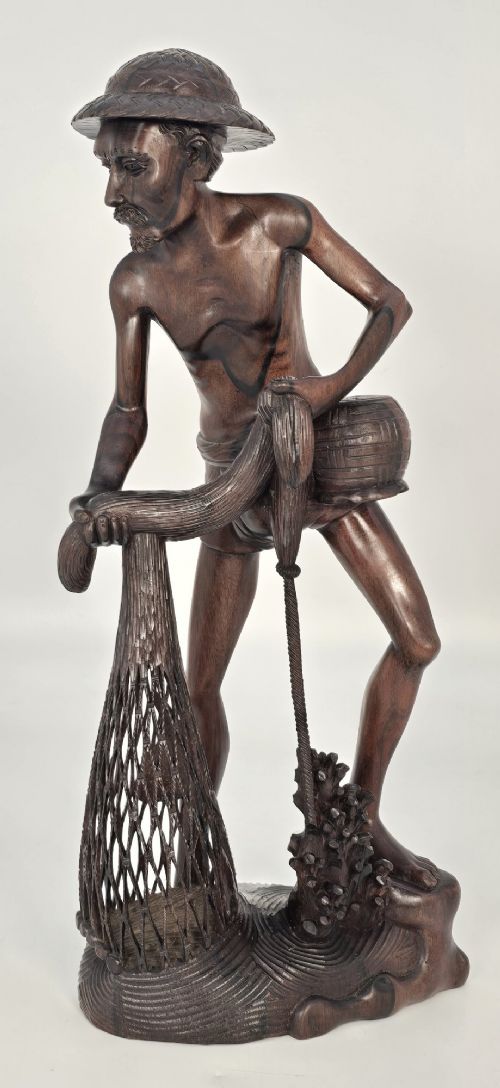
Figurative subjects dominate these listings, including figures of Buddha, Daoist immortals, fishermen, scholars, and mythical animals such as Foo dogs and dragons. These objects served diverse functions, ranging from household shrines and decorative sculptures to functional items like tobacco boxes.
Materials and Techniques
Carving relied on dense materials such as hardwood, boxwood, and root wood, which allowed artisans to execute deep relief and intricate facial expressions without splintering. Natural contours of root wood were often incorporated directly into the design of scholars and deities.
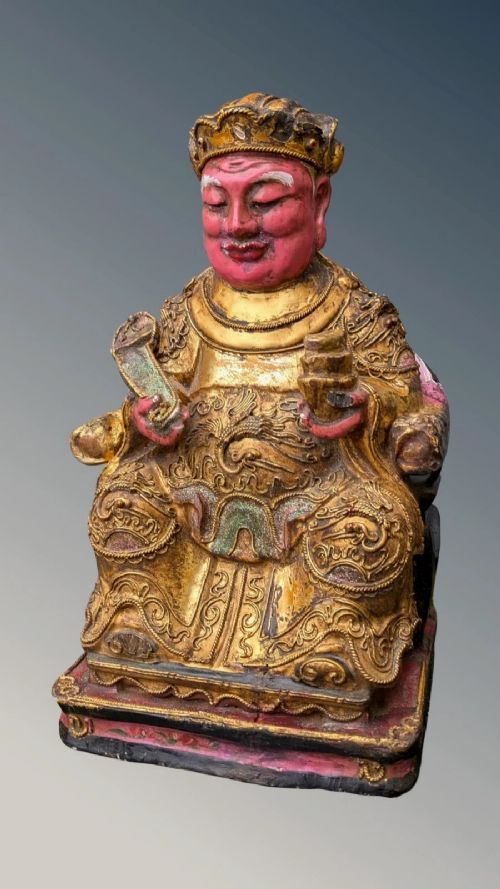
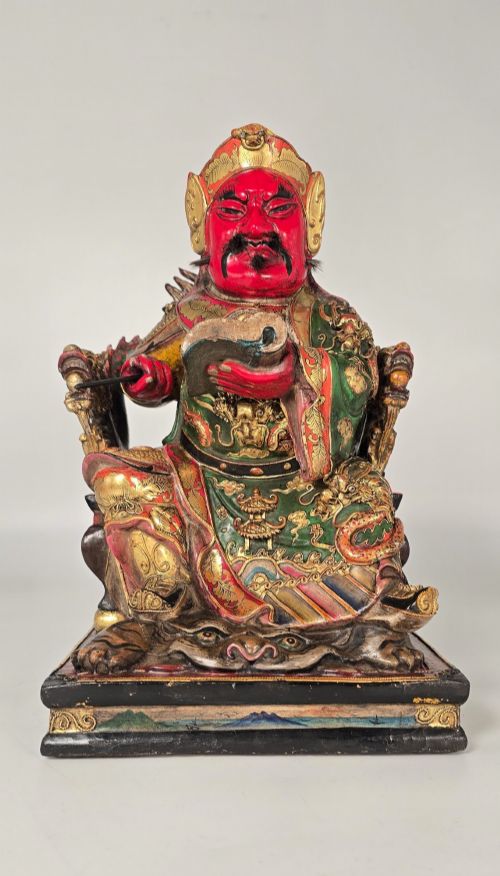
Surface treatments frequently involved layers of black or coloured lacquer, gesso, and gold leaf applied to accentuate specific details of drapery or ornamentation. Polychrome painted pigments brought realism to temple figures and civil officials, though much of this finish has weathered over time.
Several pieces double as practical companions, including tobacco boxes and card butlers disguised as carved figures.
Assessing Quality
The selection of the timber dictates the baseline of a piece, with dense hardwoods and carefully chosen root wood commanding greater presence than softer, plain woods. Preservation of original surface finishes, such as gold leaf and polychrome pigments, further elevates the status of a sculpture.
The Oriental Carved Wooden Figure Glossary
- Okimono
- A Japanese stand-alone ornamental carving intended for display in a domestic interior. These figures typically depict everyday people, animals, or legendary figures with high detail.
- Netsuke
- A small carved toggle used to secure a pouch or small container to a traditional Japanese kimono sash. They are prized for their miniature scale and intricate craftsmanship.
- Boxwood
- A dense, pale wood prized by carvers in both China and Japan for its fine grain and ability to hold microscopic detail. It darkens to a rich amber tone with age and handling.
- Root wood
- Timber formed from the root mass of a tree, selected for its gnarled and twisting natural shapes. Carvers integrated these organic forms into sculptures of scholars and immortals.
- Polychrome
- Painted in several colours. This finish appears frequently on temple figures and deities to add lifelike decoration to the carved wood.
- Qing Dynasty
- The final imperial dynasty of China, lasting from 1644 until 1912. Many figures on this page date to the later years of this period.
Oriental Carved Wooden Figure: Frequently Asked Questions
What subjects do these figures represent?
These sculptures depict a wide variety of subjects, including Buddhist and Daoist deities, mythical beasts like Foo dogs, and secular figures such as scholars and fishermen.
Many pieces draw directly from traditional folklore and religious practices in China and Japan, serving as objects of devotion or scholarly contemplation.
How do I care for carved wood?
Keep carved wooden sculptures away from direct sunlight and sudden temperature shifts to prevent the timber from drying out and splitting.
Dust the surface gently with a dry, soft brush rather than using liquid polishes, which can harm historic lacquered or painted finishes.
How can I tell Japanese from Chinese carvings?
Japanese pieces from the Meiji period often emphasise naturalistic poses and expressions in objects like okimono and netsuke.
Chinese carvings frequently lean towards formal symmetry, traditional deities, and distinct stylistic markers associated with the Qing Dynasty.
Were these figures painted originally?
Many temple figures and deities featured applications of polychrome paint, gesso, and gold leaf over the carved wood base.
Over the decades, much of this original pigment has softened or worn away, revealing the natural grain of the hardwood beneath.