


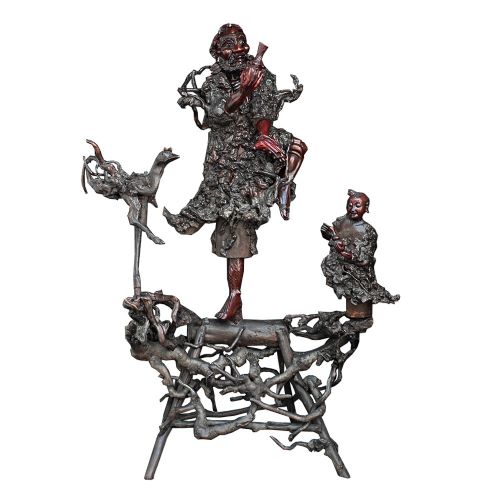


Asian Folk Art Sculpture
Asian folk art sculpture gathers hand-carved regional figures and ritual masks that bring immediate character and tangible craft tradition into a room.
Asian Folk Art Sculpture
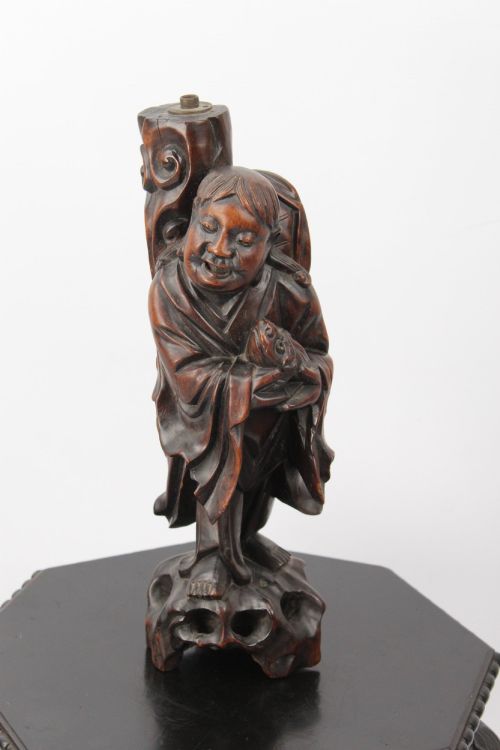
When you search for asian folk art sculpture, you encounter regional carvings shaped by local hands across the nineteenth century and the early decades of the twentieth century. These pieces encompass carved figures of Daoist immortals, Buddhist deities, and local dancers, alongside masks and wall plaques.
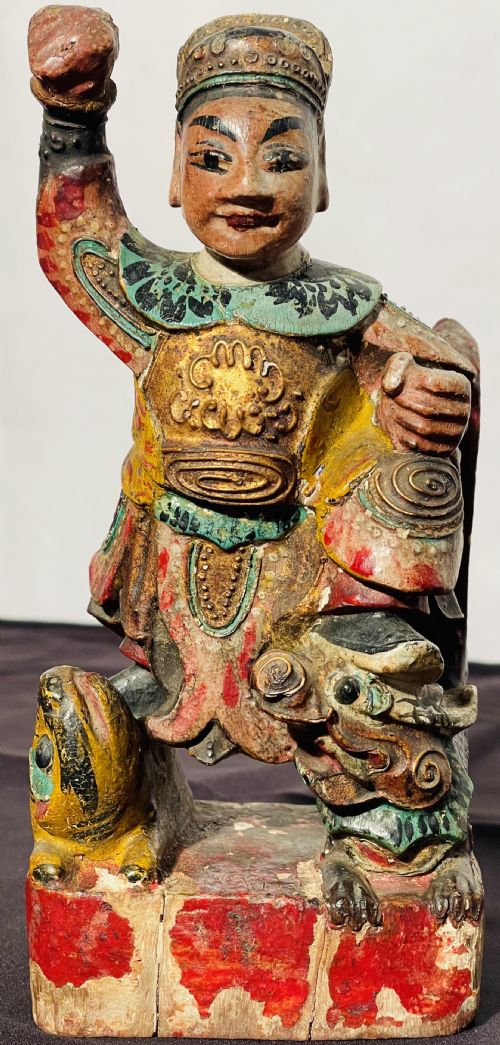
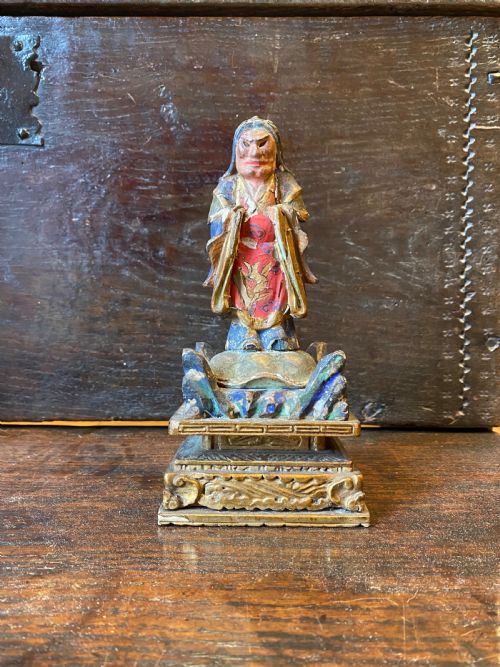
The objects appearing most frequently on this page are carved wooden figures and root wood pieces originating from China, the Himalayas, India, and Japan. They range from small tabletop scholars and fishermen to larger temple deities and ceremonial headdresses.
Materials and construction
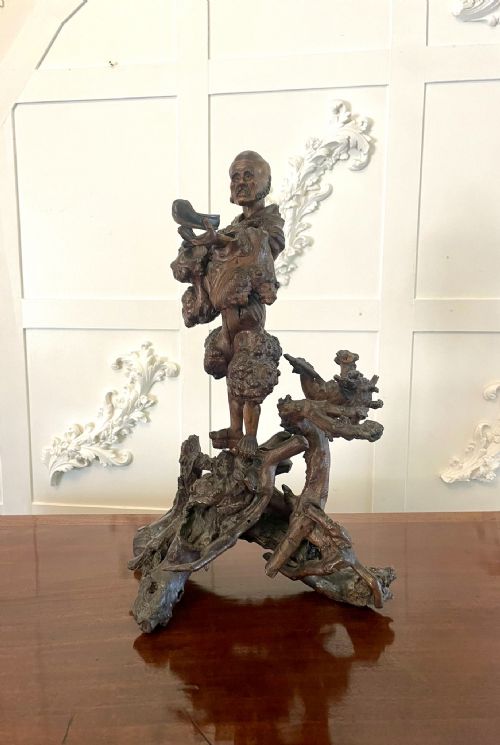
Makers utilised available timbers, turning to dense hardwoods, burr wood, and root wood to follow natural organic contours. The grain and knotting of the timber often dictate the final posture of a scholar or an immortal.
Surface finish involves hand carving supplemented by gesso and polychrome paint on select ritual pieces. Pigments define facial expressions and garments on temple deities and performance masks.
Listings span the nineteenth century and the early twentieth century, featuring works in wood, root wood, brass, and gesso.
Distinctions in quality
Carving depth and expressive power separate standard workshop output from pieces with strong regional presence. A master carver works with the natural twists of root wood rather than fighting the material.
Surface preservation also marks out better examples, where original polychrome pigment or aged patination remains undisturbed by heavy restoration.
The Asian Folk Art Sculpture Glossary
- Root wood
- Timber sourced from the root system of a tree, prized for gnarled, twisting shapes that carvers incorporate into figures. This material creates organic asymmetry.
- Daoist immortal
- A mythological figure from Chinese tradition frequently depicted in carved sculpture. These figures often hold symbolic attributes.
- Mingei
- Japanese folk art movement valuing utilitarian and regional objects made by unknown craftsmen. Pieces embody simplicity and direct expression.
- Burr wood
- Wood with distorted grain growth resulting in unique patterns. Carvers utilise these sections for texture in drapery or scenery.
Asian Folk Art Sculpture: Frequently Asked Questions
Where were these sculptures made?
These sculptures originate from workshops and communities across China, India, Tibet, Nepal, and Japan. Each region utilised local timber species and distinct stylistic traditions.
Objects range from domestic scholar carvings to ritual temple figures and ceremonial dance masks.
How should I clean a wooden sculpture?
Dust wood surfaces gently using a dry, soft brush to protect the aged patina and any delicate carved details. Avoid using water or liquid polishes.
If the piece retains polychrome paint, moisture can lift the pigment and damage the historic finish.
What is root wood carving?
Root wood carving is a technique where artisans shape gnarled tree roots into figures, animals, or landscape elements. The natural twists of the timber dictate the final composition.
This method allows the grain and knots of the wood to form part of the artistic expression.