


Oriental Carved Wood Lamp
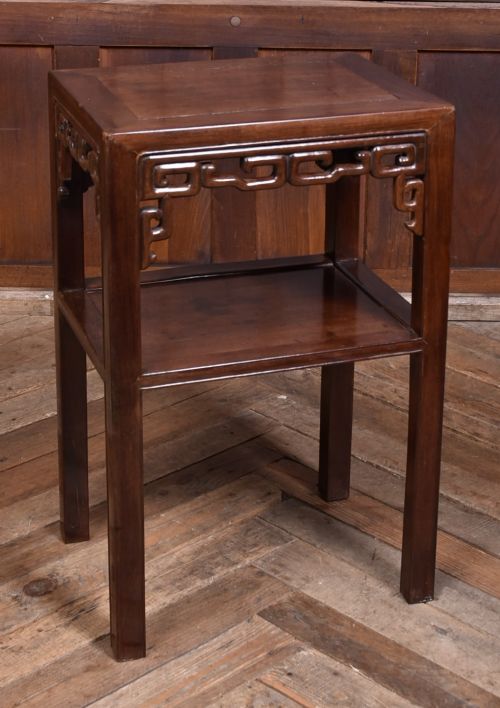
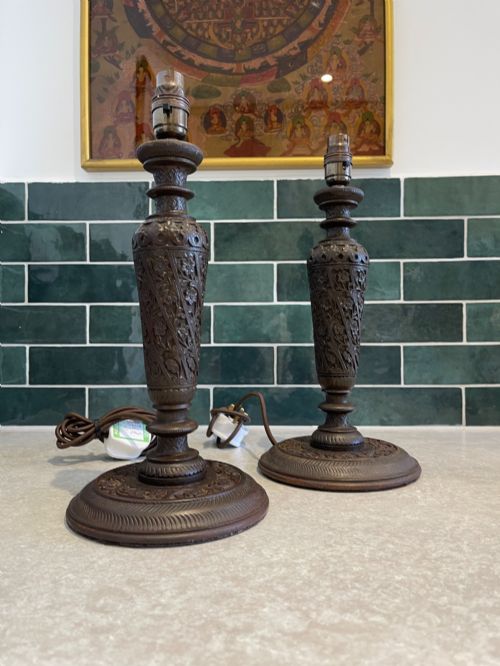
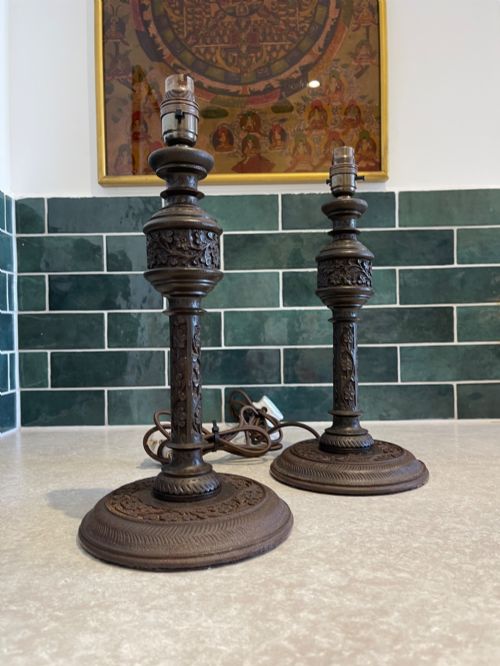
An oriental carved wood lamp brings weight and intricate relief to a corner, drawing the eye with dense foliage or writhing dragons.
Oriental Carved Wood Lamp
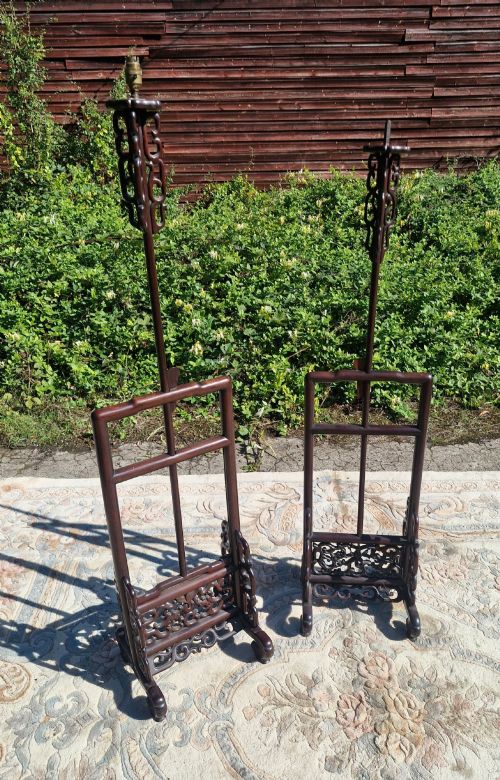
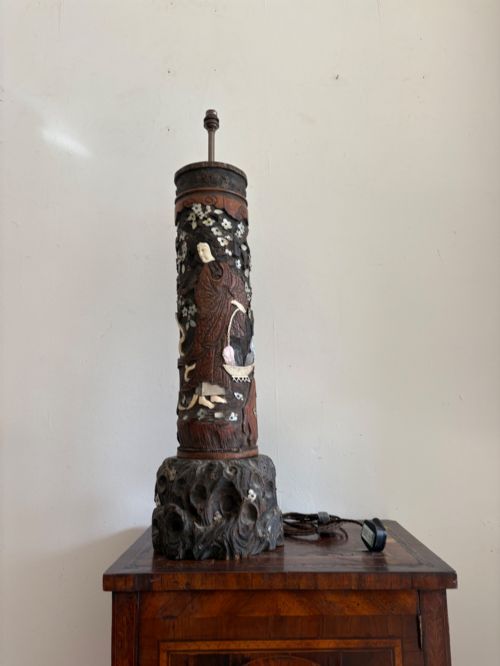
When you search for an oriental carved wood lamp, you encounter table standards, floor lamps, and converted stands rooted in the nineteenth and early twentieth centuries. Many pieces on this page originate from Chinese workshops, alongside Japanese Meiji examples and regional Indian or Indonesian interpretations.
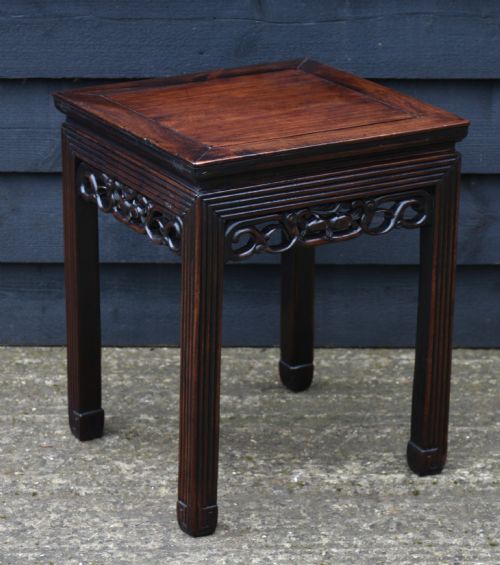
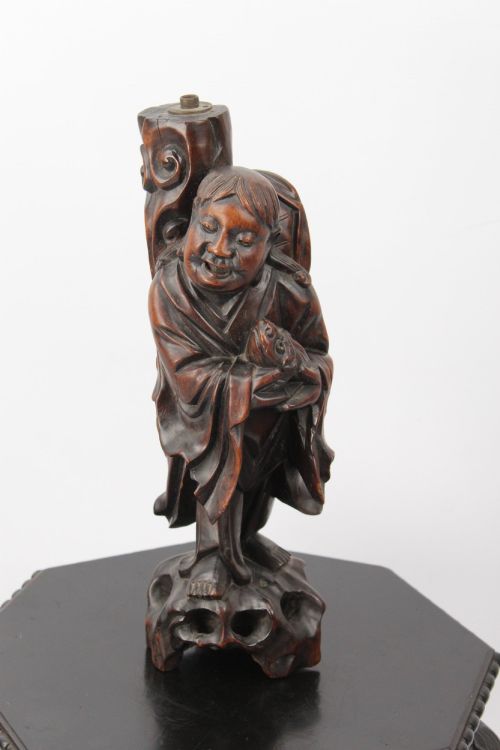
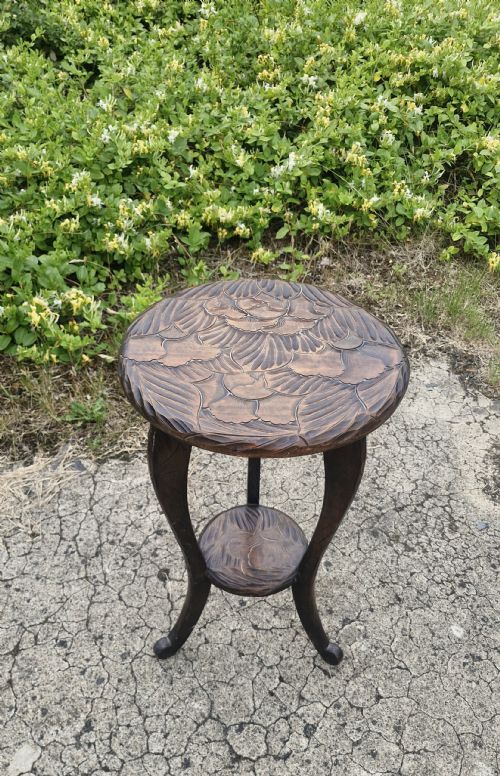
The selection ranges from rootwood figural carvings and lantern stands to standard lamps fashioned from dense padauk or rosewood. These upright forms often integrate brass fittings or sit alongside related occasional tables and plant stands sharing the same carved vocabulary.
Materials and Construction
These lamps rely upon heavy hardwoods such as rosewood, padauk, elm, and rootwood, selected for their ability to hold deep, undercut relief without splintering. Artisans executed the carving by hand, deploying chisels and gouges to build dragons, floral motifs, and figures in high relief.
Many structural elements employ traditional joinery alongside turned sections to accommodate electrical wiring while retaining the integrity of the original wood standard or transformed table base.
Rootwood carvings often let the natural twists of the timber dictate the posture of a Daoist immortal.
Assessing Quality in Carved Wood
The distinction between ordinary and superior work lies in the depth and crispness of the carving, where undercut details and expressive figural work demand exceptional skill. Timbers selected for rich natural grain and even colour elevate a piece above those cut from lesser, stained woods.
Proportion and stability dictate the standing of a floor lamp or table standard, ensuring the heavy timber base supports the vertical weight gracefully without awkward joins or mismatched secondary woods.
Liberty's
The Oriental Carved Wood Lamp Glossary
- Padauk
- A dense, heavy tropical hardwood with a deep reddish colour that darkens with age, frequently utilised for large standard lamps.
- Rootwood
- Timber harvested from the root burls of trees, shaped by carvers into organic, twisting bases and figural sculptures.
- Torchiere
- A tall floor lamp designed to direct light upwards towards the ceiling, often carved with dragon or columnar motifs.
- Meiji Period
- The era of Japanese history spanning from 1868 to 1912, known for intricate decorative arts and refined carving.
- Jardiniere Stand
- A low or medium table originally designed to hold a plant bowl, frequently repurposed as a lamp table.
Oriental Carved Wood Lamp: Frequently Asked Questions
Are these lamps converted from older stands?
Many standard lamps on this page began life as torchieres, lantern stands, or rootwood carvings before receiving modern wiring.
This adaptation preserves the carved height and structural column while making the antique suitable for everyday lighting.
How do I date a carved wooden lamp?
Dating relies upon the timber choice, the tool marks left by the carver, and the stylistic traits associated with periods like the Victorian era or Qing Dynasty.
Examining the base and any original brass fittings provides further clues to whether the piece stems from the nineteenth or early twentieth century.
What woods were commonly used?
Carvers utilised dense tropical hardwoods including rosewood, padauk, and elm, alongside gnarled rootwood for organic figural pieces.
These heavy timbers provided the necessary strength and dark tone to showcase intricate relief work.
How do I clean and maintain the wood?
Maintenance involves gentle dusting with a dry microfibre cloth to prevent dirt settling into the deep recesses of the carving.
Avoiding direct sunlight and excessive moisture preserves the natural lustre of the hardwood and prevents the timber from splitting.