







Chinese Scholar Wood Sculpture
A Chinese scholar wood sculpture captures the poised dignity of traditional learning, carved from rich timber to bring scholarly grace into your study.
Chinese Scholar Wood Sculpture
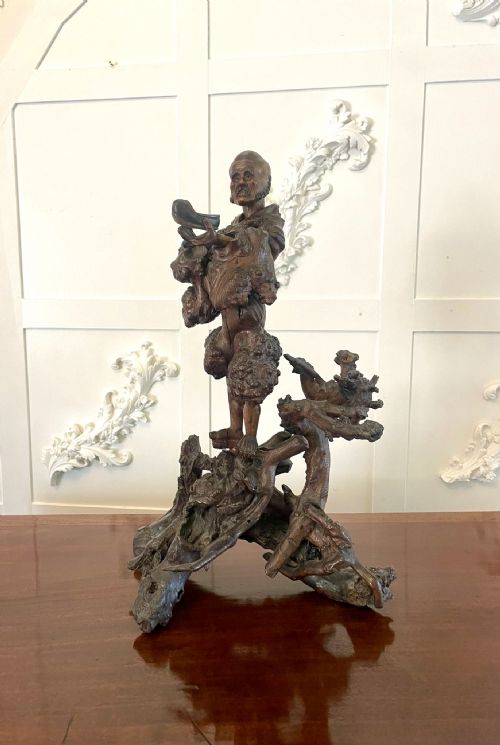
When you search for a Chinese scholar wood sculpture, you are looking at carved wooden figures and groupings that celebrate traditional scholarly pursuits. These pieces often depict learned men in contemplation, capturing the essence of scholarly virtue and philosophical study.
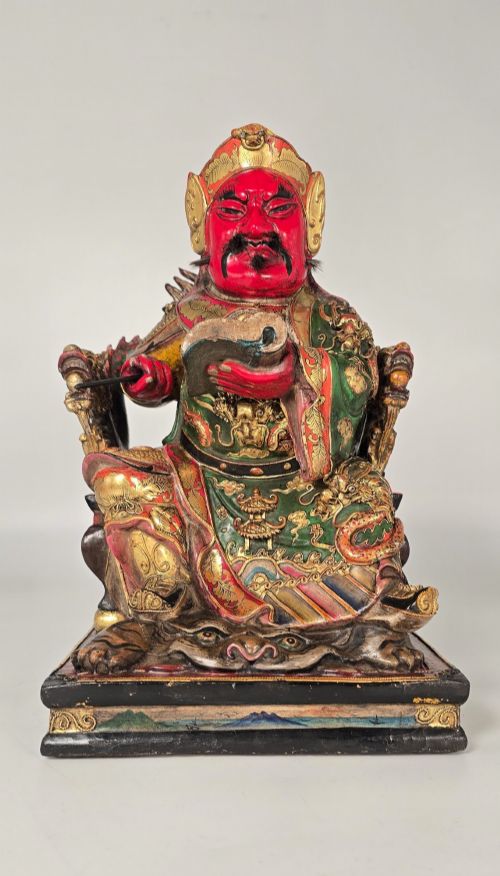
The versions you are most likely to meet on this page date from the nineteenth century and the early twentieth century. They range from naturalistic root wood carvings to detailed hardwood and lacquered figures.
The forms vary from single standing figures to intricate miniature figure groups and naturalistic root wood carvings. Some examples have even been adapted into table lamps while retaining their carved wooden character.
Materials and methods of construction
Carvers utilised dense timbers such as hardwood, boxwood, and burr root wood to create these sculptures. The natural grains and knots of the root wood were often incorporated into the final composition.
Surface finish varied according to the specific style, incorporating hand painting, black and red lacquer, gesso, and delicate applications of gold leaf. Soapstone was also utilised alongside the wood in certain landscape carvings.
Chinese Scholar Wood Sculpture Retail Price Guide 2026
Typical asking prices for chinese scholar wood sculpture among the pieces listed under this phrase on Sellingantiques today, from the lower quarter to the upper quarter. They describe what is for sale here now, not the wider market.
Listings feature items dated across the nineteenth and early twentieth centuries, including root wood, boxwood, lacquer, and giltwood.
Distinguishing quality in carving
Quality rests in the precision of the hand carving and how sensitively the artisan worked with the natural grain of the timber. Intricate detail in the facial expressions and robes separates standard decorative items from finer scholarly works.
The choice of material also dictates the character of the piece, with dense hardwoods and carefully selected burr root wood offering superior weight and tactile presence compared to simpler pine or softer woods.
The Chinese Scholar Wood Sculpture Glossary
- Root wood
- Timber sourced from the root system of a tree, prized for its gnarled and twisting natural forms. Carvers shaped these organic shapes to represent figures or mountainous landscapes.
- Hardwood
- Slow-growing dense timber that holds fine detail and takes a smooth finish. It provides durability and a substantial weight to sculptural pieces.
- Giltwood
- Timber that has been decorated with a thin layer of gold leaf. This technique highlights specific details or entire figures to add richness.
- Qing Dynasty
- The final imperial dynasty of China, spanning from the seventeenth to the early twentieth century. Pieces from this era reflect traditional imperial aesthetics and craftsmanship.
- Ruyi Sceptre
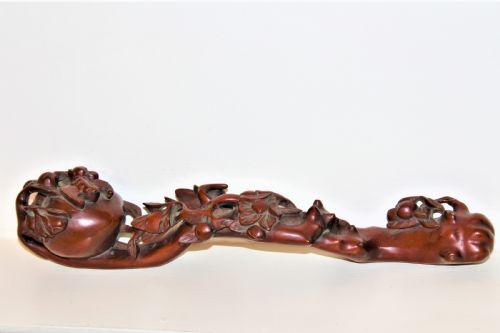
- A traditional S-shaped ornamental object symbolising power and good fortune. They were often intricately carved from boxwood and kept in scholars' studies.
Chinese Scholar Wood Sculpture: Frequently Asked Questions
How old are these wood carvings?
The pieces seen here primarily date from the nineteenth century and the early twentieth century. They reflect the craft traditions of the Qing Dynasty and later decorative arts.
Craftsmen during this period utilised both traditional hand-carving techniques and specialised wood treatments. The age is typically identified through material wear, patina, and stylistic markers.
What woods were used for these sculptures?
Carvers utilised a variety of timbers including dense hardwoods, boxwood, and burr root wood. Each wood offered different properties for holding fine detail or displaying natural grains.
Root wood was especially popular for its twisting, organic shapes which could be interpreted as figures or natural crags. Some pieces also incorporated lacquer, gesso, or gold leaf finishes.
How should I display a scholar wood sculpture?
These sculptures suit tabletops, desks, and shelves where their intricate carving can be closely appreciated. Placing them away from direct sunlight protects the wood and any applied lacquer or gold leaf.
Maintenance involves gentle dusting with a soft brush rather than liquid cleaning products. This preserves the natural patina built up over generations.