


Oriental Carved Storage Chest
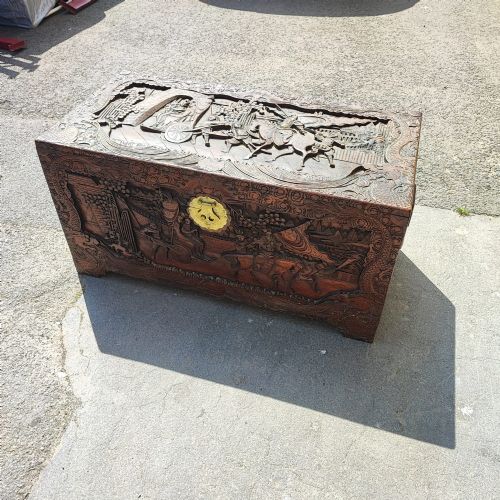
These oriental carved storage chests are solid timber boxes made for travel and safekeeping, built to hold linens and valuables while bringing rich texture to a room.
Oriental Carved Storage Chest
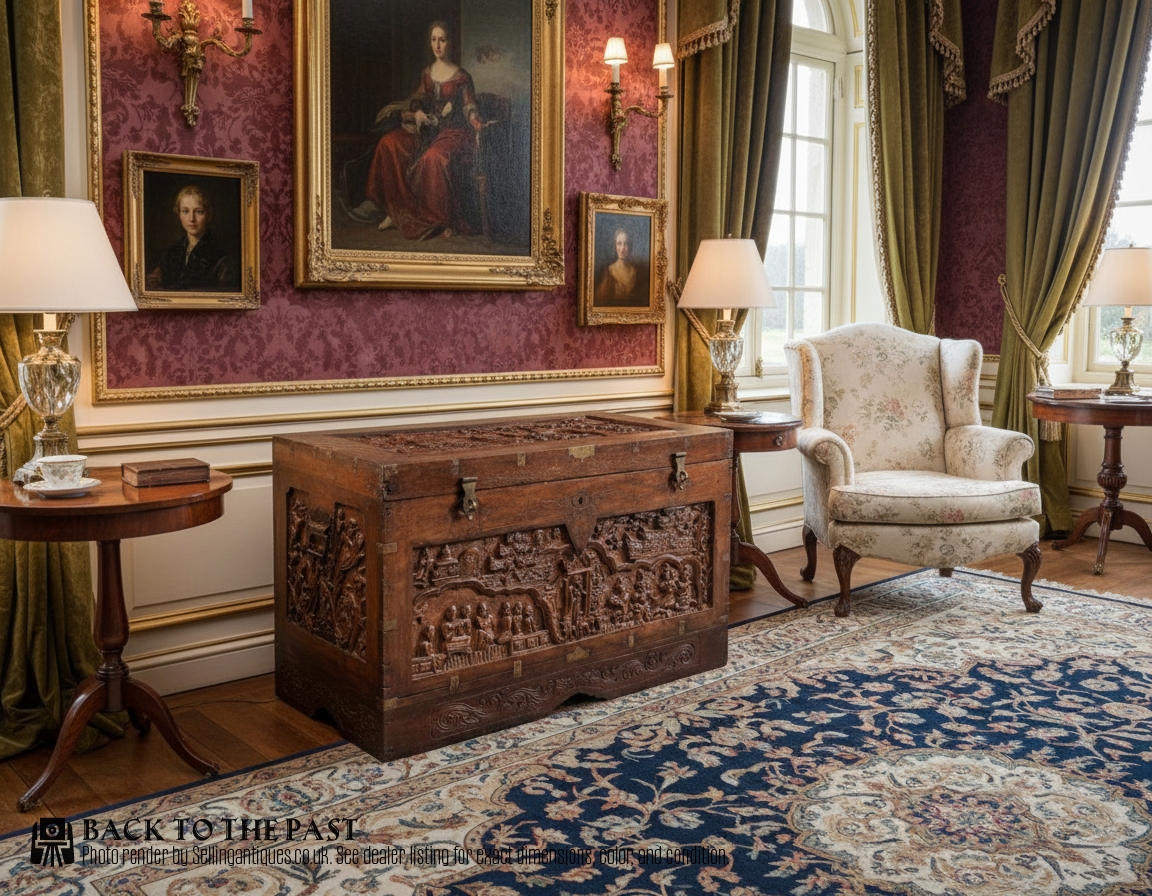
When you search for an oriental carved storage chest, you encounter heavy timber trunks and blanket boxes originating from Chinese export workshops, Anglo-Indian makers, and Zanzibar trade routes. The pieces span the nineteenth century and the early decades of the twentieth century, appearing as low trunks, coffers, and cabinets on stands.
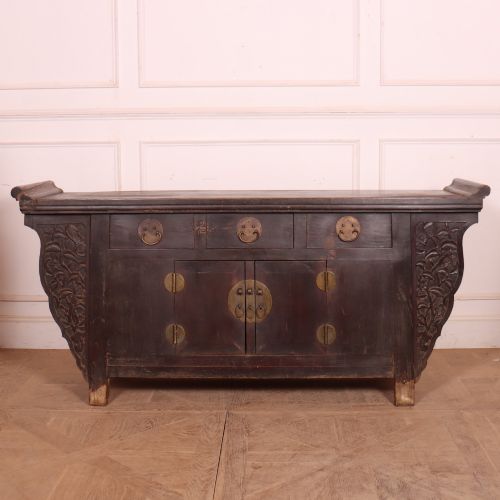
Camphor wood dominates the selection, shaped into heavy storage trunks and blanket boxes featuring deep relief carving. Alongside these sit lacquered cabinets, brass-bound boxes, and inlaid hardwood pieces from varied regional traditions.
How they were made
Cabinetmakers utilised dense timbers such as camphor wood, teak, rosewood, and elm to build robust carcass structures that resisted humidity and pests. Surfaces were finished with hand-carved relief panels, black or red lacquer, and applied brass fittings.
Many examples incorporate intricate mother-of-pearl inlay and exposed dovetail joints. Trunks often feature recessed brass carrying handles and hinged lids designed to seal tightly.
Listings feature items spanning the nineteenth century through to the 1930s, constructed in camphor wood, elm, teak, rosewood, and brass.
What varies in quality
The standard of carving defines the upper tier of these pieces, separating deep, crisp hand-chiselled foliage from shallow, mechanical work. Timber selection also dictates grade, with figured camphor wood and dense rosewood commanding attention.
Original hardware, intact lacquer finishes, and well-preserved internal trays elevate certain chests above standard utility trunks. The structural integrity of the timber joints and the retention of original patination govern the overall presence.
The Oriental Carved Storage Chest Glossary
- Camphor wood
- A fragrant timber native to Asia, prized for its insect-repellent properties and stability. It forms the primary body of most traditional storage trunks.
- Zanzibar chest
- A heavy timber trunk featuring distinctive brass studwork, strapwork, and corner brackets. These pieces reflect trade connections between India, the Middle East, and East Africa.
- Chinese Export
- Objects manufactured in China specifically for Western markets during the nineteenth and early twentieth centuries. They combine traditional local techniques with European forms.
- Chinoiserie
- European decorative style imitating Chinese artistic traditions. It appears on cabinets and trunks through lacquer work and painted motifs.
- Lacquer
- A durable resin finish applied in multiple layers to wood surfaces. It provides a glossy protective coating often embellished with carved details.
Oriental Carved Storage Chest: Frequently Asked Questions
What were camphor trunks used for?
These chests served primarily to store garments, linens, and valuable documents. The aromatic qualities of the timber helped protect textiles from moths and dampness during transport.
Merchants and travellers utilised them as durable luggage on long sea voyages. Today, they function as coffee tables, blanket boxes, and living room storage furniture.
How do I identify a Zanzibar chest?
Zanzibar chests are distinguished by heavy brass strapwork, decorative studs, and central lock plates. They are typically constructed from dense tropical hardwoods like teak or rosewood.
Unlike standard Chinese trunks, their decorative scheme relies on geometric brass work rather than deep carved wood panels.
Are these chests heavy?
These pieces are constructed from dense solid hardwoods and feature thick timber walls. They possess substantial weight, particularly the larger nineteenth-century camphor and rosewood examples.
Side handles were fitted to assist with lifting, though moving them usually requires two people.
How do I care for a lacquered cabinet?
Lacquered surfaces require gentle cleaning with a soft, dry cloth to prevent scratching. Avoid placing them in direct sunlight or near heat sources, which can cause the finish to crack.
Maintain a stable room humidity to protect both the wood substrate and the delicate lacquer layers.