


Oriental Carved End Table
These pieces are solid hardwood occasional items, and an oriental carved end table brings dense grain and deep relief work straight into a room.
Oriental Carved End Table
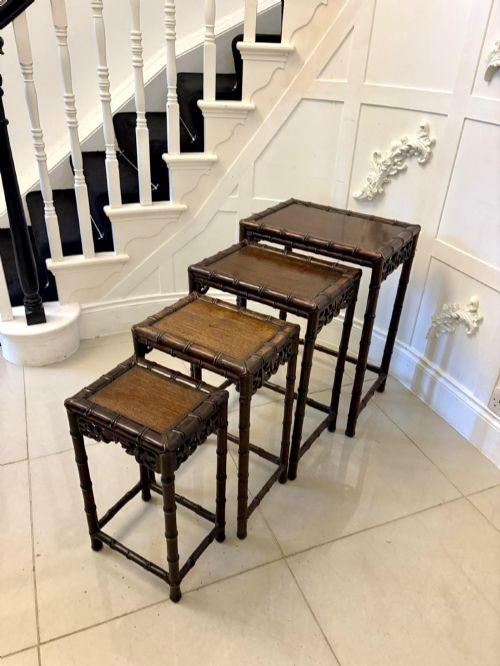
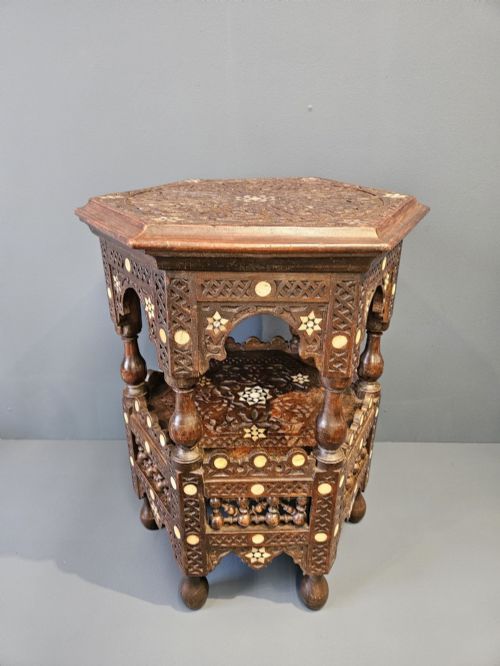
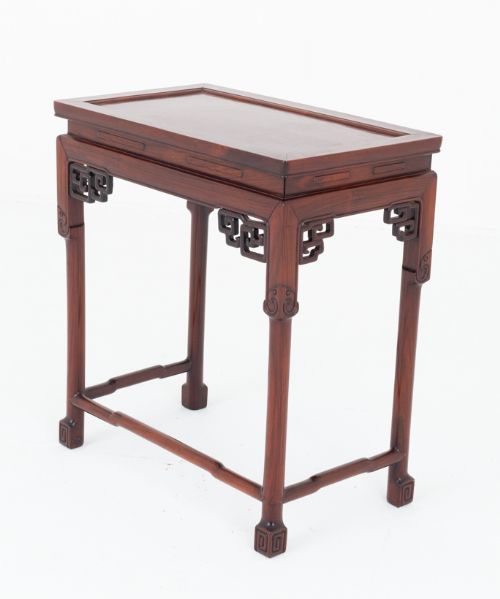
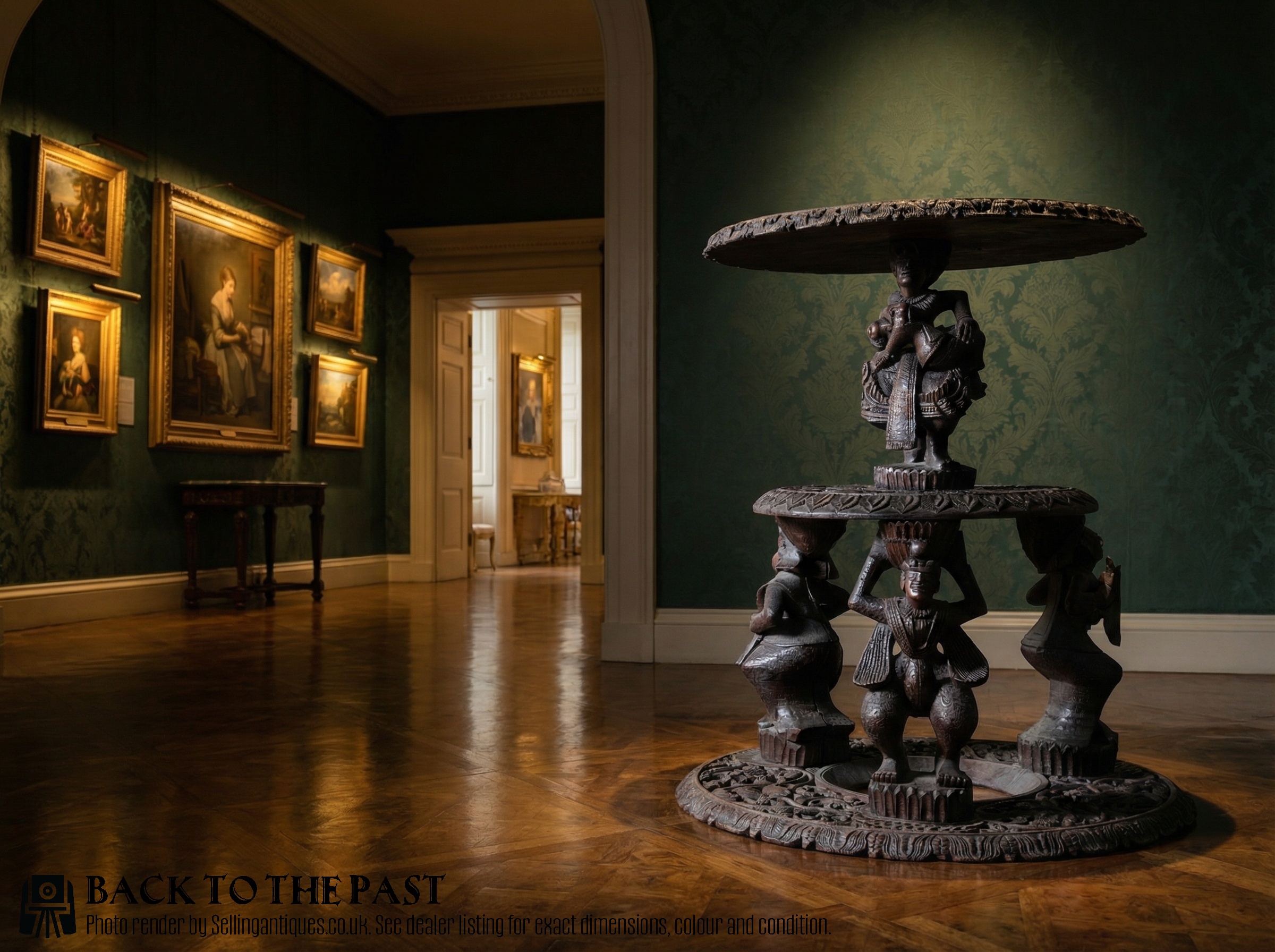
An oriental carved end table encompasses diverse small furniture forms spanning nests, lamp tables, and low kang surfaces. The listings show heavy reliance on forms originating from Chinese workshops, alongside Indian and Burmese pieces created for export and domestic use.
Most examples you will encounter belong to the nineteenth century or the early decades of the twentieth century. These include Qing Dynasty exports, Anglo-Indian creations, and occasional tables utilising traditional joinery without modern metal fasteners.
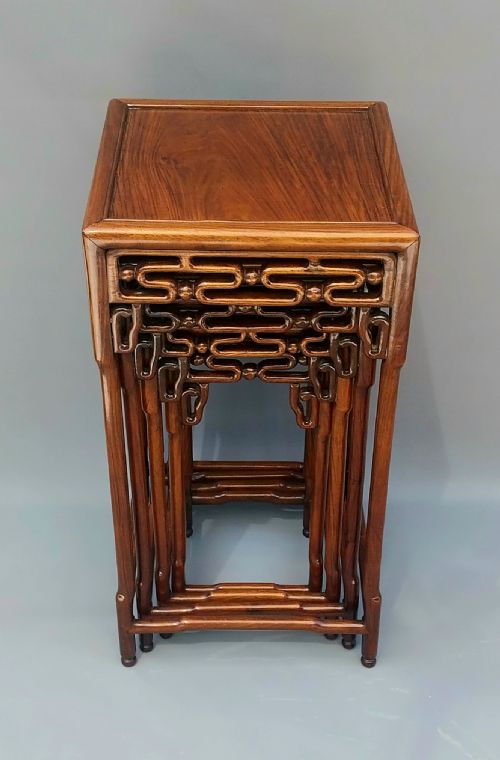
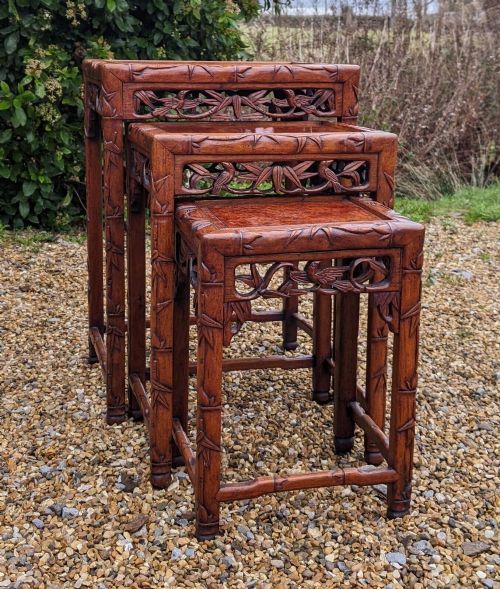
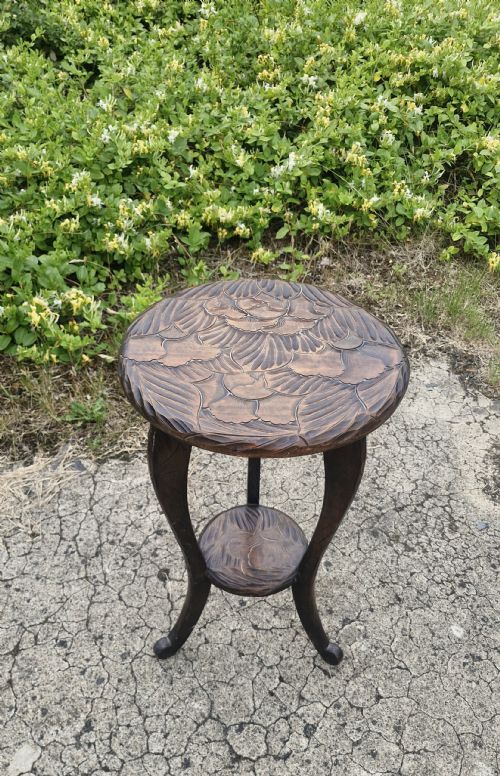
The primary forms take shape as nests of four graduated tables, octagonal lamp surfaces, and solid hardwood stools. They function as adaptable accents beside seating or in hallways, designed to display decorative objects or support daily utility.
What varies in quality
Quality rests upon the crispness of the hand-carving and the density of the chosen timber. Superior pieces exhibit sharp, undercut relief details where lesser examples rely on shallow, machine-smoothed stamping or softer secondary woods.
The integrity of the traditional joinery dictates the stability of nests and folding frames. Well-executed tables fit together snugly without relying on modern adhesives, maintaining a solid stance across all four legs.
Oriental Carved End Table Retail Price Guide 2026
Typical asking prices for oriental carved end table among the pieces listed under this phrase on Sellingantiques today, from the lower quarter to the upper quarter. They describe what is for sale here now, not the wider market.
Elephants occasionally hold up the corners, proving that Victorian craftsmen took their domestic menagerie very seriously indeed.
Liberty's
The Oriental Carved End Table Glossary
- Kang table
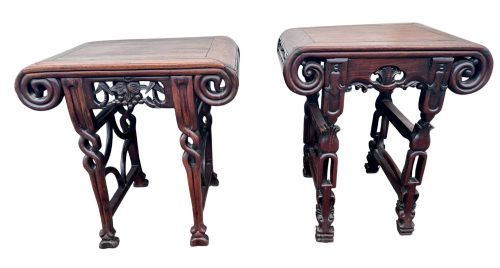
- A low platform table traditionally used in China for sitting or sleeping, adapted in export pieces as a low coffee or end table. These often feature distinctive scroll ends.
- Hongmu
- A traditional Chinese term denoting dense, heavy hardwoods of reddish or dark brown hue, frequently translated as red wood. It forms the structure of many nineteenth-century nesting tables.
- Quartetto
- A matching set of four graduated tables designed to slide neatly beneath one another. This term appears frequently in nineteenth-century British trade descriptions for nests of tables.
- Moorish Revival
- A nineteenth-century design style incorporating Islamic architectural motifs, intricate geometric lattice, and bone or mother-of-pearl inlay. It influences several octagonal lamp tables of the period.
Oriental Carved End Table: Frequently Asked Questions
How do I use a nest of tables?
A nest provides four separate surfaces that stack into the footprint of one single table when space is tight. You pull them out individually to hold drinks or books around the room.
They slide back together to form a compact column beside a sofa or chair when not in use.
What is a kang table used for?
Kang tables originated as low surfaces placed on heated brick sleeping platforms in northern China for eating and writing. Today, their low profile makes them suitable as coffee tables or distinct end tables.
Their scroll ends and sturdy frames provide a low horizontal anchor in a modern sitting room.
How do I care for rosewood tables?
Solid rosewood and hongmu benefit from occasional dusting with a dry, soft cloth to protect the polished surface. Avoid placing them near direct heat sources or strong sunlight to prevent the timber from splitting.
Applying a modest amount of beeswax preserves the natural grain without building up sticky residue.
Are marble top tables heavy?
Tables with inset rouge marble tops carry significant weight due to the density of the stone and the hardwood frame. This heft keeps plant stands and lamp tables exceptionally stable.
Take care when lifting them, as the stone sits within a wooden groove rather than fastening permanently.