
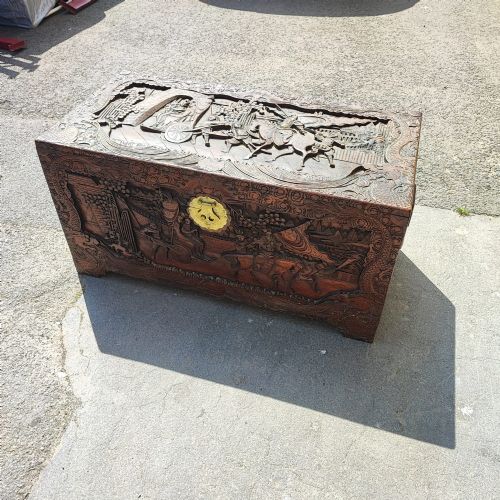


Oriental Carved Blanket Chest
An oriental carved blanket chest brings dense regional carving and aromatic camphor wood directly into a hallway or bedroom.
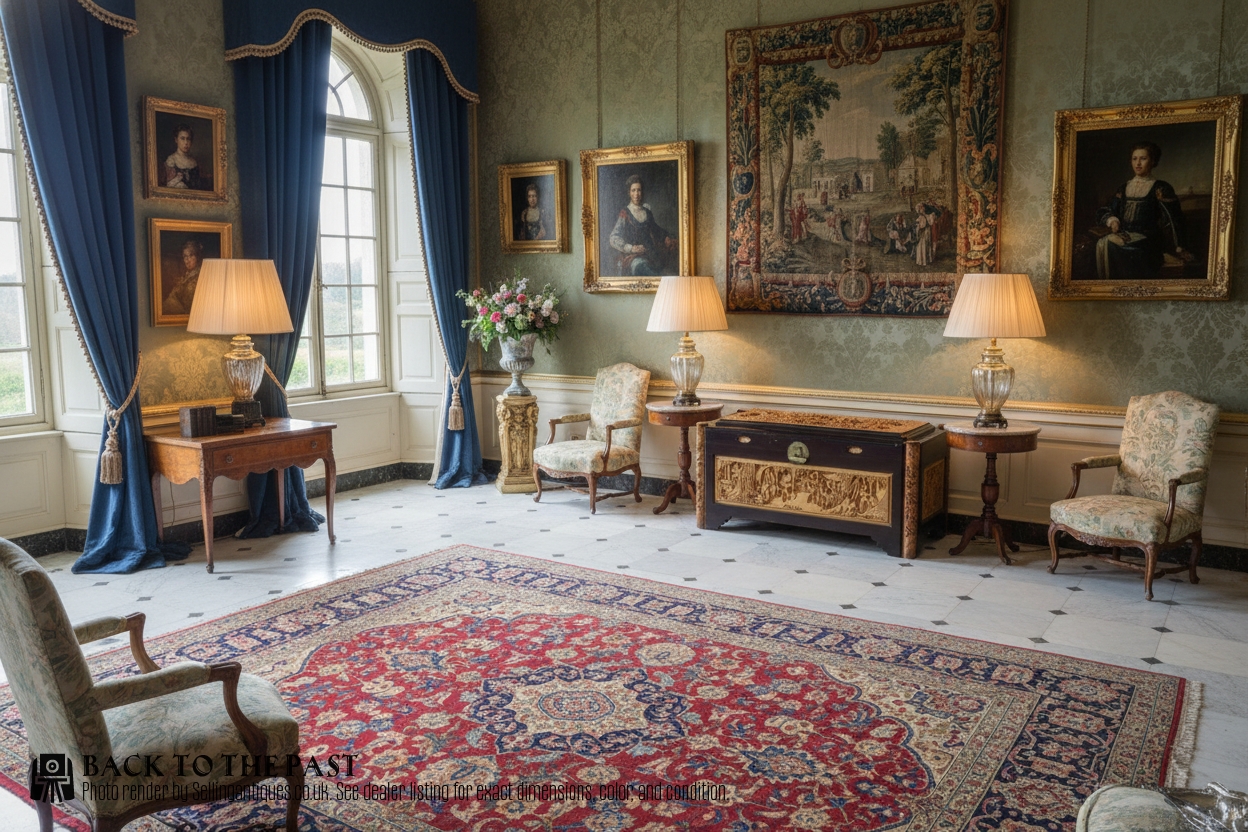
Oriental Carved Blanket Chest
An oriental carved blanket chest serves as a robust storage trunk, most frequently encountered as a camphor wood box dating from the nineteenth century or the early twentieth century. These pieces appear across various regional aesthetics, including Chinese export, Anglo-Indian, and Zanzibar traditions.
The standard form functions as a deep storage chest or blanket box, occasionally mounted upon a stand or utilised as a coffee table. Surviving examples span traditional Chinese regional designs to Zanzibar chests incorporating rosewood and brass furniture.
Makers utilised resilient timbers suited to long-distance maritime trade and domestic linen storage. Buyers find nineteenth-century items alongside Art Deco limed oak hybrids featuring carved camphor wood panels.
Quality and Craftsmanship
The depth, precision, and sharpness of the hand carving separate standard commercial boxes from finer workshop productions. Crisp relief work on the lid and front panels indicates superior artisan skill.
Hardware integration distinguishes better examples, particularly where heavy brass handles, strapping, and decorative brass-covered surfaces are fitted flush to the timber. The weight and selection of dense hardwoods like rosewood or teak also signal superior construction.
Condition of the interior aromatic camphor wood and the integrity of the lid seal influence the overall standard of preservation. Untouched original surfaces hold greater appeal than heavily restored or later altered finishes.
Open an old camphor chest and the lingering scent of nineteenth-century voyages hits you instantly.
The Oriental Carved Blanket Chest Glossary
- Camphor wood
- A fragrant timber native to Asia, prized for furniture making because its natural scent repels moths and insects. It is the most common material found in these chests.
- Zanzibar chest
- A distinct type of heavy hardwood chest originating from trade routes, typically fitted with elaborate brass studding and strapwork. They often incorporate rosewood or teak.
- Chinoiserie
- European imitation or interpretation of Chinese and East Asian artistic traditions, frequently expressed through lacquer and gilt decoration on furniture. This style appears on several nineteenth-century trunks.
- Anglo-Indian
- A descriptive term for items produced in India under British rule, combining local craftsmanship with European forms. These pieces often feature regional timbers and distinct decorative motifs.
Oriental Carved Blanket Chest: Frequently Asked Questions
What are oriental carved blanket chests made of?
These chests are constructed primarily from aromatic camphor wood, alongside regional hardwoods, elm, rosewood, and teak.
Additional materials include brass for corner bindings, hinges, and decorative studs, as well as lacquer and gilt finishes.
How were these chests originally used?
They functioned primarily as secure storage trunks for blankets, textiles, and valuable garments during domestic use or maritime travel.
The natural scent of the camphor wood protected stored woollens and linens from insect damage.
How do I date a camphor wood chest?
Dating relies on stylistic clues, construction methods, and materials, with pieces on this page spanning the nineteenth century up to the 1930s.
Earlier nineteenth-century examples often display heavy brass-bound joinery and traditional Chinese export or Zanzibar styling, while 1920s and 1930s pieces can incorporate Art Deco influences.
Can I use a blanket chest as a coffee table?
Yes, many owners adapt these sturdy chests into low coffee tables due to their flat lids and substantial proportions.
The flat surfaces and heavy timber construction make them practical for everyday living spaces.