
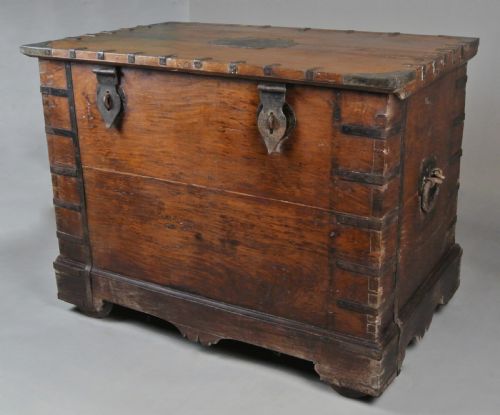
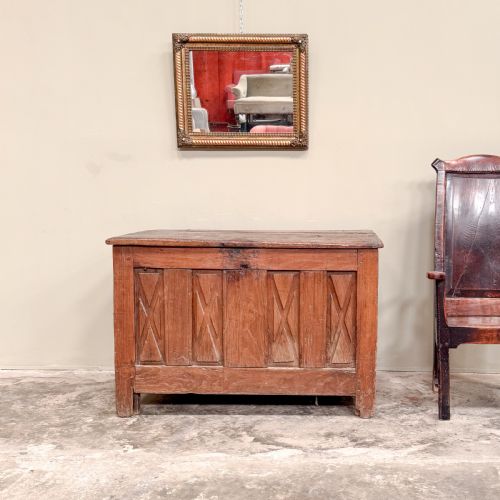
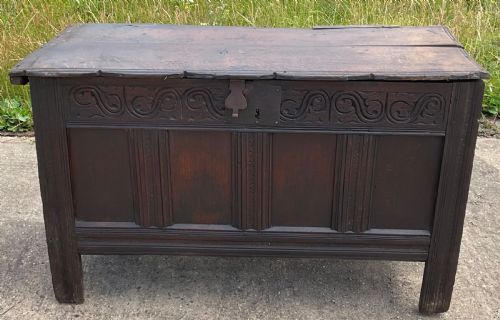
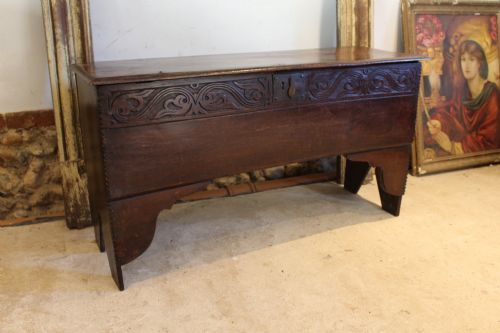
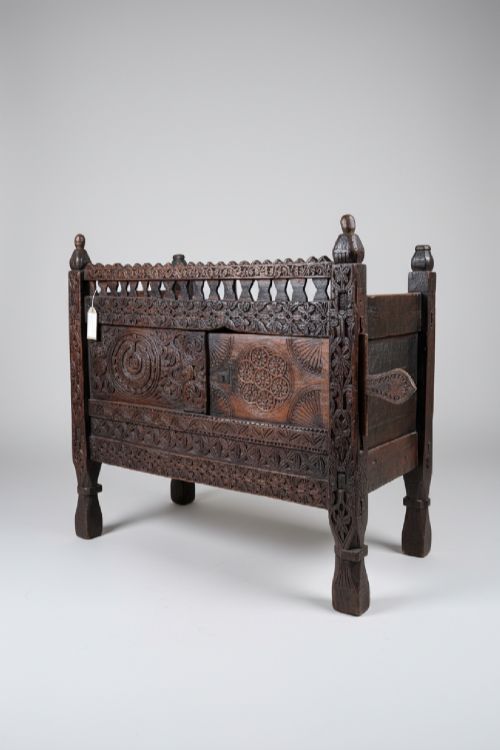


Carved Timber Storage Trunk
A carved timber storage trunk offers robust utility and deep historical character, holding household linens and valuables safely for centuries.
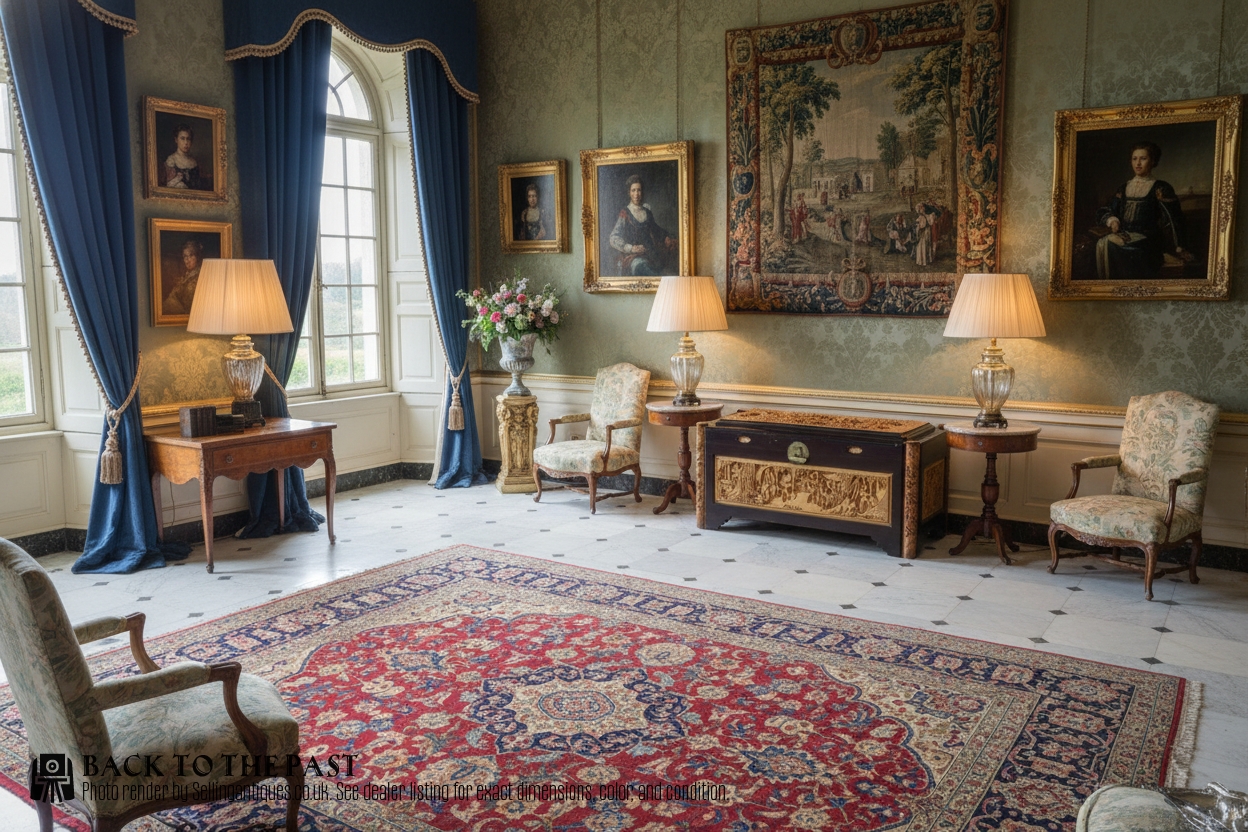
Carved Timber Storage Trunk
A carved timber storage trunk is a heavy utility chest built to hold linens, garments, and valuables in domestic spaces. These pieces span periods from the sixteenth century through the early twentieth century, originating from Welsh, English, French, Spanish, Italian, Dutch, Indian, and Chinese workshops.
The most common examples encountered on this page are seventeenth-century joined oak coffers and nineteenth-century camphor wood or teak trunks. Buyers also find regional forms such as Welsh vernacular blanket chests, French provincial coffers, and Anglo-Indian dowry chests.
Makers constructed these storage pieces to endure generations of domestic use, utilising sturdy timber frames and heavy lids. Their primary function remains unchanged, serving today as functional furniture that anchors a room while storing blankets or household goods.
How they were made
Carpenters and joiners built these pieces primarily from solid oak, teak, camphor wood, pine, walnut, elm, and cedarwood. Workshops reinforced heavy structures using iron or brass hinges, straps, and corner mounts to secure the joints.
Craftspeople shaped the timber surfaces using hand-carved panels, geometric mouldings, and incised decoration. Regional styles dictated the construction methods, from six-plank vernacular joining to elaborate panelled framing and intricate oriental relief carving.
Camphor wood trunks smell faintly of distant spice routes, holding decades of quiet history inside their heavy wooden walls.
What varies in quality
The grade of timber and the depth of the hand-carving define the upper tier of these pieces. Dense hardwoods like teak, oak, and cedarwood display crisper chisel work and greater structural integrity than softer pine or secondary woods.
Original iron or brass hardware and untouched surface patination elevate an example above heavily restored items. The precision of the joinery and the survival of primary panels intact tell the story of the maker's original skill.
The Carved Timber Storage Trunk Glossary
- Coffer
- A heavy wooden chest traditionally used for storing valuables or documents. These pieces often feature hinged lids and sturdy boarded or panelled construction.
- Dowry chest
- A storage trunk prepared for a bride to hold household linens and personal possessions. These objects frequently display regional decorative carving or specific symbolic motifs.
- Joined oak
- A method of furniture construction utilising mortise and tenon joints secured with wooden pegs. This technique defined seventeenth-century British cabinet making.
- Cassone
- A large Italian chest intended for luxury storage during the Renaissance and later periods. They often incorporate carved or painted wooden panels.
- Six-plank
- A simple construction method utilising six boards joined at the edges to form a box. Welsh vernacular makers frequently employed this technique for early coffers.
Carved Timber Storage Trunk: Frequently Asked Questions
What were carved timber storage trunks used for originally?
These trunks stored heavy textiles, woollen blankets, clothing, and family valuables in domestic chambers. Their robust construction protected contents from dampness and pests.
Wealthy households utilised them for travelling, while rural families kept them stationary as central storage furniture in the main room.
How do I clean and care for an antique timber chest?
Maintain the timber by applying a microcrystalline wax periodically to nourish the dry surface. Avoid placing the trunk near direct heat sources or strong sunlight.
Dust the carved crevices gently with a soft brush and keep the interior clean without using harsh liquid polishes.
How can I tell a seventeenth-century coffer from a later piece?
Examine the timber joints for hand-cut mortise and tenon construction secured with wooden pegs. Seventeenth-century surfaces exhibit tool marks and natural oxidation absent in modern reproductions.
The board thicknesses and structural wear patterns provide physical evidence of age.
Where should I place a large storage trunk in my home?
Position the chest at the foot of a bed to hold spare bedding and cushions. They also function well as coffee tables in living spaces or entryway seating.
Ensure adequate clearance around the heavy lid so it opens safely without hitting walls.