





Chinese Relief Carved Trunk
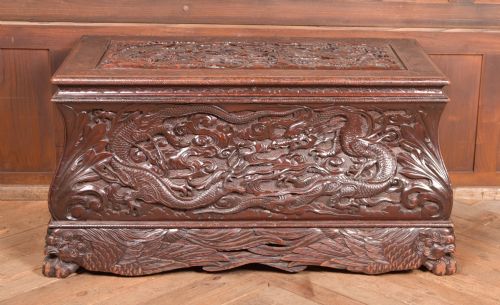
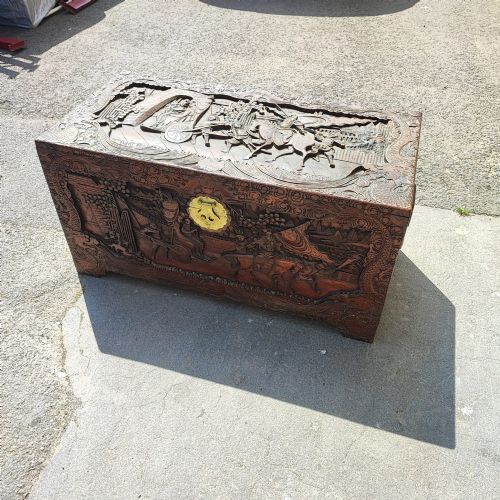
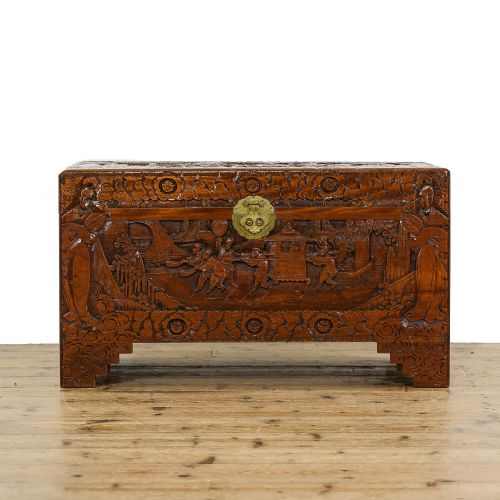
A Chinese relief carved trunk brings rich texture and practical storage into a room, combining deep carving with aromatic camphor wood.
Chinese Relief Carved Trunk
A Chinese relief carved trunk serves as a substantial storage chest, often functioning as a blanket box, luggage chest, or cabinet on chest. These pieces primarily date from the nineteenth century and the early decades of the twentieth century, including the 1900s, 1920s, and 1930s.
The form is heavily rooted in traditional Chinese craftsmanship and Chinese export styles. Buyers most commonly encounter camphor wood chests and storage boxes featuring deep relief carving across the exterior panels.
How they were made
Makers constructed these trunks primarily using solid timber and aromatic camphor wood, which naturally repelled insects and protected stored textiles. Skilled artisans carved intricate scenes and motifs directly into the wood in deep relief, creating strong shadow and dimension.
Some examples incorporate brass fittings, hinges, and corner brackets to reinforce the structure and protect the edges. Surface finishes vary from natural polished wood to lacquered wood, sometimes accented with gilt details.
Chinese Relief Carved Trunk Retail Price Guide 2026
Typical asking prices for chinese relief carved trunk among the pieces listed under this phrase on Sellingantiques today, from the lower quarter to the upper quarter. They describe what is for sale here now, not the wider market.
What varies in quality
The depth, crispness, and complexity of the relief carving separate standard boxes from superior examples. Skilled carving shows clean undercutting and well-defined figurative or botanical subjects rather than shallow, hasty incisions.
The choice of material and stability of the timber also dictate worth. Dense, well-seasoned camphor wood with strong figuring and intact brass hardware represents the higher end of the range.
The Chinese Relief Carved Trunk Glossary
- Camphor wood
- A fragrant timber native to Asia, prized for its insect-repellent properties and stability in furniture making. It forms the primary material for the majority of these storage chests.
- Relief carving
- A sculptural technique where figures and patterns project from a background plane. In these pieces, the carver removes surrounding wood to create deep pictorial scenes.
- Chinese export
- A designation for goods manufactured in China specifically for Western markets. These items often blend traditional domestic forms with motifs appealing to European and American buyers.
- Lacquered wood
- Timber coated with successive layers of natural resin varnish to produce a durable and glossy surface. This finish protects the underlying wood and provides a smooth ground for decoration.
Chinese Relief Carved Trunk: Frequently Asked Questions
What were Chinese trunks used for originally?
These chests served primarily for storing garments, blankets, and valuable textiles. The natural aroma of the camphor wood helped keep moths and dampness away from delicate fabrics.
Merchants and travellers also utilised sturdy trunks as luggage chests for long journeys. Their robust construction and secure brass hardware made them suitable for protecting personal belongings.
How do I date a Chinese carved trunk?
Dating relies on examining the timber, construction methods, and stylistic cues present in the carving. Pieces from the nineteenth century often display heavier wear and different patination compared to those from the 1920s or 1930s.
Hardware styles and the specific depth of the relief carving also help establish the era of manufacture. Early twentieth-century examples frequently feature crisper detailing and standardised brass fittings.
How do I care for camphor wood?
Keep the wood away from direct heat sources and strong sunlight to prevent the timber from drying out and splitting. Maintain a stable room temperature to protect the natural finish and the integrity of the joints.
Dust the carved surfaces regularly with a soft, dry cloth. Avoid harsh chemical polishes that can build up within the recessed areas of the relief carving.
Where should I place a trunk in my home?
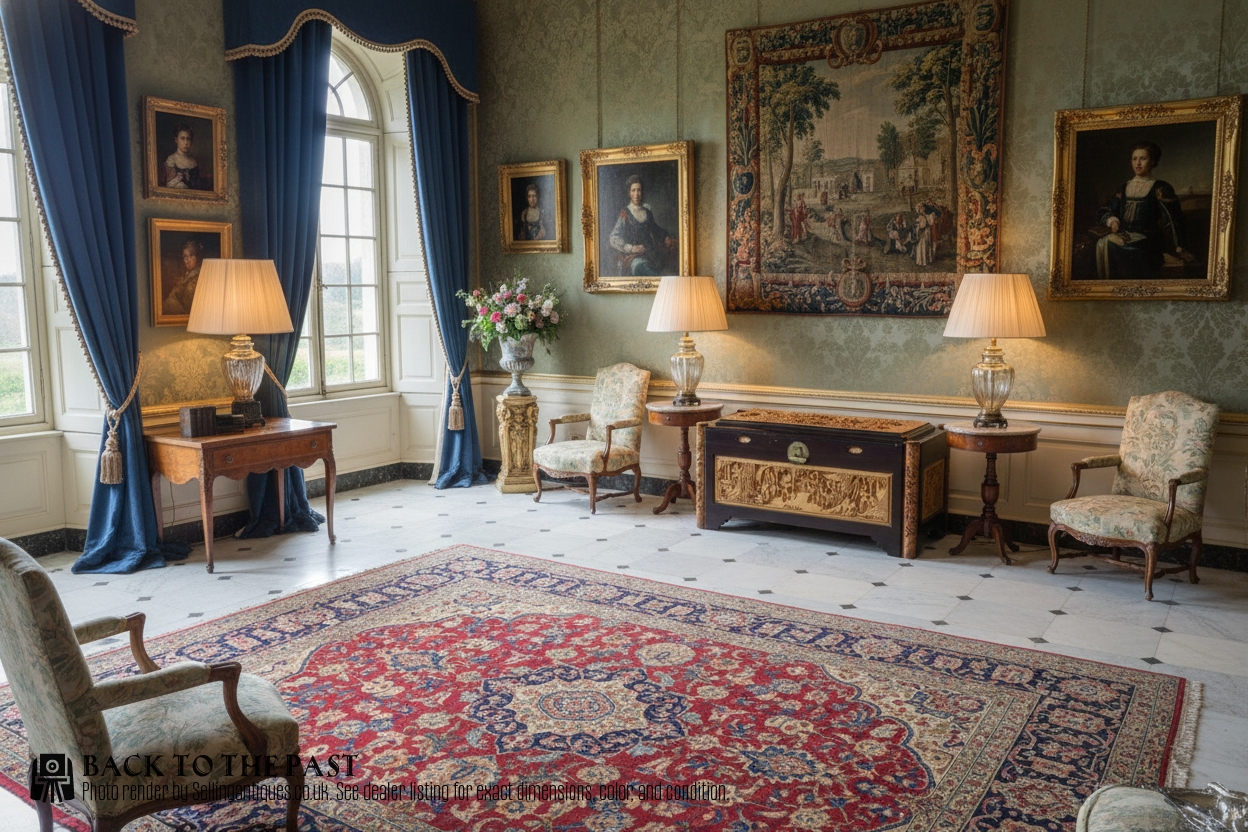
A storage chest works effectively at the foot of a bed for holding spare linen and blankets. The flat top also allows the piece to function as a low table or window seat.
Alternatively, position the trunk in a hallway or living room to provide concealed storage while introducing texture to the interior. The decorative carved panels make these pieces suitable as standalone focal points.