
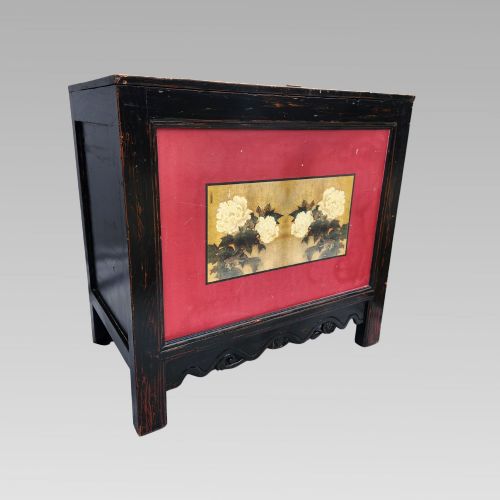


Oriental Blanket Chest
An oriental blanket chest provides deep storage in camphor wood, lacquer, or leather, bringing utility and global trade history into a room.
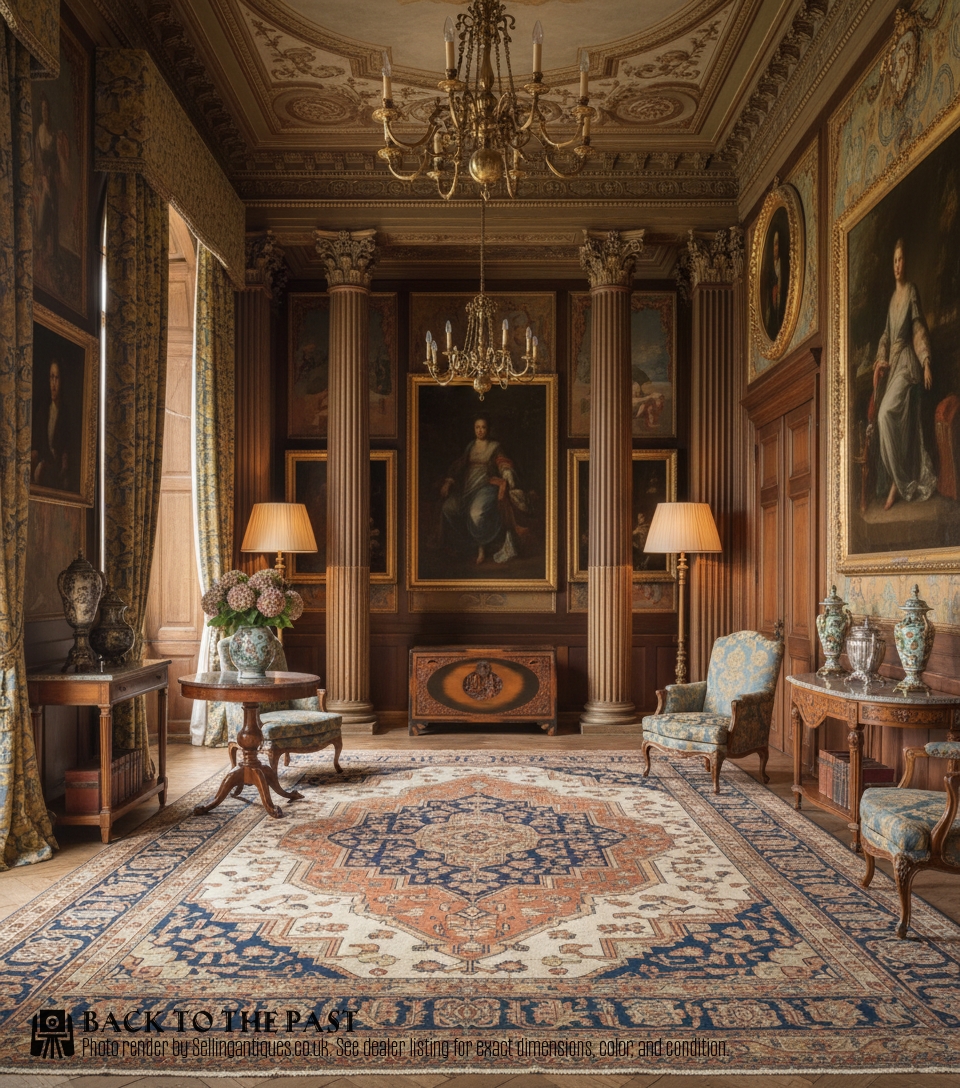
Oriental Blanket Chest
When searching for an oriental blanket chest, buyers encounter substantial storage furniture designed for travel or domestic organisation across Asian and export workshops. The pieces span the eighteenth century to the mid-twentieth century, appearing as camphor wood trunks, lacquer coffers, and leather-covered luggage.
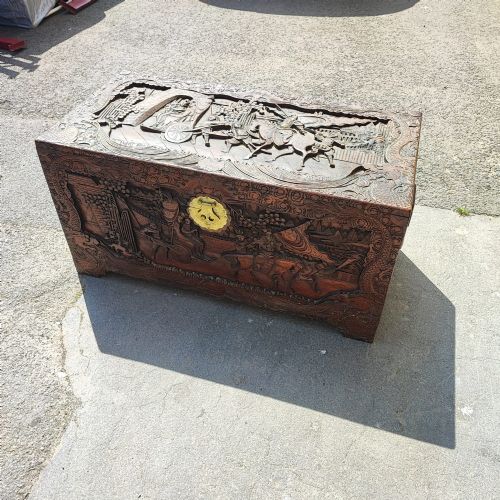
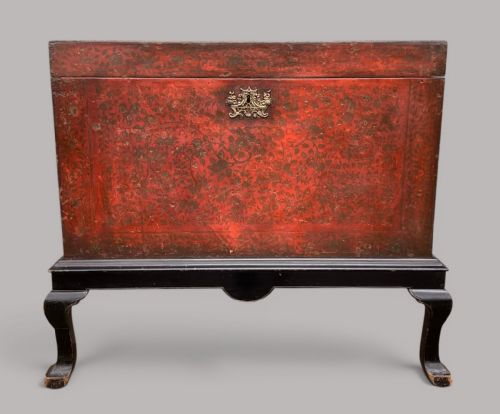
Camphor wood examples dominate the selection, often featuring hand-carved exterior panels depicting landscapes or floral motifs. Lacquered and painted trunks from Chinese export centres or Indian workshops offer alternative aesthetic forms, sometimes raised on dedicated stands.
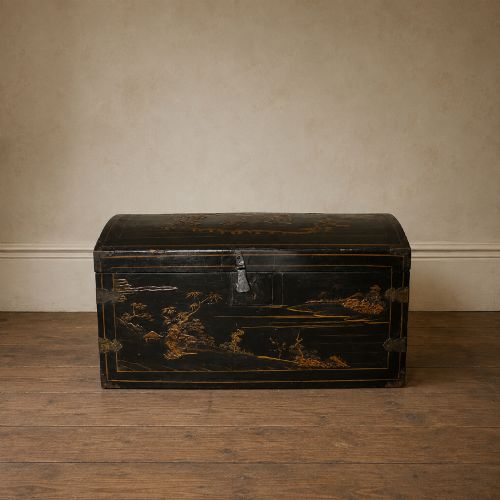
Forms range from plain utilitarian campaign trunks fitted with brass hardware to highly decorative black lacquer chests with gilt ornamentation. Buyers also meet regional variants including Zanzibar chests constructed in rosewood or hardwood with brass studding.
Materials and construction methods
Construction relies heavily on aromatic camphor wood, selected for its natural insect-repellent properties, alongside teak, rosewood, and general hardwoods. Carpenters joined panels using traditional timber techniques, housing heavy lids to seal contents securely against dust and moisture.
Surface finishes vary from plain polished timber to layered black or red lacquer applied with polychrome or gilt decoration. Metalwork forms an integral part of the fabrication, with brass corner brackets, strapwork, and substantial locks protecting edges and reinforcing joints for travel.
Opening an antique camphor chest often releases a sharp, familiar aroma that has survived undisturbed in the wood for over a century.
Assessing quality in historical trunks
Quality rests upon the crispness of the hand-carved relief work and the integrity of the timber panels. Superior camphor wood chests display deep, detailed carving across all visible sides rather than shallow surface stamping.
Hardware contributes significantly to the grade of a piece, with original heavy-gauge brass mounts and functional lock plates indicating higher workshop standards. The survival of undisturbed lacquer, gilt decoration, or painted leather surfaces further distinguishes better examples from heavily restored ones.
The Oriental Blanket Chest Glossary
- Camphor wood
- A fragrant timber native to Asia, traditionally utilised for storage chests because its natural scent protects textiles from moths and insects.
- China Trade
- Goods manufactured in China specifically for export to Western markets during the eighteenth and nineteenth centuries, blending Eastern materials with European taste.
- Zanzibar chest
- A heavy hardwood storage chest originating from or influenced by trade in East Africa and India, characterised by brass studding and strapwork.
- Cofer
- A traditional term for a strongbox or large chest used for storing valuables, clothing, or documents.
- Campaign trunk
- Portable furniture designed for military officers or travellers, fitted with carrying handles and reinforced corners to withstand frequent transit.
Oriental Blanket Chest: Frequently Asked Questions
How were these chests originally used?
These pieces served primarily for storing garments, blankets, and personal valuables at home or during long maritime journeys.
Trunks reinforced with brass and iron also functioned as luggage for merchants and military officers operating overseas.
Why use camphor wood for storage?
Camphor wood emits a distinct natural fragrance that repels moths and silverfish, making it ideal for protecting woollens and linens.
The stable nature of the timber also helps resist warping in humid climates.
How do I care for a lacquered chest?
Keep lacquered surfaces away from direct sunlight and excessive heat to prevent the finish from drying out or cracking.
Dust gently with a dry, soft cloth and avoid chemical polishes or modern cleaning agents.
What defines a Zanzibar chest?
Zanzibar chests are constructed from dense hardwoods like rosewood or teak and feature elaborate brass strapwork and decorative studding.
They reflect the historical trade routes connecting India, the Middle East, and the East African coast.