
Open Tier Bookcase
An open tier bookcase organises volumes and display pieces across accessible wooden shelves from the Georgian, Victorian and Edwardian eras.
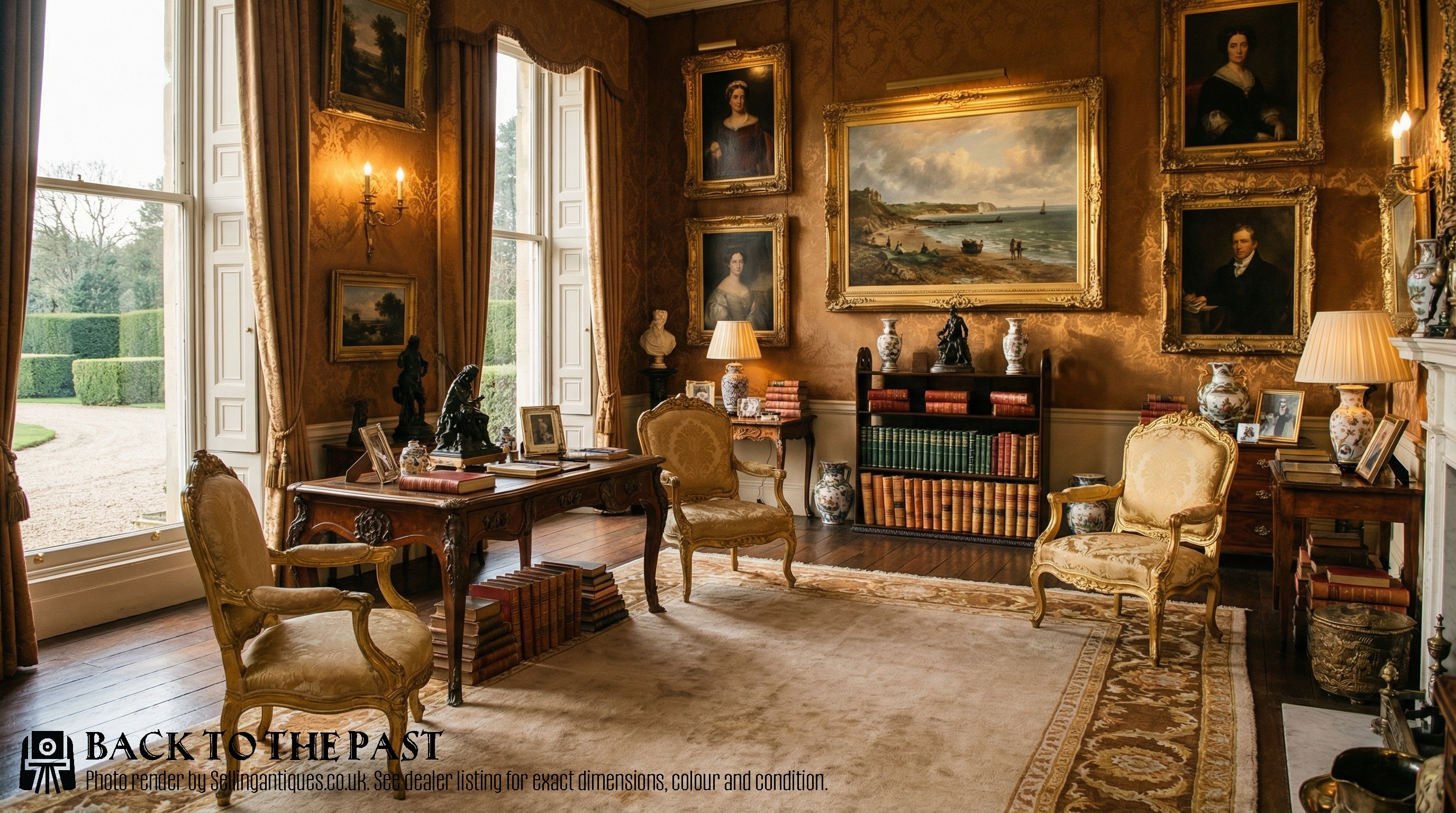
Open Tier Bookcase
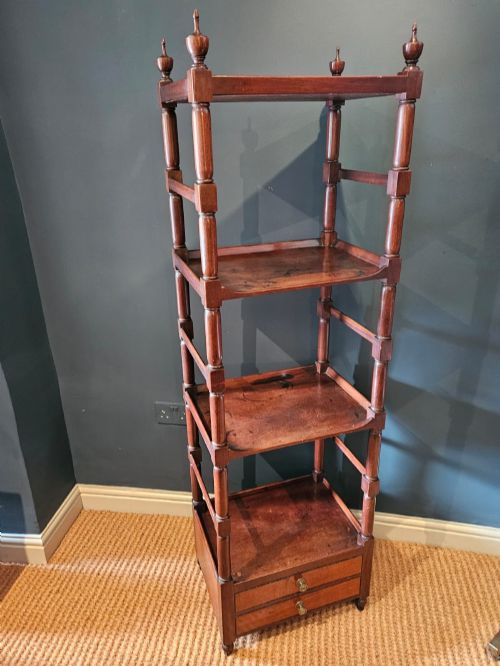
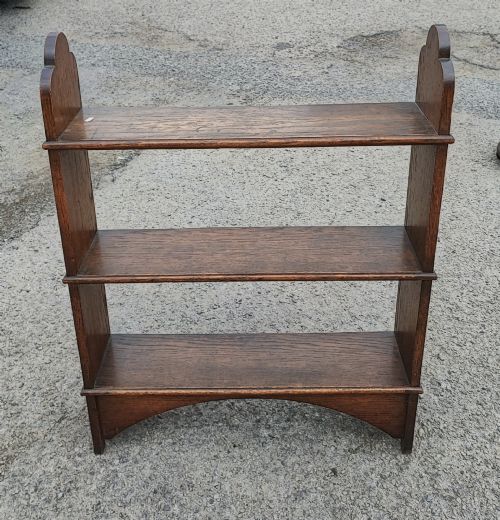
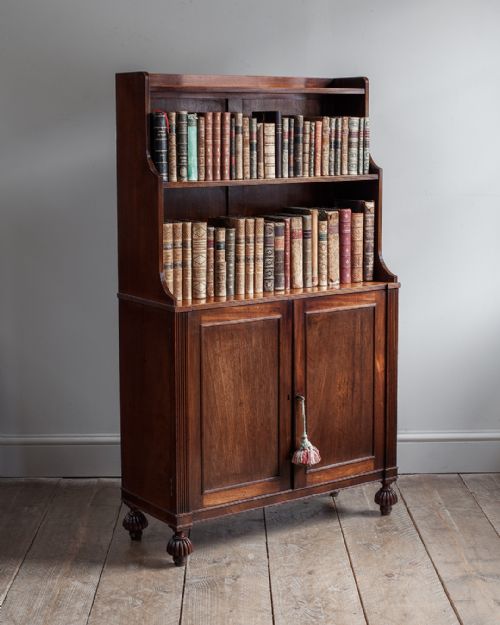
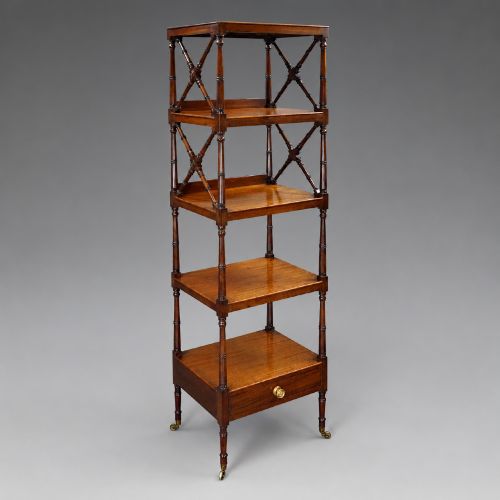
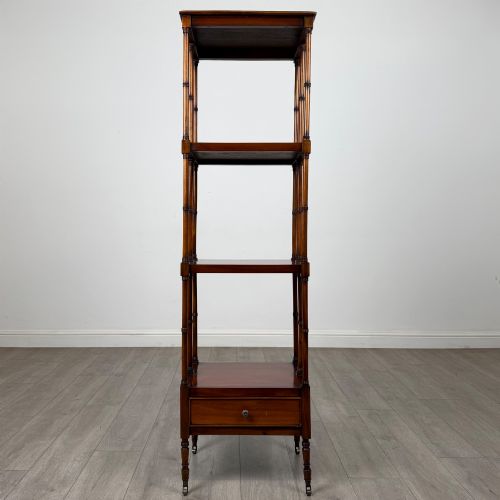
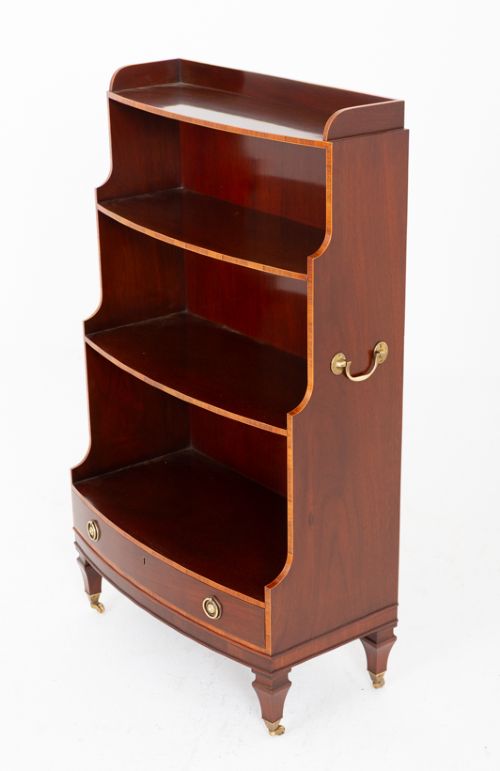
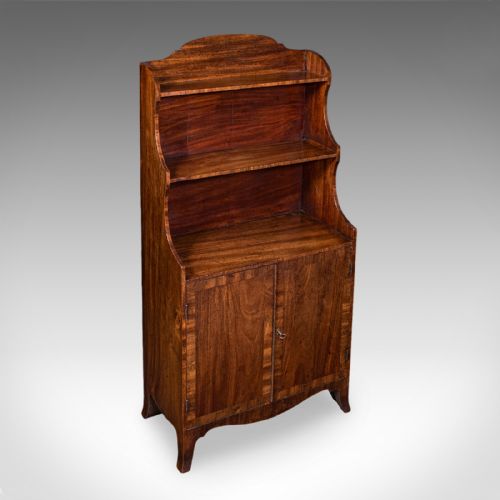
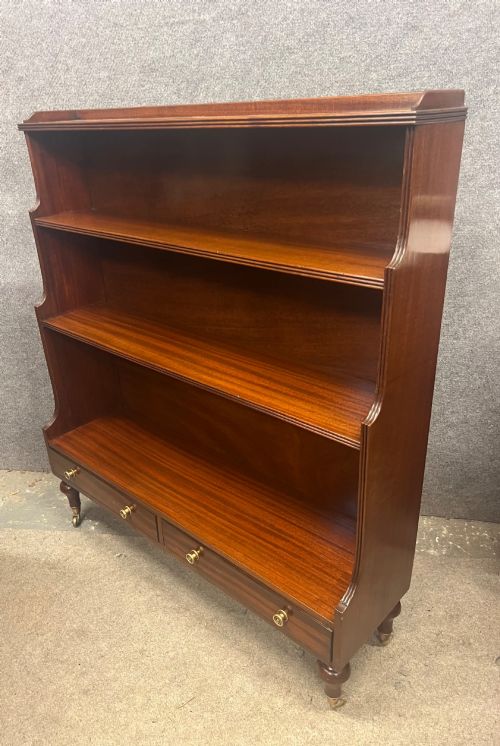
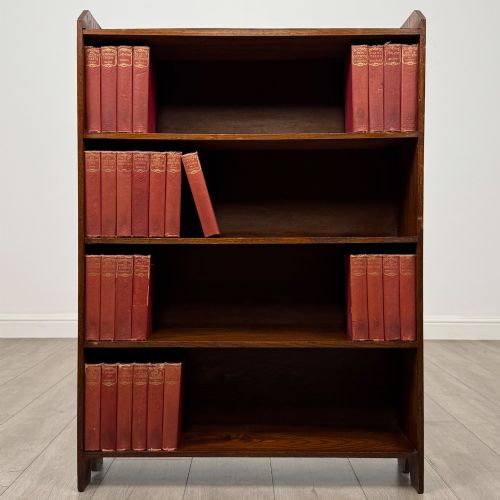
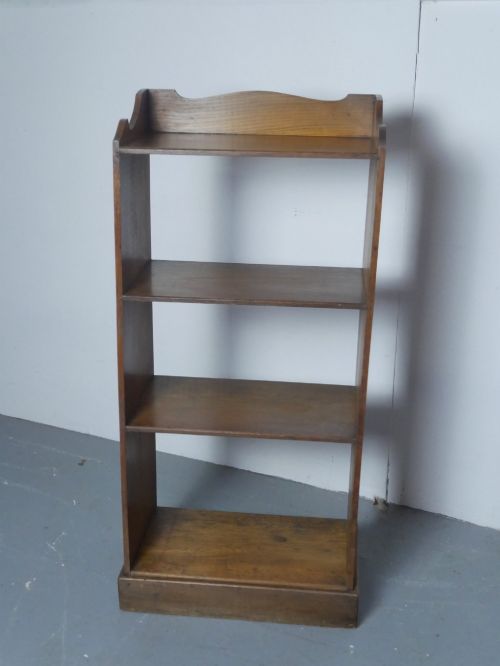
An open tier bookcase encompasses multi-tiered shelving units, whatnots, etageres and wall shelves designed for accessible storage. You will encounter forms ranging from compact two-tier tables to soaring six-tier structures and graduating waterfall bookcases.
The pieces on this page span several centuries, with particular strength in Regency, Victorian and Edwardian examples. Makers constructed these units in oak, mahogany, rosewood and walnut, sometimes incorporating lower cupboards or brass castors.
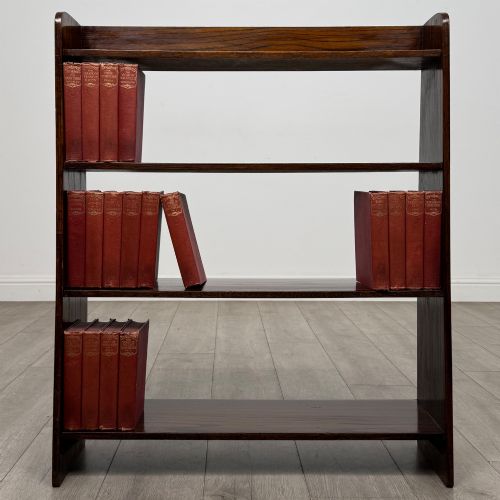
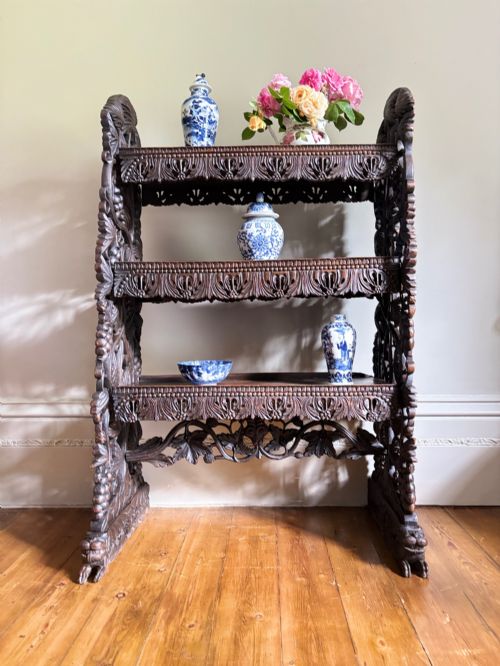
The selection includes specialised variations such as Arts and Crafts oak pieces with pierced carved ends, bamboo display shelves and Anglo-Indian padauk shelves. Buyers choose these designs to display books and decorative objects in sitting rooms and libraries.
Materials and Construction
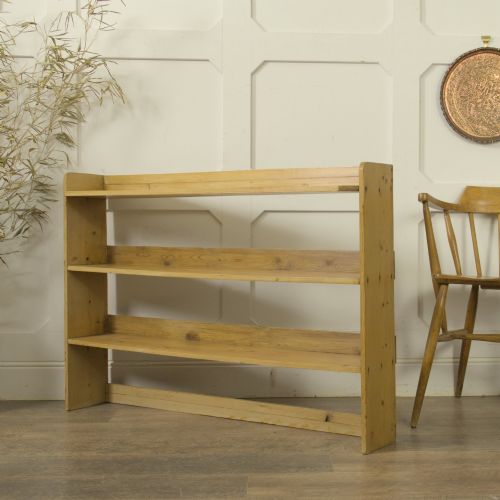
Cabinet makers utilised dense hardwoods including mahogany, rosewood, walnut and oak, alongside softer pine for vernacular shelving units. Finer examples display figured veneers, burr walnut grains and exotic timbers such as padauk.
Structural embellishments involve turned legs, brass mounts, ormolu, gilt metal and inlaid details, whilst certain pieces rest upon brass castors. Shelving configurations range from fixed tiers to adjustable wooden boards supported by side uprights.
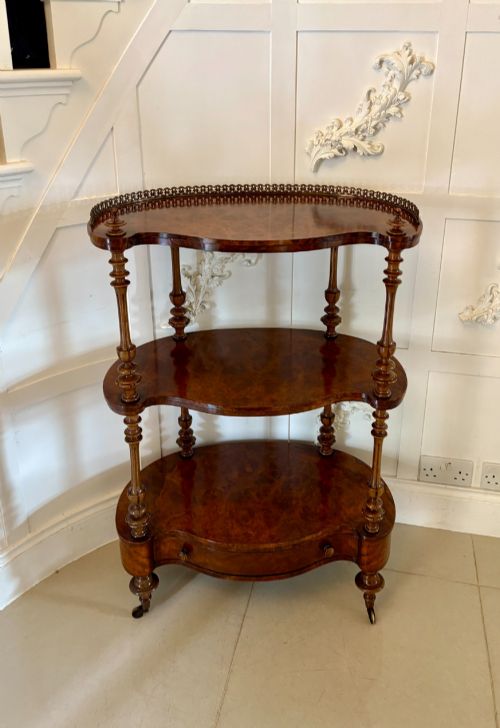
Some Victorian whatnots feature serpentine shapes and gilt mounts, proving that even a stack of shelves likes to dress up for dinner.
Quality and Construction Standards
The distinction between standard utility shelving and finer specimens lies in timber selection and cabinet-making restraint. Superior pieces employ figured veneers, rich burr walnut or substantial solid hardwoods rather than plain secondary woods.
Design sophistication separates basic tiered boards from refined pieces possessing serpentine shapes, graduated waterfall profiles, inlaid stringing or integrated brass hardware. Original surface patination and proportion dictate the standing of an individual bookcase.
Heals·Liberty's Sedley
The Open Tier Bookcase Glossary
- Whatnot
- A movable set of open shelves used for displaying ornaments or books. These pieces typically feature three to six tiers supported by slender uprights.
- Waterfall bookcase
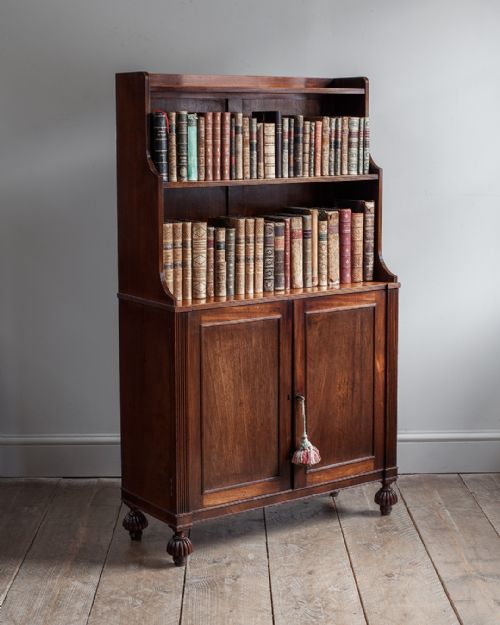
- A set of open shelves that steps back progressively from bottom to top. This graduating profile creates a distinctive cascading silhouette popular in Regency and Victorian rooms.
- Etagere
- A piece of furniture consisting of a set of open shelves for displaying small objects. Originating in France, these lightweight stands often feature turned legs.
- Padauk
- A heavy tropical hardwood prized for its reddish-brown colour and durability. Cabinet makers utilised this timber for export furniture destined for British homes.
- Serpentine
- A gently curving line forming a wave-like shape across the front edge of a shelf or cabinet. This contour adds visual movement to Victorian burr walnut examples.
Open Tier Bookcase: Frequently Asked Questions
What is an open tier bookcase?
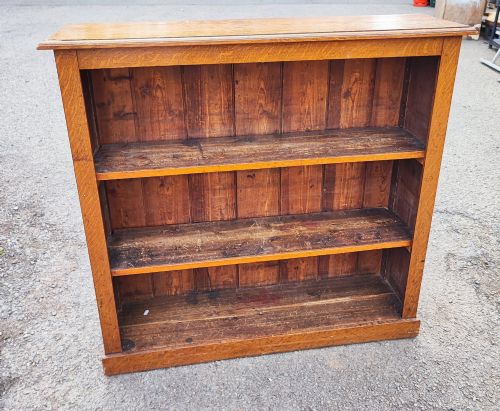
An open tier bookcase is a set of accessible wooden shelves designed for holding books and displaying decorative objects without glazed doors or enclosed sides. These units range from compact table-top Whatnots to tall library shelving.
Craftsmen built these pieces across multiple periods, resulting in diverse forms such as graduating waterfall shelves and multi-tiered etageres.
How do I date a wooden bookcase?
Dating relies upon timber choices, construction techniques and stylistic markers associated with specific periods like the Georgian, Regency or Edwardian eras. Regency pieces often showcase rosewood and mahogany with restrained classical lines, whilst Edwardian versions frequently use oak.
Examine the secondary woods, fixings and edge profiles to establish the period of manufacture alongside listed design attributes.
Where should I place a whatnot?
A whatnot suits corners, alcoves or freestanding positions in sitting rooms and studies where books or ornaments require accessible display. Their open shelves allow light to pass through, making them suitable for smaller rooms.
Ensure the piece rests on a level surface away from direct heat sources to protect the polished timber surfaces.
What is the difference between a bookcase and a whatnot?
A bookcase is primarily constructed for storing volumes vertically, whereas a whatnot traditionally serves as a multi-purpose display stand for ornaments, small ceramics and books. Many whatnots feature graduating tiers supported by delicate turned columns.
In practice, antique listings often group these terms together when describing multi-tiered open shelving units.