

Mahogany Waterfall Shelves
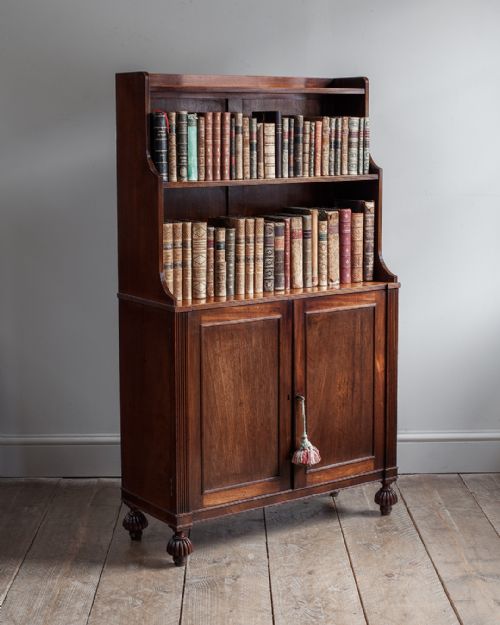
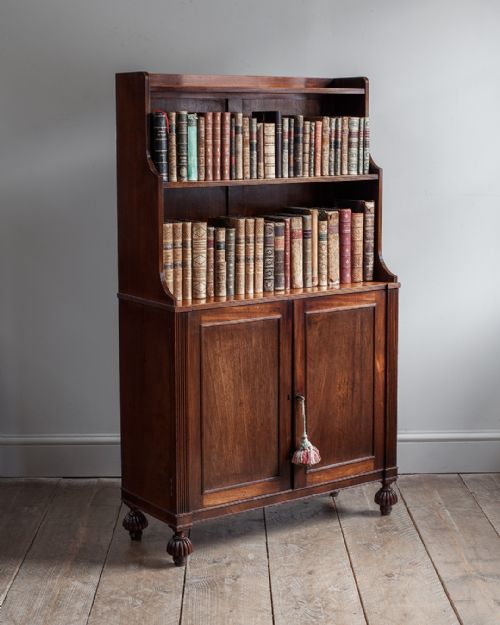
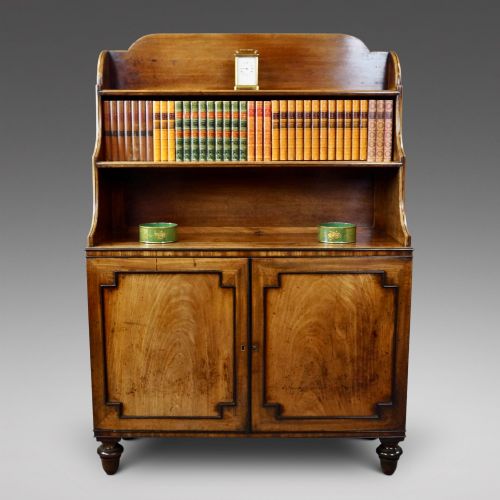
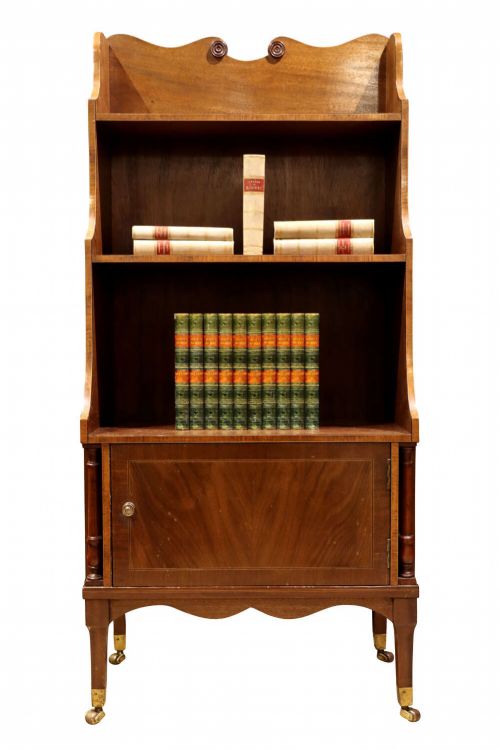
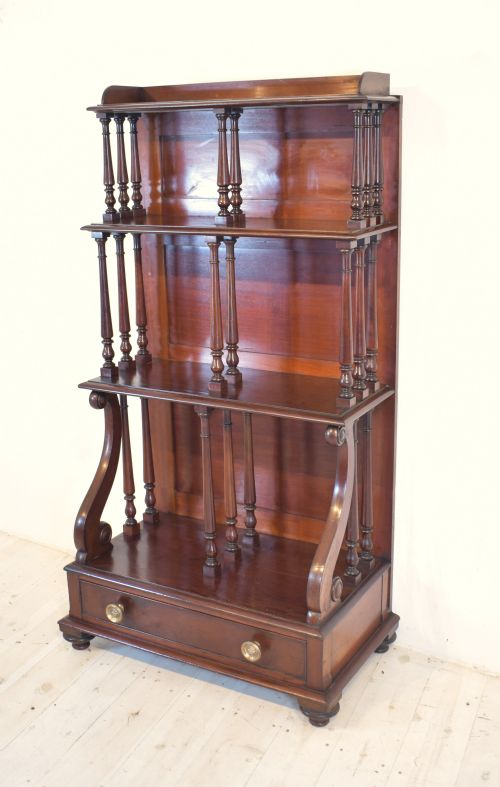
These mahogany waterfall shelves bring graduated tiers of timber together to hold books or display objects with distinct period character.
Mahogany Waterfall Shelves
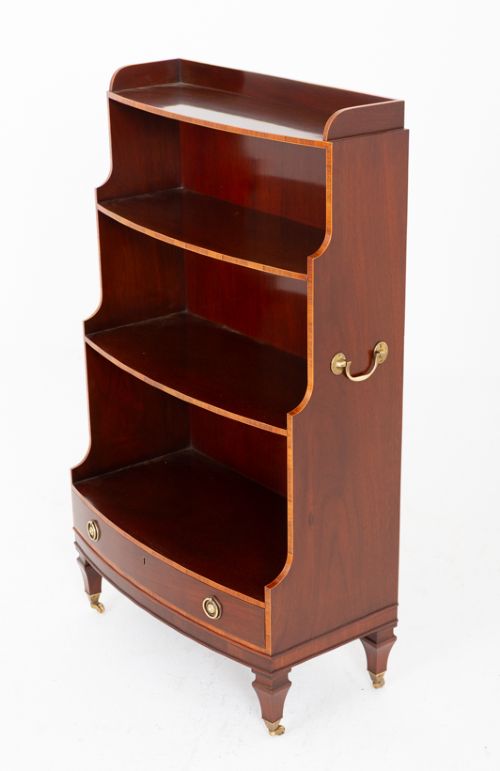
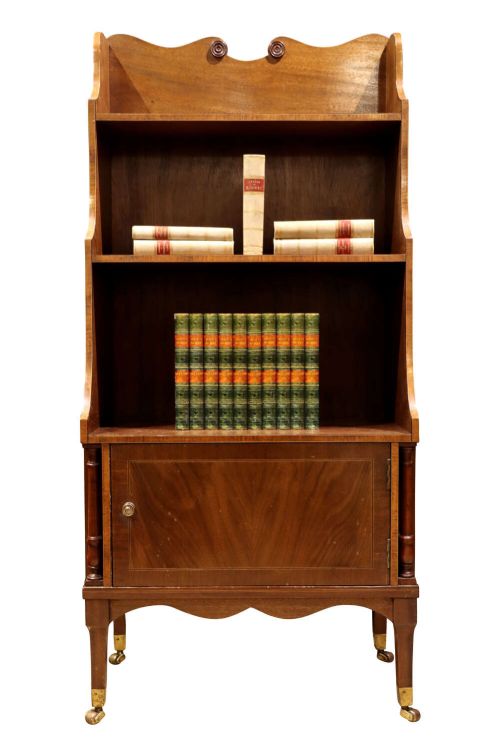
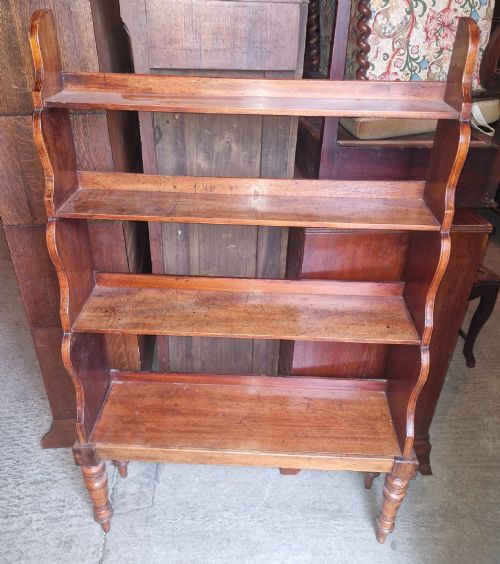
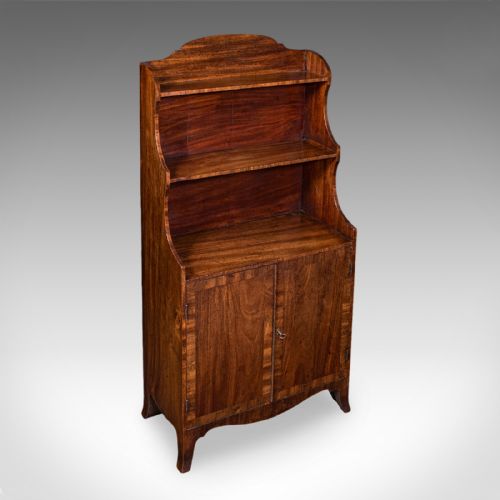
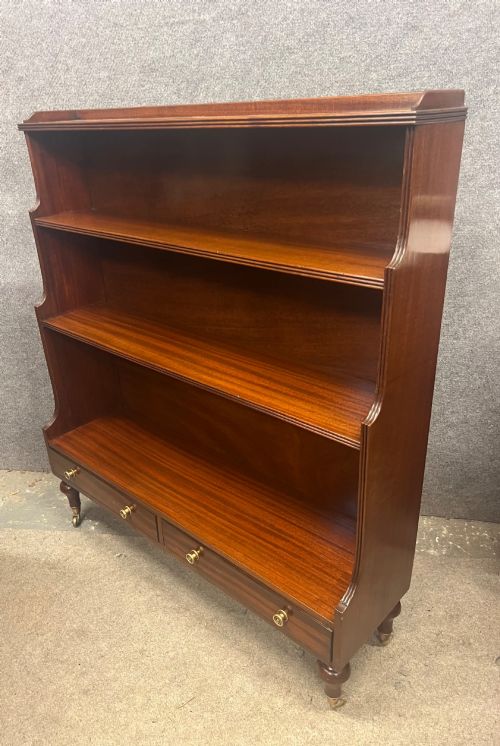
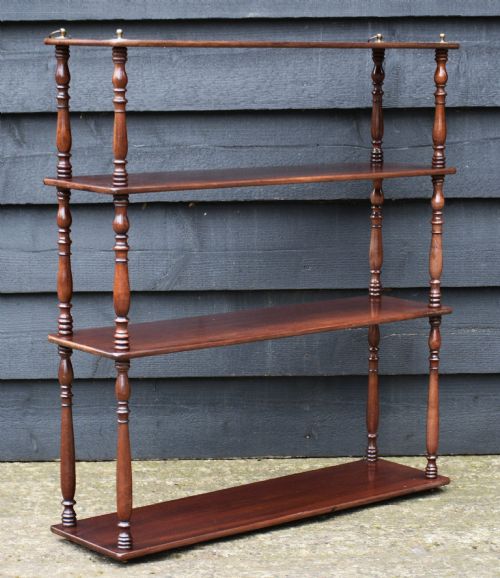
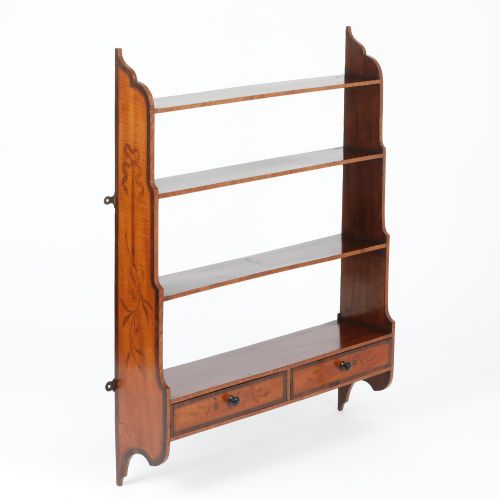
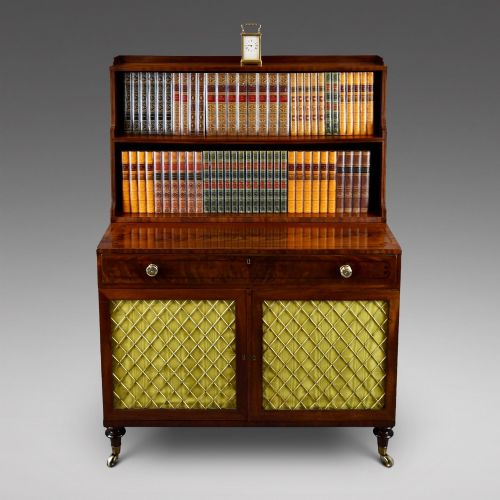
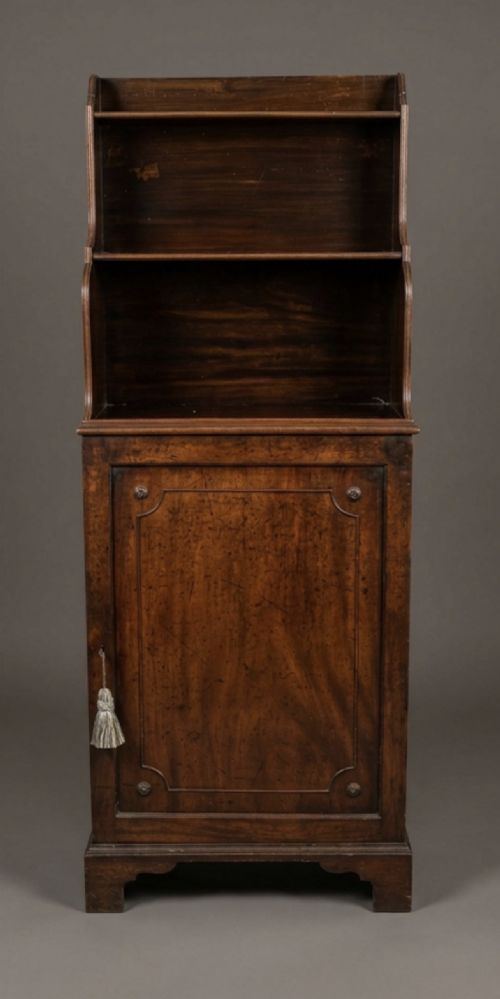
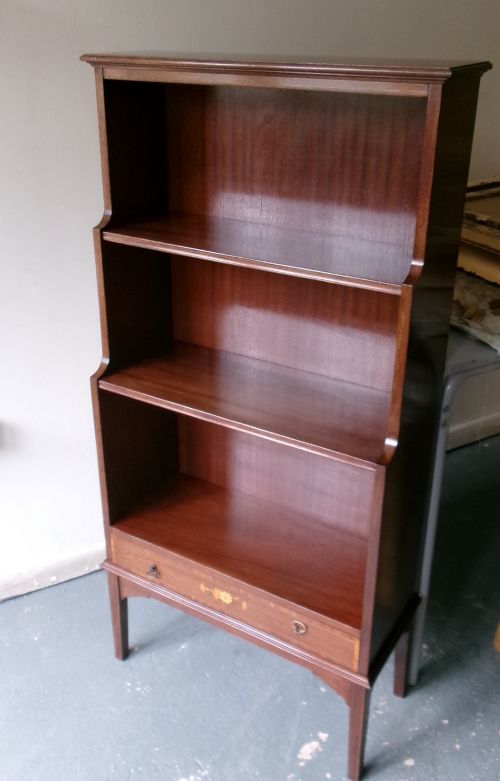
Mahogany waterfall shelves present a stepped profile where each tier recedes from the one below it, creating a distinctive graduated arrangement. These pieces appear in forms ranging from wall-hanging units to substantial freestanding bookcases and cabinets.
The pieces on this page span several eras, with Regency, Georgian, and Victorian examples appearing alongside Edwardian and later revival items. Buyers encounter both open shelving units and designs fitted with lower cupboards or drawers.
Origins vary between freestanding library pieces, petite chiffoniers, and wall-mounted sets meant for display. The common thread remains the stepped mahogany tiers that define the waterfall silhouette.
Materials and construction
Makers built these pieces primarily from solid mahogany and flame mahogany veneers, often incorporating contrasting timbers such as satinwood, boxwood, and inlay wood for stringing and cross banding.
Structural details include brass castors on floor-standing cabinet variants and secure mounting points on wall-hanging versions. Joinery relies on traditional cabinet-making methods suited to graduated shelf supports and upright side panels.
Listings feature mahogany waterfall shelves spanning the Georgian, Regency, Victorian, and Edwardian periods alongside twentieth-century revivals.
Judging quality in mahogany waterfall pieces
The distinction between tiers rests upon the choice of timber figure, particularly the richness of flame mahogany and the precision of boxwood stringing or satinwood details. Superior examples display careful grain matching across the graduated shelves.
Proportion and stability dictate the standing of a piece, whether it is a small wall-hanging set or a large library bookcase. Finer instances show restraint in inlay and solid structural integrity within the stepped uprights.
Shapland and Petter
The Mahogany Waterfall Shelves Glossary
- Waterfall
- A stepped furniture design where successive tiers recede from the bottom to the top. This profile became popular during the Georgian and Regency periods for bookshelves and display units.
- Cross banding
- A narrow strip of veneer laid across the grain of the primary timber to form a decorative border. It frequently frames the edges of shelves or drawer fronts on better pieces.
- Stringing
- Fine inlay lines of a contrasting wood, such as boxwood, used to outline panels and tiers. This technique highlights the geometric form of the shelving.
- Chiffonier
- A low cabinet with shelves or a superstructure above, serving storage and display functions. These often appear in nineteenth-century examples alongside open bookcases.
- Flame mahogany
- A highly figured wood grain resembling flickering flames, prized for its dynamic pattern. Cabinet-makers reserved this veneer for prominent surfaces like door panels and top tiers.
Mahogany Waterfall Shelves: Frequently Asked Questions
Where should I place wall hanging shelves?
Wall-hanging shelves require secure fixings into structural wall studs or masonry to support the weight of the mahogany timber and books.
They suit study spaces, hallways, or living rooms where floor space is limited.
What is the difference between open and closed versions?
Open waterfall shelves provide immediate access to books and display items across all graduated tiers.
Versions with cupboards or drawers below offer enclosed storage for smaller items while maintaining the stepped display space above.
How do I care for mahogany surfaces?
Mahogany responds well to regular dusting with a soft, dry cloth and occasional applications of traditional beeswax.
Avoid placing timber furniture in direct sunlight or near heat sources to prevent the veneer from drying.
How can I tell a Georgian piece from a Victorian one?
Georgian and Regency pieces often exhibit simpler, sharper architectural lines with contrasting stringing and solid timber construction.
Victorian and later revival examples frequently incorporate heavier proportions, elaborate inlays, or fitted brass castors.