
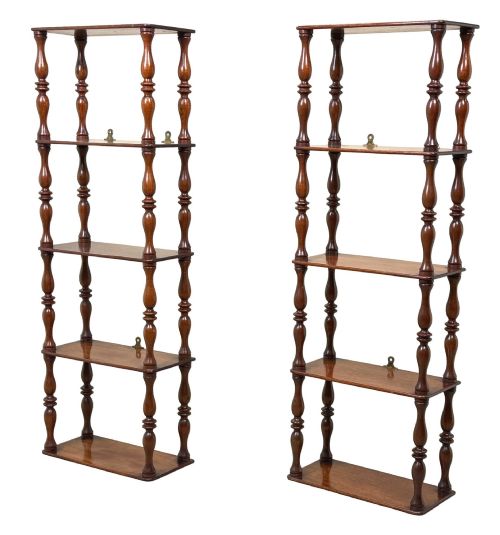
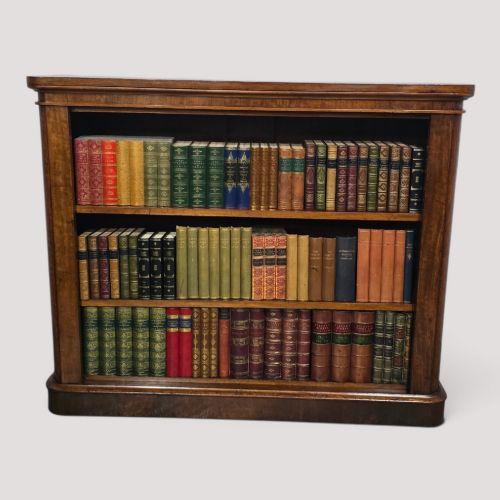
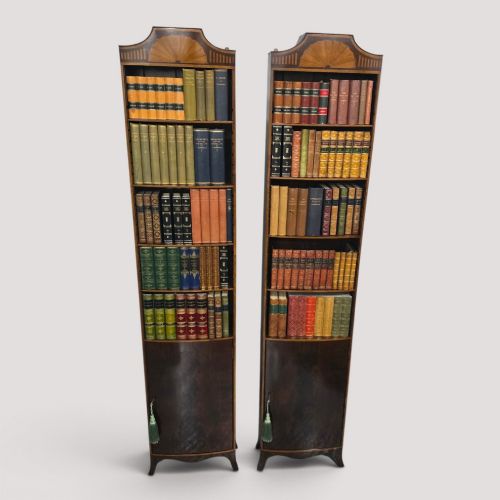
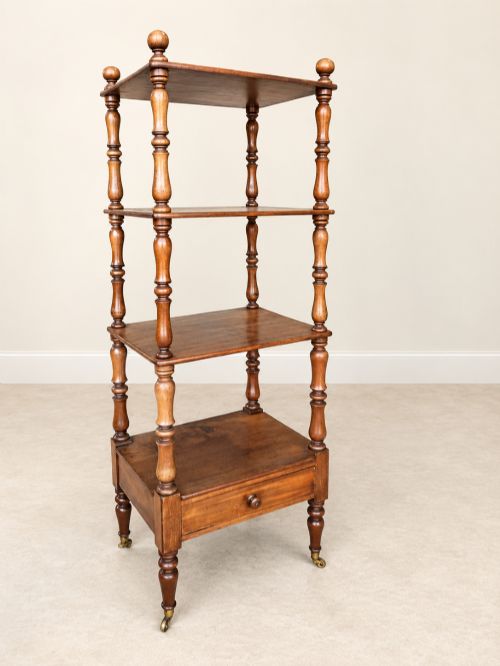
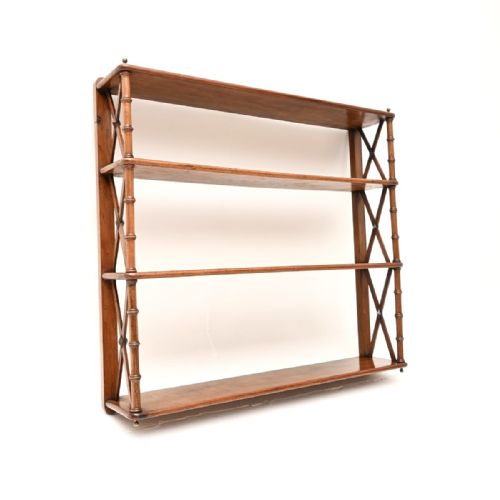
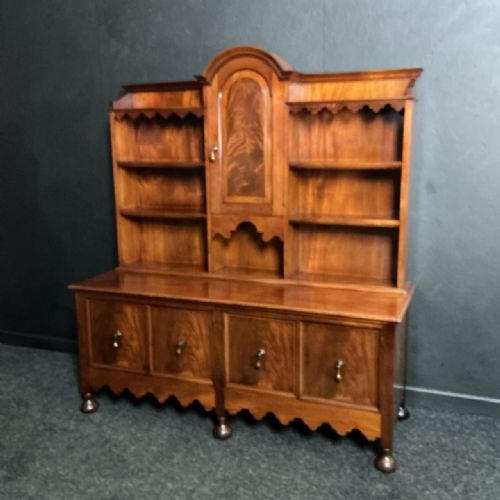
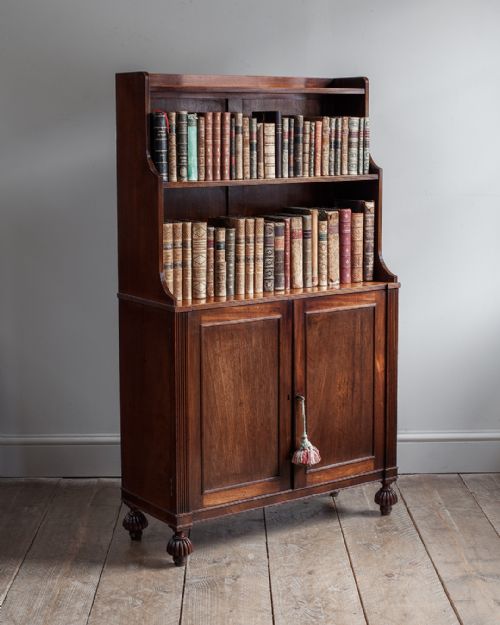
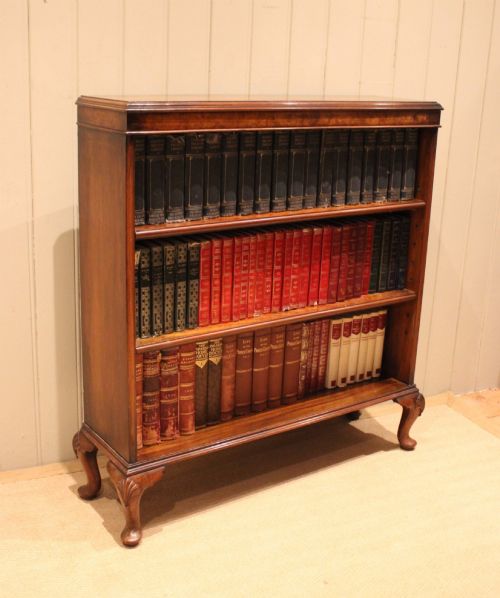
Brown Wooden Open Shelf
A brown wooden open shelf brings practical display and warm timber tones to a room, spanning periods from the Georgian era through to Art Deco.
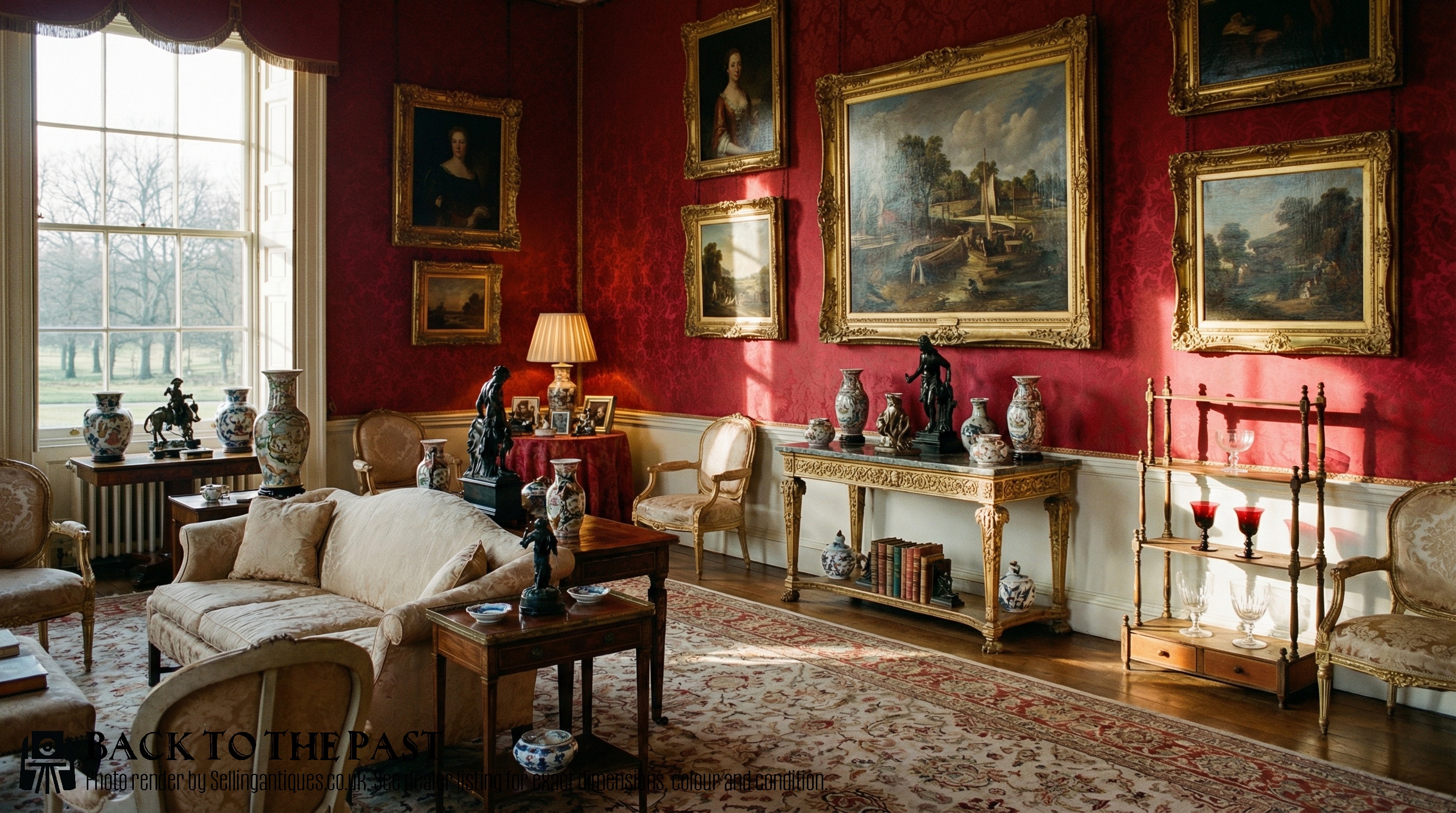
Brown Wooden Open Shelf
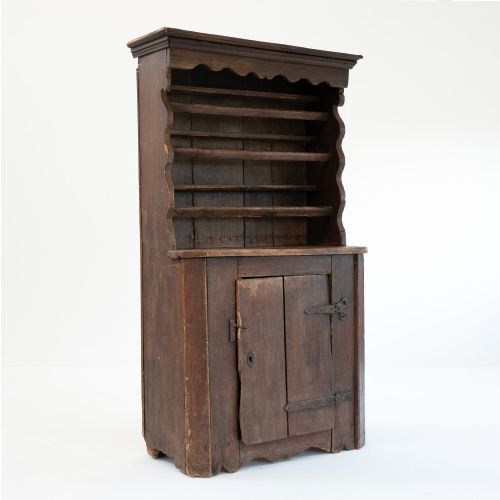
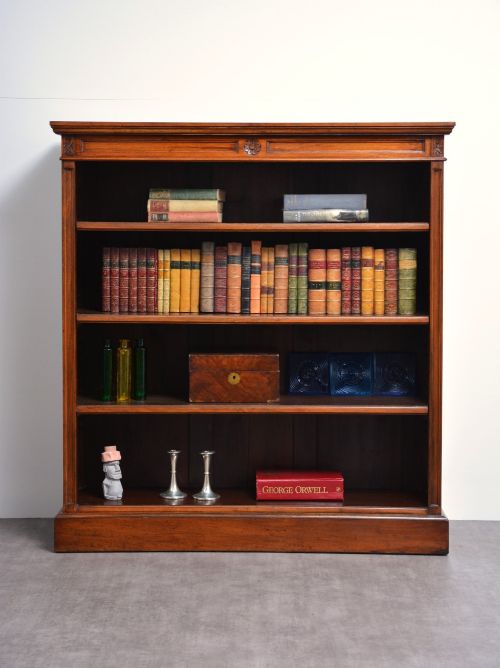
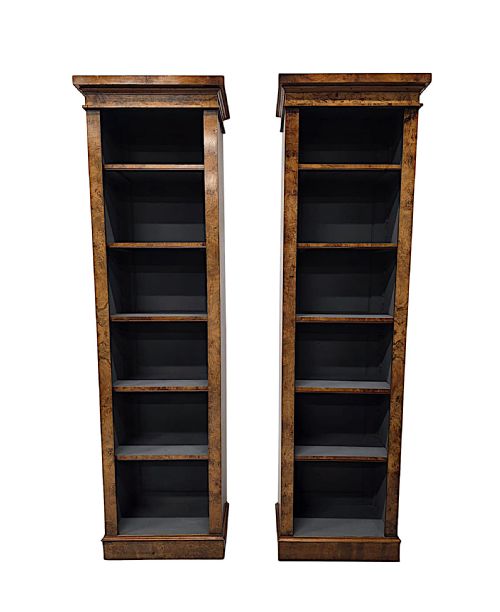
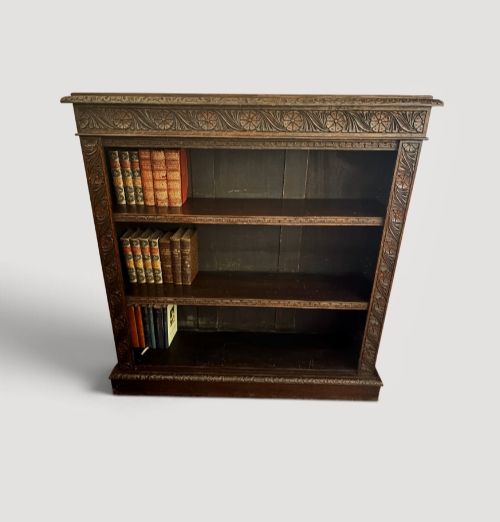
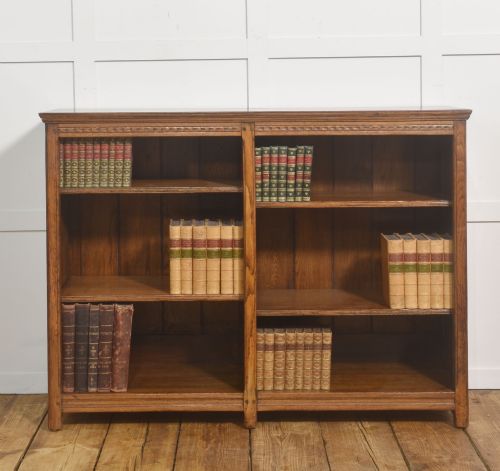
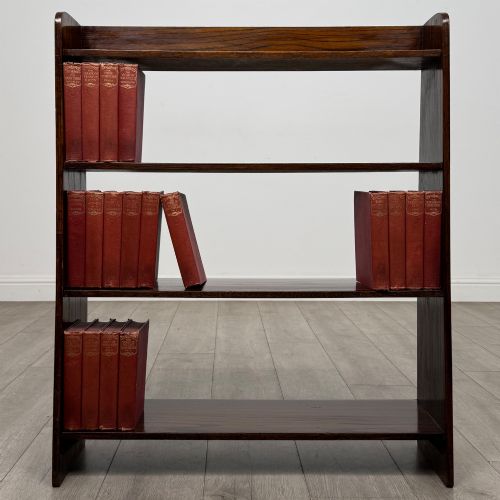
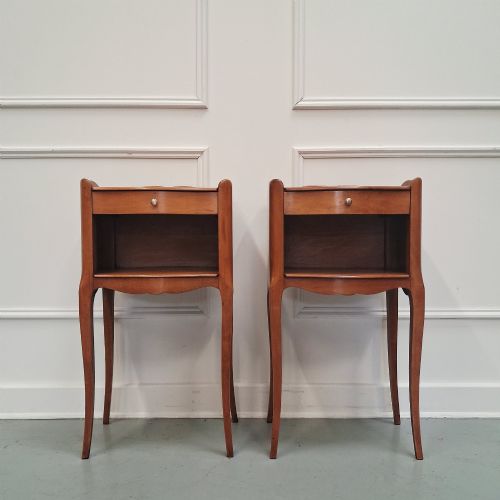
A brown wooden open shelf most commonly takes the form of an open bookcase, wall shelf, or dresser. These pieces provide accessible storage and display surfaces for books and decorative objects.
The selection here includes examples from the Victorian, Edwardian, and 1930s periods. Formats range from tall library bookcases to slim waterfall bookshelves and bedside units.
Makers and designers from these eras utilised traditional cabinet-making layouts. Many pieces feature adjustable shelving or carved detailing suited to domestic interiors.
Construction and materials
Makers relied primarily on oak, mahogany, and walnut, often employing walnut veneer or burr walnut for decorative grain patterns. Pine and ash also appear across specific regional and period pieces.
Styles recorded in the archive range from Georgian and Regency to Arts and Crafts, Art Deco, and French Provincial.
Assessing build and finish
Quality rests on the selection of timber figures and the precision of the shelf adjustment mechanisms. Dense hardwoods like mahogany and figured walnut indicate superior workshop selection.
Heals·Whytock and Reid
The Brown Wooden Open Shelf Glossary
- Waterfall bookcase
- A set of open shelves that steps back progressively from bottom to top, creating a cascading profile.
- Adjustable shelves
- Shelving supported by movable pins or rack-and-pinion strips, allowing variable shelf heights.
- Burr walnut
- Timber taken from the wart or burl growth of a walnut tree, yielding highly figured, swirling grain patterns.
- Breakfront
- A piece of furniture where the central section projects forward from the flanking outer sections.
- Etagere
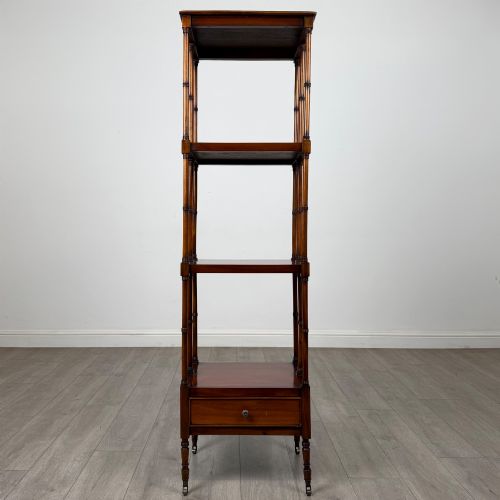
- A piece of furniture consisting of a set of open shelves for displaying small objects.
Brown Wooden Open Shelf: Frequently Asked Questions
How do I date a brown wooden open shelf?
Dating relies on observing timber choices, construction methods, and stylistic cues present in the piece. Victorian and Edwardian examples often display specific revival motifs or characteristic proportions.
Hardware and joint types further clarify the period of production. Examining the backboards and shelf supports provides additional context for the manufacturing decade.
Are these shelves suitable for heavy books?
Many period bookcases were engineered specifically for heavy volumes and incorporate sturdy timber carcases. Solid oak and mahogany variants handle substantial weight effectively.
Pieces with adjustable shelving rely on the strength of the supporting pins or vertical tracks. Reviewing the thickness of the timber shelves helps determine their load capacity.
How should I care for walnut and mahogany surfaces?
Maintenance involves dusting with a dry cloth and avoiding direct exposure to strong sunlight. Wax finishes benefit from occasional application to nourish the grain.
Keeping the timber away from extreme temperature fluctuations prevents wood movement. Gentle cleaning preserves the natural patina developed over the decades.