
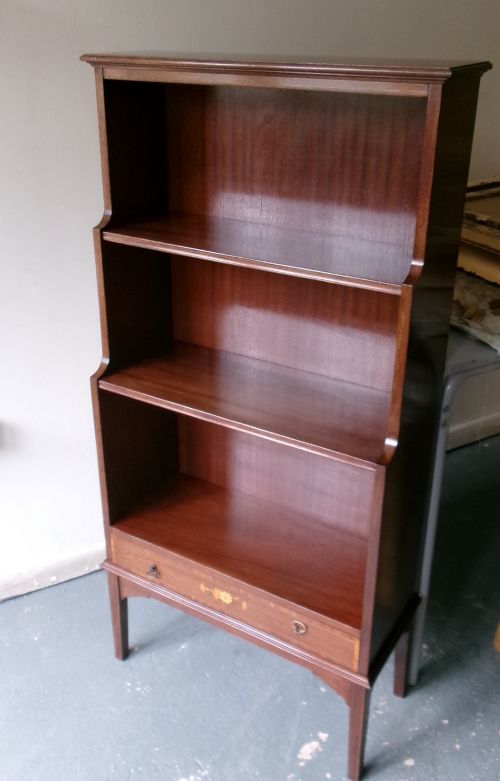
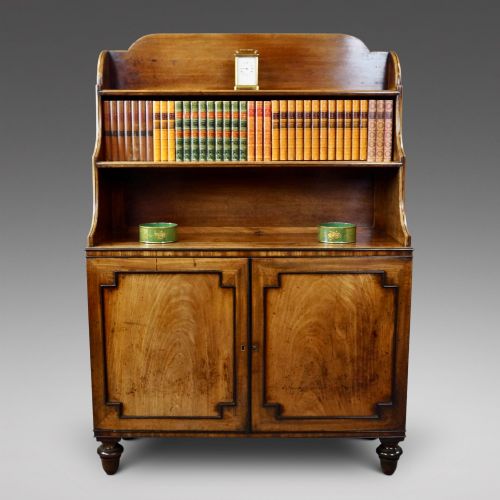


Wooden Waterfall Display
A wooden waterfall display brings tiered shelving and character to a room, offering stepped surfaces that showcase books and objects with distinct visual rhythm.
Wooden Waterfall Display
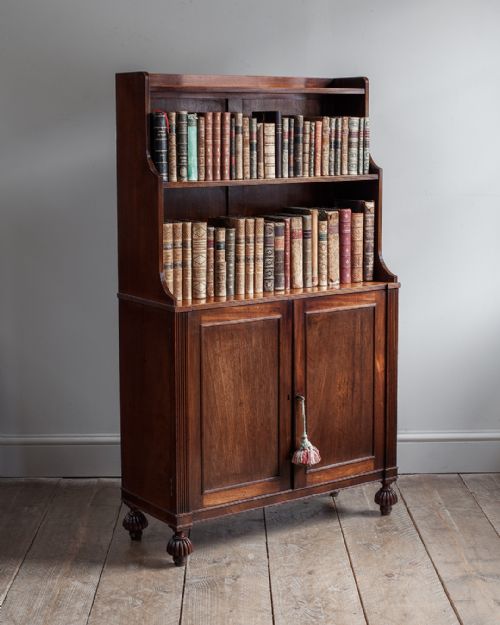
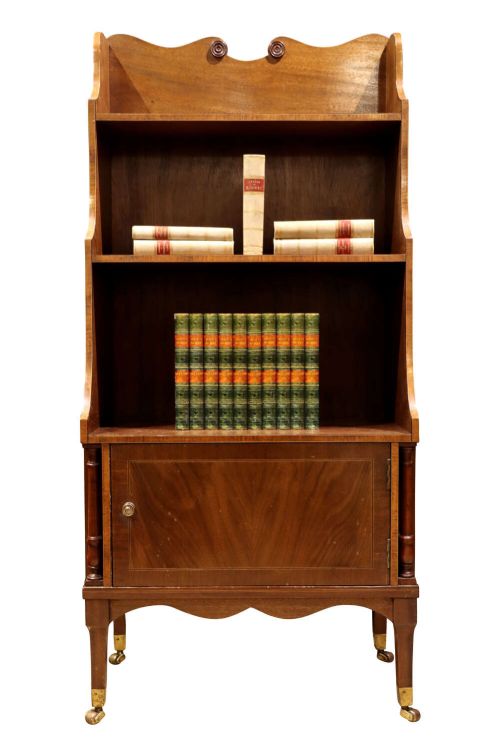
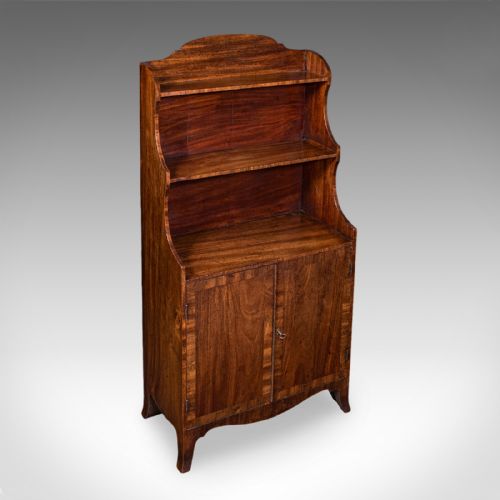
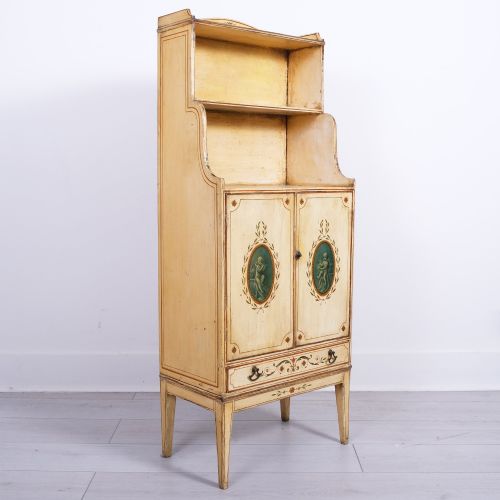
When you search for a wooden waterfall display, you encounter tiered pieces of furniture designed with stepped shelves that descend from back to front. The selection on this page centres on bookcases, wall shelves, and open shelving units spanning the Georgian, Regency, Victorian, and Edwardian periods.
The forms range from petite chiffonier cupboards and multi-tiered open galleries to wall-mounted shelves and drawer-fitted cabinets. Mahogany and oak dominate the construction, accompanied by flame mahogany, satinwood, pine, and painted wood finishes.
How they were made
Cabinet makers utilised solid timber and veneers, frequently selecting mahogany and oak for structural integrity and rich grain patterns. Inlaid details in contrasting woods adorn pieces from later periods, whilst brass castors provide mobility on larger cabinet examples.
Joinery techniques relied on traditional framing and shelving housing, supporting multiple stepped tiers while maintaining the characteristic descending profile of the waterfall design.
Mahogany and oak are the primary timbers recorded across these listings, spanning the Georgian, Regency, Victorian, and Edwardian periods.
What varies in quality
Quality rests upon the selection of timber figures, such as flame mahogany or figured oak, and the precision of the graduated side supports. Finer examples display subtle inlay work, harmonious proportions across the tiers, and well-integrated drawer or cupboard sections.
Simpler vernacular pieces show utilitarian construction in pine or plain oak, whereas pieces from the Regency and Georgian eras often exhibit more refined architectural moulding and superior cabinet work.
The Wooden Waterfall Display Glossary
- Waterfall bookcase
- A set of open shelves stepped back progressively from bottom to top, creating a profile resembling descending water. This form gained popularity during the Georgian and Regency periods for displaying books and ornaments.
- Chiffonier
- A low cabinet featuring shelves or a cupboard beneath, often combining display and storage functions in a compact footprint. These pieces frequently incorporate drawers alongside tiered upper sections.
- Flame mahogany
- A decorative veneer cut from timber where the branch meets the trunk, producing a rippling flame-like pattern. Cabinet makers reserved this material for prominent exterior surfaces to create strong visual impact.
- Inlay
- A technique where pieces of contrasting wood or other materials are inserted into depressions in the base wood to form decorative patterns. Edwardian and late Victorian examples frequently employ this method for linear or botanical motifs.
Wooden Waterfall Display: Frequently Asked Questions
Where should I place a waterfall bookcase?
These stepped pieces suit studies, living rooms, and hallways where their graduated shelves can display books or small collections without dominating the floor space.
Because many examples feature finished backs or shallow profiles, they sit comfortably against walls or function effectively as room accents.
How do I identify a Georgian waterfall piece?
Georgian and Regency pieces typically show dense mahogany timbers, hand-cut joinery, and restrained classical proportions rather than heavy machine moulding.
Look for pegged joints, fine cockbeading around drawers, and aged patination on the wood surface.
Are these shelves sturdy enough for heavy books?
Most period waterfall units handle standard volumes securely, though the upper stepped tiers naturally accommodate lighter books and decorative objects due to their shallower depth.
Heavier folios sit best on the deeper lower shelves of the bookcase or cabinet structure.
What is the difference between open and cupboard styles?
Open waterfall units provide immediate visibility from all angles and suit decorative displays, whilst hybrid designs incorporate cupboards or drawers below the stepped tiers.
Cupboard variants offer enclosed storage for items you prefer to keep out of sight while maintaining the signature stepped display above.