
Small Mahogany Bookshelf
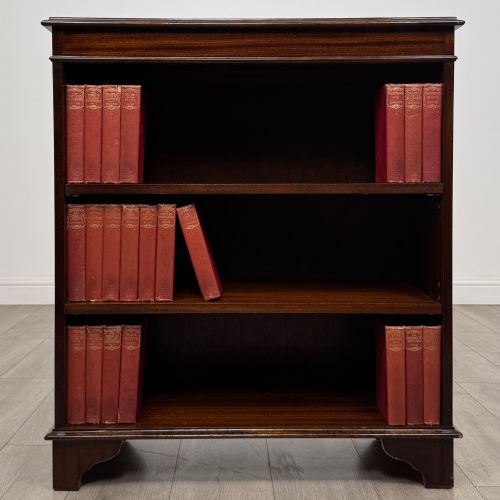
A small mahogany bookshelf brings compact warmth and structured storage to a room, offering an ideal home for favourite volumes.
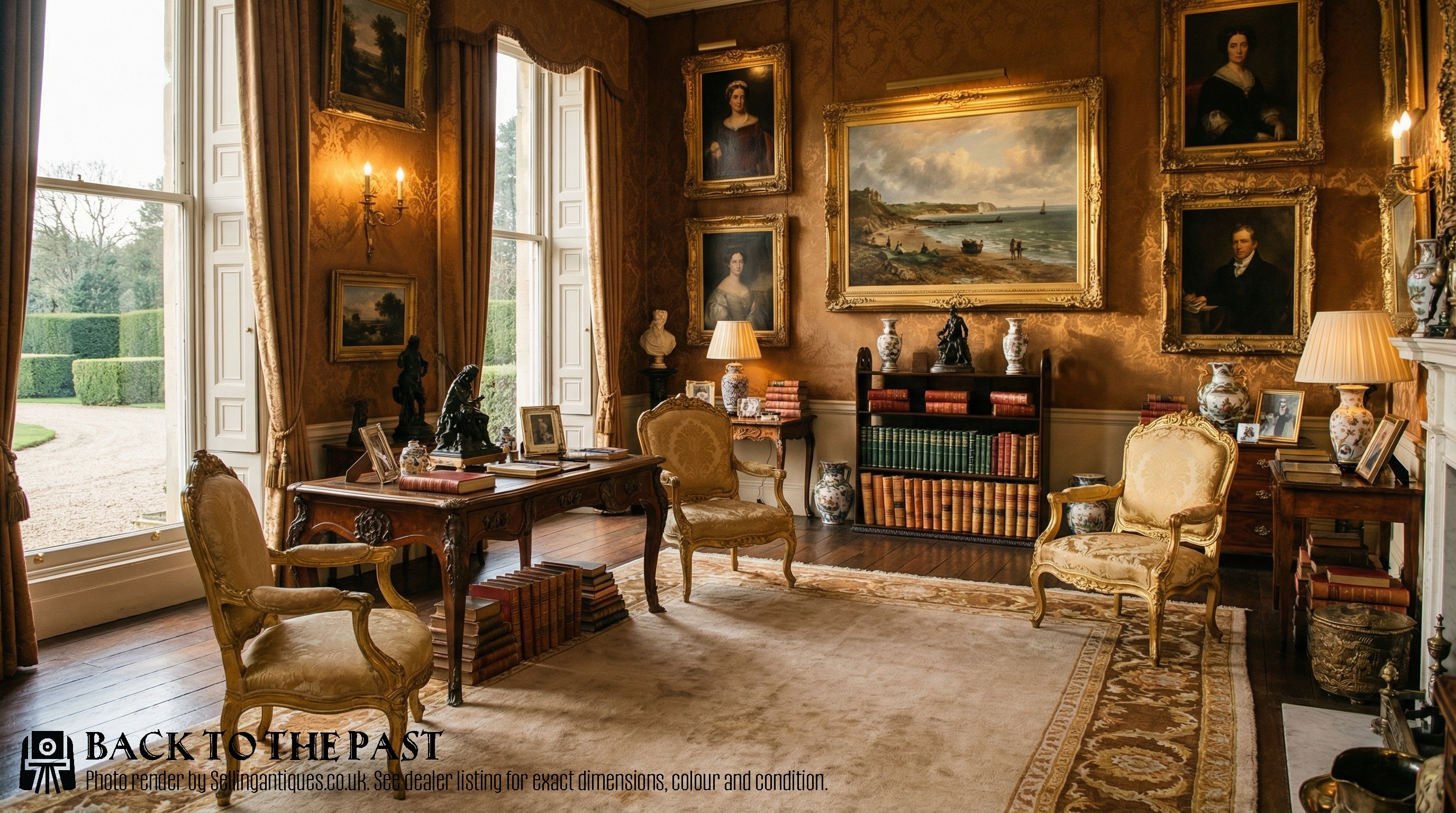
Small Mahogany Bookshelf
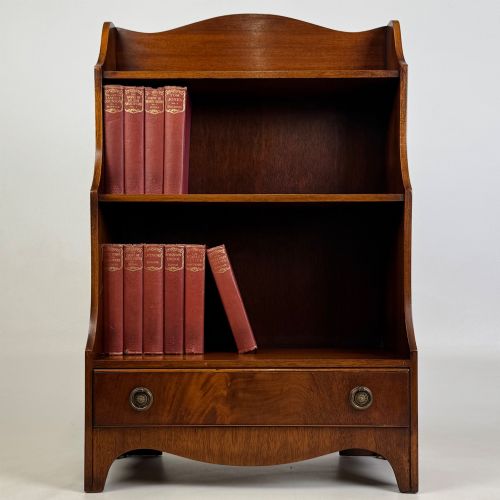
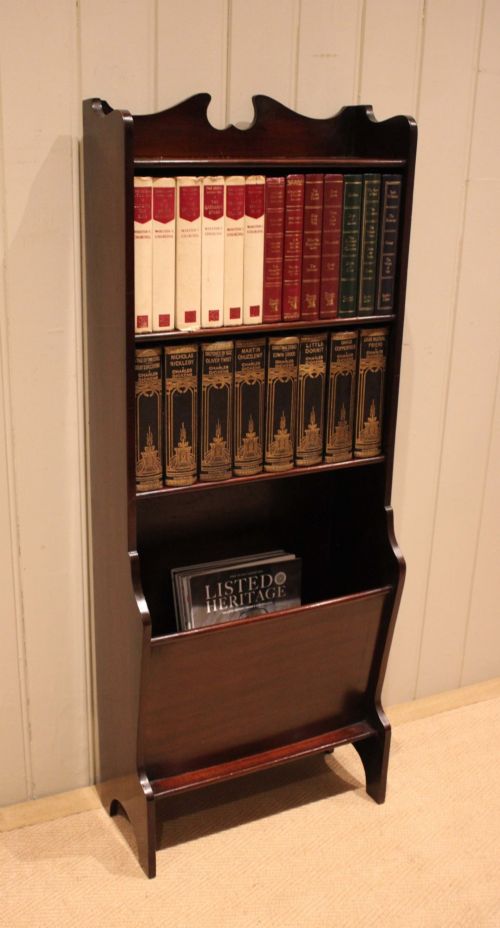
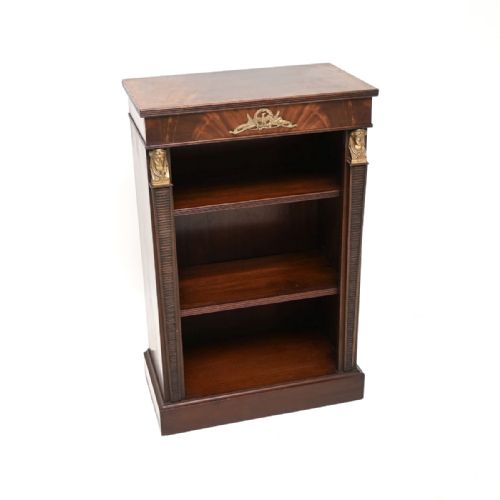
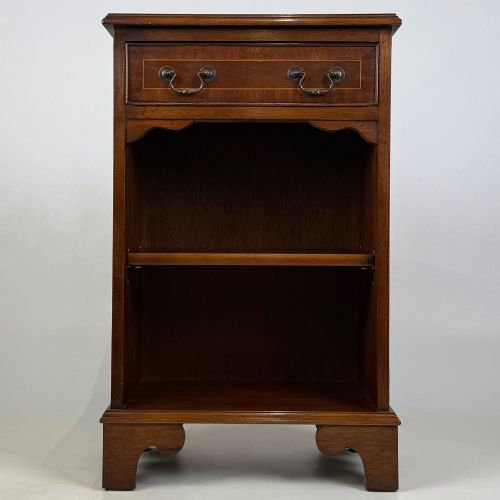
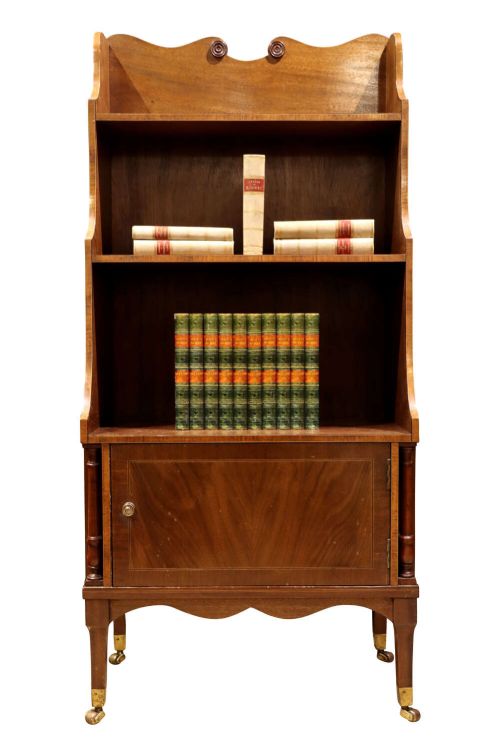
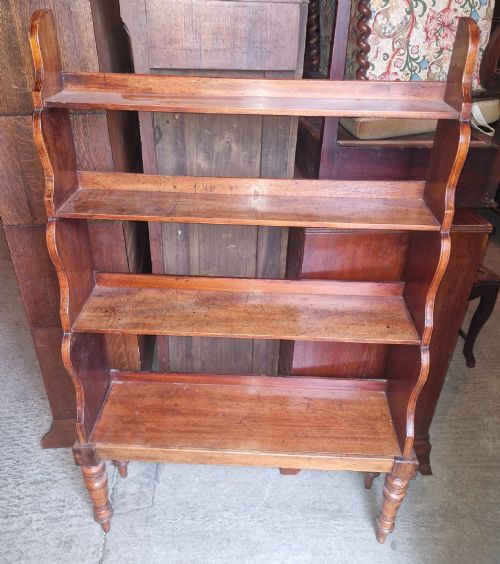
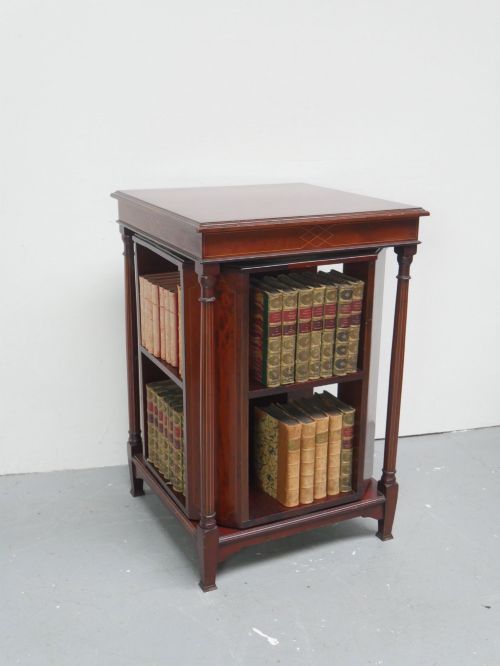
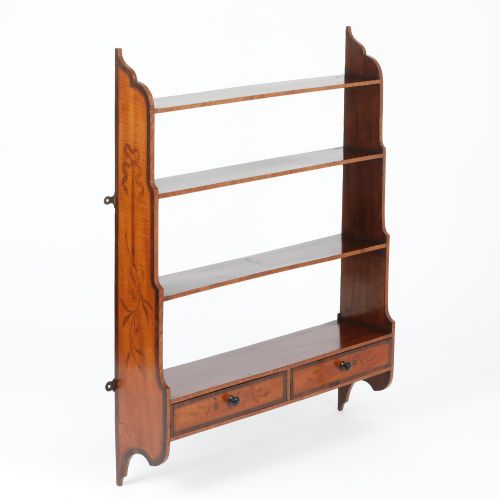
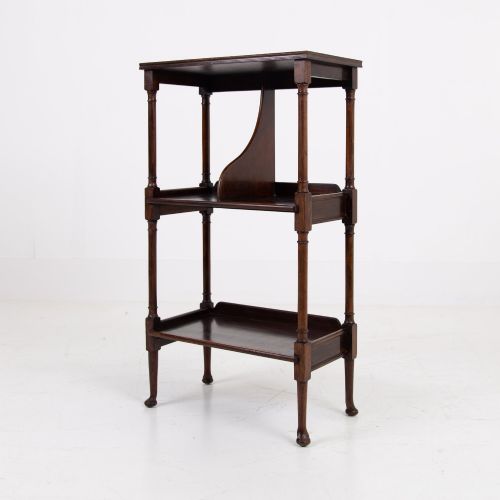
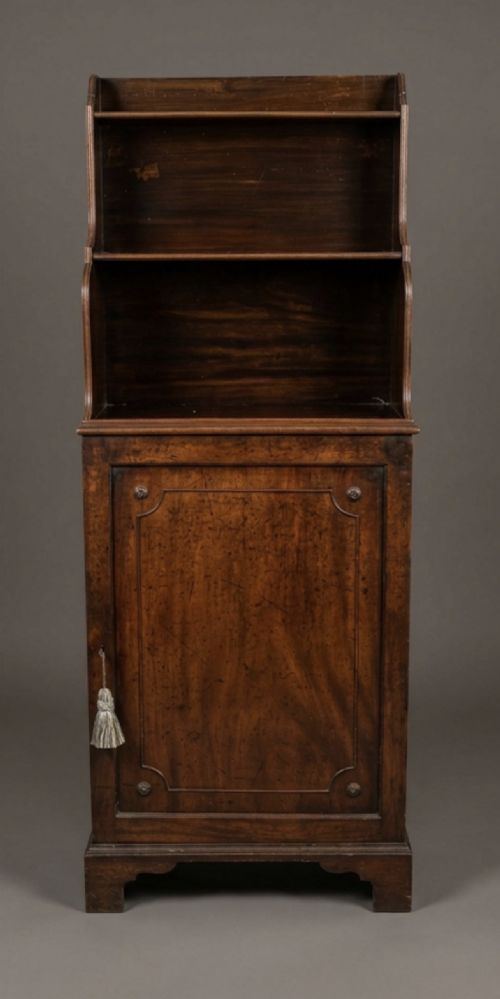
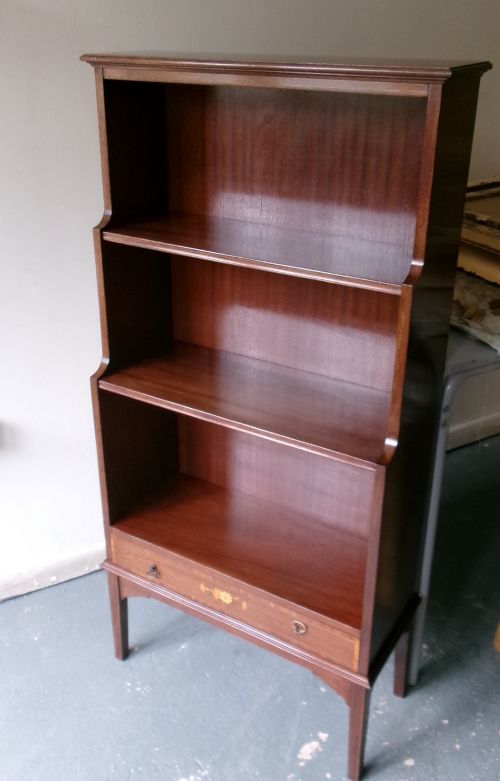
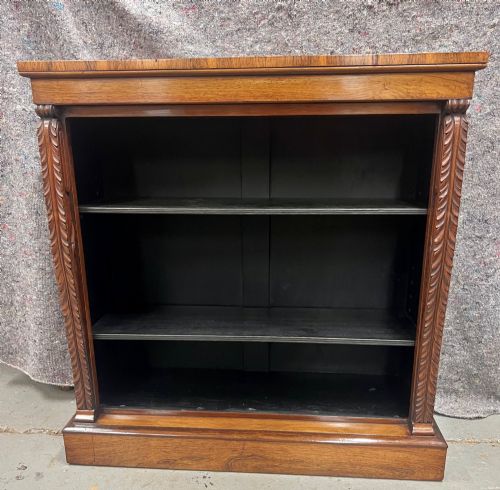
A small mahogany bookshelf appears in numerous domestic guises across this selection, ranging from open wall shelves and freestanding waterfall tiers to rotating tabletop bookstands. Buyers searching for a small mahogany bookshelf most frequently encounter Edwardian and Victorian pieces, alongside Regency examples and later revival styles.
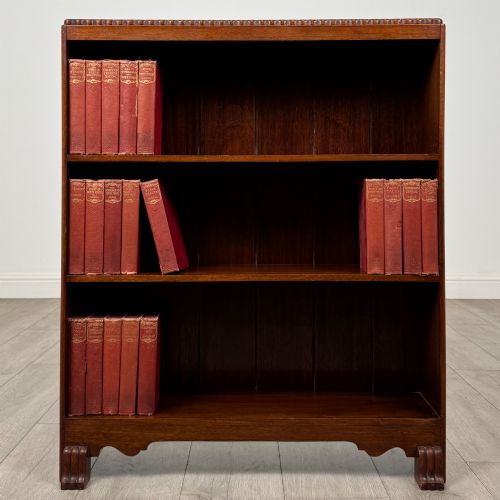
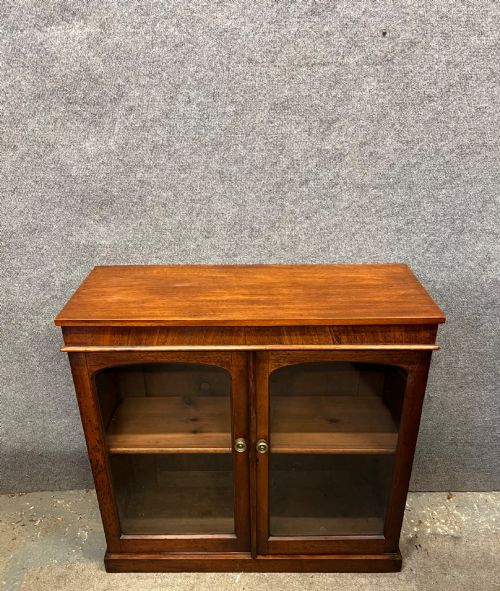
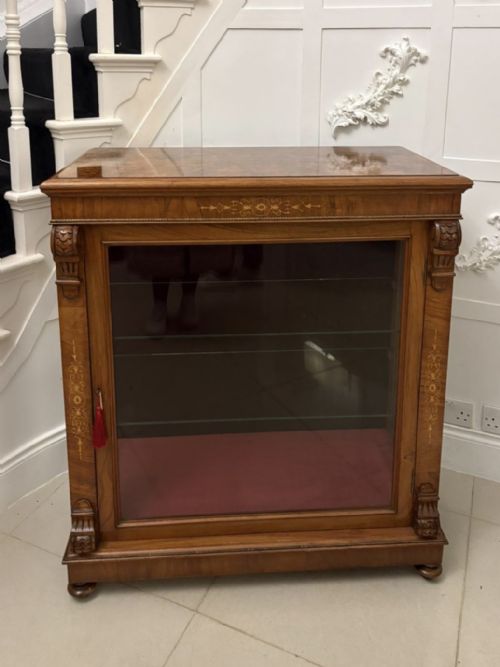
The objects serve varied functions within smaller spaces, encompassing slim open bookcases, cabinet-topped variants with cupboards, and tiered display units fitted with brass castors. Forms extend to specialised items like revolving bookstands, desk tidies, and narrow wall-hanging shelves designed to maximise storage without dominating a room.
Materials and Construction
Construction relies primarily on rich mahogany timber, frequently accented with contrasting boxwood inlay or satinwood details to highlight shelves and panels. Cabinetmakers utilised durable joinery methods to build stable freestanding frames, wall-mounted units, and revolving mechanisms that turn smoothly on central pivots.
Finishing touches often include fitted brass castors for mobility on larger waterfall cabinets, alongside glass doors or leather inserts on specific display pieces and desk tidies. The integration of varied wood types demonstrates traditional craftsmanship tailored to both utility and visual refinement.
The listings span Edwardian, Victorian, and Regency periods, incorporating materials such as mahogany, satinwood, brass, and boxwood inlay.
Distinctions in Quality
Quality separates along the precision of inlaid details, the depth of the mahogany grain, and the execution of structural elements like rotating book mechanisms or tiered waterfall curves. Superior pieces display crisp boxwood stringing, harmonious proportions, and robust hardware such as original brass castors.
Simpler workshop output offers sturdy domestic utility with plain timber surfaces and minimal ornamentation, while finer examples demonstrate advanced cabinetmaking through integrated display cabinets, delicate fretwork, and carefully matched wood veneers.
Shapland & Petter
The Small Mahogany Bookshelf Glossary
- Waterfall bookcase
- A tiered shelving unit where each successive shelf steps back from the one below it, creating a cascading profile. This form is common in both Victorian and Edwardian examples.
- Revolving bookcase
- A compact bookstand engineered to rotate on a central base for easy access to volumes from any angle. Tabletop and freestanding versions appear frequently in early twentieth-century pieces.
- Boxwood inlay
- Contrasting light-coloured wood inserted into the darker mahogany surface in thin decorative lines or geometric patterns. It provides crisp definition to edges and panels.
- Whatnot
- An open multi-shelved piece of furniture designed for displaying small objects or books. Regency and Victorian makers produced these in various portable and freestanding formats.
Small Mahogany Bookshelf: Frequently Asked Questions
Where should I place a small mahogany bookshelf?
These compact pieces fit easily into alcoves, beside armchairs, or upon tabletops where floor space is limited. Their modest proportions allow them to integrate smoothly into studies, hallways, and living rooms without overwhelming the existing layout.
Freestanding waterfall models and revolving bookstands also work well as standalone focal points near seating areas. Wall-hanging versions free up floor space entirely while keeping daily reading material within arm's reach.
How do I distinguish Edwardian from Regency styles?
Edwardian pieces, typically built around nineteen hundred, often incorporate delicate satinwood inlay, lighter framing, and gentle revival aesthetics. They tend to reflect a domestic drive for practical elegance in smaller urban homes.
Regency examples from the early nineteenth century favour bolder classical proportions, heavier architectural lines, and occasional brass mounts or castors. Revival pieces from later decades often re-create these classic traits with slight variations in wood finish.
Are revolving bookcases stable enough for heavy books?
Most revolving bookstands are engineered with sturdy internal cruciform pivots designed to balance weight evenly across four quadrants. They handle standard octavo volumes and novels securely during rotation.
Very heavy or oversized folios are better suited to sturdy open shelves or lower cabinet bays. Regular weight distribution ensures the smooth turning action remains reliable over time.