


Open Salt Cellars Pair
These open salt cellars pair selections bring Georgian and Victorian dining tables to life with diminutive vessels designed for loose salt.
Open Salt Cellars Pair
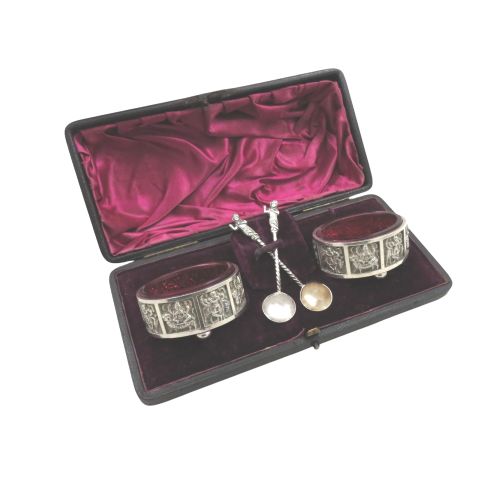
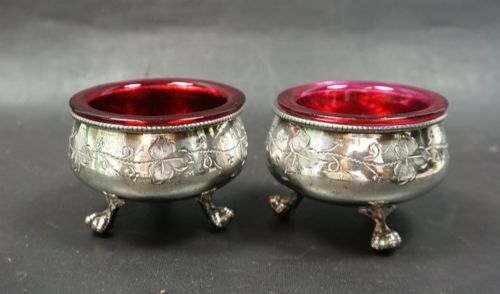
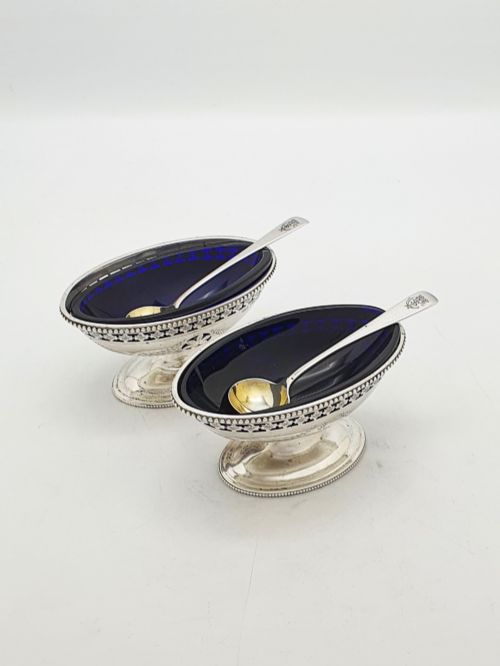
Buyers will frequently encounter sterling silver examples accompanied by contrasting glass liners in cobalt or cranberry hues. Silver plate and regional ceramics also appear, spanning centuries of dining custom from eighteenth-century trencher salts to twentieth-century cased sets with spoons.
Materials and methods
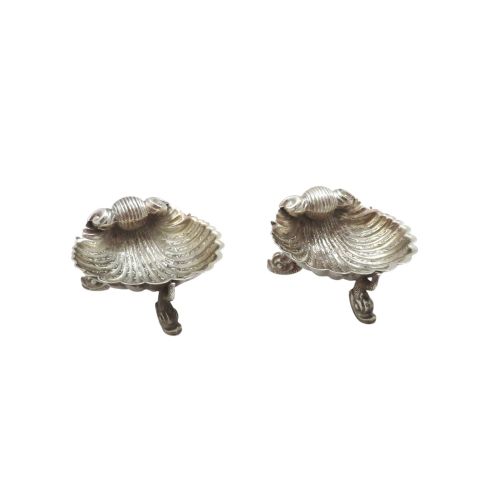
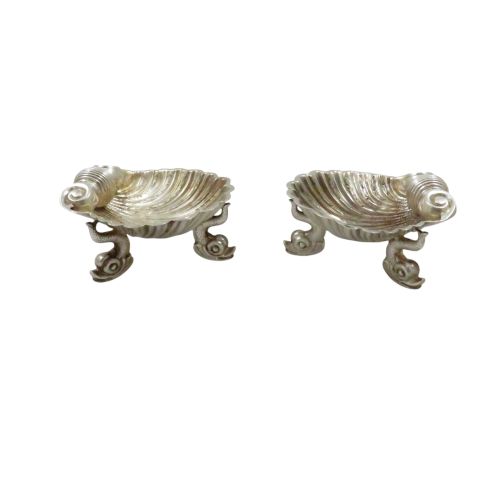
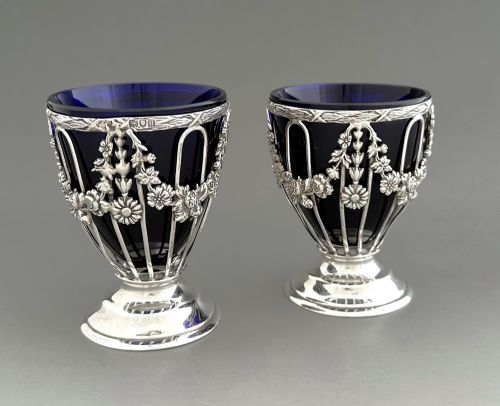
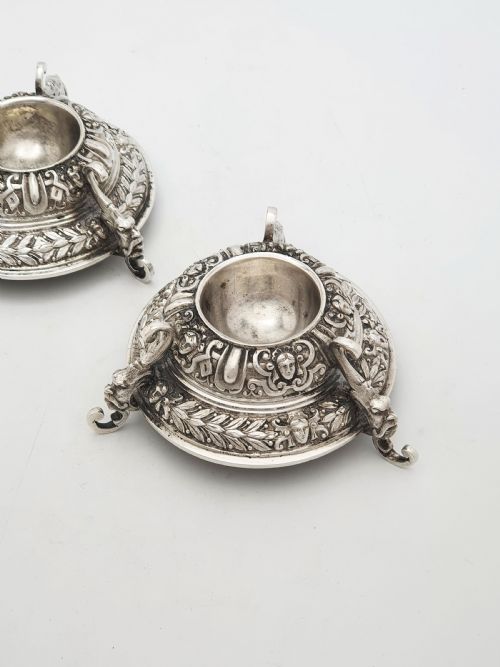
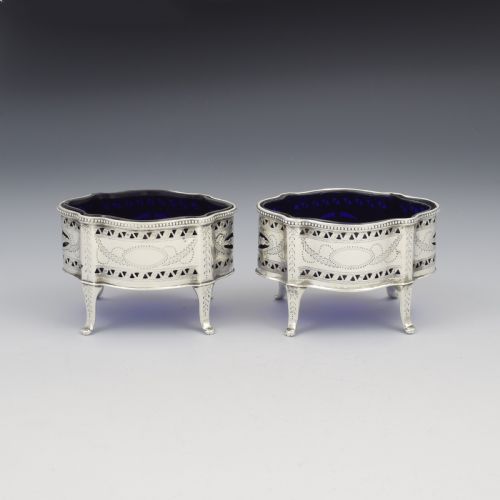
Silversmiths shaped sterling silver and silver plate through casting, piercing and wirework, creating ornate bodies supported on dolphin feet, tripod mounts or flat bases. Many designs incorporate hand-blown glass liners in cobalt and cranberry shades, fitted snugly within pierced or solid metal frames.
Makers utilised traditional techniques such as chasing and engraving to define decorative motifs, including rococo scrolls, floral swags and figural elements. Cabinetmakers also turned dense timbers like pollard oak into capstan forms, while potteries utilised ironstone china for moulded table wares.
Victorian silversmiths occasionally transformed table salt into miniature garden wheelbarrows, birds and swans.
Judging the range
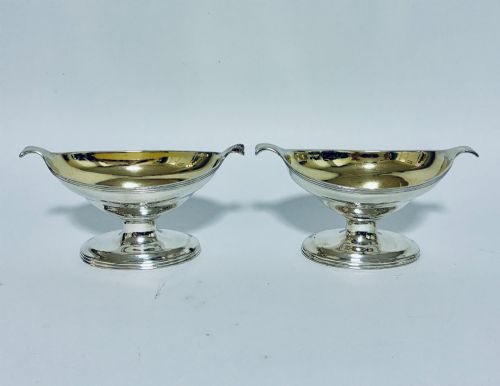
The standard of an open salt cellars pair rests on the crispness of the metalwork and the originality of its components. Finely chased detailing, substantial gauge metal and intact glass liners distinguish superior examples from simpler production pieces.
Provenance and maker attribution elevate certain items, particularly those bearing clear hallmarks from notable silversmiths or featuring uncommon figural motifs and fitted presentation cases.
Josiah Williams And Co·David Hennell·John Edmonstone·Edward Wood·Vale Brothers And Sermon
The Open Salt Cellars Pair Glossary
- Trencher salt
- A heavy, low-profile salt cellar dating from the seventeenth and eighteenth centuries, usually square or octagonal in plan. These preceded pedestal and footed designs on the dining table.
- Cobalt glass
- A deep blue glass used for removable liners inside open silver salts. It provides a striking visual contrast to the polished metal exterior.
- Pierced work
- Metal pierced with decorative patterns using a fine saw or punch. This technique lightened the appearance of Victorian table salts.
- Cauldron salt
- A round, swelling salt cellar raised on three small legs. This classic form remains common across Georgian and Victorian tableware.
- Quaich
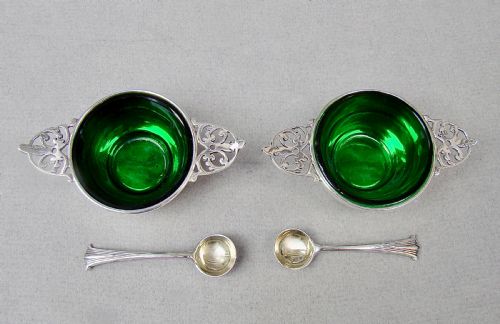
- A traditional Scottish two-handled drinking vessel adapted in these listings as novelty salt cellars. They show distinct regional silver forms.
Open Salt Cellars Pair: Frequently Asked Questions
How were open salt cellars used?
Diners used these small vessels to hold loose salt at the table before the invention of free-flowing table salt in containers with shakers.
Guests would take a pinch of salt using tiny matched spoons or the tip of a clean knife to season their food.
Do salt cellars need glass liners?
Many silver and plated salt cellars were manufactured with removable glass liners in cobalt or cranberry colours.
These liners protected the metal from the corrosive nature of salt and allowed for easy cleaning after meals.
How do I date an antique salt?
English silver pieces carry hallmarks that indicate the assay office, the year of production and the silversmith's mark.
Stylistic cues such as rococo revival curves or Edwardian wirework also help determine the period of manufacture.
Can I use antique salts today?
These small vessels function well on modern dining tables for holding salts, condiments or small spices.
Careful cleaning after use preserves the glass liners and prevents any residue from damaging the silver surfaces.