



Sterling Silver Shell Dishes
Sterling silver shell dishes combine marine naturalism with domestic utility, offering a refined way to serve butter, salt, or small morsels at table.
Sterling Silver Shell Dishes
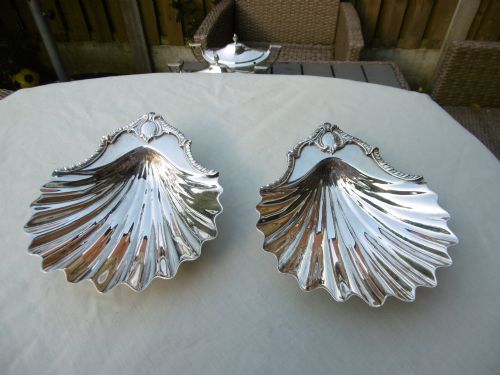
Sterling silver shell dishes take the natural fluted form of the scallop shell and adapt it for use on the dining table or dressing surface. You will frequently encounter pairs of small salt cellars and butter dishes, alongside larger serving pieces, centerpieces, and trinket trays.
The objects span multiple eras, with examples appearing across the Georgian, Victorian, Edwardian, and mid-century periods. Many butter dishes and salt sets survive in fitted presentation cases, sometimes accompanied by dedicated knives or spoons.
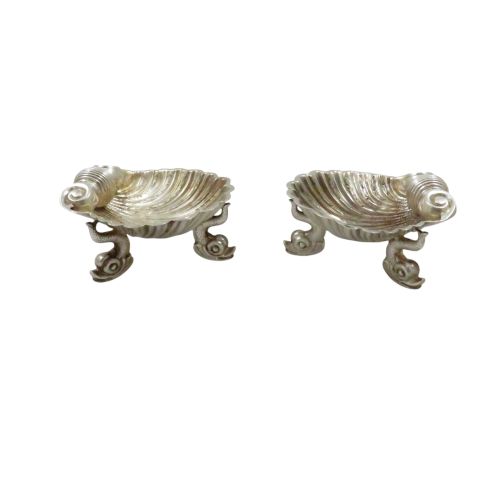
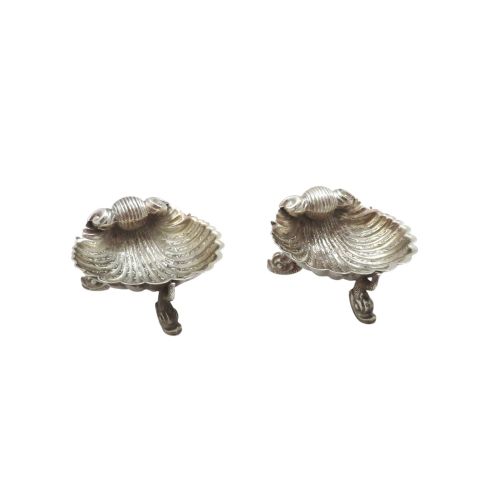
Formations range from simple ridged bowls to elaborate designs supported by dolphin feet or executed in heavy gauge silver. The scale varies from miniature salt cellars designed for individual place settings to substantial bowls intended for centrepieces.
Distinctions in quality
The calibre of a piece depends on the weight of the metal and the crispness of the chasing along the fluted ribs. Heavier gauge silver provides a substantial feel in the hand and resists distortion through decades of use and polishing.
Execution of secondary details distinguishes finer examples, such as the naturalistic modelling of dolphin feet, the precision of pierced reticulation, or the quality of a fitted leather and silk case. Maker marks and clear hallmarks also contribute to the distinction of individual pieces.
Several Victorian salt cellars stand upon tiny dolphin feet, letting aquatic creatures support the marine-themed shell above them.
William Plummer·The Goldsmiths & Silversmiths·Edward Farrell·J T Younge, Walker & Crowder·Mappin & Webb·Atkin Brothers
The Sterling Silver Shell Dishes Glossary
- Sterling silver
- An alloy comprising a high proportion of pure silver combined with other metals to ensure durability for tableware. This standard forms the basis of British assay marks.
- Silver gilt
- Silver coated with a thin layer of gold, commonly applied to the interior bowls of salt cellars to prevent salt from corroding the underlying silver. It provides a warm contrast to the bright exterior metal.
- Reticulation
- An openwork pattern created by piercing or cutting decorative designs into the silver. This technique appears on specific shell dishes to lighten the visual weight of the border.
- Salt cellars
- Small vessels used to hold salt at the dining table before the widespread adoption of salt shakers. Shell forms served as popular miniature dishes for individual portions.
- Butter shell
- A shallow dish specifically proportioned for serving individual pats of butter. These pieces frequently occur in pairs or matched sets with knives.
Sterling Silver Shell Dishes: Frequently Asked Questions
How were sterling silver shell dishes used historically?
These dishes served practical dining functions, holding portions of butter or supplying salt to individual place settings. Larger versions functioned as sweetmeat dishes, trinket trays, or table centerpieces.
Over time, many butter dishes and salt cellars were housed in velvet-lined presentation boxes for gifting or safe storage between formal meals.
How do I tell Victorian pieces apart from Georgian ones?
Georgian pieces often display bold Rococo influence with organic asymmetry and cast supporting feet, dating from the eighteenth and early nineteenth centuries. Victorian examples frequently incorporate crisp stamping and machinery-assisted detailing alongside traditional hand-chasing.
Examining the assay office marks and date letters stamped into the silver provides the exact year of manufacture.
Do salt cellars require special care at home?
Gilded salt cellars require gentle cleaning because salt residue can pit silver if left in contact for extended periods. Wash them in warm soapy water and dry thoroughly rather than relying solely on abrasive dips.
Storing pieces in their original fitted cases helps protect the soft metal and any silk or velvet linings from atmospheric tarnish.
Why do many butter dishes include knives?
Edwardian and Victorian sets often paired butter shells with small, specially designed silver knives to slice and transfer firm pats of butter at the table. These matched utensils completed the dining service.
Finding a complete set with its original knife and fitted leather case indicates a well-preserved survival.