
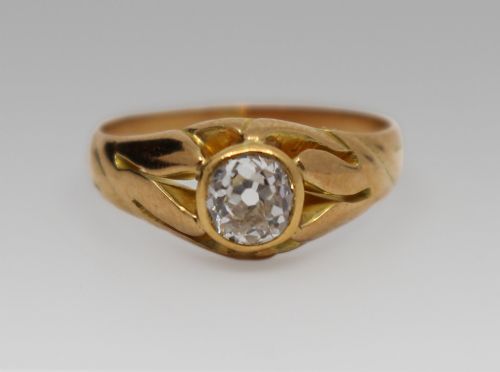
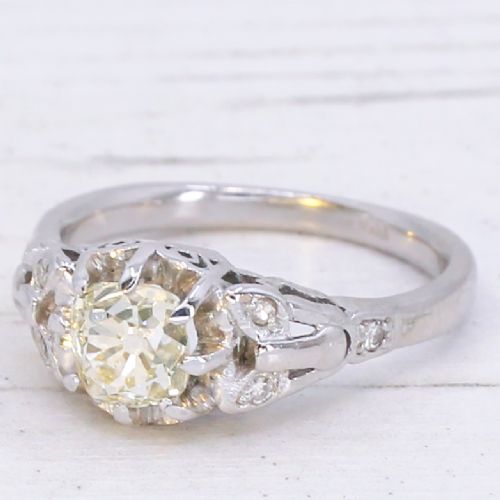
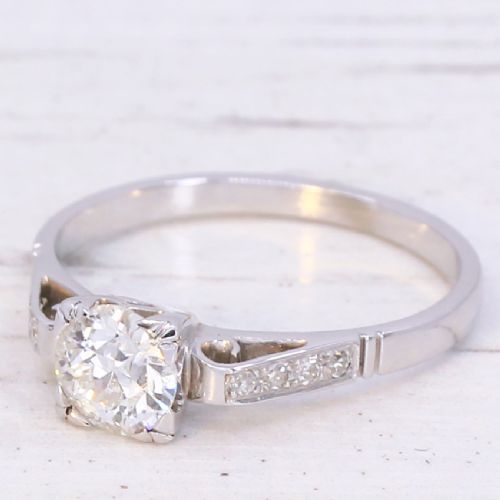
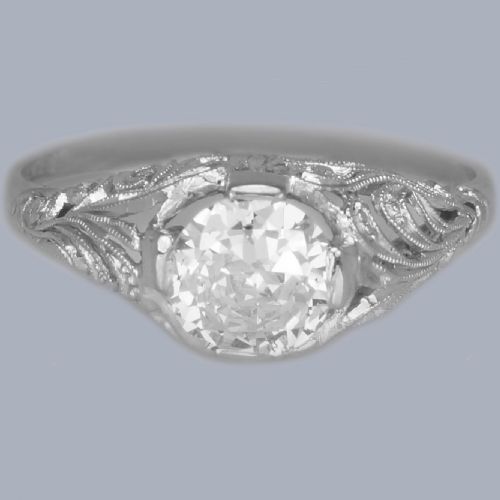

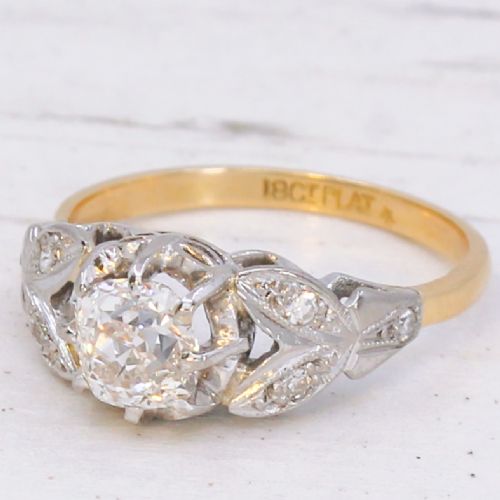
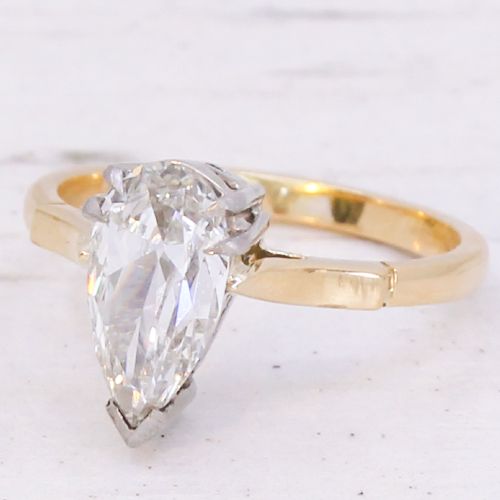
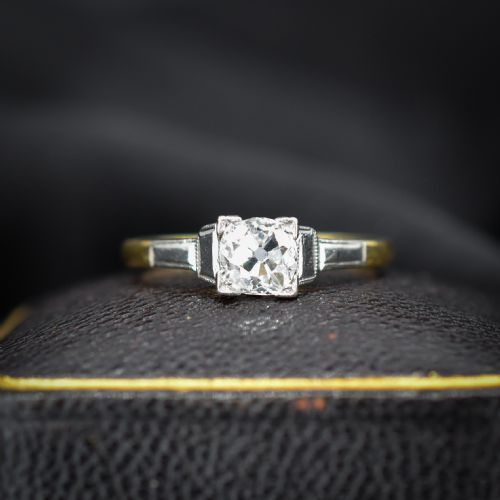
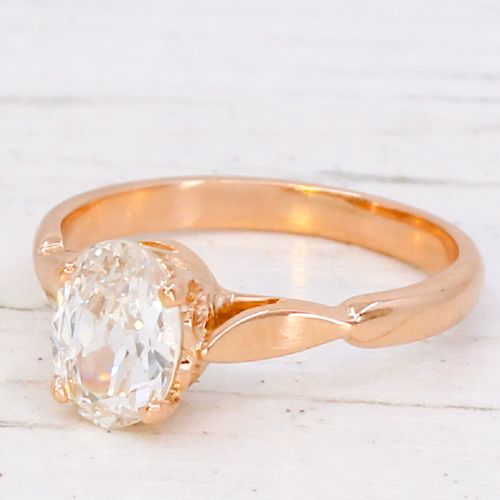
Old Cut Diamond Solitaire
Discover an old cut diamond solitaire, where hand-faceted stones capture candlelight with a deep, characterful warmth unknown in modern cutting.

Old Cut Diamond Solitaire
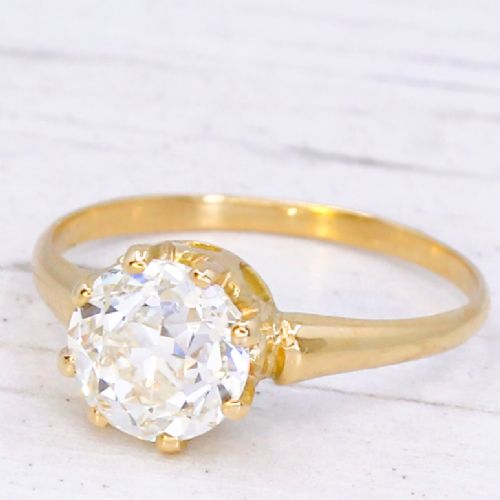
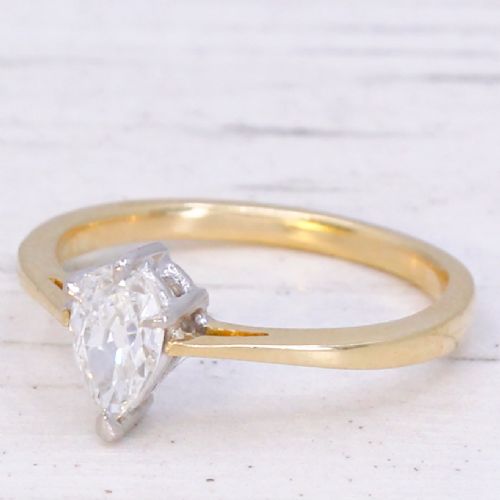
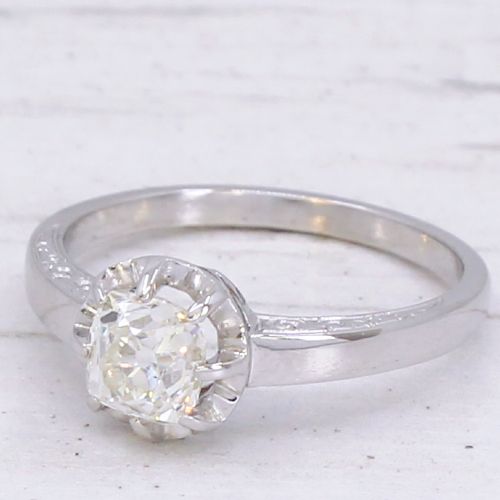
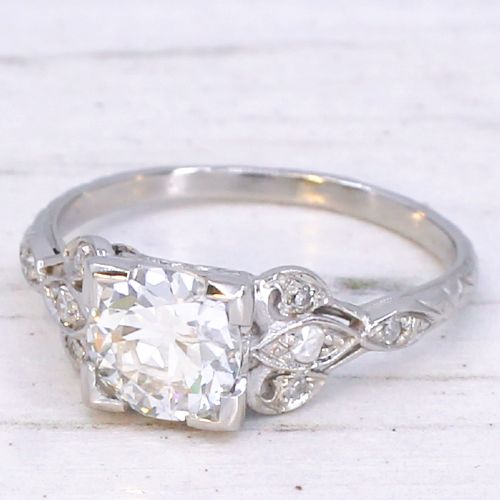
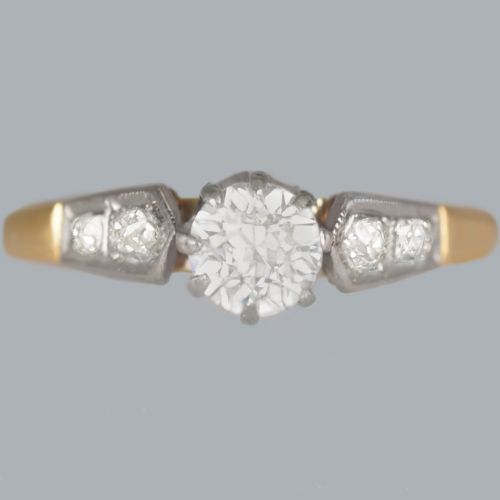
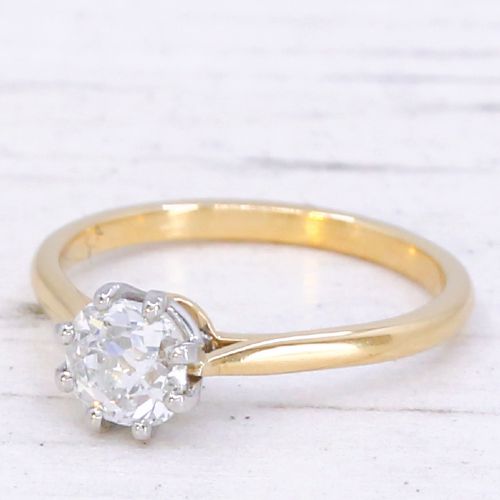
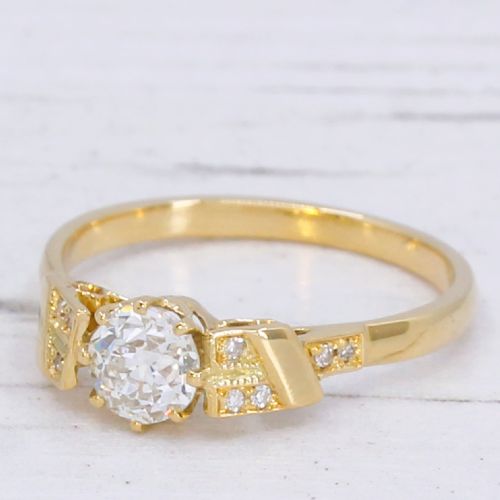
An old cut diamond solitaire centres on a single, historically faceted diamond mounted to highlight its individual optical charm. These pieces appear most frequently as engagement rings spanning from the Victorian and Edwardian eras through the Art Deco period and into the mid-century.
The selection ranges from delicate lower-carat mountings to substantial stones exceeding two carats. Alongside traditional rings, the inventory includes pendants and occasional drop earrings featuring the same distinctive single-stone configuration.
Makers and designers from the early twentieth century favoured geometric platinum settings and warm yellow or rose gold bands. Buyers searching this category encounter pieces defined by hand-wrought metalwork and antique gemstone proportions.

How They Were Made
Goldsmiths shaped these mountings using durable platinum or varied carats of gold, including eighteen-carat yellow, rose, and white variations. Metals were hand-forged, cast, or pierced into intricate galleries and shoulders to support the central gem.
Stones were shaped entirely by hand before the advent of standardised modern machinery, resulting in characteristic high crowns, small tables, and open culets. This manual cutting process produced faceted patterns tailored to each rough crystal rather than strict mathematical symmetry.
Old Cut Diamond Solitaire Retail Price Guide 2026
Typical asking prices for old cut diamond solitaire among the pieces listed under this phrase on Sellingantiques today, from the lower quarter to the upper quarter. They describe what is for sale here now, not the wider market.
Some diamonds still hold the quiet flicker of Victorian candlelight inside their deep, hand-polished pavilions.
What Varies in Quality
The overall standard depends heavily on the diamond's internal clarity, its inherent body colour, and the preservation of the original hand-cut facets. Stones with minimal inclusions and pleasing warmth command greater appreciation among collectors.
The integrity and artistry of the metal mounting also influence desirability. Settings retaining crisp millegrain edges, secure claw work, and minimal past alterations represent the finest surviving examples of period craftsmanship.
The Old Cut Diamond Solitaire Glossary
- Old European cut
- A round diamond cutting style popular in the late nineteenth and early twentieth centuries featuring a small table, high crown, and large facets.
- Old mine cut
- An earlier cushion-shaped diamond cut with a nearly square girdle, rounded corners, and a deep pavilion designed to catch candlelight.
- Culet
- The small flat facet at the very bottom of a historic diamond, often visible through the stone as a tiny open circle.
- Millegrain
- A decorative technique consisting of a row of tiny, raised metal beads bordering the edge of a setting, common in Edwardian and Art Deco jewellery.
- Solitaire
- A piece of jewellery featuring a single gemstone set entirely on its own without accompanying side stones.
Old Cut Diamond Solitaire: Frequently Asked Questions
How do I care for my antique ring?
Clean your piece gently using warm water, mild washing liquid, and a soft toothbrush to remove accumulated daily oils from beneath the stone. Avoid harsh ultrasonic cleaners which can loosen fragile historic settings or stress older metals.
Store the item separately in a lined box to prevent scratching against other jewellery. Regular inspection by a specialist jeweller ensures the claws remain secure around the hand-cut stone.
Can these rings be resized safely?
Most gold and platinum mountings from the early twentieth century can be adjusted by a skilled jeweller who understands antique construction. The process involves adding or removing a small section of metal from the lower band.
Intricate shoulders featuring hand-engraving or calibre-cut gems require particular care during resizing to preserve the surrounding decorative work. Consult an experienced workshop familiar with historic jewellery restoration.
How do I identify the period of a ring?
Examine the mounting style, metal combinations, and overall design motifs to determine the likely era of manufacture. Edwardian pieces frequently utilise platinum-topped gold with lace-like pierced galleries, while Art Deco examples display bold geometric lines.
Official hallmarks stamped inside the band offer definitive clues regarding the assay office and exact year of creation. Comparing the stone proportions also helps distinguish Victorian cushion shapes from later round European cuts.
Why do old cut diamonds look different?
Historic diamonds were shaped by hand under low-intensity lighting to maximise their brilliance in candle or gas illumination. Consequently, they display broader flash patterns and softer scintillation compared to mathematically uniform modern brilliant cuts.
The presence of an open culet and a smaller table creates a distinctive depth and charm unique to antique stones. Each gem possesses optical irregularities that reflect its individual genesis and manual heritage.