

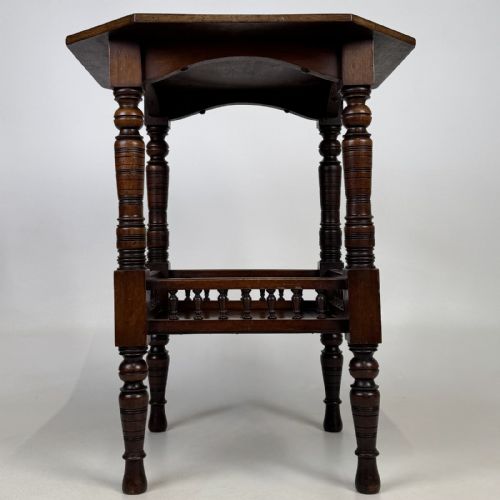
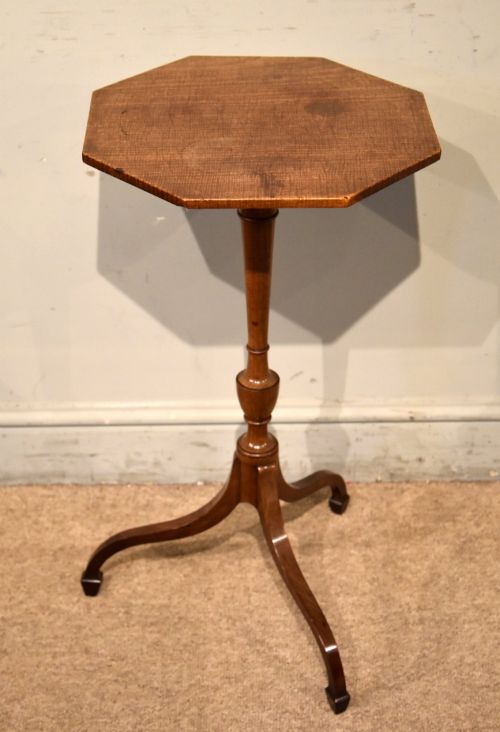
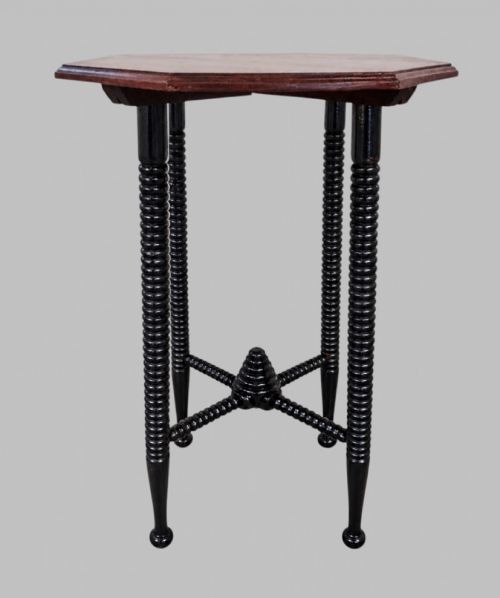
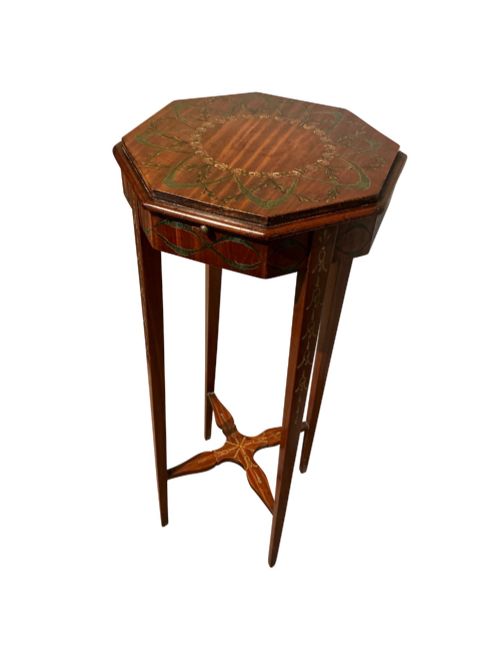
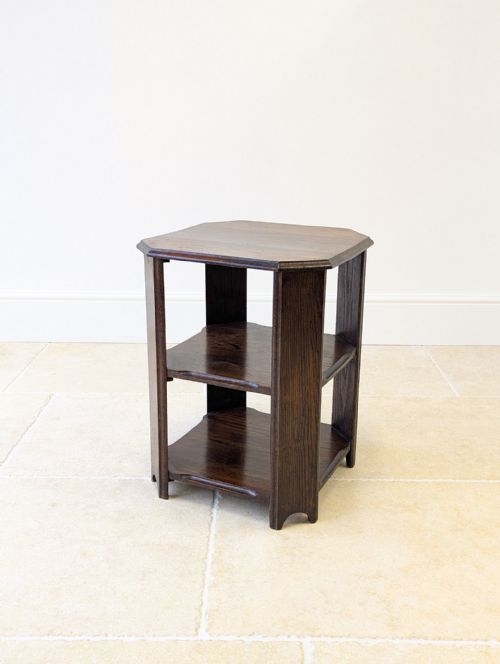
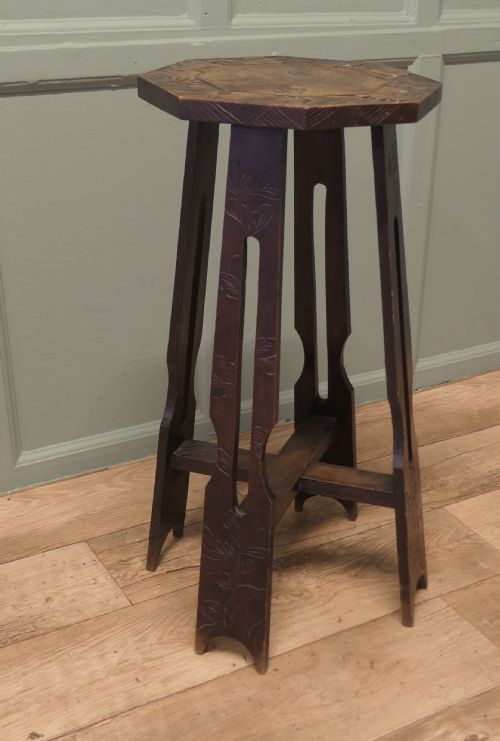
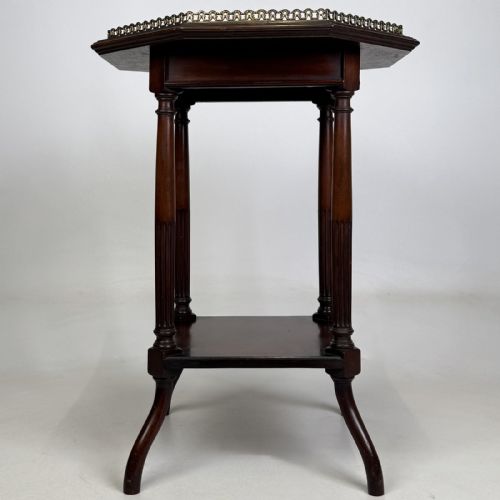
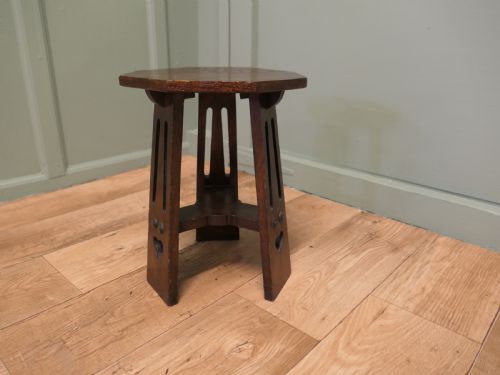
Octagonal Plant Stand Table
An octagonal plant stand table brings geometric balance to a corner, serving as a sturdy stage for greenery or lighting.
Octagonal Plant Stand Table
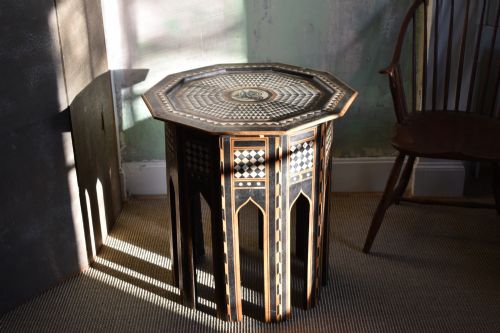
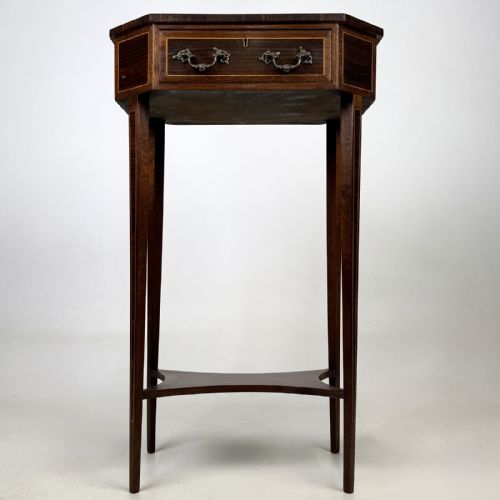
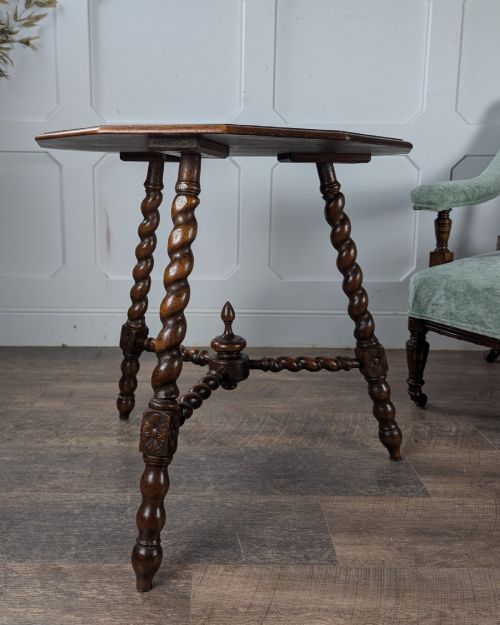
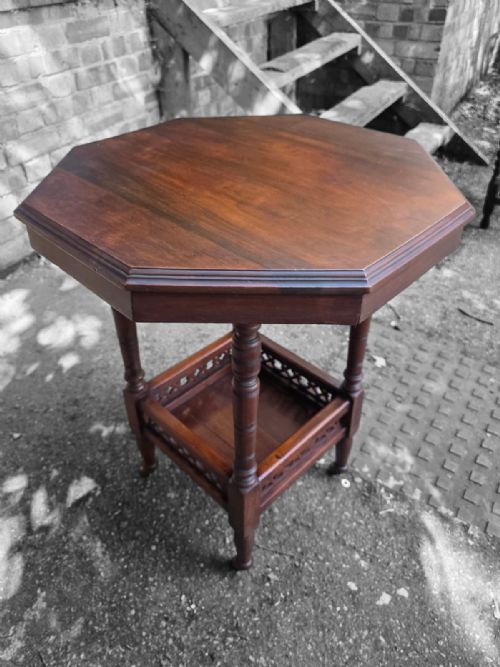
The octagonal plant stand table combines multi-sided geometry with a compact footprint, suiting smaller display spaces. The surface provides adequate room for pottery or lamps while keeping proportions neat.
Victorian and Edwardian examples appear frequently alongside pieces from the 1900s to the 1930s. These items often double as occasional tables, side tables, or urn stands depending on their height and build.
Origins stretch from English workshops to Anglo-Indian and Moorish centres, introducing diverse regional carving traditions to British domestic interiors.
Materials and Construction
Timber selection ranges from native oak, mahogany, and walnut to exotic hardwoods like teak, padauk, and satinwood. Cabinetmakers utilised these dense woods to support intricate geometric carving and inlaid surface decoration.
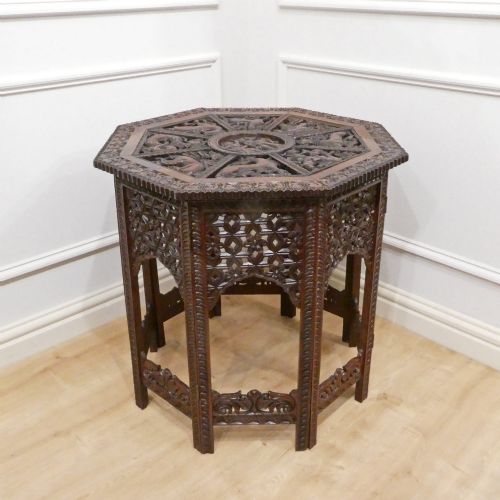
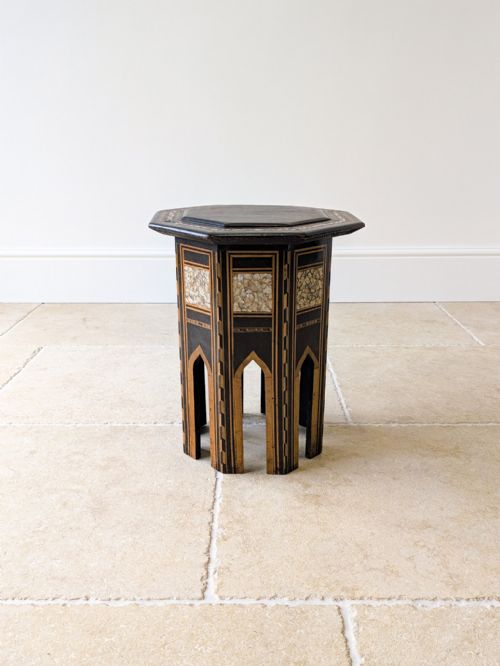
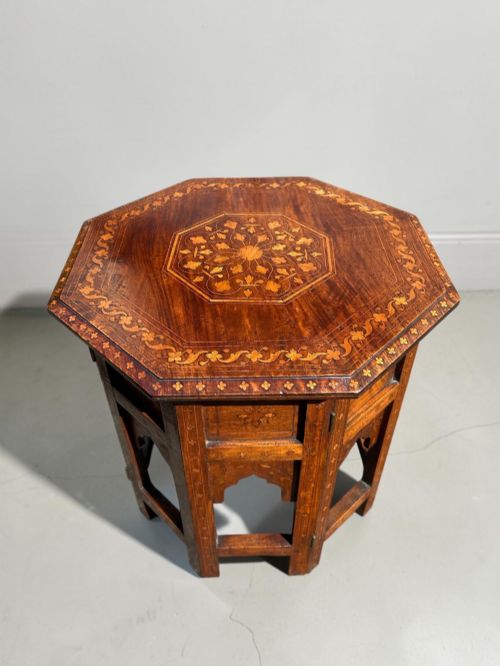
Inlay work incorporates contrasting materials such as brass wire, bone, and mother-of-pearl to create complex botanical and geometric motifs across the table top. Carving styles span traditional British barley twist legs to deep relief work originating in Hoshiarpur and Morocco.
Octagonal Plant Stand Table Retail Price Guide 2026
Typical asking prices for octagonal plant stand table among the pieces listed under this phrase on Sellingantiques today, from the lower quarter to the upper quarter. They describe what is for sale here now, not the wider market.
Elephant tables from the Bombay Presidency bring miniature trunk supports right into the parlour.
Distinction in Craft
Quality rests in the crispness of the hand-carving and the precision of inlaid elements rather than the sheer weight of the timber. Finely executed pieces maintain tight joints and flush inlay work across multiple wood species.
The integrity of the structural frame beneath decorative surfaces determines longevity, particularly in pieces with multi-sided tops and slender legs.
Liberty and Co·Shoolbred
The Octagonal Plant Stand Table Glossary
- Octagonal top
- A geometric table surface with eight distinct sides, which defines the core silhouette of these stands.
- Inlay
- A technique where contrasting materials like brass, bone, or mother-of-pearl are set flush into recesses within the timber surface.
- Anglo-Indian
- A stylistic description for furniture made in India during the British period, combining local timber and carving with European forms.
- Crossbanded
- A border applied to a table top where the grain runs perpendicular to the main panel, framing the central wood.
- Torchere
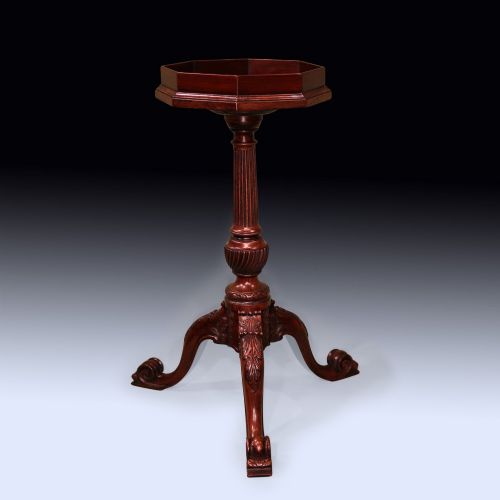
- A tall, slender stand designed specifically to elevate a light source, candle, or small decorative urn.
Octagonal Plant Stand Table: Frequently Asked Questions
What is an octagonal plant stand table used for?
These tables provide a raised surface for potted plants, small lamps, or decorative ornaments in domestic spaces. Their eight-sided tops fit neatly into corners or alongside seating.
Historically, makers designed similar stands as urn stands, torchere supports, or occasional side tables. The compact footprint makes them versatile for modern rooms requiring surface area without bulk.
How do I identify a Moorish revival table?
Moorish revival pieces rely on dense, intricate surface carving and geometric lattice patterns. They frequently incorporate inlaid bone or mother-of-pearl.
Originating in late Victorian interest in exotic styles, these tables often utilise teak or hardwood frameworks to support the heavy decorative scheme.
How do I care for antique hardwood tables?
Maintain timber surfaces by dusting with a dry cloth and occasionally applying natural beeswax to nourish the wood grain. Avoid placing items near direct heat sources to prevent timber splitting.
Protect inlaid sections by keeping moisture away from brass, bone, and mother-of-pearl elements.