
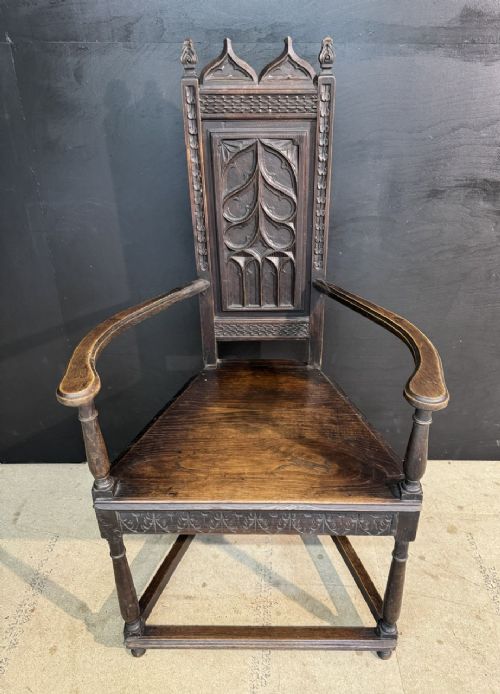
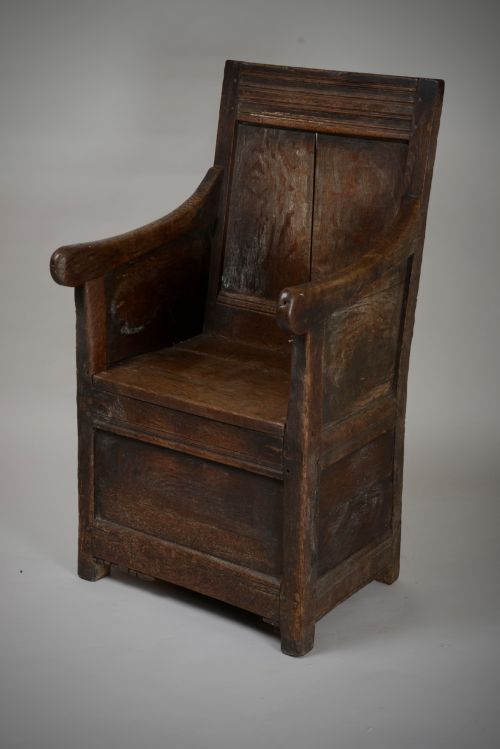
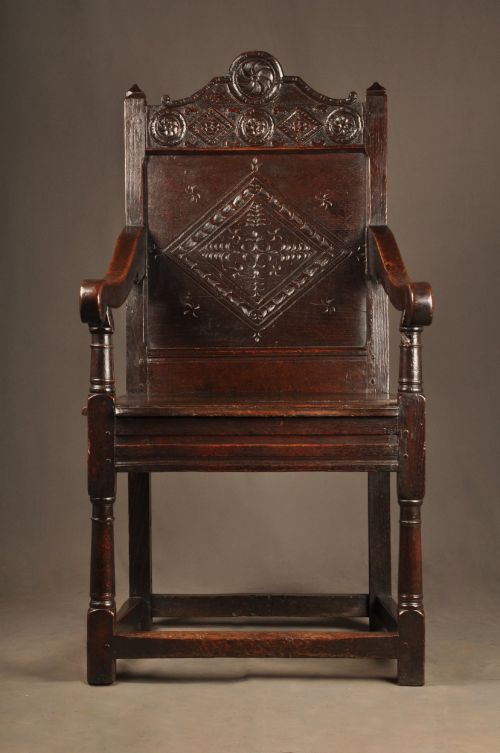
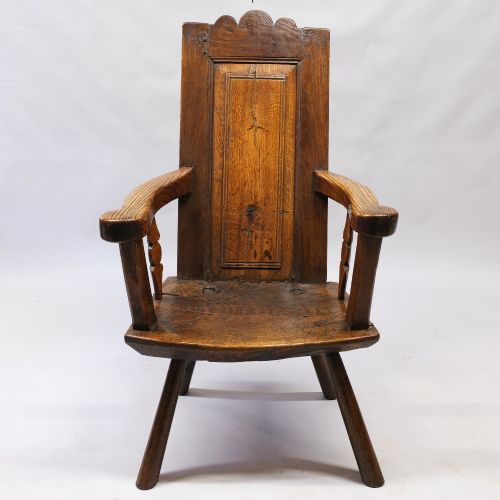

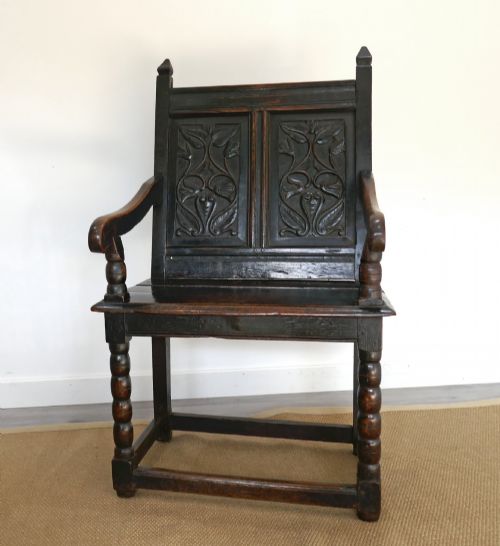
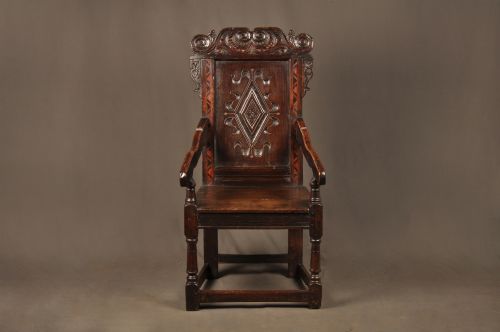
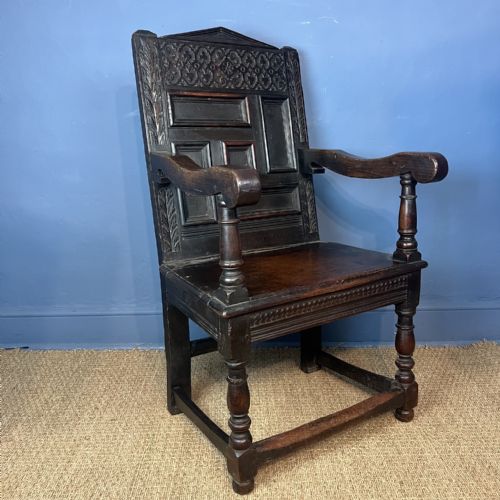
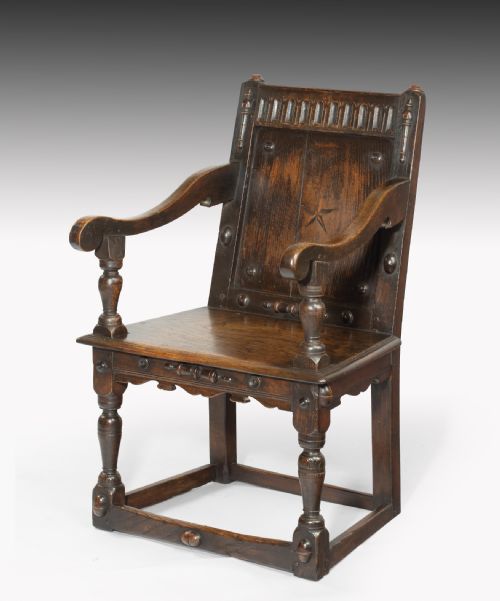
Oak Wainscot Armchair
Solid timber and rigid joinery define the oak wainscot armchair, a seating form built to last centuries in domestic halls.
Understanding the oak wainscot armchair
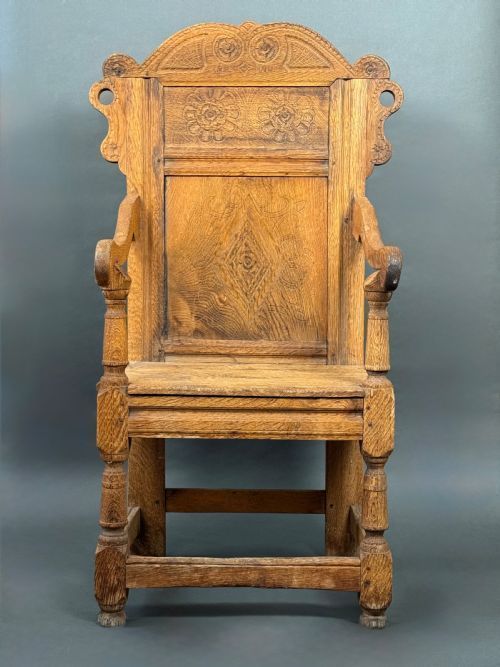
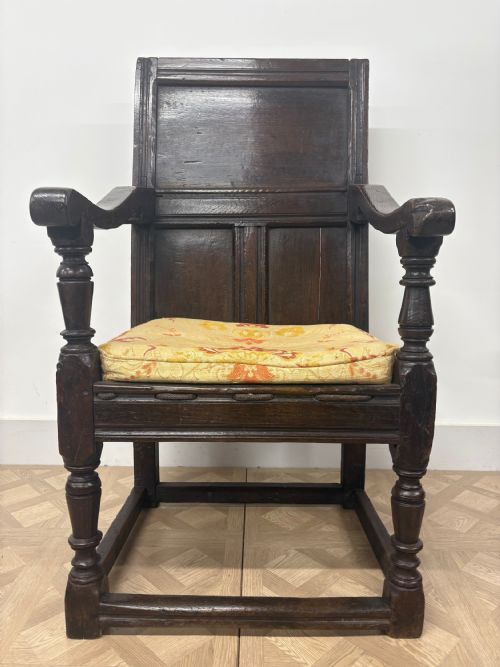
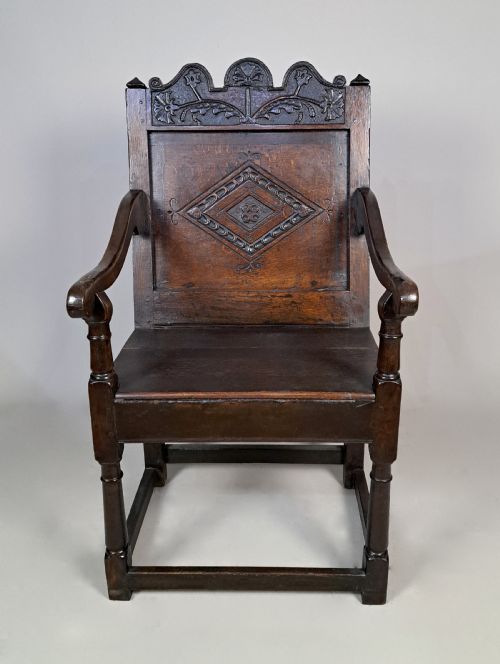
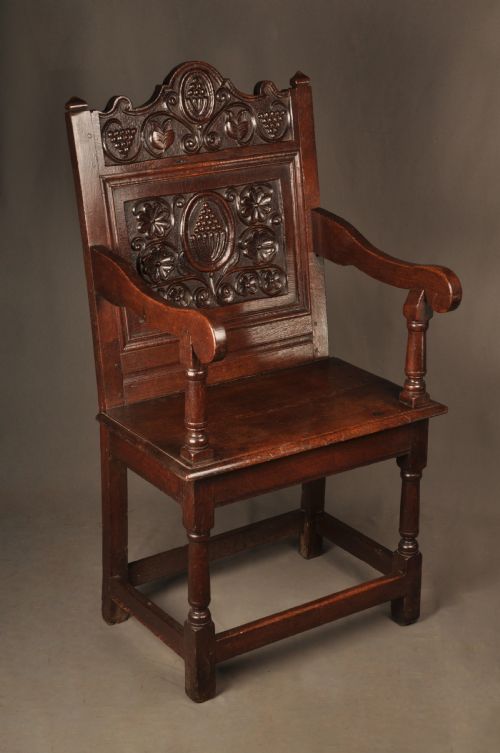
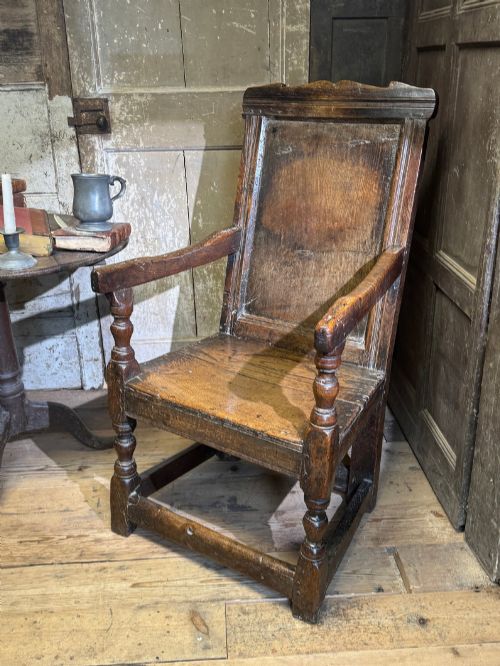
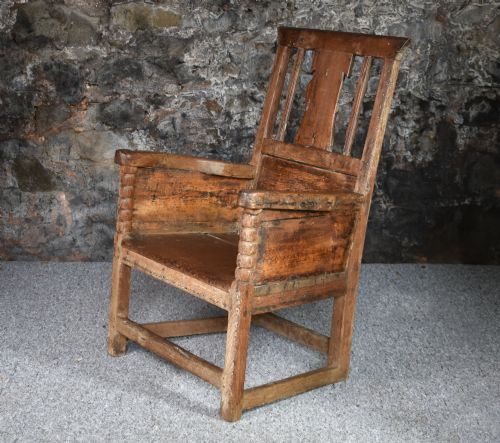
An oak wainscot armchair represents the heavier end of early domestic seating, constructed with solid wood panels and framed joinery rather than upholstery. When searching for this form, buyers encounter examples originating principally from the sixteenth, seventeenth, and eighteenth centuries, alongside later nineteenth-century revivals.
The seventeenth century yields the highest volume of surviving pieces, often displaying regional traits associated with Yorkshire, Lancashire, or Wales. Earlier sixteenth-century box chairs and later eighteenth-century country interpretations also appear across the inventory.
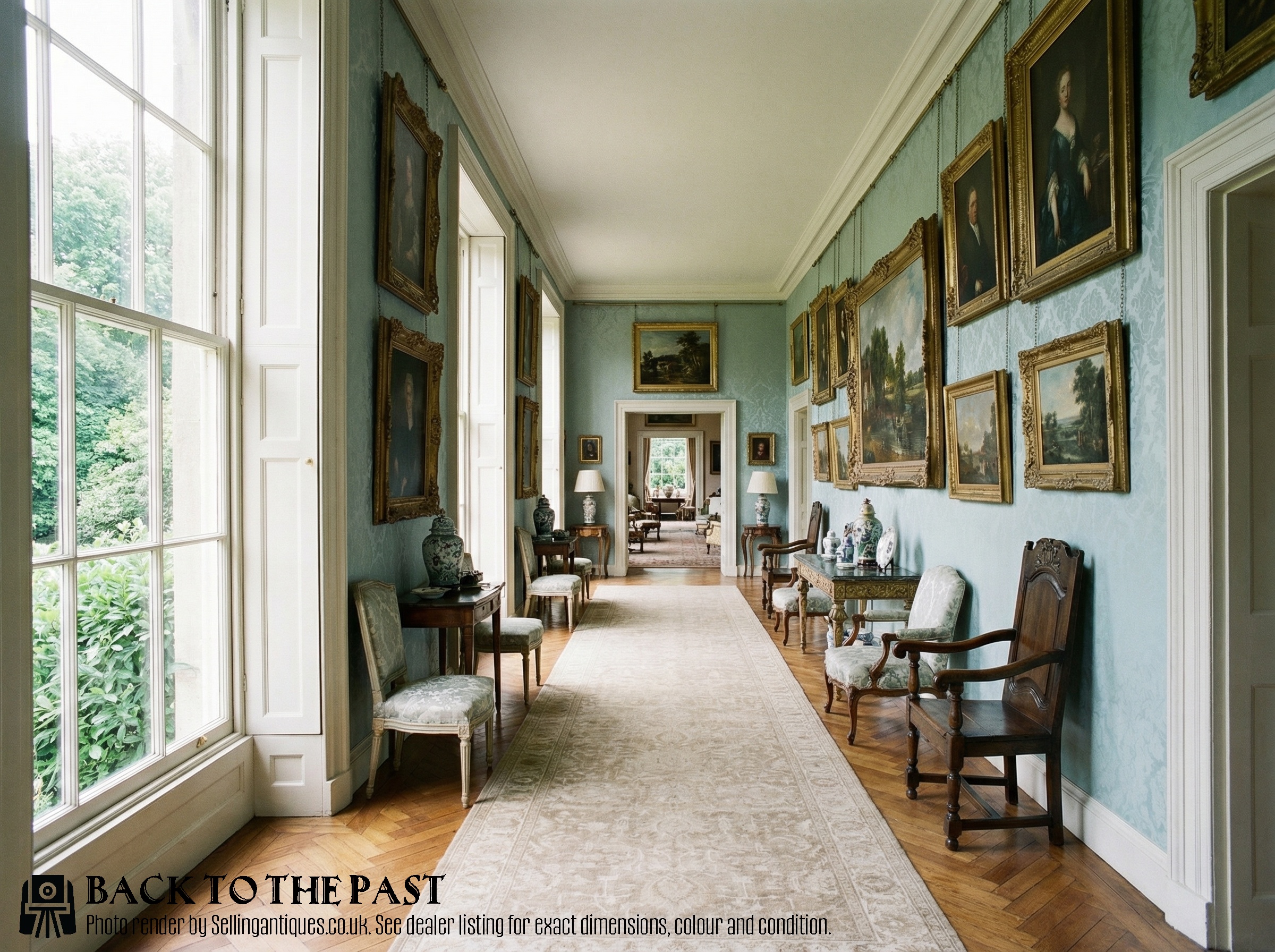
Materials and construction
Makers utilised solid oak almost exclusively for these chairs, relying on its density and strength to support the heavy panelled backs and substantial armrests. Occasional pieces incorporate alternative native timbers such as elm or alder, though oak remains the defining material.
Construction relies on traditional joined framework, utilising pegged mortise and tenon joints to secure the uprights, seat rails, and back panels. Surfaces show the marks of hand tools, including adzes and chisels, prior to the widespread adoption of mechanical planing.
Retail Price Guide 2026
Typical UK retail prices for oak wainscot armchair, calculated from the Sellingantiques database of over a million retail prices indexed since 2003. This retail price guide relies exclusively on Sellingantiques data; no external sources or auction records are used, so the figures do not describe the wider market.
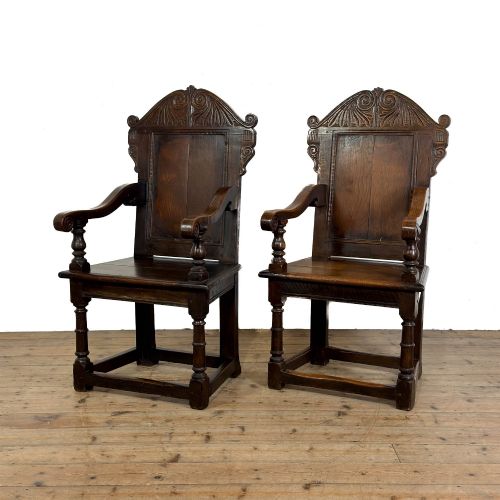
Several heavy examples are recorded specifically as throne chairs, suggesting past occupants enjoyed ruling the household from the fireside.
Assessing quality and proportion
Quality rests primarily on the depth and crispness of the carved ornament, ranging from simple channel-moulded rails to intricate guilloche patterns and figurative panels. Pieces with well-proportioned arms and uncompromised structural height command greater attention from collectors.
The degree of original timber retention and the integrity of the joined joints determine the overall substance of the piece. Later replacements to seat boards or lower legs alter the balance of an otherwise period example.
The Oak Wainscot Armchair Glossary
- Wainscot
- A term originally describing oak panelling, applied to chairs built with panelled wooden backs and solid box-like construction.
- Joined
- A method of furniture construction using interlocking timber joints secured by wooden pegs rather than metal nails or glue.
- Carolean
- Pertaining to the reign of King Charles II, a period associated with rich carving and turned components in seating.
- Elbow chair
- An alternative historical term for an armchair, referencing the prominent wooden armrests designed to support the arms.
Frequently Asked Questions
How were wainscot armchairs used?
These chairs served as principal seats of authority within the great hall or parlour, often reserved for the head of the household.
Their solid wooden construction protected the occupant from draughts in unheated rooms.
Where were these chairs placed?
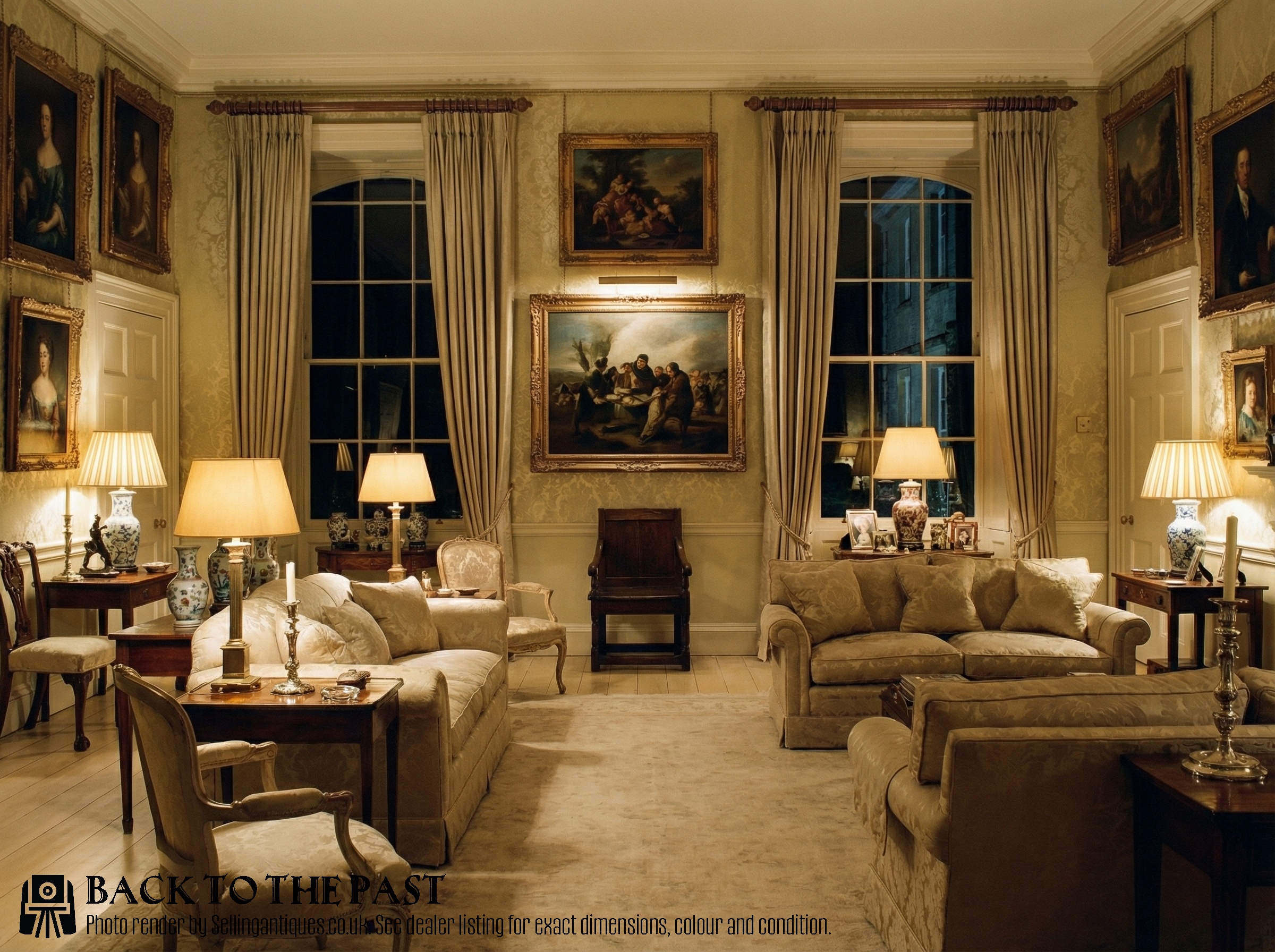
Owners positioned them beside the hearth or at the head of the dining table where heavy timber provided both status and physical comfort.
Later periods saw them relocated to libraries, hallways, or used as reading chairs.
How do I care for early oak?
Maintain stable indoor humidity levels and apply traditional beeswax periodically to nourish the dry timber surface.
Avoid placing solid oak furniture near direct heat sources or in strong sunlight.
How do I identify a revival piece?
Nineteenth-century revival pieces often display machine-sawn timber marks and uniform colouration that differs from seventeenth-century patina.
Joinery techniques on later copies tend to rely on modern adhesives alongside or instead of pegged mortises.