
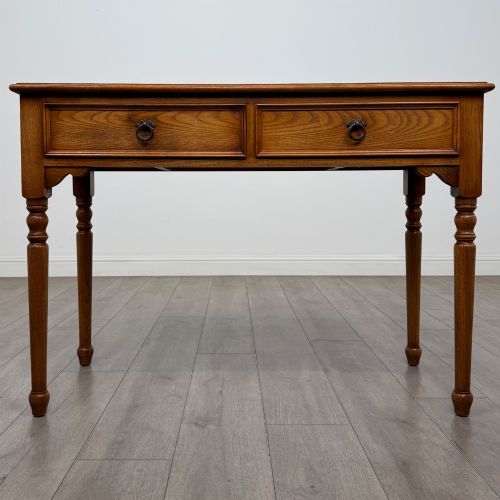
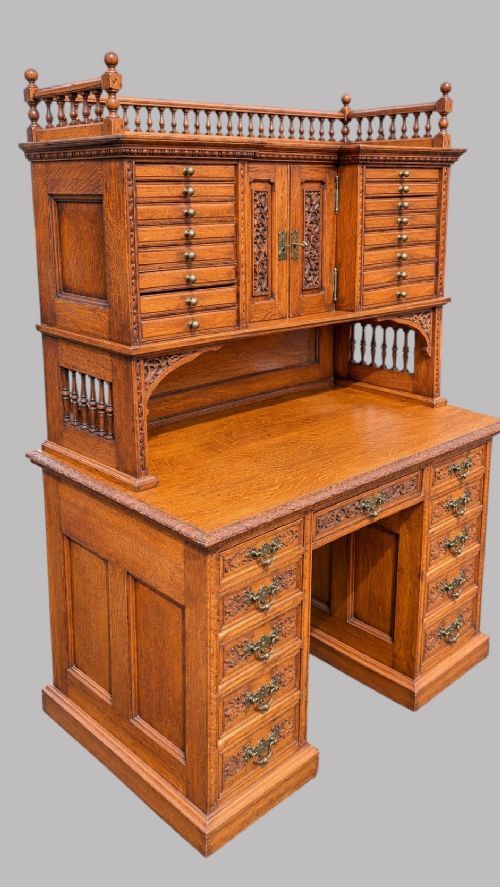
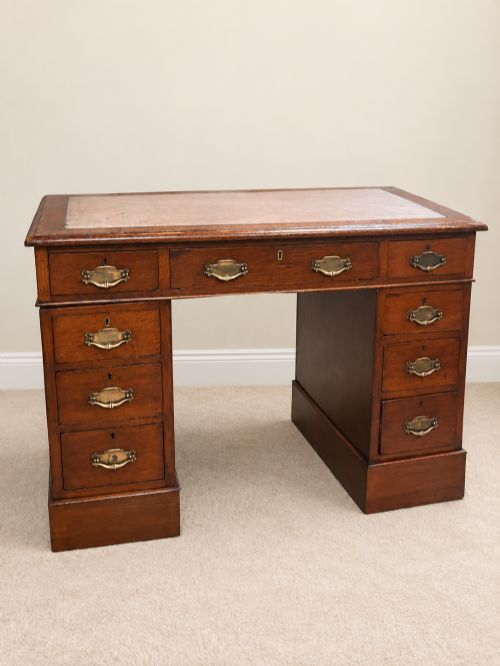
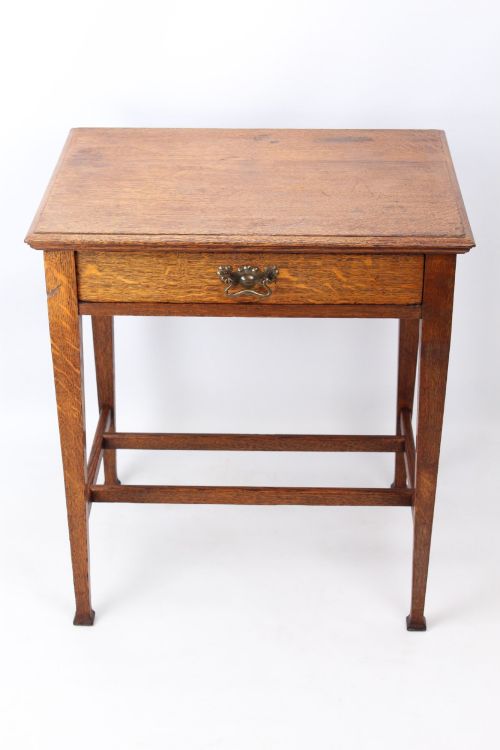
Oak Study Table
An oak study table brings solid construction and rich grain to a room, offering a dependable surface for daily work and reading.
What an oak study table is
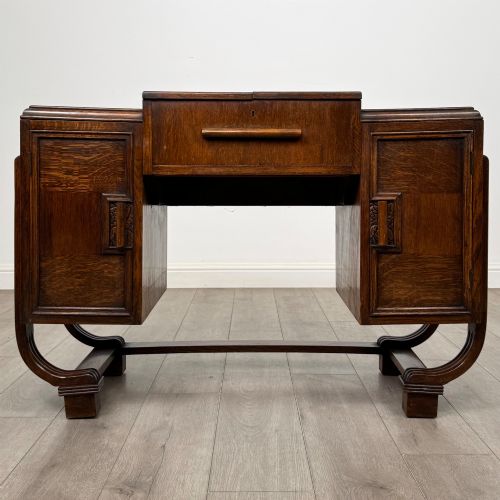
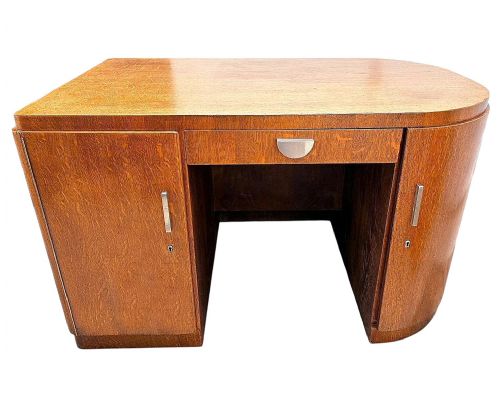
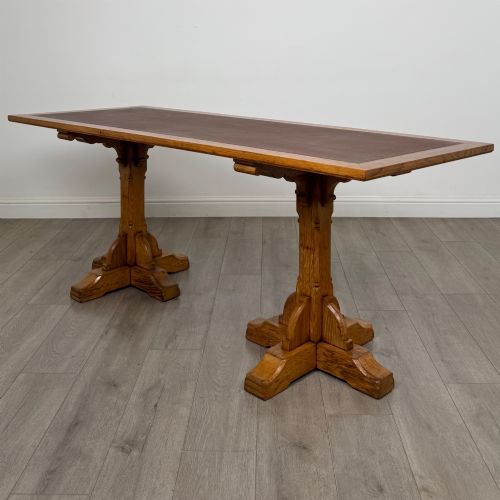
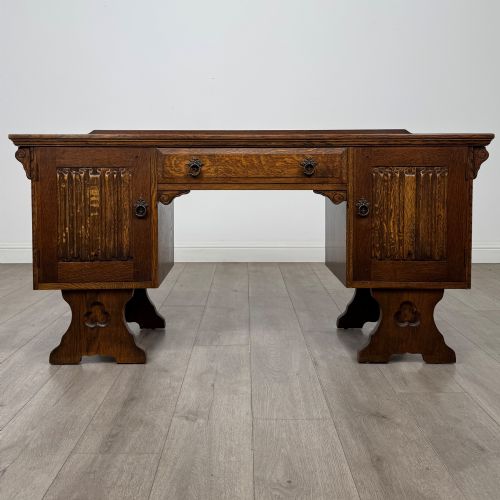
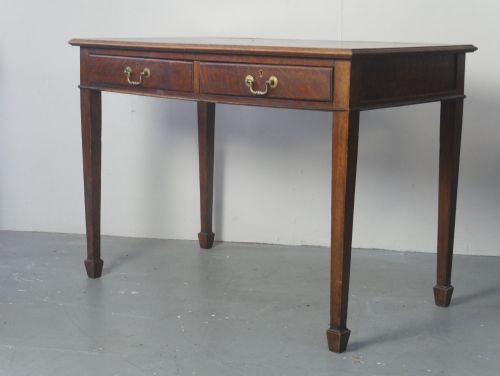
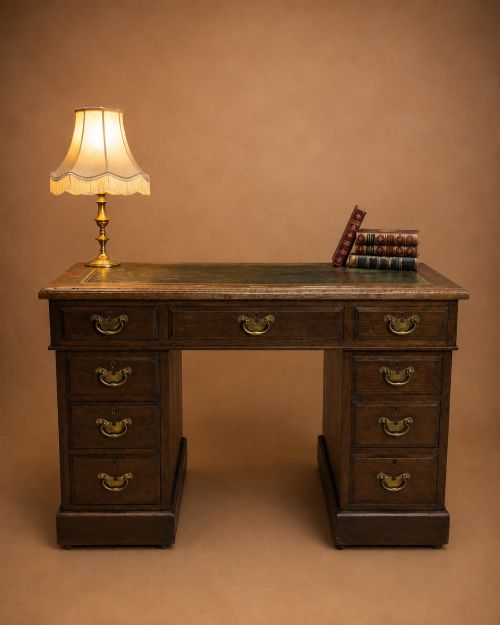
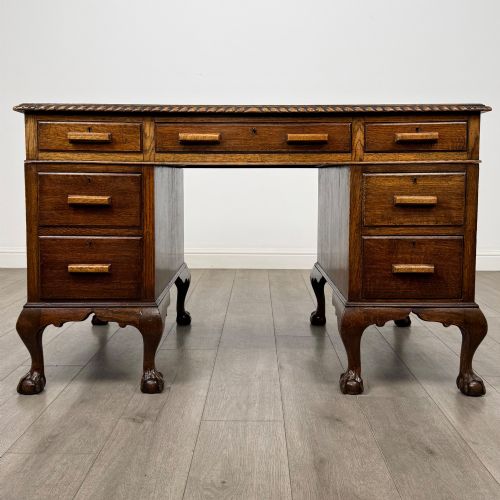
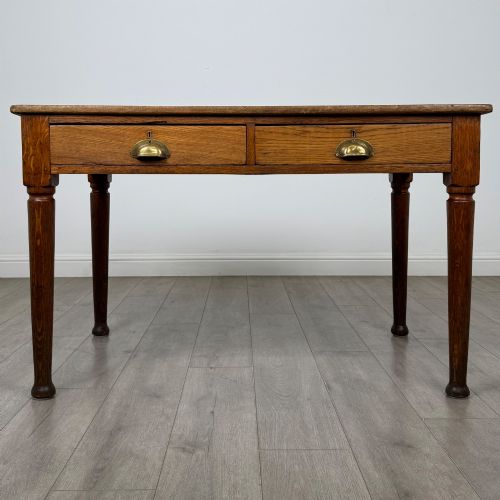
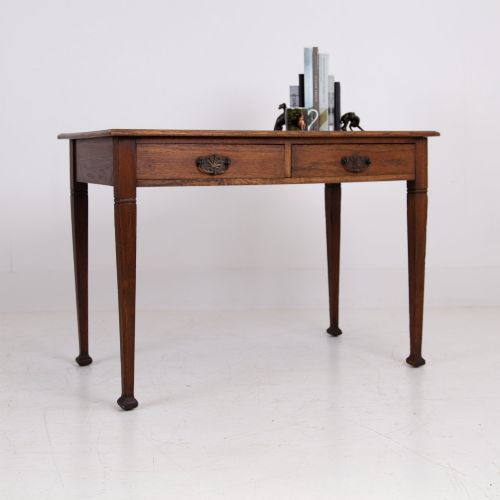
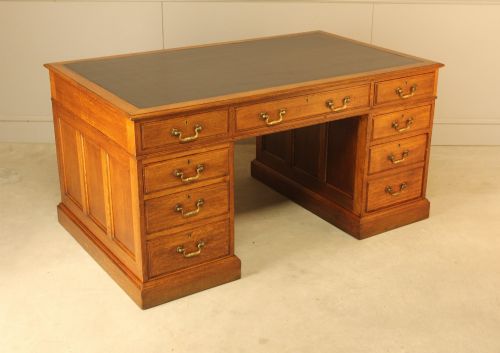
An oak study table is a practical writing surface or library table built primarily during the Victorian, Edwardian, and Arts and Crafts periods. These sturdy pieces serve as functional desks and office tables, frequently incorporating leather inserts and brass or copper fittings.
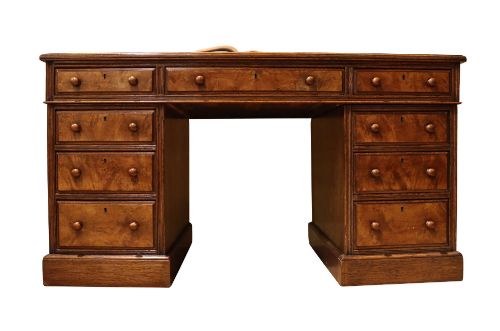
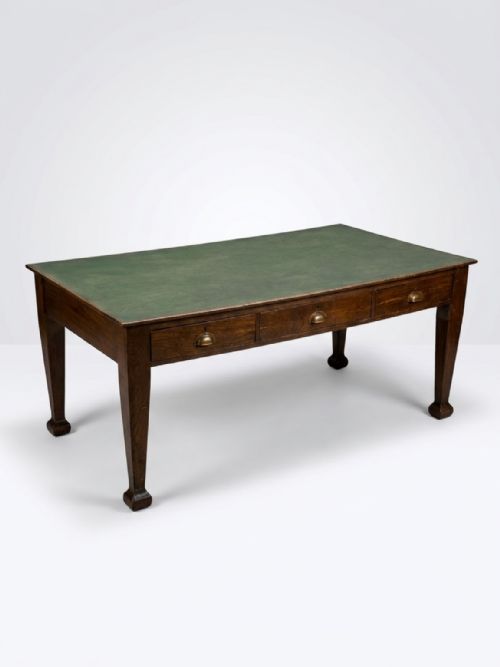
The versions most commonly met on this page span from eighteen-seventy through nineteen-ten, taking the form of twin pedestal desks, writing tables, and college study tables. English oak provides the core structure, often paired with walnut or limed finishes depending on the specific nineteenth or early twentieth-century workshop.
How they were made
Makers constructed these study tables using solid English oak, frequently selecting quarter-sawn timber to highlight characteristic medullary rays. Joinery relied on traditional methods suited to heavy daily use in studies and libraries.
Working surfaces were regularly inset with tooled leather, whilst hardware components such as handles and escutcheons utilised brass and copper to complement the dark grain of the wood.
Retail Price Guide 2026
Typical UK retail prices for oak study table, calculated from the Sellingantiques database of over a million retail prices indexed since 2003. This retail price guide relies exclusively on Sellingantiques data; no external sources or auction records are used, so the figures do not describe the wider market.
Some college study tables bear the quiet ink stains of past scholars who burned the midnight oil.
What varies in quality
Quality in these tables rests upon the selection of timber and the integration of stylistic details such as Liberty designs or Arts and Crafts movement motifs. Superior examples demonstrate thoughtful proportion and careful matching of oak boards across the top.
The treatment of secondary materials, including the tooling on leather inserts and the finish of brass and copper hardware, separates standard institutional desks from finer domestic writing tables.
Howard & Sons
The Oak Study Table Glossary
- Pedestal desk
- A heavy freestanding writing table supported by two vertical banks of drawers rather than four distinct legs.
- Library table
- A large central table designed for reading and writing, finished on all sides so it could stand away from walls.
- Quarter-sawn
- A method of cutting oak logs that produces distinctive figuring across the grain and greater dimensional stability.
- Limed oak
- A finishing technique that fills the open pores of oak with a lighter pigment to create a pale, frosted appearance popular in the Edwardian era.
Frequently Asked Questions
What is an oak study table?
An oak study table is a nineteenth or early twentieth-century desk designed for reading, writing, and administrative tasks. These pieces range from simple college tables to elaborate twin pedestal desks.
They generally feature solid timber construction, often enhanced with leather writing surfaces and metal hardware, making them central items in historical studies and libraries.
How do I date an oak study table?
Dating relies on stylistic clues, construction methods, and materials recorded across the Victorian and Edwardian periods. Pieces from the eighteen-seventies and eighties often display heavy Victorian proportions, whilst those from nineteen-ten lean towards Edwardian Arts and Crafts simplicity.
The presence of specific design movements, such as Liberty or Arts and Crafts details, helps narrow the decade of manufacture alongside standard generational wear.
Where were these tables used?
These tables were primarily built for domestic studies, home offices, institutional colleges, and private libraries. Their robust oak frames suited environments requiring heavy, continuous writing work.
Because many library tables are finished on all sides, they were frequently positioned in the centre of rooms rather than pushed directly against walls.
How do I care for a leather top?
Leather inserts require gentle cleaning with a slightly damp cloth followed by a suitable leather cream to prevent cracking. Avoid harsh chemical cleaners that can strip the original tooling and colour.
Keeping the table away from direct heat sources and strong sunlight preserves both the supple quality of the leather and the surrounding oak finish.