

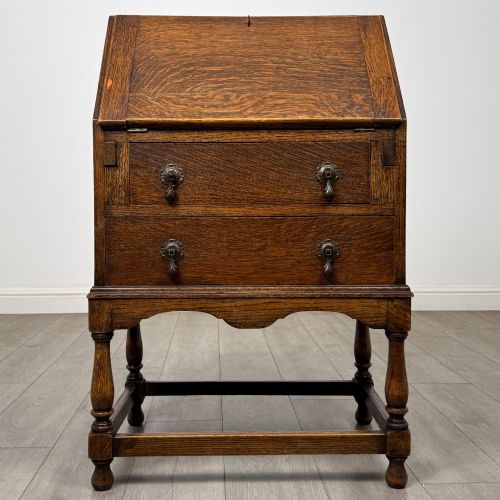
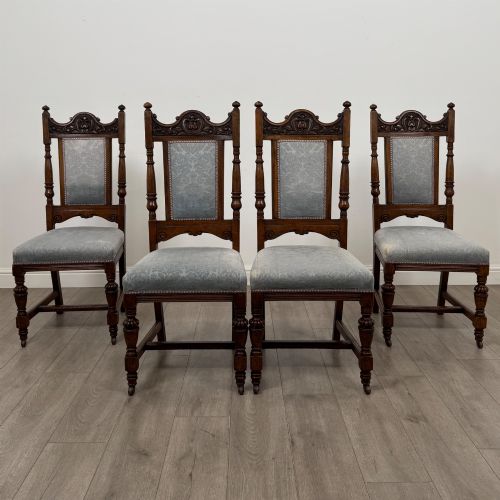
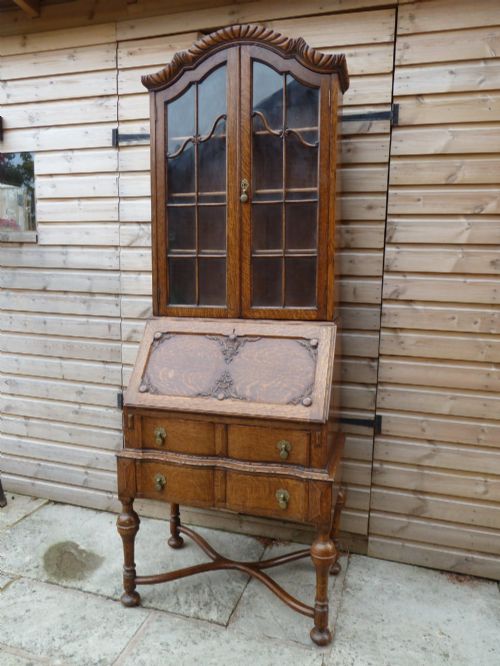
Turned Leg Oak Desk
A turned leg oak desk brings sturdy warmth and rich grain to a study, built to last generations.
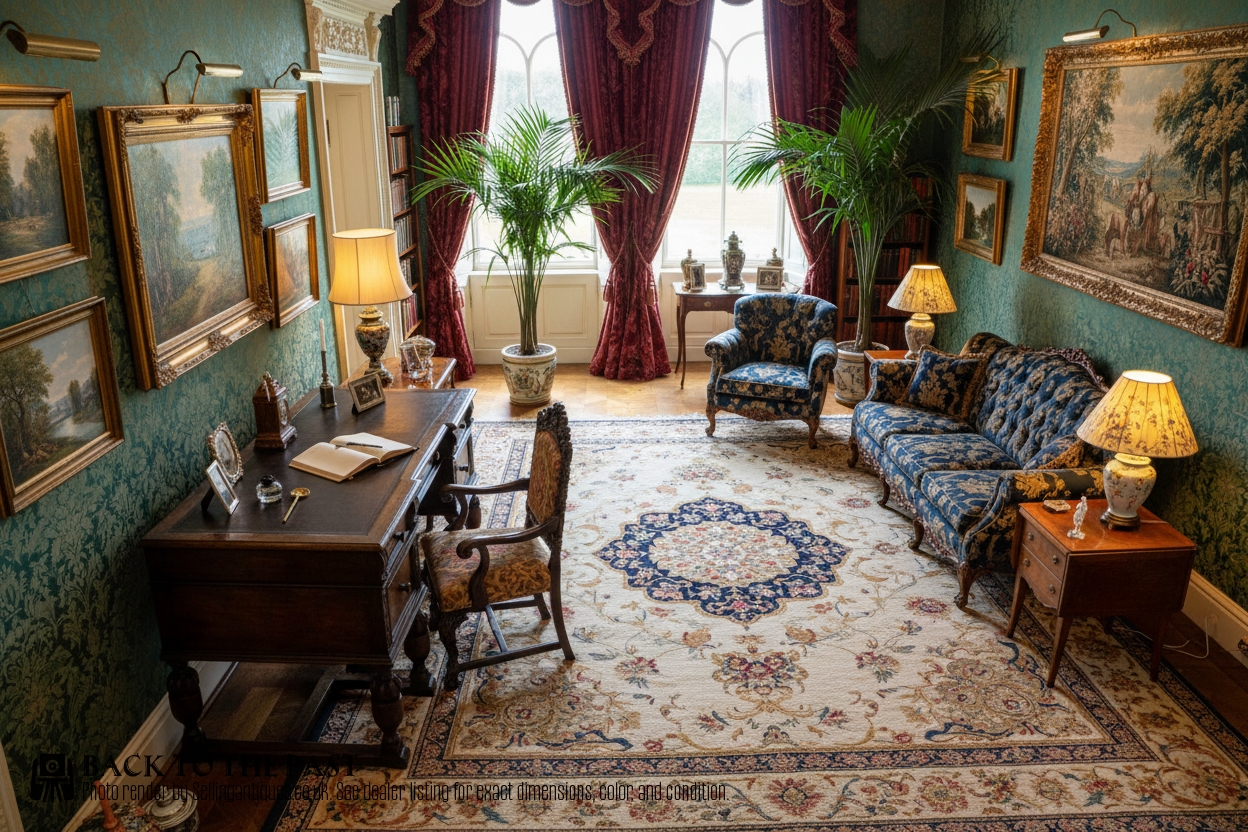
Understanding the turned leg oak desk
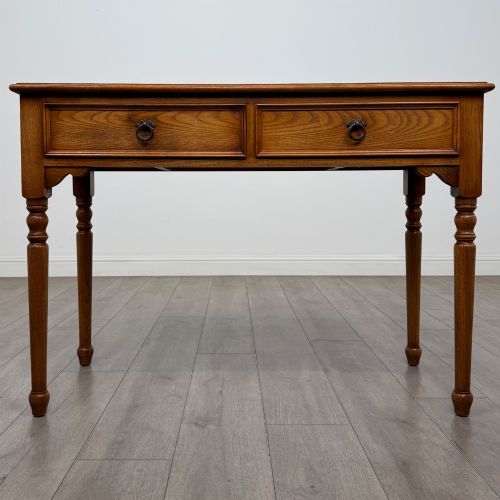
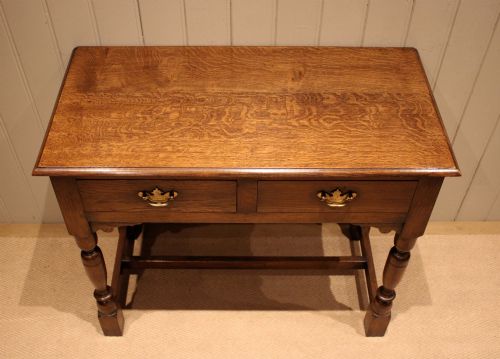
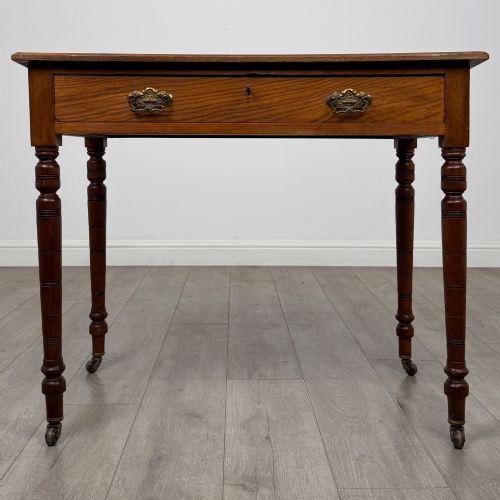
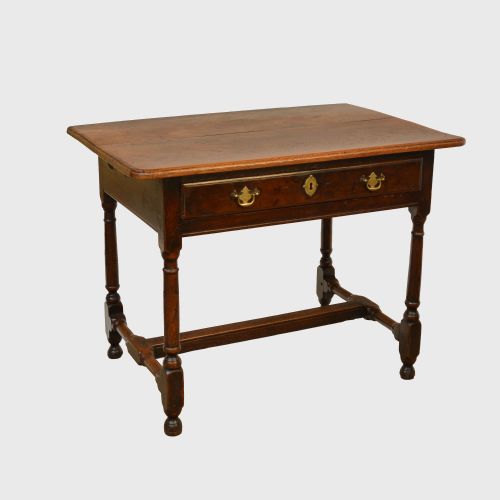
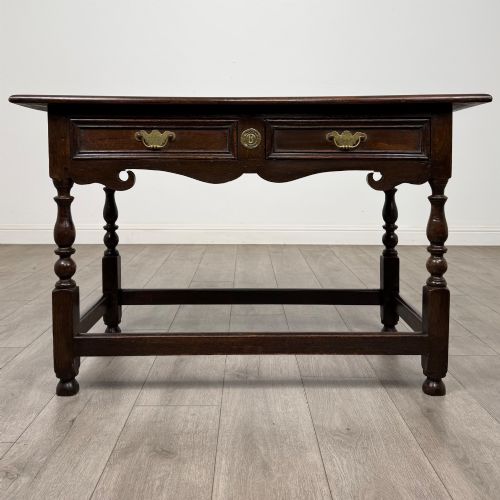
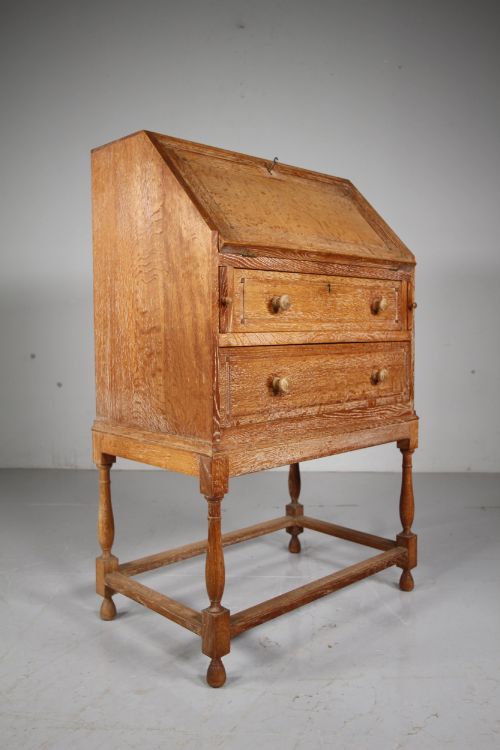
A turned leg oak desk combines durable timber construction with lathe-shaped supports, appearing across styles from the seventeenth century through the Victorian era and into the early twentieth century. You will encounter various forms on this page, including writing tables, writing desks, and bureaus.
The materials recorded in these pieces rely predominantly on solid oak, frequently paired with brass hardware, leather writing surfaces, and iron details. Golden oak finishes and darker seventeenth-century provincial tones both feature amongst the selections.
Makers and workshops produced these writing tables for domestic and professional use, ensuring that practical storage and stable legs remained central. Examples range from simple nineteenth-century writing tables to early bureau forms and carved pedestals.
Construction and Materials
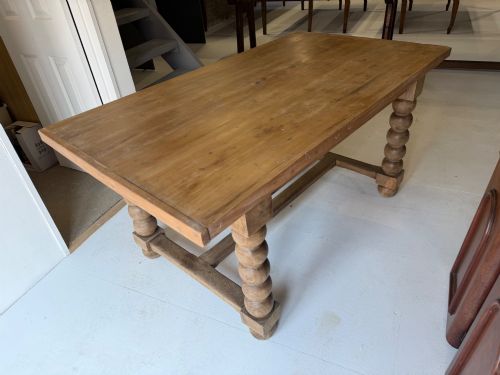
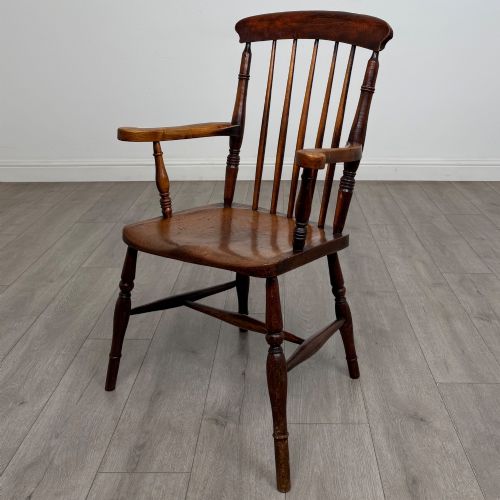
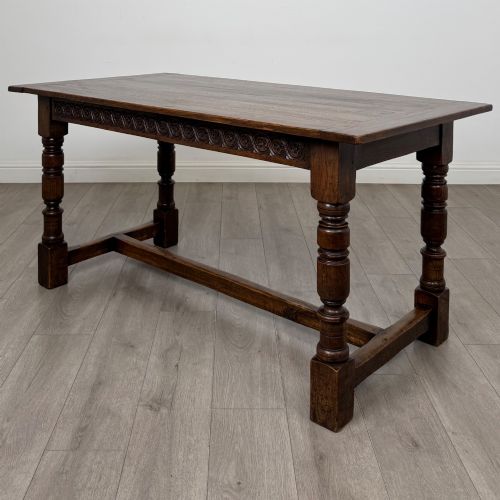
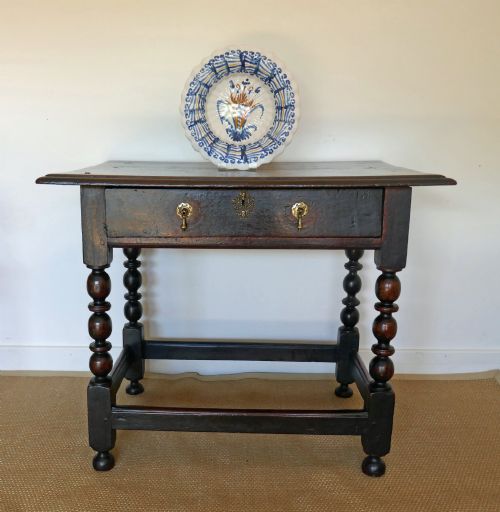
Makers shaped the structural supports on a lathe, producing bobbin and other turned leg profiles that give these writing tables their characteristic silhouette. Solid oak planks form the primary body and top surfaces across the periods.
Secondary materials such as brass handles, iron fittings, and inset leather writing surfaces complete the construction. Cabinetmakers joined the timber using traditional joinery methods suited to heavy hardwood use.
Retail Price Guide 2026
Typical UK retail prices for turned leg oak desk, calculated from the Sellingantiques database of over a million retail prices indexed since 2003. This retail price guide relies exclusively on Sellingantiques data; no external sources or auction records are used, so the figures do not describe the wider market.
Listings feature oak desks spanning the seventeenth century, the Victorian era, and the early twentieth century.
Judging Quality
Quality rests upon the crispness of the turning on the legs and the selection of the oak timber itself, distinguishing standard utility pieces from finer examples. Golden oak grain patterns and well-proportioned writing surfaces indicate higher consideration during manufacture.
The integration of supportive elements like brass hardware and leather inserts elevates certain writing tables above simpler models. Carved details and period integrity further separate the basic forms from more ambitious provincial or Victorian desks.
The Turned Leg Oak Desk Glossary
- Oak
- A durable hardwood native to Britain and Europe, prized for its strength and prominent grain. It forms the structural foundation of every piece listed here.
- Turned leg
- A structural support shaped on a lathe by rotating the timber against cutting tools. This technique creates cylindrical profiles such as bobbin shapes.
- Bureau
- A sloping-lidded desk enclosing small drawers and pigeonholes. Early examples often rest on turned legs.
- Writing table
- A freestanding desk designed primarily for correspondence rather than heavy storage. These frequently feature drawers beneath the top surface.
Frequently Asked Questions
How do I date an oak desk?
Dating relies on stylistic clues, construction methods, and materials recorded across different eras. Seventeenth-century pieces display provincial framing, whereas Victorian examples introduce golden oak finishes and distinct hardware.
Hardware styles, timber preparation, and leg turning profiles also shift over time. Comparing these details helps place a desk within the nineteenth or twentieth century.
What is golden oak?
Golden oak refers to a lighter, warm-toned finish popular during the Victorian and Edwardian periods. It highlights the natural medullary rays in the timber.
This appearance contrasts sharply with the darker, heavier tones found in earlier seventeenth-century provincial furniture.
How should I care for a leather top?
Leather writing surfaces require gentle cleaning and occasional conditioning to prevent drying and cracking. Avoid using harsh chemical sprays or excessive moisture on the hide.
Keep the desk away from direct sunlight and heat sources to preserve both the leather insert and the surrounding oak frame.
What are bobbin turned legs?
Bobbin turning is a lathe technique that produces a series of rounded, spool-like shapes along the length of a leg. It appears frequently on seventeenth-century and revival pieces.
This decorative turning adds texture and visual rhythm beneath the desk top.