
Traditional Oak Study Desk
A traditional oak study desk brings solid construction and rich grain to a room, offering a functional workspace rooted in Victorian and Edwardian craftsmanship.
Traditional Oak Study Desk
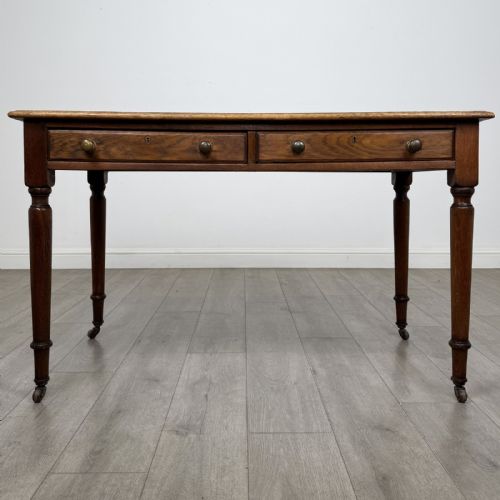
A traditional oak study desk encompasses writing tables, pedestal desks, and large partners desks designed for serious administrative work or library use. When exploring these pieces, you will encounter sturdy forms originating primarily from the Victorian and Edwardian eras, alongside early twentieth-century examples.
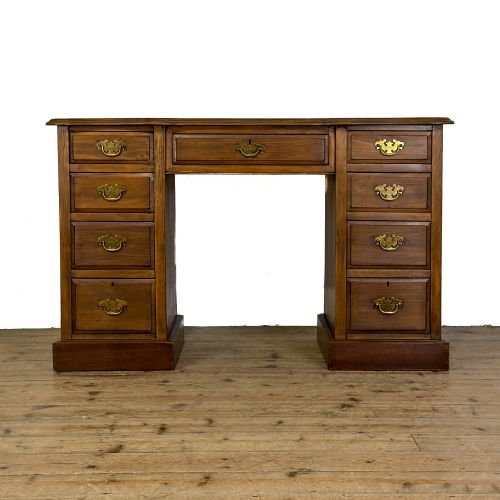
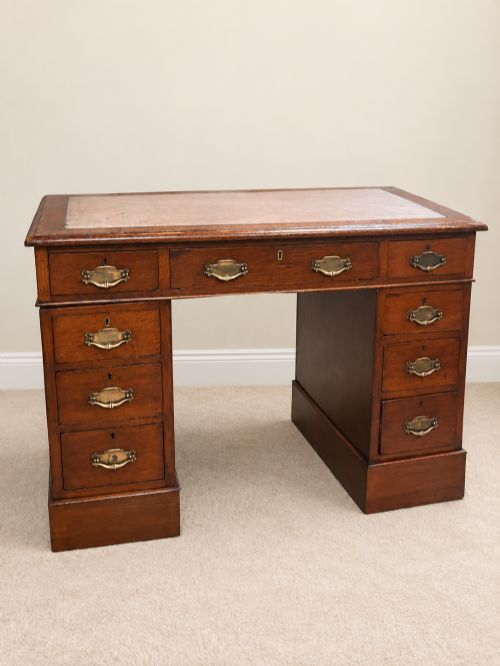
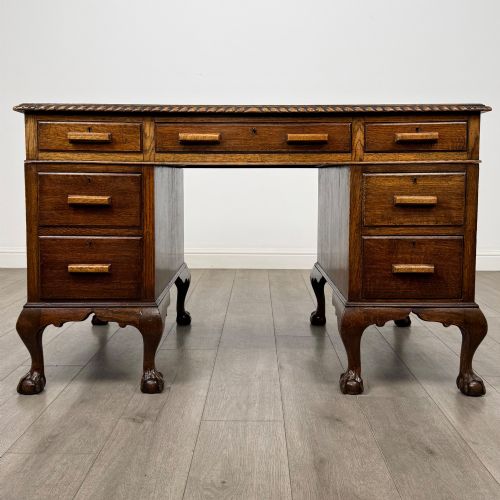
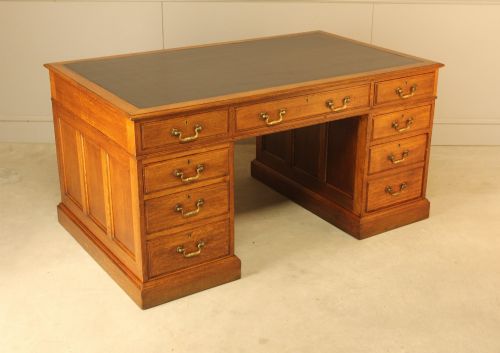
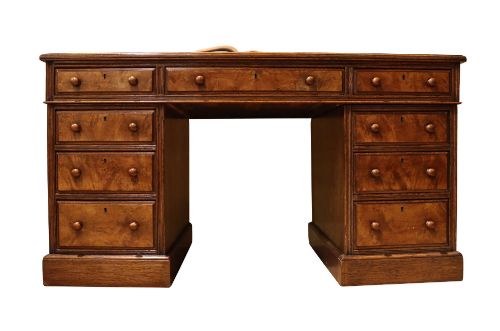
The pedestal desk is the most frequent configuration met on this page, featuring banks of drawers supporting a central writing surface. These pieces often incorporate inset leather tops and brass hardware, reflecting their heavy administrative origins in studies and offices.
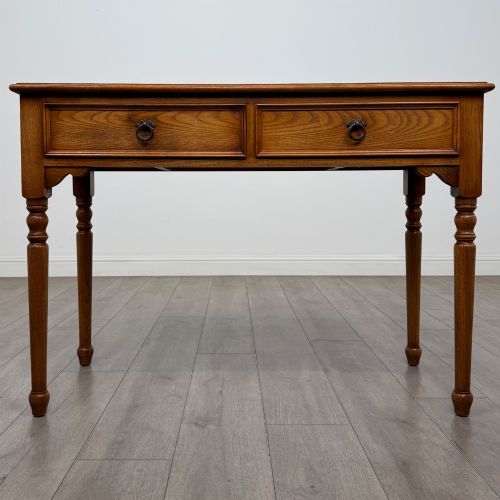
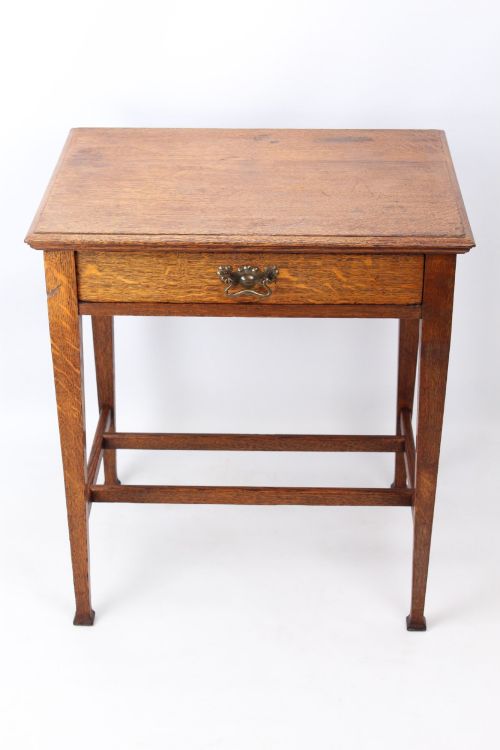
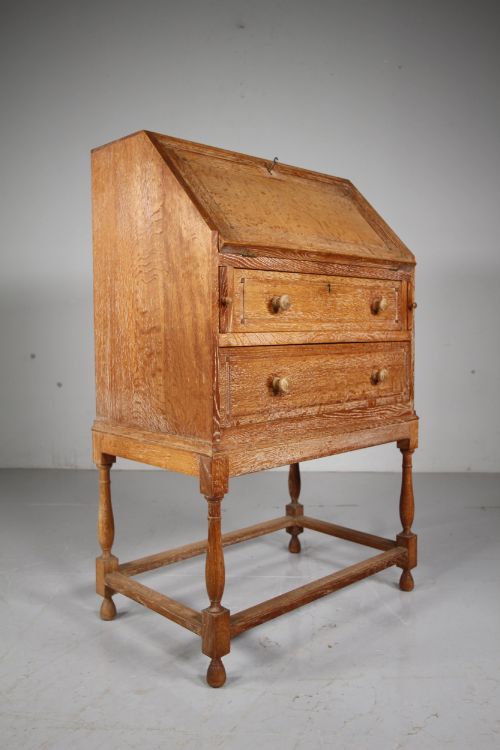
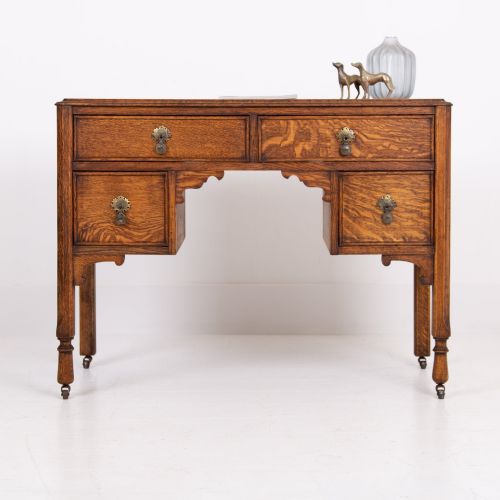
Smaller writing tables and bureaus also appear regularly, offering simpler writing surfaces with single or multiple drawers. These variations provide suitable options for domestic studies where floor space is more restricted than in a traditional Victorian library.
Materials and Construction Techniques
Solid oak and figured oak form the structural foundation of these desks, frequently paired with secondary timbers like pine in the internal framing of drawers. Craftsmen utilised quarter-sawn oak to display prominent medullary rays, enhancing the visual depth of the panels and drawer fronts.
Leather inserts in shades of green and tan provide a durable writing surface, typically bordered with blind and gilt tooling. Brass drop handles, cast iron mechanisms, and turned wooden knobs complete the functional cabinetry of the period.
Traditional Oak Study Desk Retail Price Guide 2026
Typical asking prices for traditional oak study desk among the pieces listed under this phrase on Sellingantiques today, from the lower quarter to the upper quarter. They describe what is for sale here now, not the wider market.
Some estate desks retain the original ink stains inside their top drawers, recording decades of spilled wells and hurried correspondence.
Distinctions in Quality and Make
The caliber of a traditional oak study desk depends on the selection of timber and the complexity of its joinery. Fine examples display carefully matched grain across drawer fronts and pedestal panels, whereas simpler utility pieces rely on plain timber boards.
Interior construction further separates standard furniture from superior workshop output. Dovetailed drawer linings, solid oak drawer bases, and heavy free-standing pedestals indicate careful cabinet-making intended for heavy daily service.
Heals of London
The Traditional Oak Study Desk Glossary
- Pedestal Desk
- A heavy desk consisting of two independent pedestals containing drawers, bridged by a central writing section. This form provides substantial storage beneath the main work surface.
- Partners Desk
- A large double-sided desk designed for two people to work opposite one another, featuring banks of drawers on both faces. These pieces were standard fixtures in institutional libraries and large administrative offices.
- Writing Table
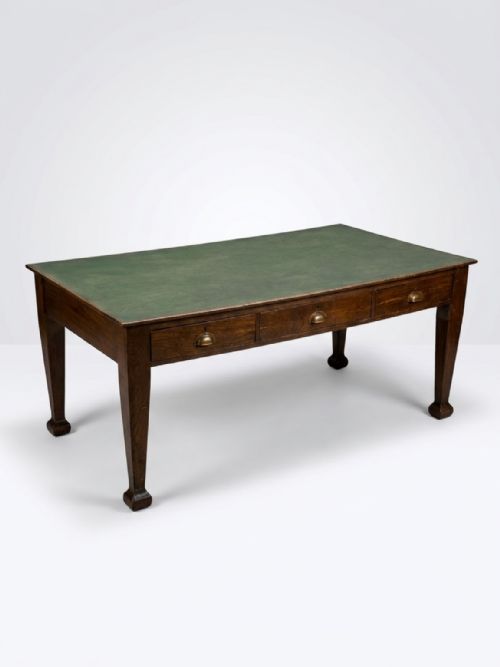
- A lighter table fitted with one or more drawers beneath the writing surface, lacking the heavy pedestal banks of an office desk. They function well as standalone library tables.
- Linenfold
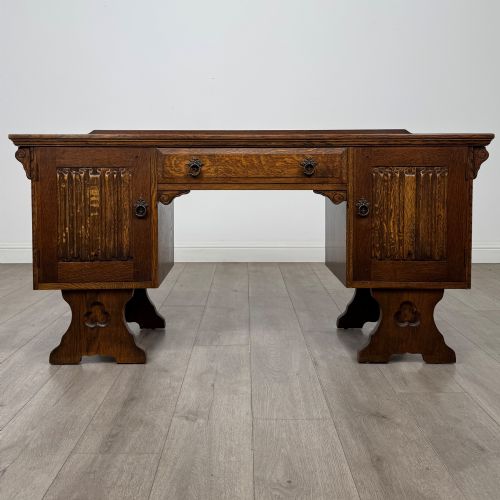
- A style of wood carving that imitates folded linen, frequently seen on Edwardian panels and cupboard doors. It adds architectural texture to the cabinetry.
- Burr Walnut
- A highly figured wood veneer sliced from the wart or burl growths of walnut trees. It creates intricate, swirling patterns when applied to drawer fronts.
Traditional Oak Study Desk: Frequently Asked Questions
What is a partners desk?
A partners desk is a large, double-sided form designed to allow two people to sit and work opposite each other. These pieces feature drawers and cupboards accessible from both sides.
They were originally built for institutional libraries, boardrooms, and legal offices where colleagues needed shared access to workspace and storage.
How do I care for a leather desk top?
Leather writing surfaces require gentle cleaning with a slightly damp cloth to remove dust and debris. Avoid harsh chemical cleaners that strip the original dye and gilt tooling.
Applying a specialised leather balm periodically helps maintain suppleness and prevents the hide from drying and cracking over time.
Are these desks suitable for modern computers?
Many traditional oak desks accommodate modern technology quite easily due to their generous surface area and sturdy construction. Pedestal desks provide ample kneehole space and surface room for screens.
Care should be taken to measure the height of the kneehole opening, as older designs occasionally sit lower than contemporary office chairs require.
How do I distinguish Victorian from Edwardian desks?
Victorian desks generally exhibit heavier proportions, darker finishes, and dense ornamentation such as carved panels or substantial brass handles. They prioritize solid utility and imposing presence.
Edwardian examples often display lighter golden oak tones, cleaner lines, and occasional Arts and Crafts influences that favor simpler construction over heavy historical revival styles.