
Oak Panel Bench
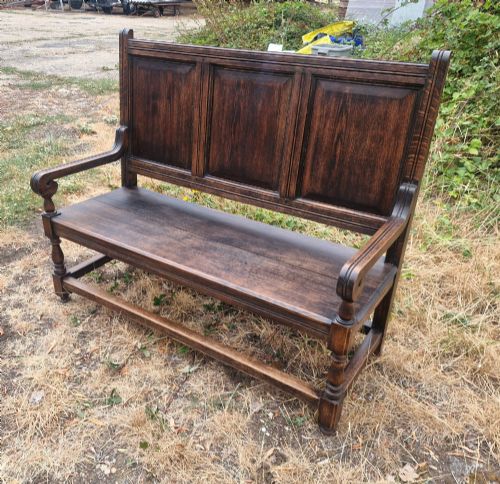
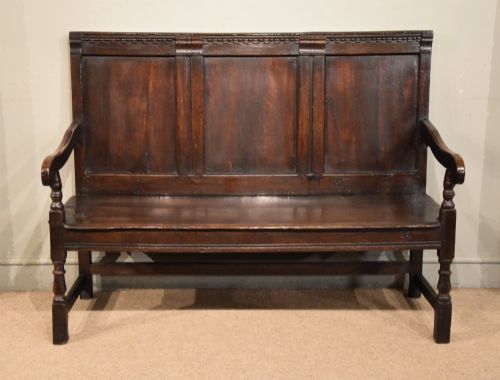
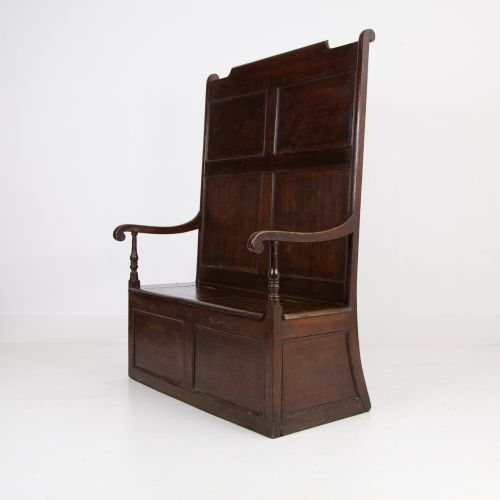
An oak panel bench is a sturdy traditional seat built to withstand centuries of daily use in draughty halls and farmhouses.
How They Were Made
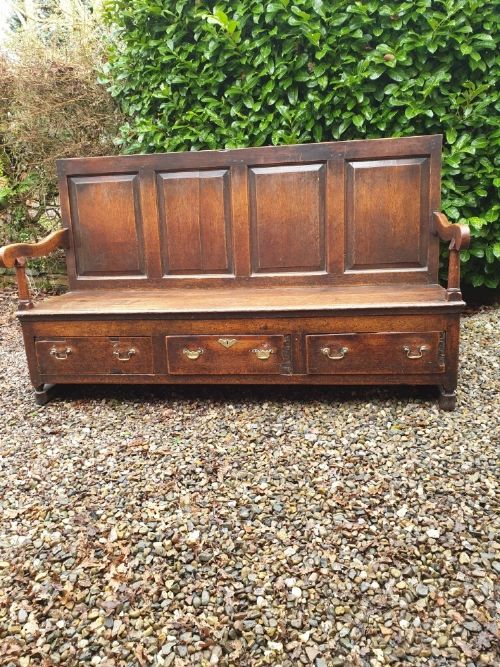
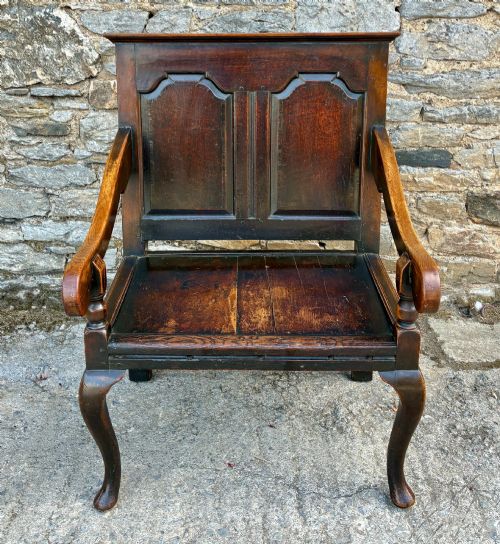
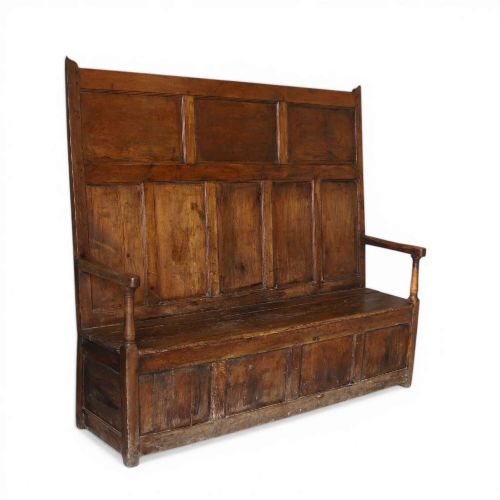
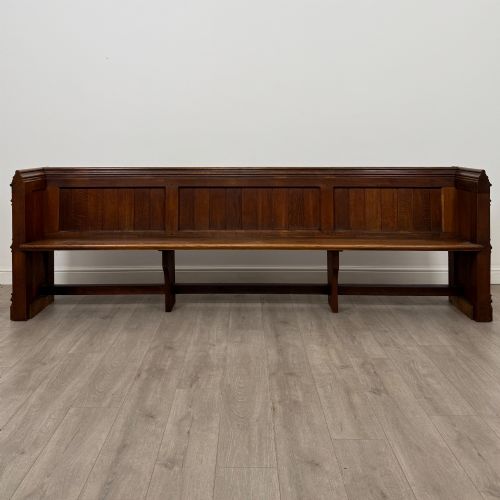
Joiners constructed these seats using frame-and-panel techniques that allowed the solid oak to expand and contract with seasonal changes in humidity without splitting the timber. Panels fit into grooved stiles and rails, secured firmly with wooden pegs known as trunnels.
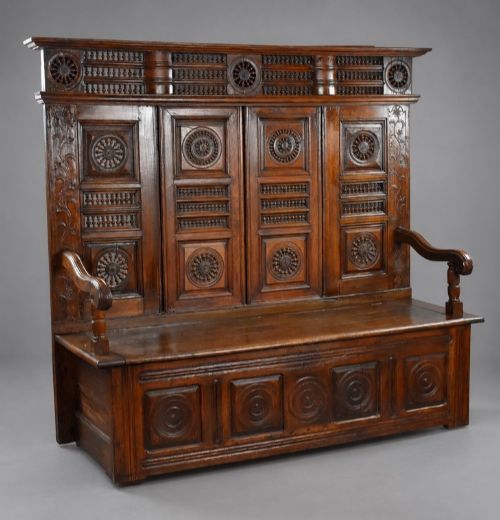
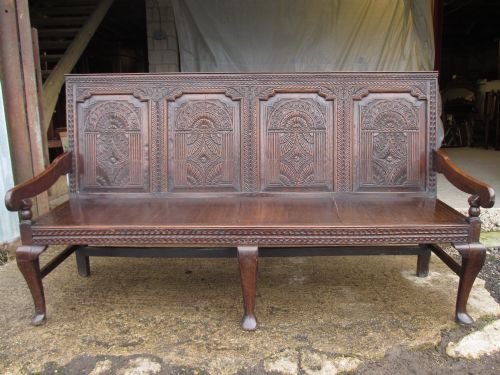
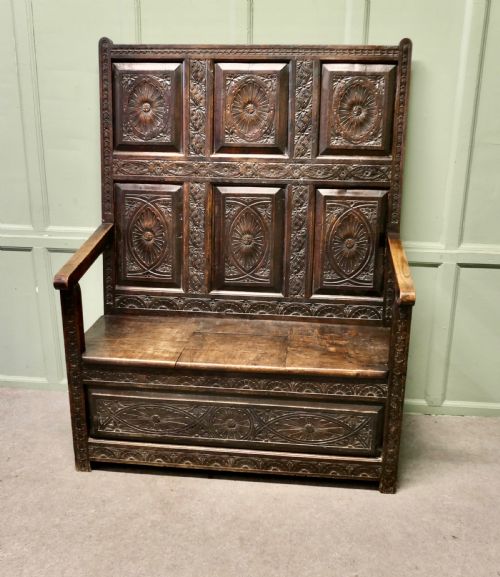
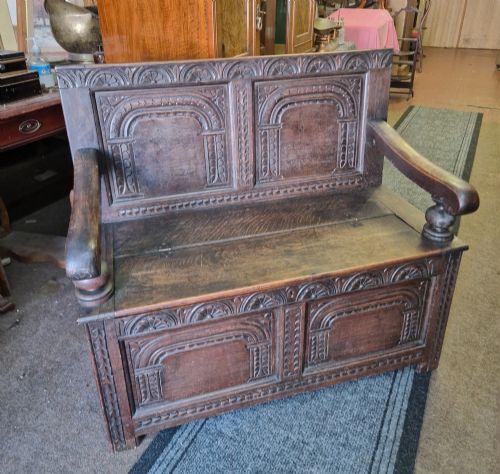
Carving, where present, was executed by hand using gouges and chisels directly onto the seasoned oak, ranging from geometric strapwork to detailed foliage and figural motifs.
What Varies in Quality
Proportion and the integrity of the original timber define the upper tier of these pieces, alongside the crispness and depth of hand-carved panels. Early examples retain their original board seats and structural framework without extensive timber replacement.
Lesser items suffer from replaced floorboards in box settles, extensive alteration of the back panels, or later nineteenth-century carving applied to older plain surfaces.
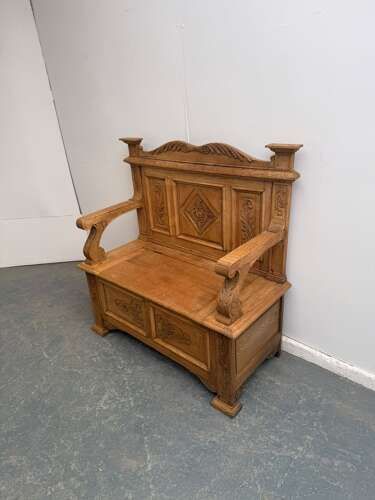
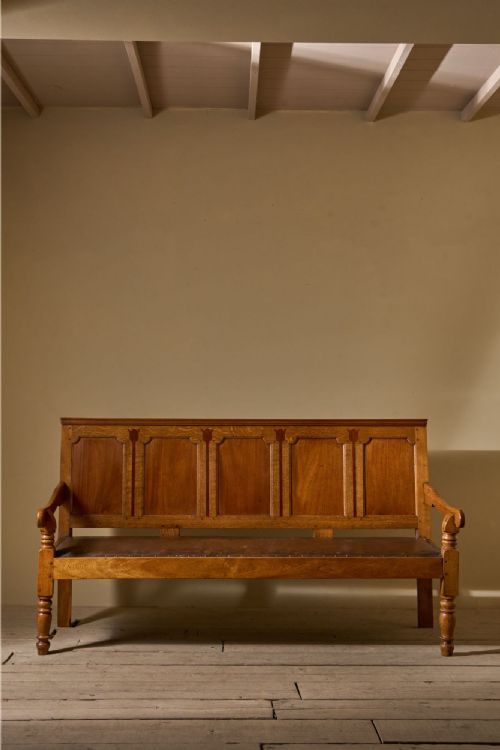
Listings feature oak panel benches spanning from the 17th century through the Edwardian era, incorporating materials like brass, iron, leather and ash.
The Oak Panel Bench Glossary
- Settle
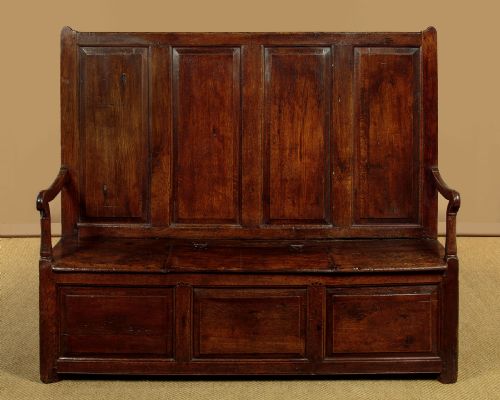
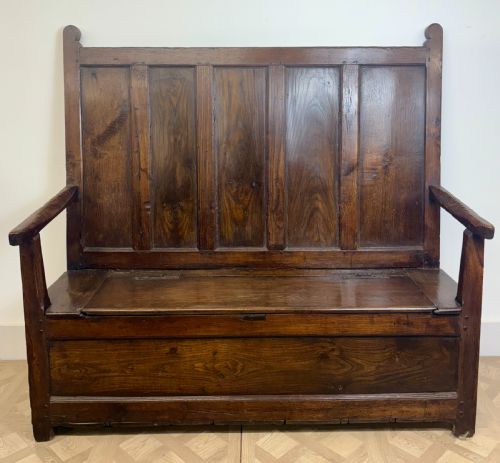
- A wooden bench with a high solid back, arms and frequently a closed box base for storage. It was designed to keep sitting occupants warm by blocking cold air currents in large rooms.
- Box settle
- A variation featuring a storage compartment beneath the hinged seat lid. This form doubled as a blanket chest and a seating place.
- Monk's bench
- A multi-functional item with a hinged back that folded down over the arms to form a table top. The listings show examples produced during the twentieth century.
- Trunnel
- A cylindrical wooden pin used to fasten mortise and tenon joints together. Traditional joiners relied on these instead of metal nails.
- Stile
- The vertical upright member in a panelled frame. It forms the outer structural boundary of the panel construction.
Oak Panel Bench: Frequently Asked Questions
What is an oak panel bench used for?
These pieces were originally placed in hallways, kitchens and great rooms to provide seating while blocking cold draughts from exterior doors. The enclosed base versions also served to store blankets, dry goods or household items out of sight.
Today, they function well in modern entrance halls or kitchens, offering both a practical seat and concealed storage space for everyday items.
How do I date an antique oak settle?
Dating relies on examining the construction methods, tool marks and timber characteristics visible on the piece. Hand-riven boards, pegged mortise and tenon joints, and the style of the panel mouldings point towards specific historical periods.
Earlier seventeenth and eighteenth-century examples display different patination and framing proportions compared to Victorian revivals or Edwardian workshop reproductions.
Are these benches comfortable to sit on?
Traditional wooden benches have upright, rigid backs built from solid oak planks without built-in padding or upholstery. They were designed for upright posture rather than lounging.
Owners commonly add loose squab cushions or sheepskins to the seat base to make prolonged sitting more comfortable while preserving the exposed timber back.
How do I care for antique oak furniture?
Maintenance requires keeping the timber away from direct heat sources and sudden humidity fluctuations, which can cause the solid oak panels to split. Regular dusting with a dry cloth and occasional application of traditional beeswax helps nourish the waxed finish.
Avoid using modern silicone polishes, as these build up on the surface and dull the natural patina developed over centuries.