
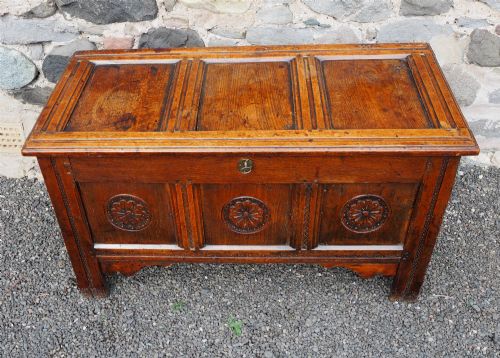
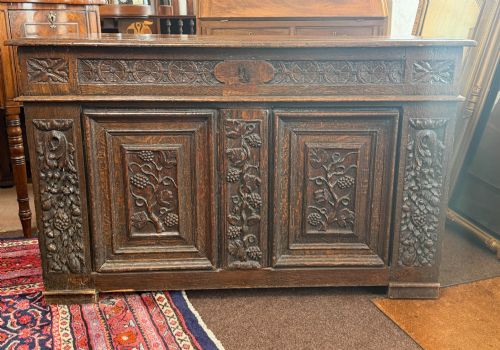
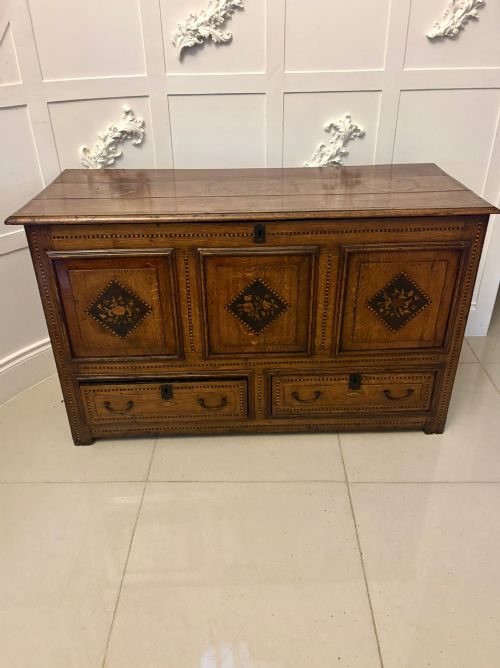

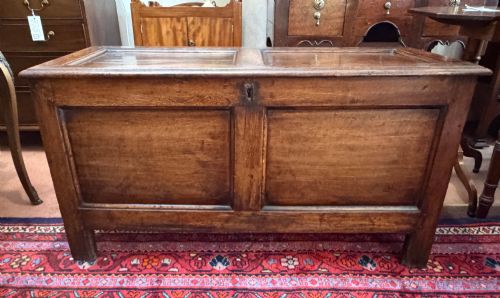
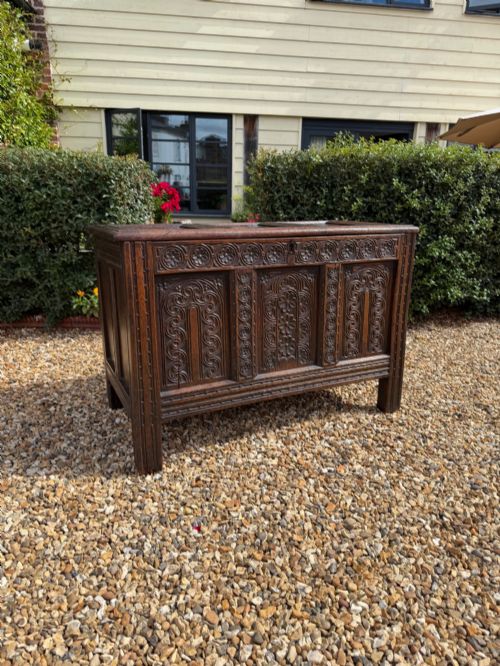
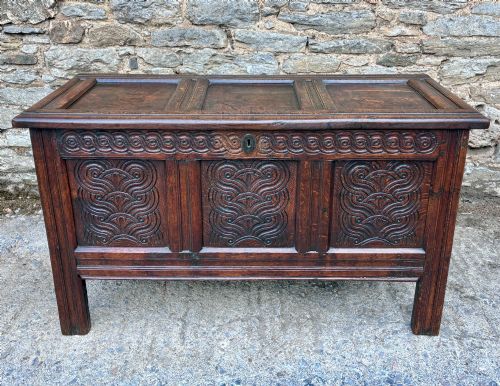
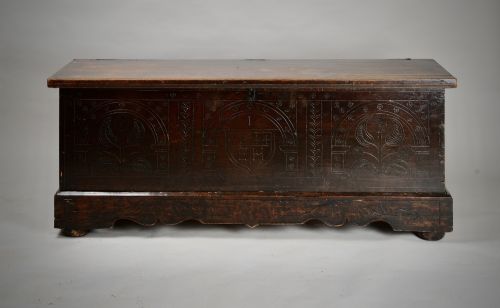
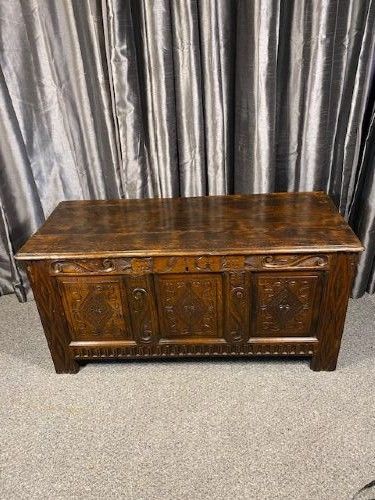
Oak Mule Chest Trunk
An oak mule chest trunk is a substantial storage piece combining a traditional lidded coffer with one or more fitted drawers beneath.
Oak Mule Chest Trunk
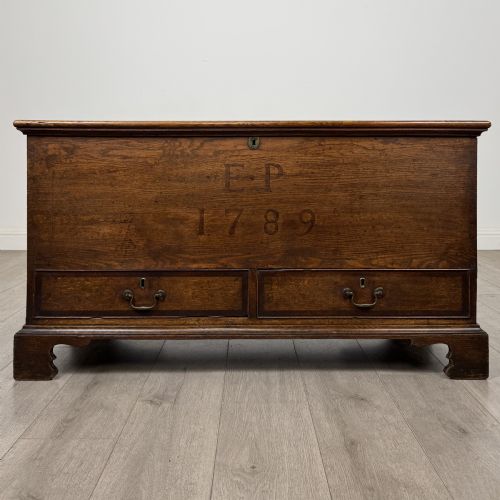
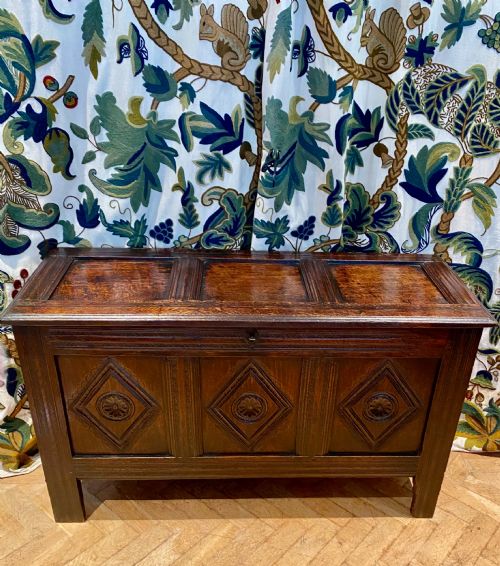
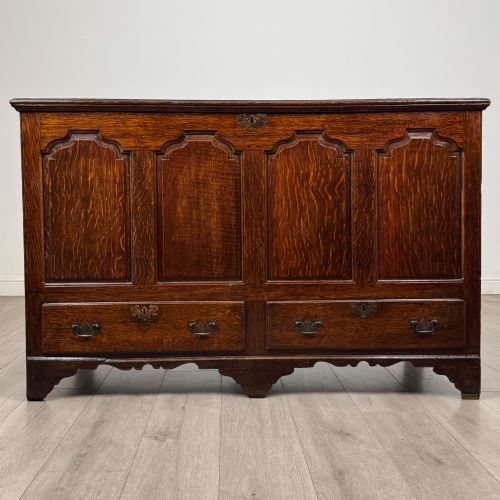
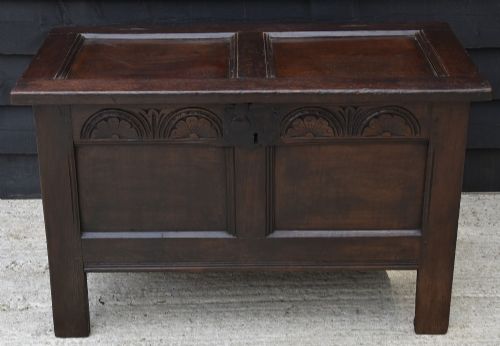
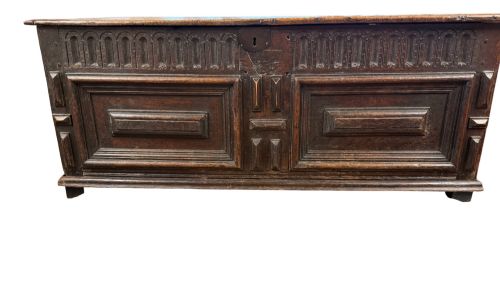
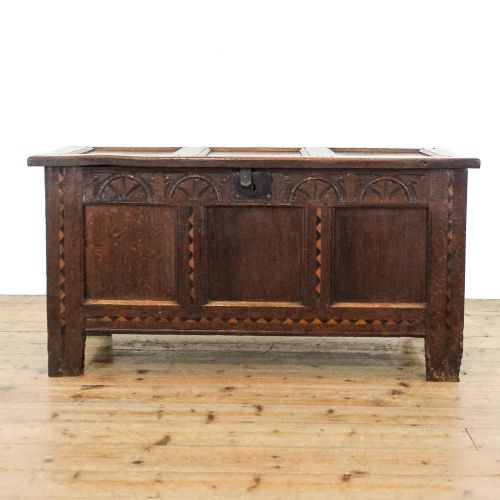
When you search for an oak mule chest trunk, you are looking at utilitarian storage furniture developed from simple coffers by the addition of a base drawer. The examples you meet on this page span from the seventeenth century through the Georgian period and into nineteenth-century revivals.
The form bridges the gap between a blanket box and a chest of drawers, offering top access for bulky textiles and drawer access for smaller items. Regional variations such as the Welsh coffer bach appear frequently alongside English vernacular pieces.
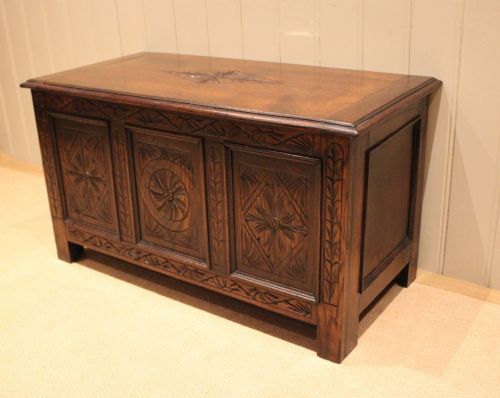
Makers utilised solid timber construction, panelling, and occasionally marquetry inlay or burr elm panels to ornament the primary storage box. These items served domestic households primarily as blanket boxes and linen storage before becoming decorative antiques.
Assessing Quality and Character
Quality in these chests is found in the crispness of the original timber framing, the integrity of the joints, and the retention of period hardware. Pieces that keep their original base drawers and uncompromised boarded lids command greater interest from collectors.
The refinement of the carving, the subtlety of geometric mouldings, and the presence of decorative details like marquetry inlay or burr elm panels separate standard vernacular examples from finer urban commissions.
Listings feature solid oak alongside contrasting materials like burr elm, brass, iron, and marquetry inlay.
The Oak Mule Chest Trunk Glossary
- Coffer
- A large wooden chest traditionally used for storing valuables, linens, or documents. They often feature hinged lids and plain or carved panel fronts.
- Mule chest
- A storage chest characterised by a coffer top sitting above one or more drawers in the base. This hybrid form emerged when makers added drawers beneath existing trunk designs.
- Coffer bach
- A small Welsh chest, translated literally as little coffer, often constructed with distinctive regional proportions and vernacular joinery. They served similar domestic storage functions on a miniature scale.
- Marquetry
- The art of applying pieces of veneer to a structure to form decorative patterns and pictures. It appears on select high-status seventeenth-century pieces.
- Linen fold
- A style of wood carving that resembles folded parchment or linen cloth. This motif frequently decorates panels on early seventeenth-century coffers.
Oak Mule Chest Trunk: Frequently Asked Questions
What is an oak mule chest trunk?
A mule chest is essentially a traditional storage coffer that has been modified to include one or more drawers built into the base section beneath the main compartment.
This hybrid design allowed household owners to access smaller items stored in the drawers without needing to clear objects off the top of the lid.
How were these chests used historically?
Households utilised these large wooden boxes primarily for storing heavy woolen blankets, household linens, and valuable personal clothing.
The sturdy construction also allowed the lids to double as temporary seating or table surfaces within modest domestic rooms.
How do I tell seventeenth-century pieces apart from later copies?
Early pieces display hand-cut joinery, pegged tenons, and distinct tool marks left by regional carpenters working with green or freshly split timber.
Later revival pieces from the nineteenth and twentieth centuries often show mechanical saw marks and standardised dimensions that differ from antique practice.