
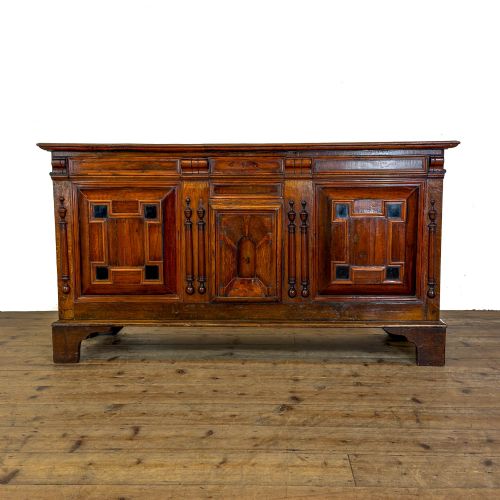
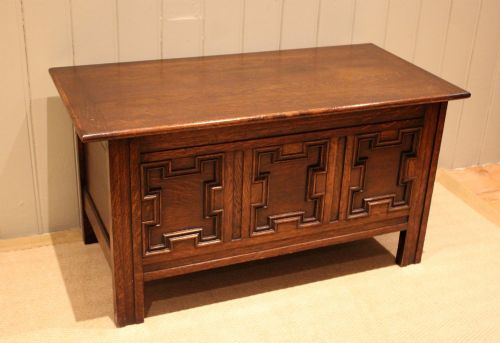
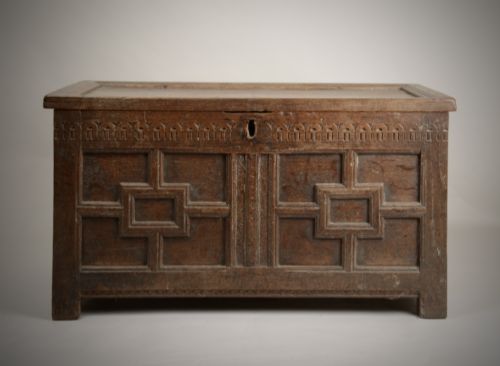


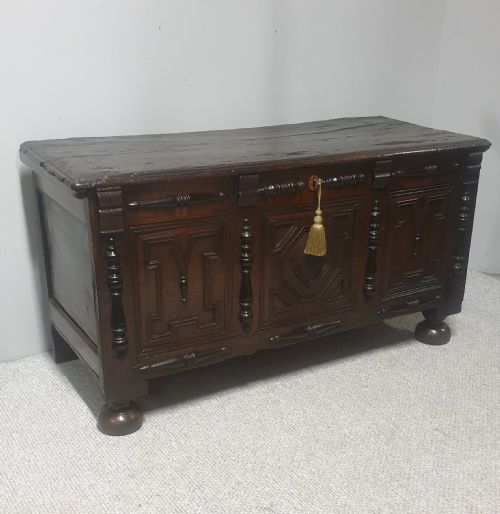


Geometric Carved Oak Trunk
A geometric carved oak trunk is a sturdy timber storage piece defined by surface carving, offering historic presence for the modern room.
Geometric Carved Oak Trunk
When you search for a geometric carved oak trunk, you encounter heavy storage furniture that spans centuries of British cabinetmaking. The pieces listed here appear in forms such as coffers, blanket chests, and mule chests, crossing periods from the sixteenth century through the nineteenth century, alongside later revivals.
The most common examples on this page date from the seventeenth century and its later revivals around nineteen-twenty and nineteen-thirty. These items combine utilitarian storage with decorative surface work, frequently featuring panelled construction and characteristic geometric moulding across the front.
Makers historically produced these trunks for domestic storage, often incorporating internal till compartments for valuables. The styles present range from Elizabethan and Jacobean to Arts and Crafts interpretations, showing how the form evolved while retaining its core timber identity.
What varies in quality
The distinction between standard and superior pieces rests upon the crispness of the geometric carving and the choice of timber figure. Finer examples display deeply undercut mouldings and carefully selected quarter-sawn oak that reveals distinctive medullary rays.
Proportion and structural integrity also separate the grades of these chests, with better specimens retaining their original timber floors, lids, and ironwork rather than replacement elements. The integration of the decorative panels into the main frame demonstrates the maker's skill.
Materials recorded across the inventory include oak, iron, ebonised wood, fruitwood, and brass.
The Geometric Carved Oak Trunk Glossary
- Coffer
- A heavy wooden chest traditionally used for storing valuables, linen, or documents. These pieces often feature hinged lids and sturdy boarded or panelled construction.
- Mule chest
- A traditional storage chest that includes one or more drawers beneath the main internal compartment. This form bridges the gap between the simple coffer and the chest of drawers.
- Geometric moulding
- Raised wooden strips applied to the surface of a panel to create repeating patterns. This technique was particularly popular during the seventeenth century.
- Quarter-sawn
- A method of timber cutting where logs are quartered lengthwise, producing boards with straight grain lines and prominent figure. This cut reduces warping in dense woods like oak.
- Strapwork
- A type of flat, interlaced ornament resembling leather straps or bands carved into the wood. It appears frequently on Elizabethan and Jacobean woodwork.
Geometric Carved Oak Trunk: Frequently Asked Questions
What is a geometric carved oak trunk?
It is a heavy timber storage chest decorated with raised geometric patterns and mouldings. These pieces served domestic households for centuries.
They appear in various forms including coffers and mule chests, spanning periods from the sixteenth century to later revival eras.
How were these trunks used historically?
Households utilised these chests to store textiles, valuable documents, and personal belongings safely away from damp floors. The heavy lids provided secure storage.
Some examples include internal compartments known as tills, which kept smaller items separated from the main body of the chest.
How do I date a carved oak trunk?
Dating relies on examining the construction methods, timber preparation marks, and stylistic vocabulary such as strapwork or geometric moulding. Earlier pieces display hand-riven timber and pegged joinery.
Revival pieces from the twentieth century often utilise machine-sawn timber or different secondary woods alongside traditional stylistic motifs.
How do I live with an oak chest?
These robust timber pieces function well as coffee tables, end-of-bed storage, or hallway benches while holding household items. Their dark wood tones anchor a room's interior.
Placement away from direct heat sources prevents the solid oak from drying out and splitting over time.