






Victorian Carved Oak Chest
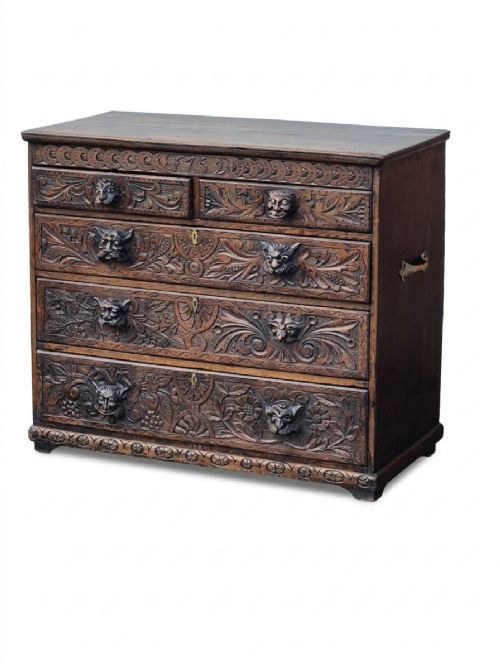
When you search for a victorian carved oak chest, you are looking at sturdy storage pieces bearing deep foliate motifs and grotesque masks.
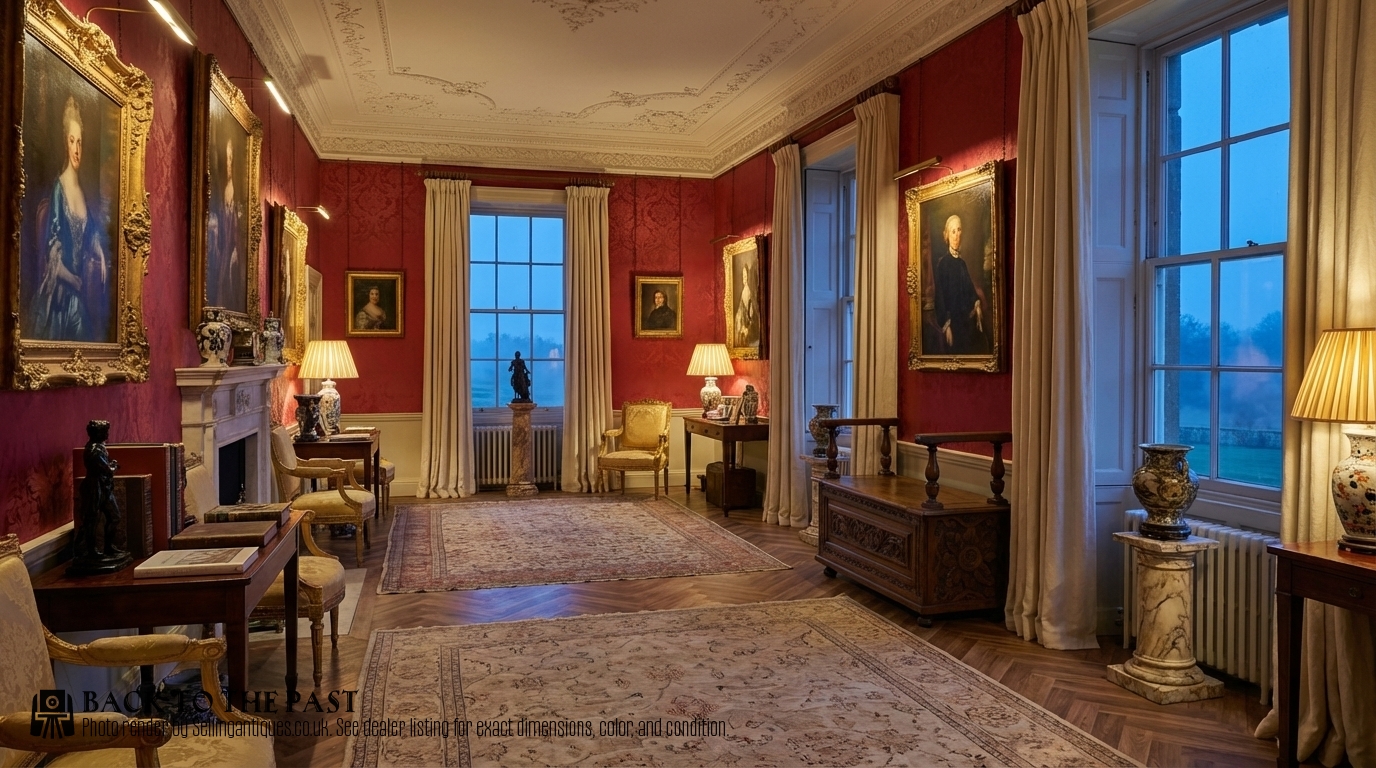
Victorian Carved Oak Chest
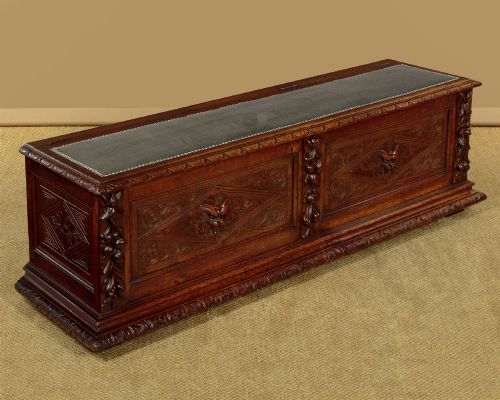
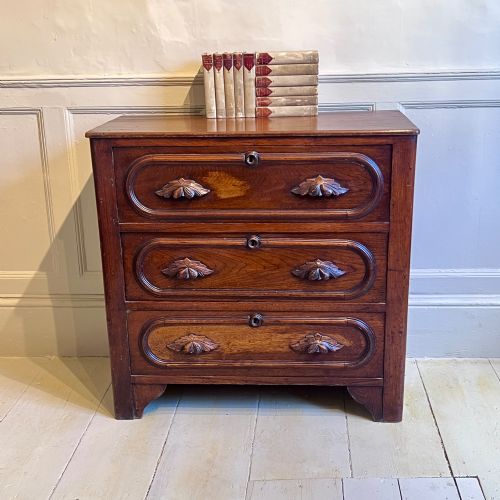
A victorian carved oak chest encompasses a range of robust storage forms, including straight-front drawer units, blanket boxes, and coffer benches. Most items met on this page date from the nineteenth century, with strong representation from the Victorian period and the eighteen-eighties.
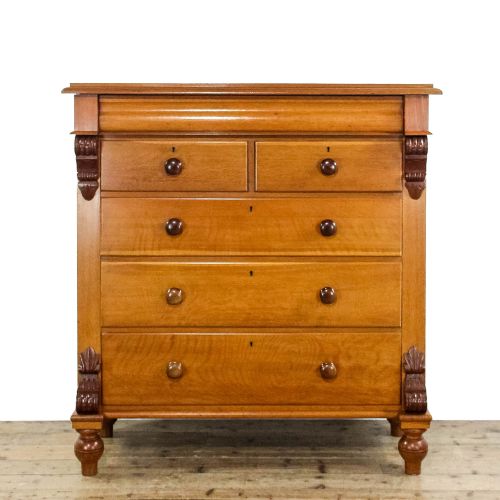
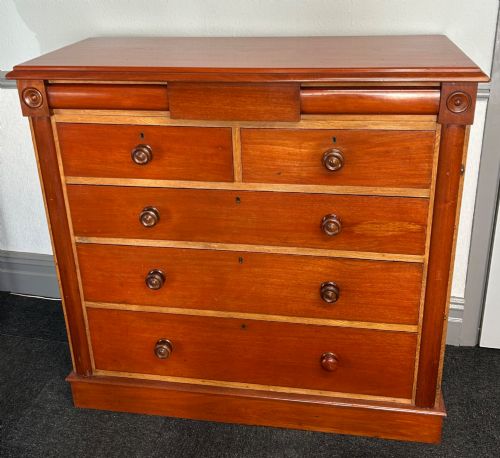
Makers utilised heavy timber to build functional furniture that doubled as decorative focal points for halls and bedrooms. Pieces span standard chests of drawers, tall Wellington chests, and hybrid settle benches with integrated storage compartments.
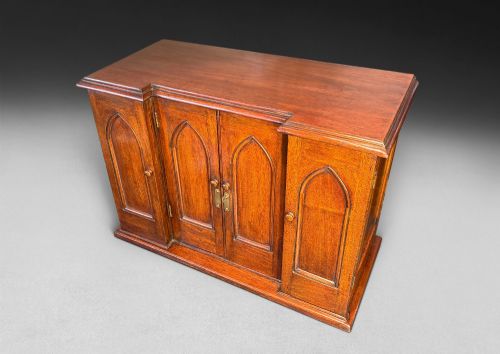
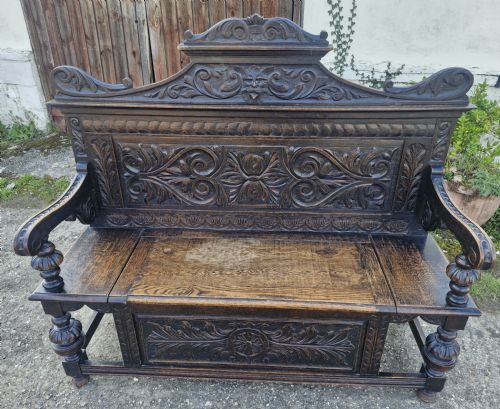
Stylistic influences lean heavily towards Gothic Revival and Jacobean Revival, often incorporating Renaissance Revival details. Buyers frequently encounter pieces displaying carved Green Man masks and foliate patterns across the exterior panels.
Materials and Making
Carpenters built these pieces primarily using solid oak and mixed hardwoods, supplemented by secondary timbers where appropriate. The material took deep chisel work well, allowing craftsmen to execute high-relief carvings of foliage, lions, and grotesque faces.
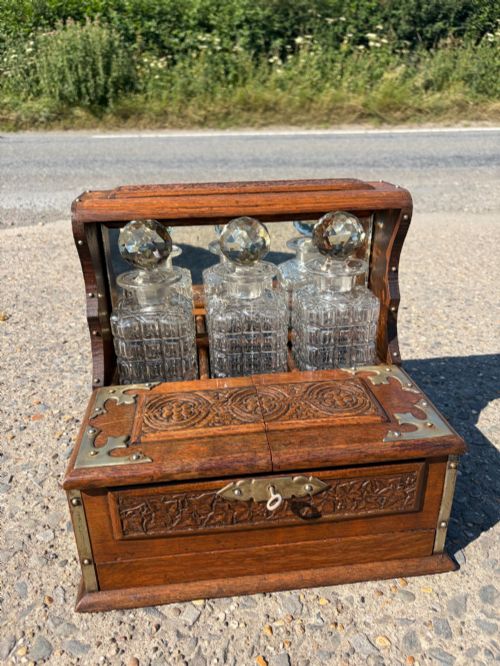
Hardware played a practical and decorative role, with brass and iron used for drawer pulls, locking mechanisms, and hinges. Metal elements such as copper occasionally appeared on specialised storage boxes like slipper boxes or coal containers.
Several chests double as seating, allowing Victorians to ponder their linen collection while sitting firmly upon a wooden Green Man.
Variations in Quality
Quality in a victorian carved oak chest rests upon the crispness and depth of the chisel work across the panels and drawer fronts. Superior examples feature sharply defined Green Man masks and balanced foliate motifs that show deliberate planning by the carver.
Construction methods also dictate standard, particularly the use of solid timber throughout rather than thinveneered overlays. Drawers that run smoothly and retain their original brass or iron hardware indicate careful original manufacture and subsequent preservation.
Tahan of Paris·Manoah Rhodes & Sons Ltd
The Victorian Carved Oak Chest Glossary
- Wellington chest
- A tall, slender chest of drawers secured by a locking hinged side pilaster that covers the drawer edges. This form gained popularity during the nineteenth century for efficient storage.
- Green Man
- A sculptural architectural motif depicting a human face disgorging or entwined with foliage. It appears frequently on revival furniture from the Victorian era.
- Coffer
- A large wooden chest traditionally used for storing valuables, linen, or documents. Many examples feature hinged lids and heavy boarded construction.
- Gothic Revival
- An architectural and decorative style drawing inspiration from medieval forms. It manifests in these chests through pointed arches, tracery, and solemn proportions.
- Settle bench
- A wooden bench with a high solid back and enclosed storage beneath the seat. These multi-functional items served as seating and blanket storage in large halls.
Victorian Carved Oak Chest: Frequently Asked Questions
How do I identify a Green Man carving?
Look closely at the wooden panels for a human visage surrounded by or emerging from carved leaves and vines. These foliate masks often feature prominent leafy mouths and textured brows.
Such ornamentation is a hallmark of Gothic and Renaissance Revival cabinet-making during the nineteenth century. They served both decorative and symbolic functions on heavy storage furniture.
What is a Wellington chest?
A Wellington chest is a tall, narrow set of drawers characterised by a locking wooden flap on one vertical edge. This locking stile secures all the drawers simultaneously when engaged.
Originating earlier in the century, these tall units became popular for storing linen or personal items in compact spaces. They are typically constructed from dense hardwoods like oak.
Where were these chests placed originally?
These storage items found homes in grand entrance halls, bedrooms, and studies depending on their specific form. Settle benches and coffers stood in hallways for outer garments and boots.
Meanwhile, straight-front chests of drawers and tall cabinets served domestic sleeping quarters. Their heavy construction suited high-traffic areas of the Victorian household.
How do I care for antique oak furniture?
Maintain antique oak by keeping it away from direct heat sources and sudden humidity changes to prevent timber splitting. Dust the carved surfaces regularly with a dry, soft cloth.
Avoid modern silicone polishes which build up over the grain and attract dirt. Periodic application of traditional beeswax helps nourish the historic timber finish.