




Carved Wood Bedding Box
Carved wood bedding box examples are solid storage chests crafted from sturdy timber for holding household linens and garments.
Carved Wood Bedding Box
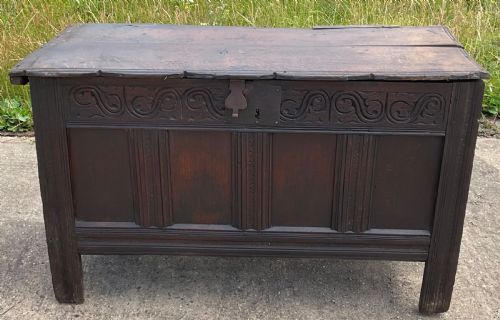
When you search for a carved wood bedding box, you are looking at sturdy storage chests that served domestic households for centuries. These heavy timber receptacles were built to secure blankets, linens, and personal garments safely away from dust and pests.
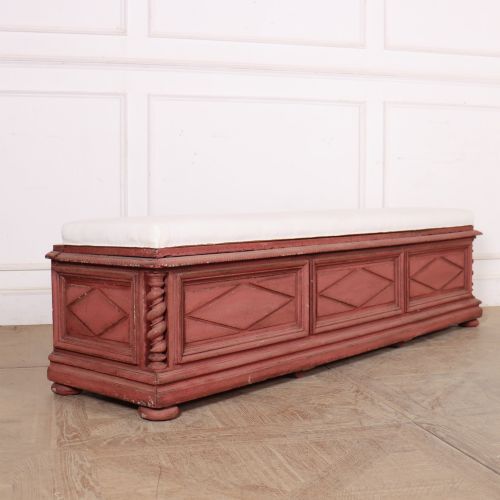
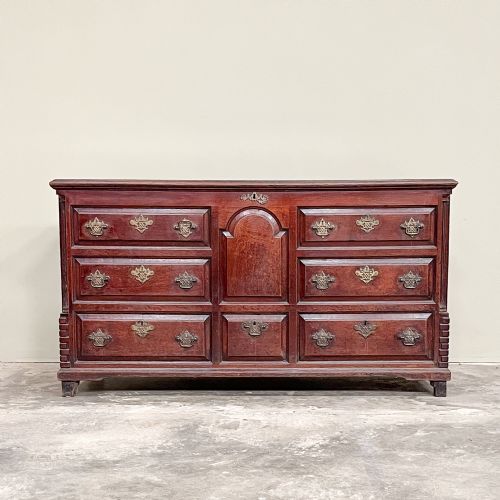
The versions you are most likely to meet on this page span from the seventeenth century through to the Edwardian period and the early twentieth century. They appear primarily as robust oak coffers, mule chests, blanket chests, and occasionally painted wooden benches.
Makers shaped these pieces within various regional aesthetic traditions, ranging from English country house and Georgian designs to Jacobean revival styles and Italian neoclassical forms. Their enduring utility lies in providing substantial enclosed storage alongside a solid surface.
How they were made
The primary material seen across these pieces is solid oak, often darkened or polished, complemented by structural additions of iron, brass, and occasional upholstery. Joinery relied on heavy timber framing to withstand the daily demands of domestic storage.
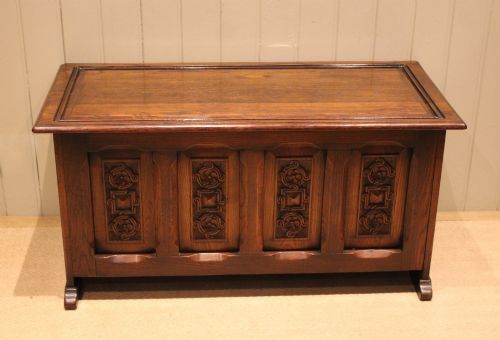
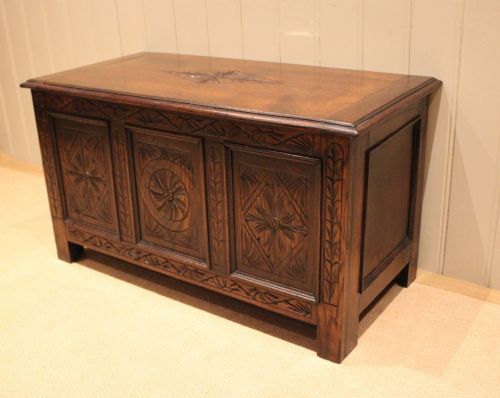
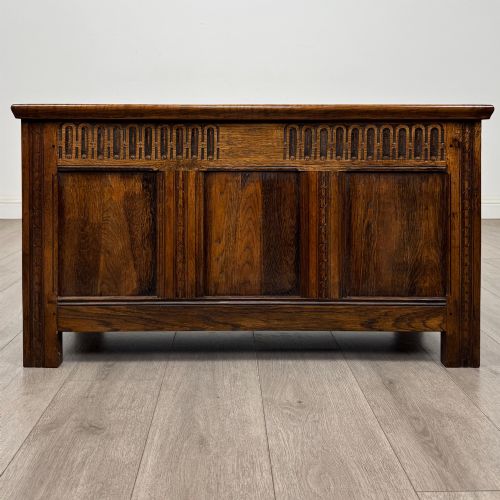
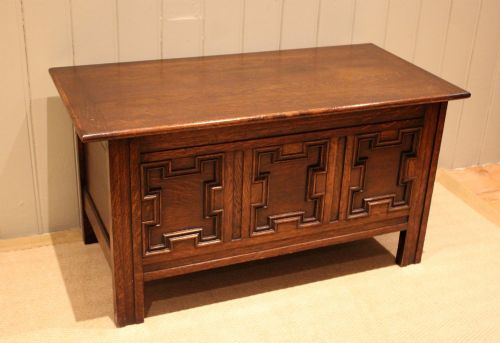
Surface decoration was achieved through hand carving directly into the wood, displaying geometric patterns, floral motifs, or panelled frontages characteristic of the period. Some later or continental examples introduced painted finishes and ebonised wood details rather than exposed grain.
Materials recorded include oak, painted wood, ebonised wood, upholstery, iron, and brass.
What varies in quality
Quality in these chests is dictated by the integrity of the timber and the depth of the hand carving rather than surface sheen alone. Pieces fashioned from solid oak with robust original framing stand apart from later revivals through the weight of their construction.
The refinement of the decorative carving and the preservation of original metalwork, such as iron or brass hinges and locks, separate standard utility boxes from superior examples. Proportion and balance across the panels also signal the maker's original skill.
The Carved Wood Bedding Box Glossary
- Cofer
- A large wooden chest traditionally used for storing valuables and household goods. These heavy boxes formed the basis of domestic storage before fitted wardrobes became common.
- Mule chest
- A storage chest featuring one or more drawers built into the base beneath the main compartment. This form developed in the eighteenth century to offer easier access to smaller items.
- Blanket chest
- A deep rectangular box designed specifically for holding bed linens and blankets. They often double as seating benches at the foot of a bed.
- Jacobean style
- An architectural and furniture design aesthetic dating from the early seventeenth century. It is characterised by heavy rectilinear proportions and intricate geometric carved ornamentation.
- Ebonised wood
- Timber treated with a chemical stain or dark finish to imitate ebony. This technique provided a contrasting dark surface on decorative furniture details.
Carved Wood Bedding Box: Frequently Asked Questions
What is a carved wood bedding box?
A carved wood bedding box is a sturdy timber chest built to store blankets, linens, and personal garments in the home.
These pieces range from seventeenth-century coffers to Edwardian blanket chests, combining practical storage with decorative wood carving.
How were these chests used historically?
Households utilised these heavy chests primarily for keeping valuable textiles clean, dry, and protected from moths and dust.
Over time, their sturdy flat tops also allowed them to function as makeshift tables or seating benches within bedrooms and halls.
What materials are typical for these chests?
Solid oak is the predominant timber found across these pieces, frequently paired with iron hinges and brass fittings.
Some examples also incorporate painted wood finishes, upholstered elements, or ebonised wood details depending on their stylistic period.
How can I tell different periods apart?
Periods are identified by the structural form and the style of the hand carving applied to the timber.
Early pieces show seventeenth-century Jacobean revival characteristics, whereas eighteenth-century examples lean towards Georgian proportions and mule chest drawer configurations.
How do I care for an antique wooden chest?
Antique wooden chests require stable indoor humidity levels to prevent the solid timber from drying out or splitting.
Applying a traditional beeswax polish helps nourish the wood surface while preserving the natural grain and historic patina.