
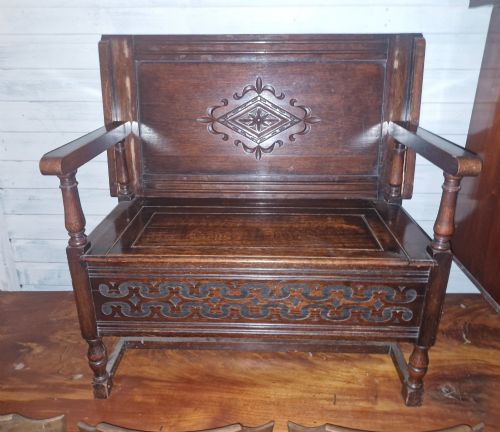

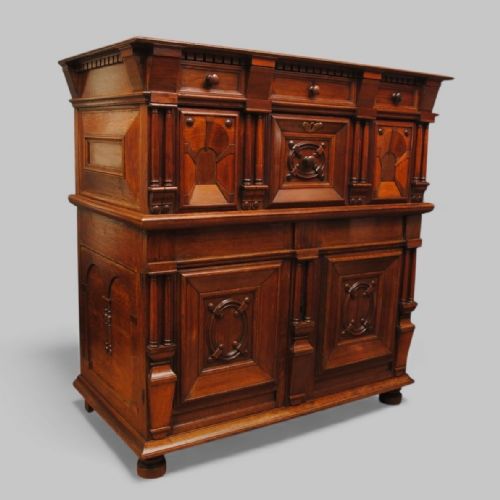
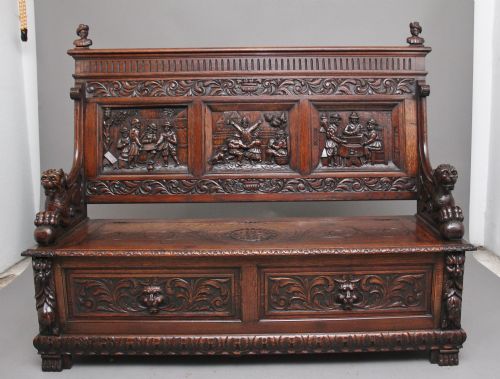


Jacobean Revival Coffer
These jacobean revival coffer items are sturdy oak pieces built for storage and seating, offering traditional character for modern hallways.
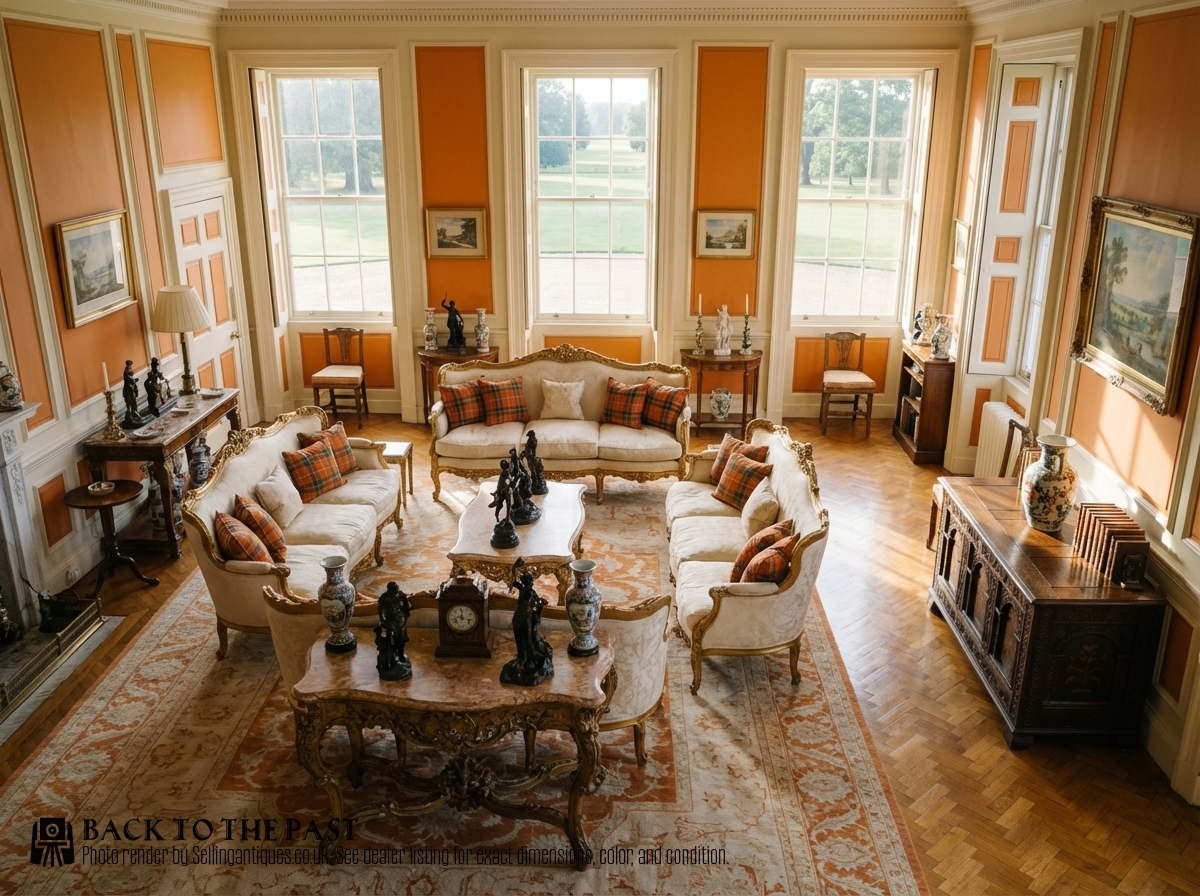
Jacobean Revival Coffer
When you search for jacobean revival coffer, you encounter heavy wooden furniture designed primarily for entrance halls and reception spaces. The pieces range from straightforward chests to versatile benches with lift-up lids and fold-over tops.
Most examples originate from the Victorian era, the 1900s, and the 1920s, drawing heavily on earlier 17th-century traditions. You will frequently find variants like box stools, monks benches, and high-back settles sharing these revival characteristics.
The form prioritises utility alongside architectural presence, serving simultaneously as seating and enclosed storage. These items reflect a sustained historical interest in robust domestic woodwork spanning multiple centuries.
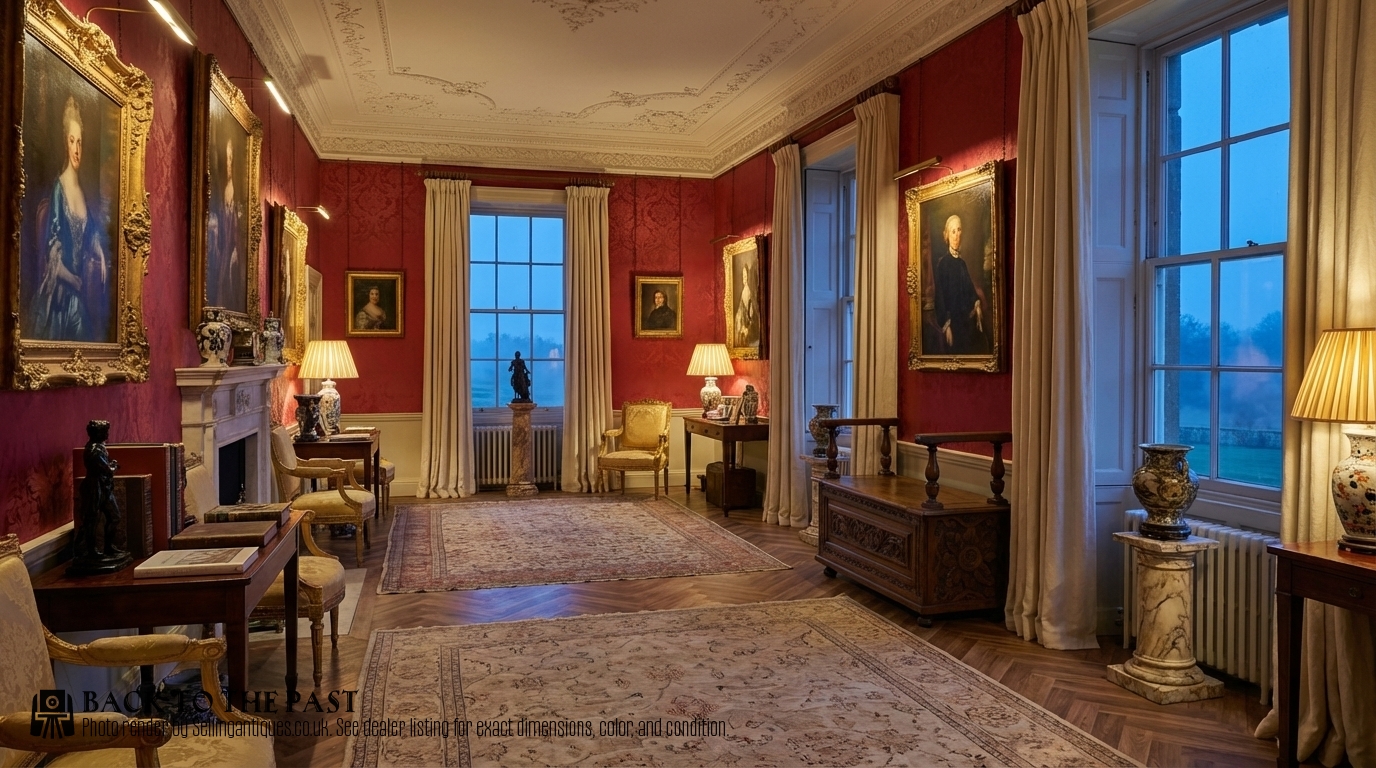
Materials and Construction
Solid oak serves as the primary material across the listings, complemented by occasional uses of walnut, fruitwood, and fruitwood inlay. Cabinetmakers relied on heavy timber to construct durable frames capable of withstanding daily domestic use.
Detailing often involves hand carving to emulate earlier centuries, featuring motifs such as the Green Man alongside traditional panelled construction. Metal and iron components provide functional hinges and structural reinforcement for lids and seats.
Listings span multiple decades from the 17th century through the 1930s, showcasing oak, fruitwood, and walnut construction.
Assessing Craftsmanship
The standard of carving defines the distinction between simpler items and more ambitious statements. Crisp, deep relief work on panels and backs indicates a higher level of artisan investment than flat or mechanical ornamentation.
Timber selection and hardware integration further separate utilitarian items from finer examples. Heavier oak construction with well-fitted joints and robust iron hinges ensures greater longevity and structural integrity.
The Jacobean Revival Coffer Glossary
- Cofer
- An antique chest or box used for storage, often featuring a hinged lid and solid wooden construction.
- Monks Bench
- A multifunctional furniture piece featuring a convertible top that transforms from a table into a bench with a backrest.
- Settle
- A wooden bench with high arms and a high solid back designed to block draughts in large halls.
- Box Stool
- A compact seating unit incorporating an enclosed storage compartment beneath the seat.
- Green Man
- A sculptural architectural motif depicting a human face entwined with leaves, foliage, and vines.
Jacobean Revival Coffer: Frequently Asked Questions
What is a jacobean revival coffer?
A jacobean revival coffer is a storage chest or bench produced during later periods, such as the Victorian era or the 1920s, in imitation of 17th-century styles.
These items combine traditional heavy oak construction and panelled details with practical uses like hallway seating.
How do I use a monks bench?
A monks bench serves dual purposes as a chair and a small table through a folding back mechanism.
Lift the backrest forward to rest flat across the arms, creating a convenient surface for resting items in a hallway.
Where should I place a hall bench?
Hall benches suit entranceways, corridors, and reception rooms where guests arrive and require a place to sit.
Their built-in storage compartments also provide a practical spot for hats, gloves, and daily accessories.
How can I tell the age of these pieces?
Dating relies on examining the timber, the hardware, and the specific revival style associated with the item.
Pieces originating from the 19th and early 20th centuries often utilise machine-sawn elements alongside hand-finished carvings.