


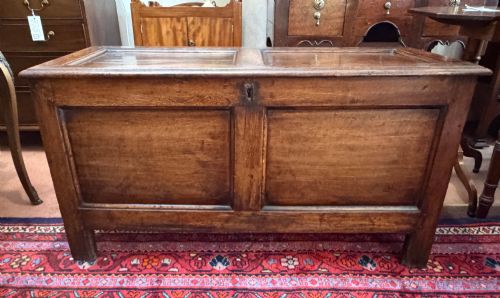
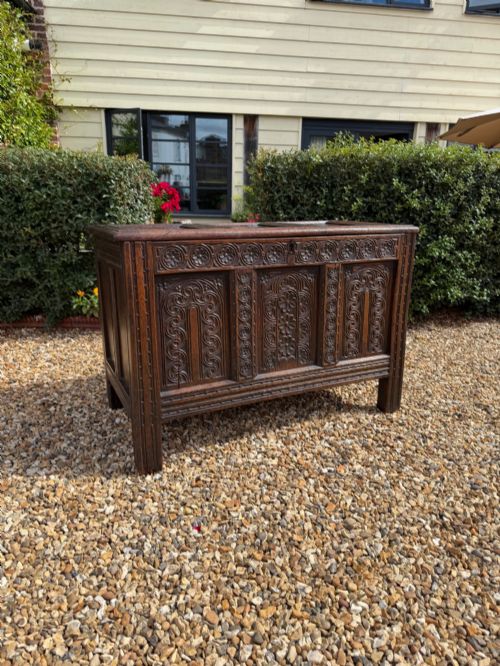
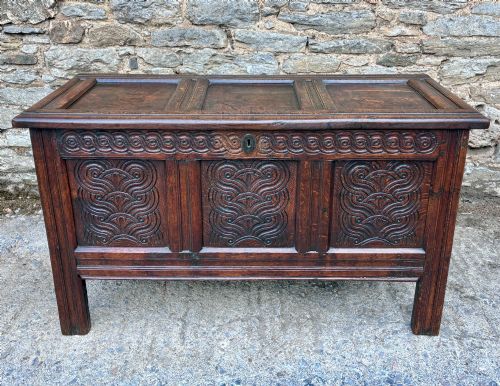
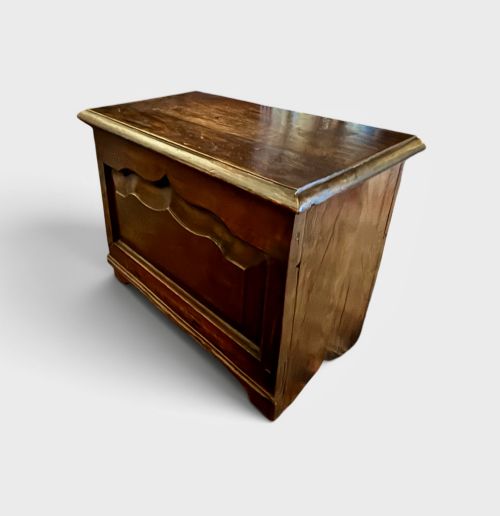
Panelled Oak Storage Box
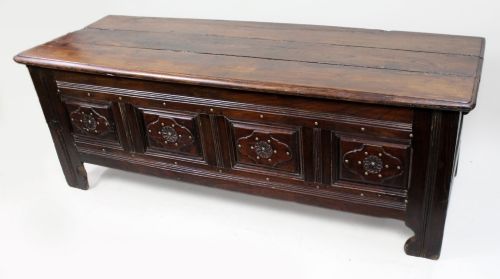
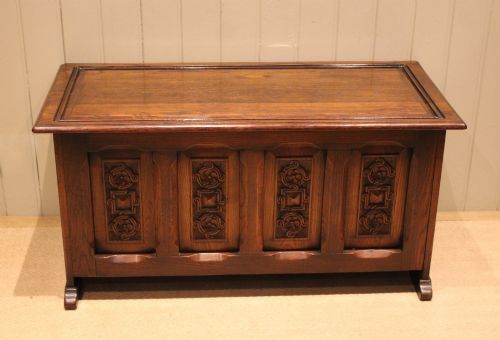
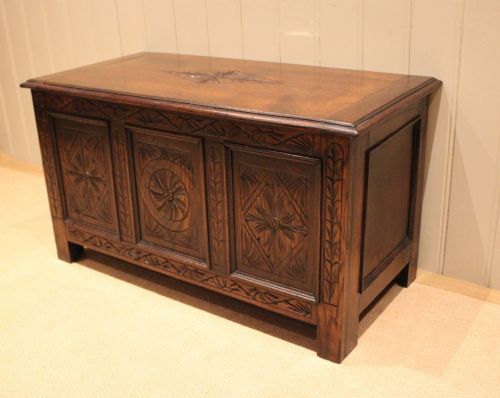
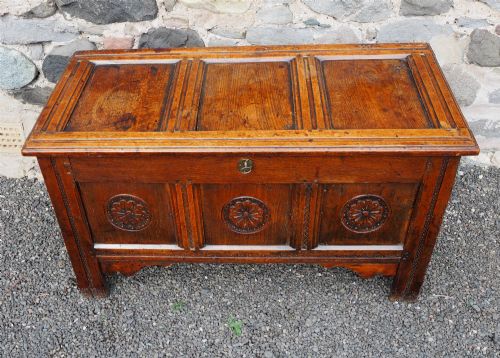
A panelled oak storage box brings heavy timber construction and centuries of domestic utility directly into a modern room.
Panelled Oak Storage Box
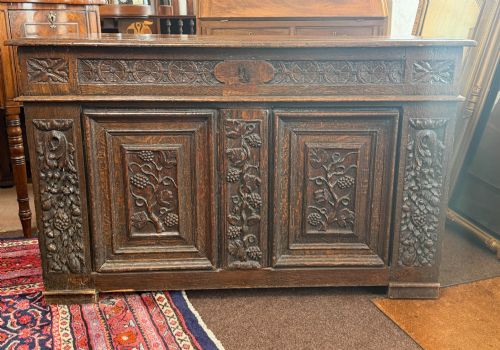
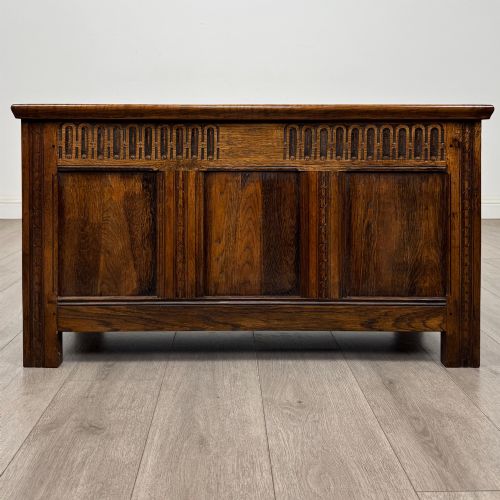
When you search for a panelled oak storage box, you encounter sturdy timber receptacles built to hold household linen, garments, and valuables. The pieces on this page span several centuries, with a strong representation of seventeenth-century and eighteenth-century examples alongside later revivals.
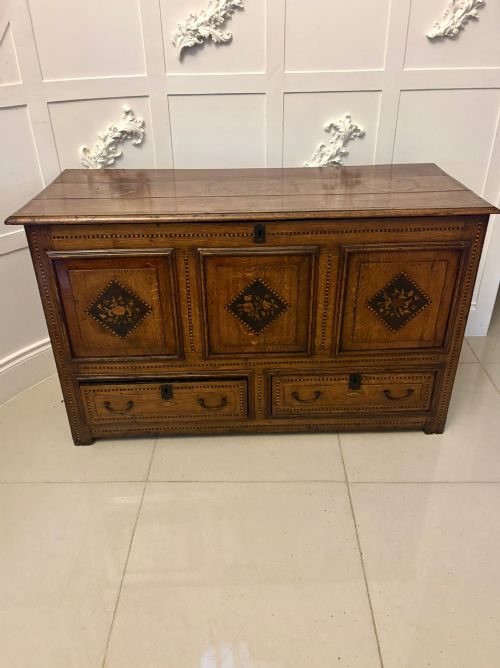
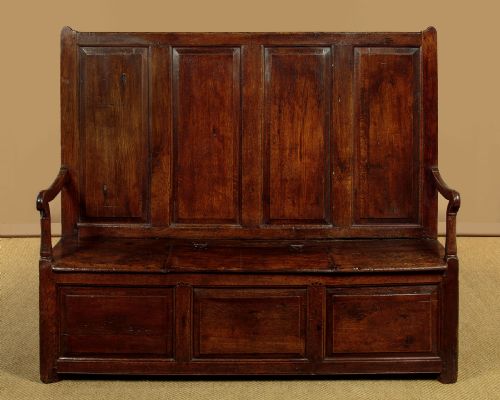
Most items appear as coffers, blanket boxes, or mule chests, while related regional forms such as Welsh box settles and coffer bach appear with distinct joinery. These objects originate from English, Welsh, and French workshops, utilising solid timber frames designed to withstand generations of domestic use.
Materials and construction
Joiners constructed these boxes primarily using solid oak timbers, occasionally supplementing them with ash, pine, or ebonised wood for secondary parts or internal divisions. Panels were fitted into grooved framing to allow the wood to expand and contract naturally with changes in humidity.
Hardware played an essential functional role, with blacksmith-forged iron hinges, latches, and strapwork securing the lids and corners. Some examples incorporate decorative marquetry inlay, wood inlay, or carved surface details executed directly into the dense grain of the oak.
Listings feature oak storage pieces spanning from the sixteenth century through the Victorian era, alongside twentieth-century revivals.
Assessing quality
The standard of a panelled oak storage box rests upon the crispness of its hand-carved ornamentation and the integrity of its original boarded construction. Pieces retain greater desirability when they preserve their deep, aged surface patina and original ironwork rather than replacement elements.
Proportion and regional character also dictate distinction, as compact country pieces or documented provincial examples demonstrate superior craftsmanship compared to later revival items. The precision of the frame-and-panel joinery determines how well the lid and sides maintain alignment over centuries.
The Panelled Oak Storage Box Glossary
- Coffer
- A large wooden chest used historically for storing valuables and household goods. These heavy boxes typically feature hinged lids and sturdy plank or panelled construction.
- Mule chest
- A storage chest featuring one or more drawers built into the base beneath the main compartment. This form developed during the seventeenth and eighteenth centuries to provide easier access to contents.
- Box settle
- A high-backed wooden bench with a box compartment hidden beneath the seat. These dual-purpose items served to keep drafts away from fireside occupants while storing textiles.
- Marquetry inlay
- The art of applying decorative pieces of contrasting wood veneer to a structural surface to form geometric or pictorial patterns. This technique appeared on select high-status seventeenth-century pieces.
Panelled Oak Storage Box: Frequently Asked Questions
What were these wooden boxes used for originally?
Households utilised these heavy containers primarily to store valuable textiles, woollen blankets, and family documents away from damp floors and pests. In more modest settings, they doubled as seating benches or tables within shared living spaces.
Over successive centuries, their functional role evolved as domestic architecture incorporated built-in closets, transforming these chests into decorative furniture used to display inherited household items.
How can I tell a seventeenth-century box from a later revival piece?
Early pieces display distinct hand-tool marks, pegged mortise and tenon joints, and native oak timber that has darkened unevenly through oxidation and wax accumulation. The construction methods rely entirely on traditional joinery without modern machine-cut screws or standardised fixings.
Later revival items produced in the nineteenth or twentieth centuries often exhibit uniform machine planing, lighter colouration, and lack the genuine structural wear accumulated from centuries of movement.
Where were these regional oak chests made?
Makers constructed these storage pieces across rural workshops in England, Wales, and provincial France using locally available timber supplies. Welsh examples frequently display distinct regional characteristics, such as specialised carving motifs or proportions suited to Welsh country houses.
French provincial workshops produced comparable forms utilising local oak stocks, often incorporating differing panel configurations and subtle regional moulding profiles distinct from British island traditions.
How do I care for antique oak furniture at home?
Maintain these wooden surfaces by applying traditional beeswax sparingly to nourish the dry grain and preserve the historic patina. Avoid placing the boxes near direct heat sources or in areas subject to rapid humidity fluctuations, which can cause the oak panels to split.
Allow air circulation around the piece and clean dust gently with a soft, dry cloth rather than modern liquid polishes that can penetrate open timber pores.