
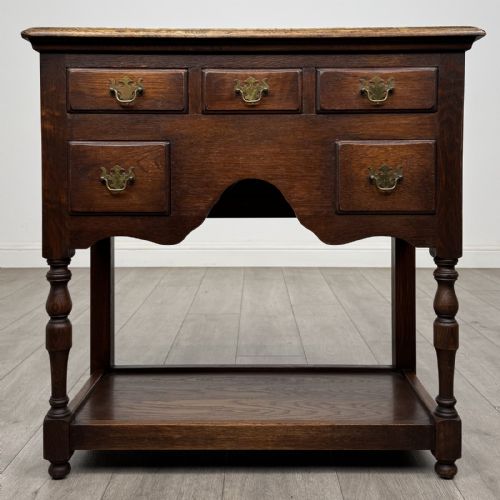
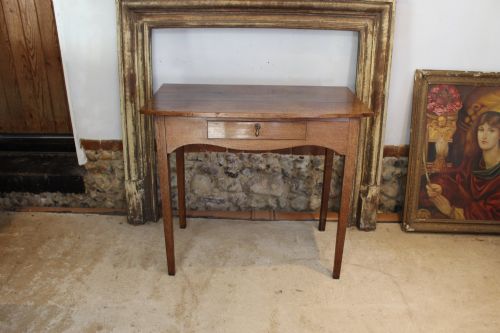
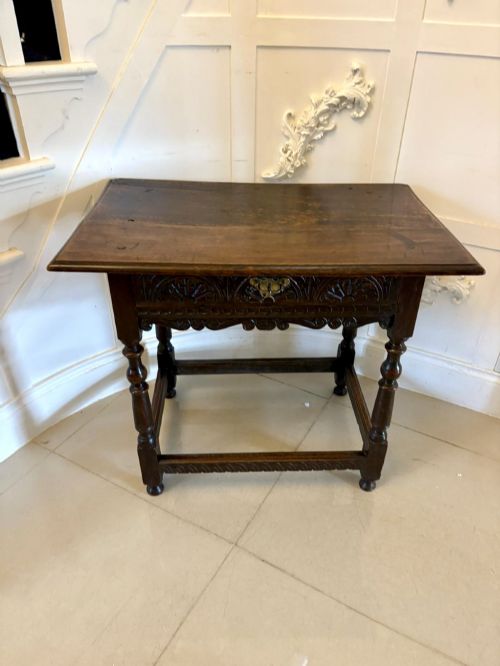
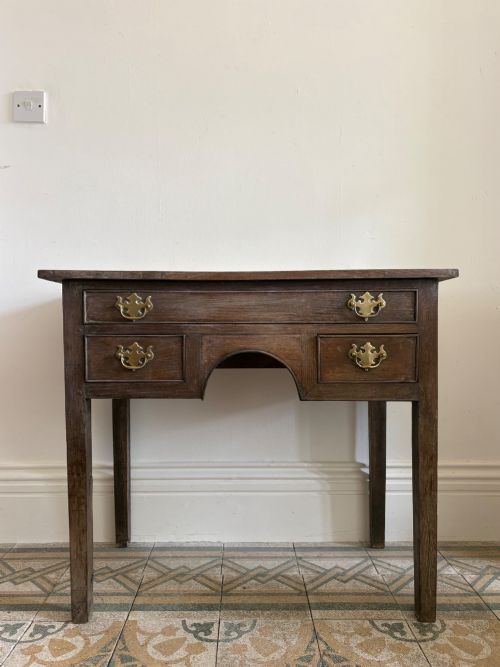
Oak Lowboy with Drawers
An oak lowboy with drawers is a compact table built for domestic service, prized for its timber grain and understated proportions.
Oak Lowboy with Drawers
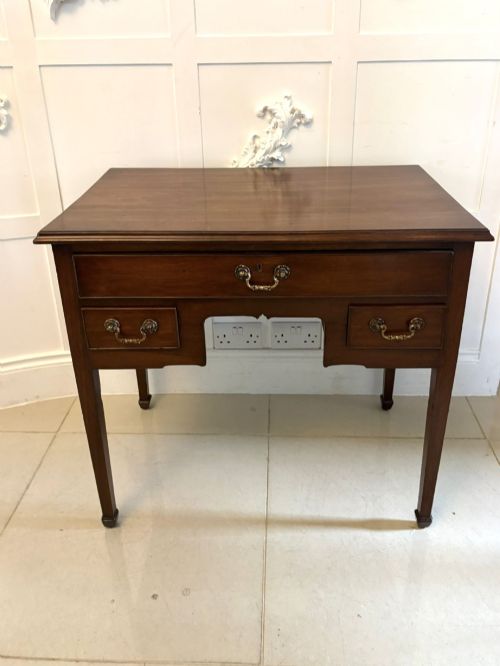
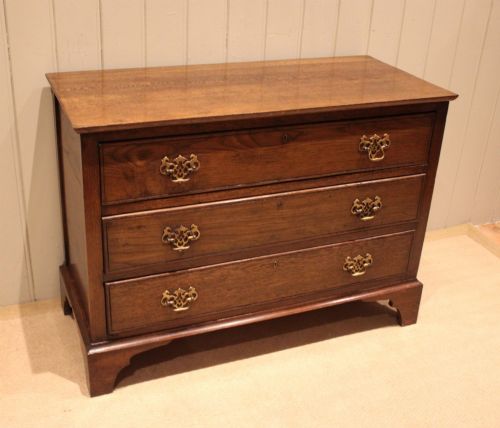
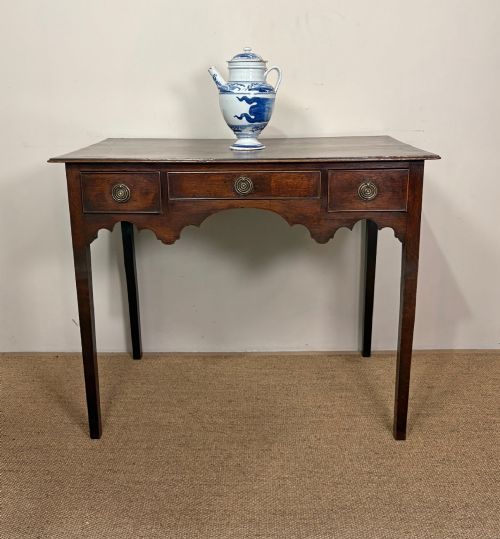
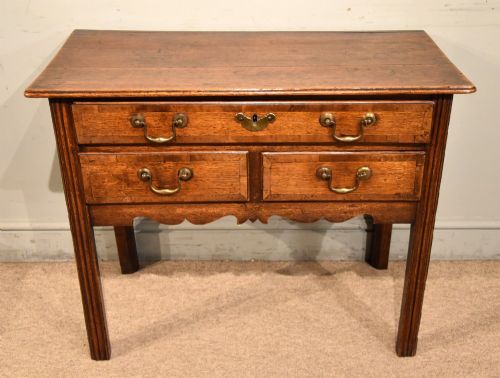
An oak lowboy with drawers is a low table fitted with one, two or three frieze drawers, originally designed for personal grooming or writing in smaller chambers. The pieces found here span the seventeenth century, the Georgian era and the eighteenth century, alongside later revivals from the nineteenth and twentieth centuries.
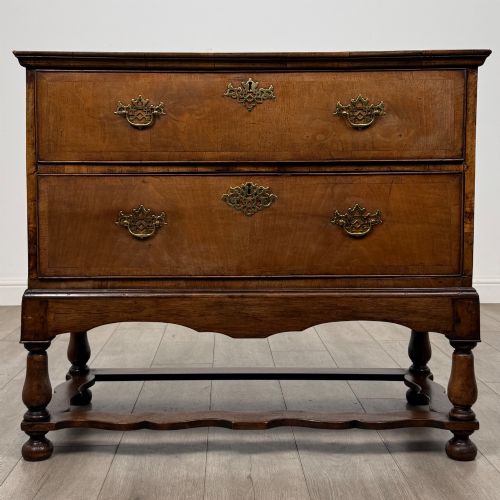
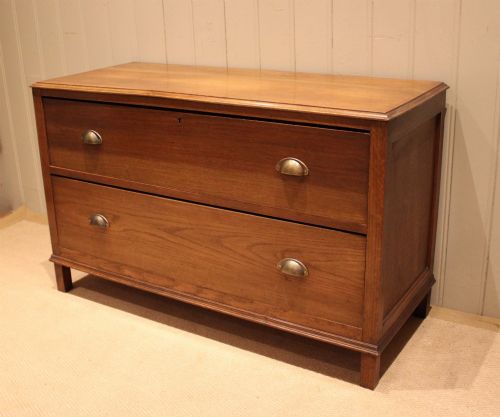
Forms cross over between lowboys, side tables, occasional hall tables and dresser bases, reflecting the versatile functions these tables served in historic households. Provincial country examples sit alongside more refined Georgian pieces, demonstrating a range of regional cabinet-making traditions.
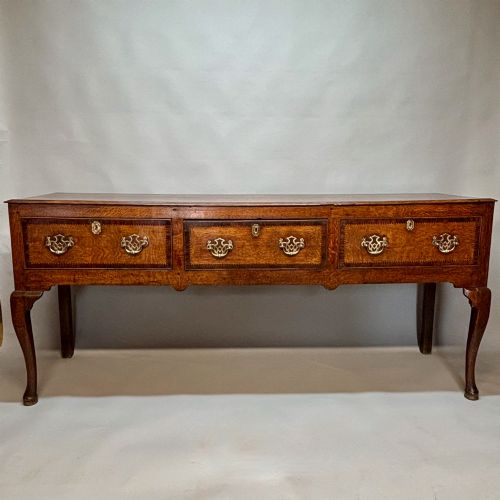
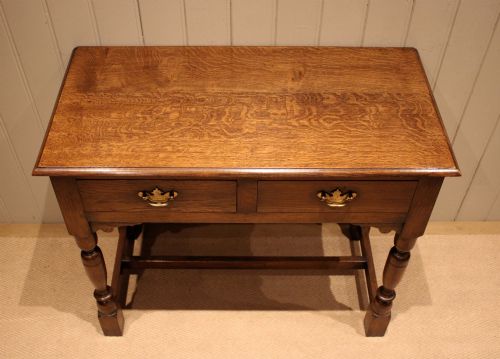
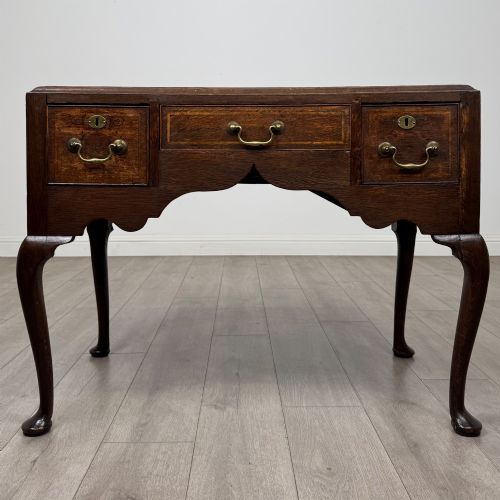
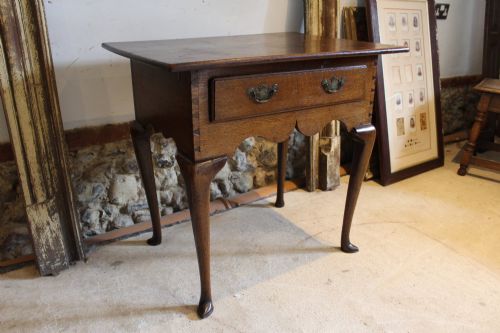
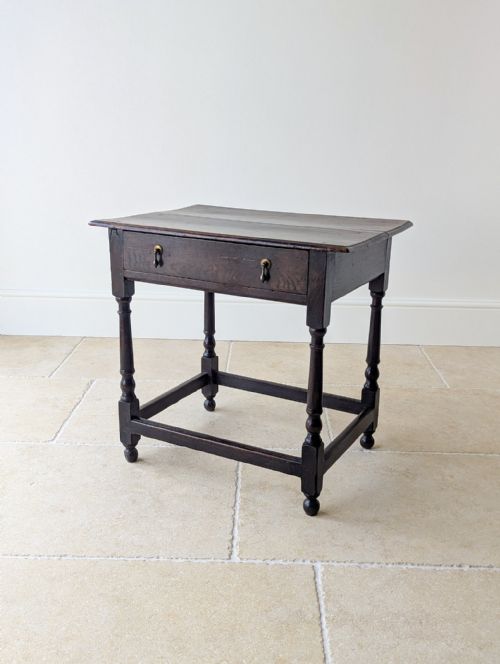
Construction relies heavily on solid oak, though walnut, mahogany and fruitwood also appear in the evidence alongside brass hardware. Surviving examples display turned legs, cabriole legs, crossbanding and feather banding, marking out different periods of stylistic development.
How they were made
Cabinet-makers built these tables primarily using solid oak timbers, often combined with secondary woods such as fruitwood or walnut for specific decorative elements like crossbanding and feather banding. Brass was utilised for drawer handles and escutcheons, particularly on pieces featuring pierced brass backplates.
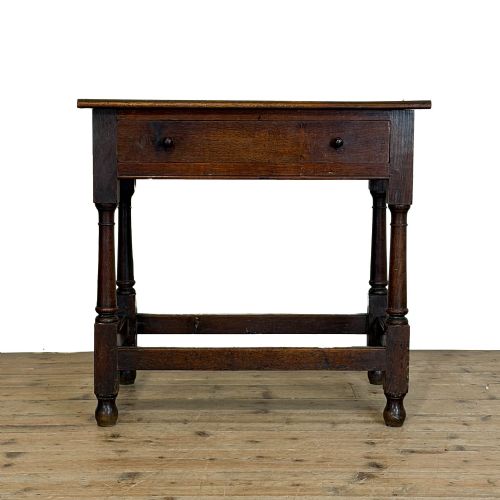
Leg construction varies between turned wooden supports found on earlier seventeenth-century pieces and shaped cabriole legs typical of the Georgian period, sometimes enhanced with carving. Drawers were integrated into the frieze, frequently numbering three across the front.
The listings show oak lowboys paired with walnut, mahogany and fruitwood, spanning the seventeenth century through to Georgian and later revival periods.
What varies in quality
Quality rests in the choice of timber and the restraint of decorative enrichment, where well-figured oak grain and subtle feather banding elevate a piece above utilitarian storage. The execution of structural joints and the crispness of turned or carved legs demonstrate the maker's competence.
The survival of original brass handles and smooth drawer operation distinguish untouched examples from those altered over centuries of domestic use. Provincial country pieces carry a simpler charm, whereas urban Georgian workshops produced finer proportions and decorative details.
The Oak Lowboy with Drawers Glossary
- Lowboy
- A small dressing table or side table fitted with drawers, standing on relatively tall legs. This form became popular in the late seventeenth century and remained a staple of domestic interiors through the Georgian period.
- Frieze drawer
- A drawer built into the upper band of the table frame just beneath the top board. These drawers often number one, two or three across the front of a lowboy.
- Cabriole leg
- A furniture leg that curves out in a convex arc and then bends inward in a concave arc, terminating in a foot. This style is frequently seen on Georgian examples.
- Feather banding
- A decorative inlay technique using thin strips of veneer arranged in a herringbone pattern around drawer edges. It requires precise woodworking skill to execute.
- Crossbanding
- A border of veneer laid across the grain of the main surface to frame a drawer front or tabletop. It creates a contrasting visual boundary using different timbers.
Oak Lowboy with Drawers: Frequently Asked Questions
What was an oak lowboy used for?
These tables served primarily as dressing tables in bedchambers, where a mirror could be placed on top while the drawers held personal items and linens. They also functioned as convenient writing desks or side tables in hallways and parlours.
Over time, their compact footprint allowed them to migrate into various rooms of the house as flexible storage and surface space.
How do I date an oak lowboy?
Dating relies on observing structural characteristics, timber choices and leg styles recorded across different periods. Seventeenth-century examples often feature straight turned legs and heavier framing, while Georgian pieces frequently display cabriole legs and crossbanded drawer fronts.
Later nineteenth and twentieth-century revivals copy these earlier styles, meaning timber ageing and construction methods provide vital clues to exact age.
Where should I place a lowboy at home?
A lowboy fits naturally into a hallway as an occasional table, against a living room wall beneath a mirror, or as a compact dressing table in a bedroom. Its shallow depth ensures it does not intrude into narrow circulation spaces.
The drawers provide useful concealed storage for small household items while the top surface holds lamps, books or decorative objects.
What is the difference between a lowboy and a side table?
While the terms frequently overlap in historical records, a lowboy specifically incorporates one or more drawers built into the frieze for storage. A side table may simply consist of a top surface supported by legs without any drawer compartments.
Many pieces listed as side tables in the evidence share the same low proportions and drawer configurations characteristic of traditional lowboys.