

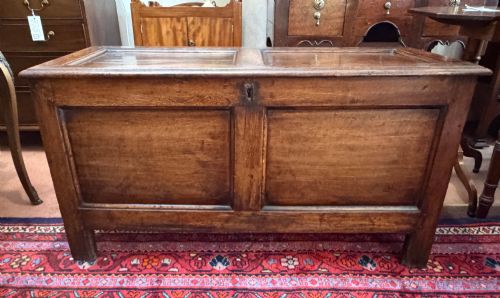
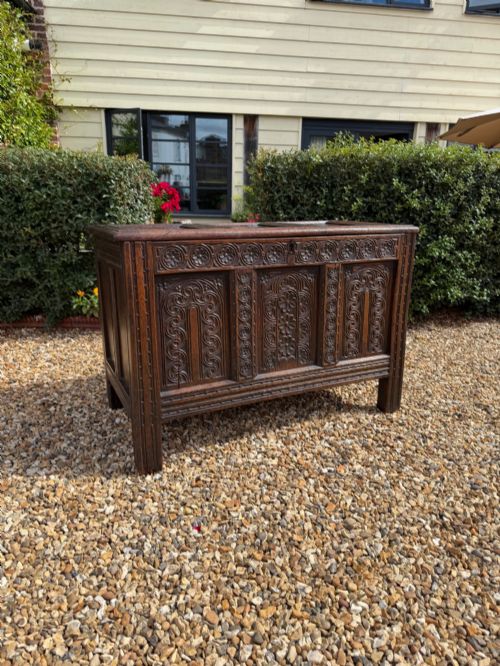
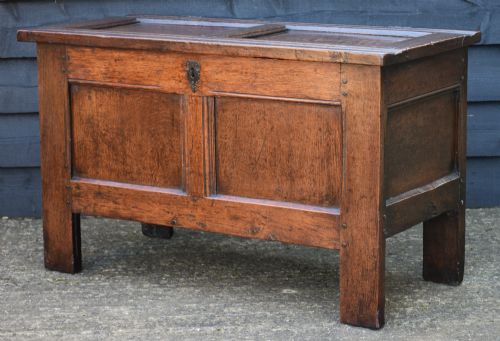
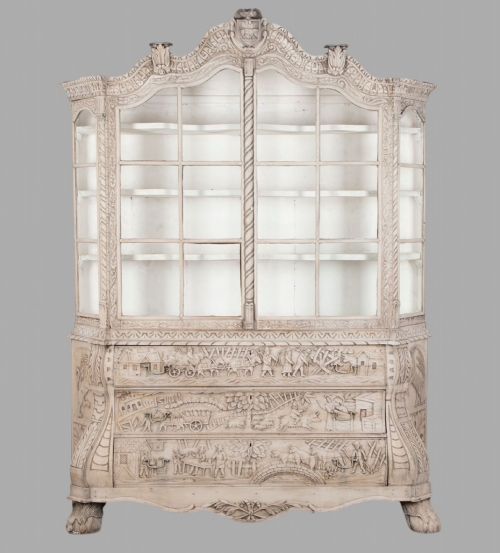
Oak Linen Chest
An oak linen chest brings centuries of practical English and Welsh craftsmanship into a room as durable storage.
Oak Linen Chest
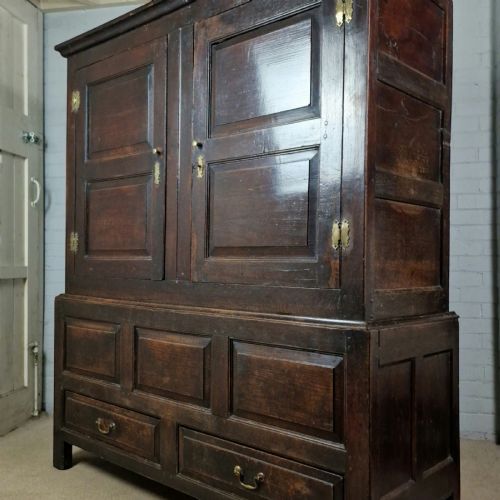
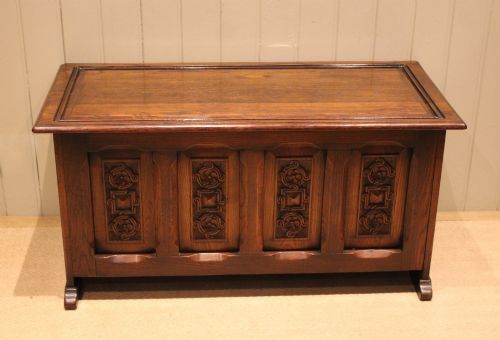
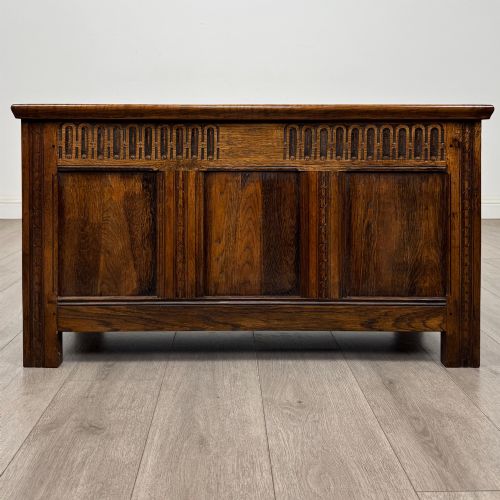
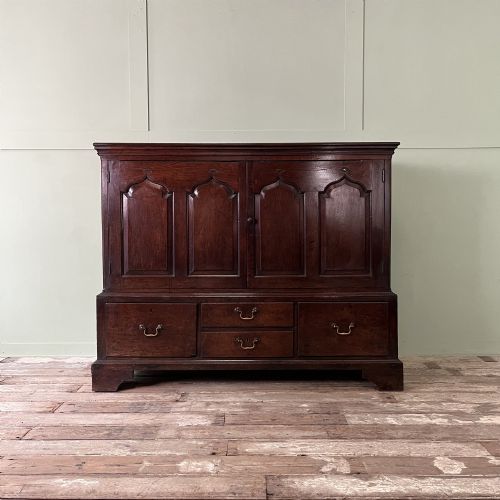
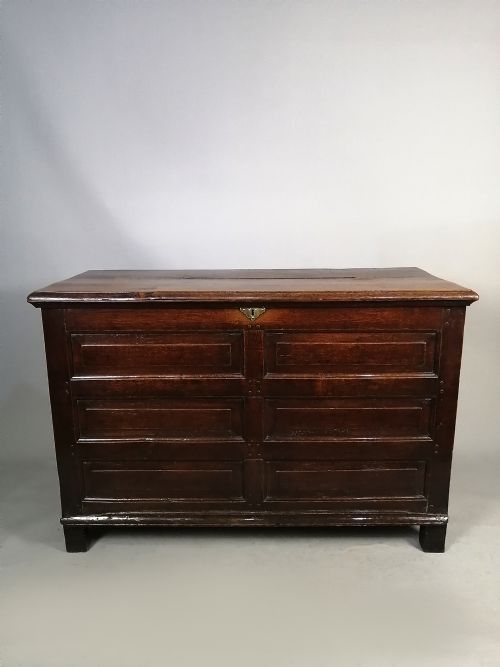
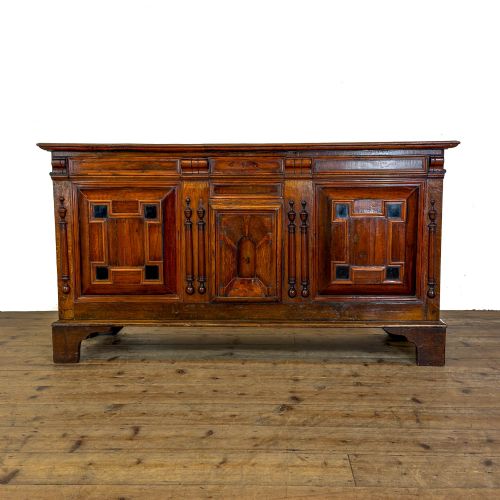
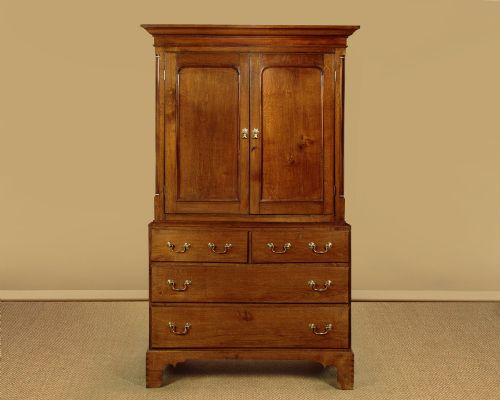
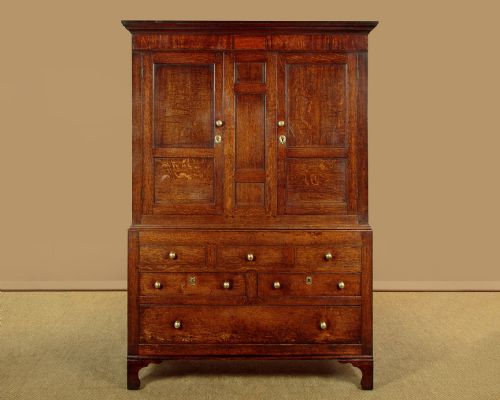
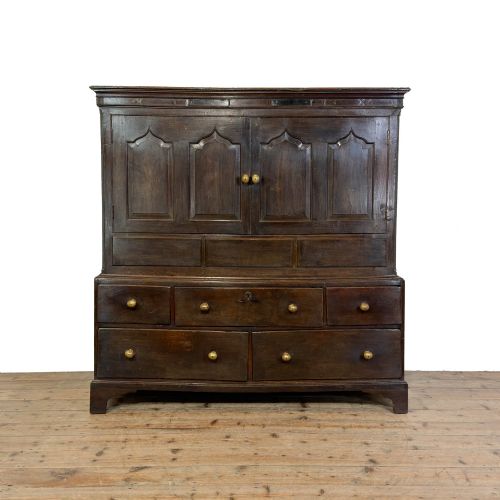
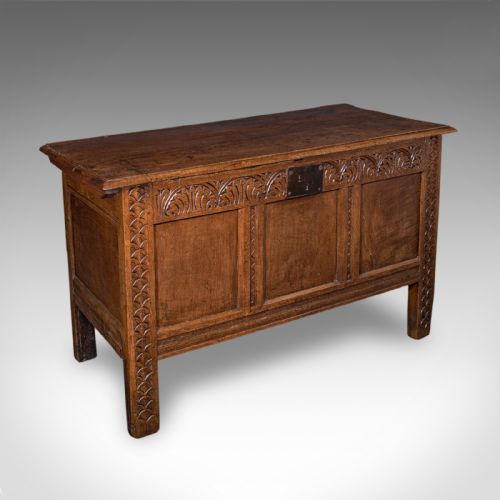
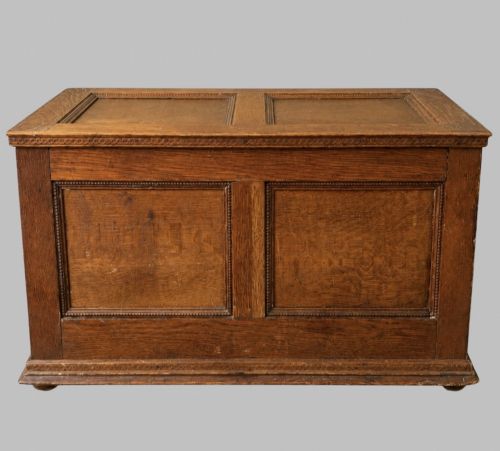
An oak linen chest covers a broad category of domestic storage furniture spanning from the seventeenth century through the Georgian and Victorian eras, including both hinged coffers and large multi-tier press cupboards. Buyers seeking this phrase typically encounter sturdy panelled boxes or tall cabinet forms designed originally to store household textiles and garments.
The regional variations appearing in these records often point to robust Welsh vernacular pieces and English country workshops rather than metropolitan cabinet-making. Simple boarded trunks sit alongside sophisticated linen press cupboards featuring interior sliding trays or drawer bases.
Earlier examples from the seventeenth century frequently display carved panels and smaller proportions, while eighteenth and nineteenth century pieces transition into taller press formats with integrated drawer sections.
Materials and construction
Solid timber forms the foundation of these pieces, utilising heavy boards joined with traditional pegged framing and panel construction to accommodate seasonal wood movement. Joiners relied on durable native stock supplemented occasionally by decorative accents in brass, iron, or ebonised wood.
Surface decoration ranges from geometric mouldings and linen fold carvings to deep patinated finishes developed through generations of domestic use and waxing. Certain provincial examples incorporate specialised internal machinery such as wooden screw mechanisms for pressing textiles flat.
Oak Linen Chest Retail Price Guide 2026
Typical asking prices for oak linen chest among the pieces listed under this phrase on Sellingantiques today, from the lower quarter to the upper quarter. They describe what is for sale here now, not the wider market.
Some provincial presses hide heavy wooden screw mechanisms inside their upper cupboards to squeeze household sheets completely flat.
Assessing quality and character
Quality rests upon the integrity of the timber, the crispness of any hand-carved panels, and the survival of original structural elements like hinges, feet, and interior trays. Pieces retaining their deep natural surface patina and untouched joinery command greater appreciation than those with heavily restored or replaced sections.
Proportion and scale also dictate desirability, with smaller seventeenth-century coffers and well-balanced Georgian low press cupboards representing particularly sought-after formats among collectors.
The Oak Linen Chest Glossary
- Coffer
- A heavy timber storage chest with a hinged lid, frequently utilised for blankets, valuables, and household linen before dedicated wardrobes became common.
- Linen Press
- A tall two-part storage cabinet containing sliding internal trays designed to press textiles flat, often sitting above a chest of drawers.
- Livery Cupboard
- An enclosed standing cupboard used for ventilating and storing food or household provisions in earlier domestic settings.
- Linen Fold
- A decorative carved wood panel motif resembling folded cloth, popular during the Tudor and seventeenth-century revival periods.
- Vernacular
- Furniture built by local country craftsmen following regional traditions rather than following fashionable London pattern books.
Oak Linen Chest: Frequently Asked Questions
What is the difference between a coffer and a linen press?
A coffer is a traditional hinged box designed primarily for general storage and sitting, whereas a linen press is a taller upright cabinet containing internal sliding shelves or drawers specifically for folded textiles.
While coffers date back deeply into the seventeenth century and earlier, press cupboards generally emerged in more developed forms during the Georgian period to accommodate expanding wardrobes.
How do I date an antique oak chest?
Dating relies on observing construction methods, tool marks, joinery techniques, and hardware styles across the piece. Hand-pegged tenon joints, tool-hewn boards, and regional carving styles help place a chest securely into periods like the seventeenth century or Georgian era.
Secondary woods, nail types, and the overall depth of the surface patina further clarify whether a piece belongs to an early period or a later revival.
Were these chests used only for linen?
Historic households utilised these versatile boxes and cupboards for storing woollens, family documents, church vestments, and valuable dry goods alongside household linen. The sturdy hinged lids also allowed many examples to function double duty as seating benches or serving surfaces in hallways and living spaces.
As domestic storage needs evolved through the nineteenth century, these pieces adapted readily to general clothing and blanket storage.
How do I care for antique oak furniture?
Maintaining antique oak requires keeping pieces away from direct heat sources and drastic humidity swings that can cause the heavy timber to split or warp. Regular gentle application of traditional beeswax helps nourish the wood and preserve its deep historic patina without sealing the pores.