


Oak Ladder Back Chairs
Oak ladder back chairs span centuries of vernacular domestic seating, offering straightforward utility and time-tested joinery for everyday interiors.
Oak Ladder Back Chairs
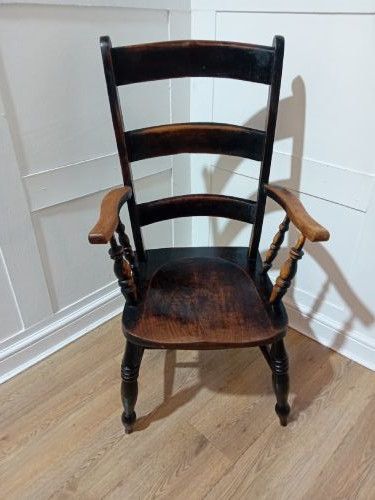
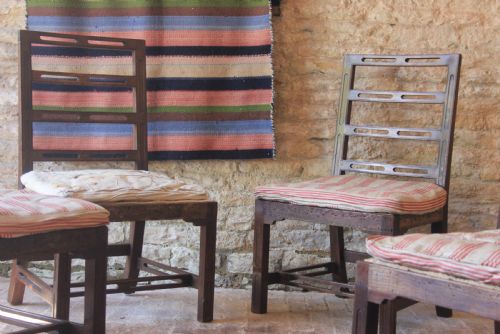
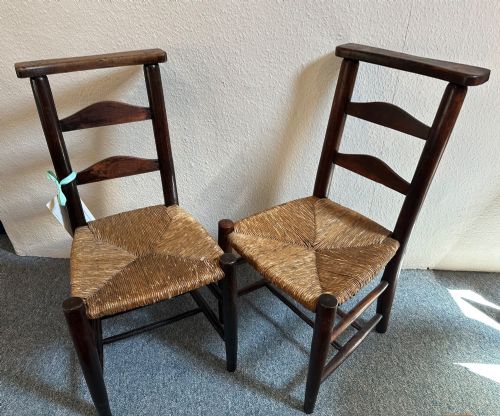
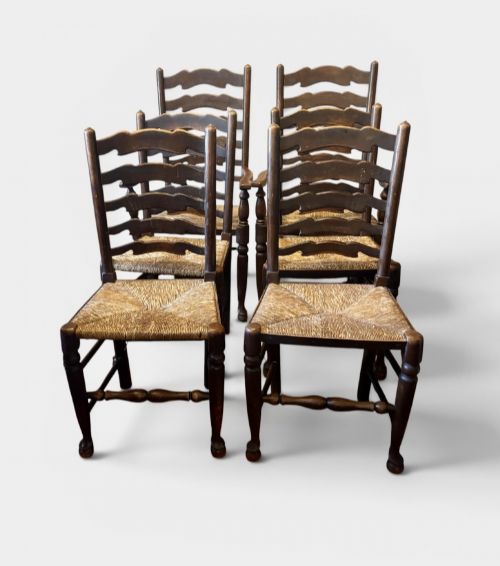
When searching for oak ladder back chairs, buyers encounter practical domestic seating produced across English, French, and Irish regions from the eighteenth century into the twentieth century. These pieces appear primarily as sets of dining chairs, alongside individual armchairs, carvers, and occasional rocking variants.
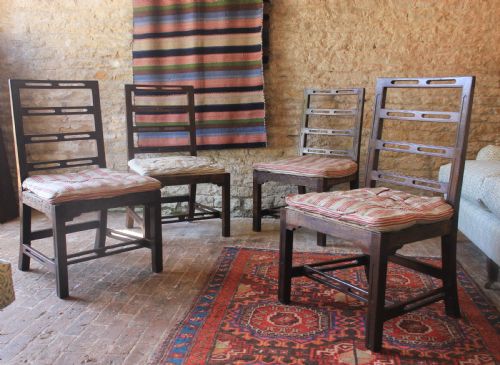
Makers shaped these utilitarian forms for rural kitchens, country houses, and provincial dining rooms, employing local hardwoods alongside softer timbers. Surviving examples range from simple vernacular work to refined Arts and Crafts interpretations and revival styles.
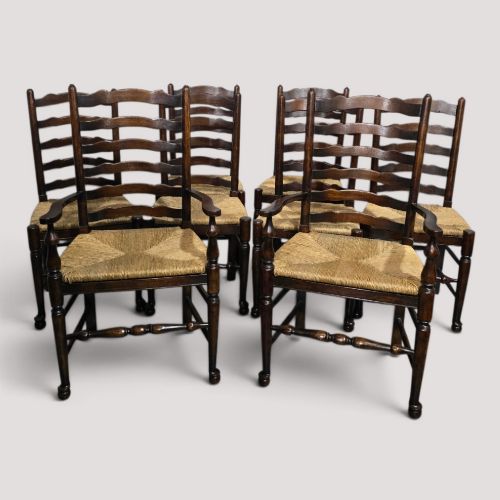
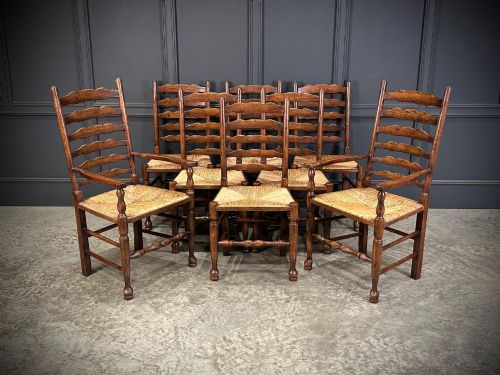
The selection includes matched dining sets of six, eight, or ten chairs, as well as smaller pairs and singular high chairs or library steps. Buyers frequently find pieces retaining early rush or leather seating surfaces alongside later restorations.
Materials and Construction
Carpenters built these frames predominantly using solid oak, often supported by secondary timbers such as ash, elm, beech, and mahogany for turned components and spindles. The horizontal slats, or rungs, were typically shaved or steam-bent before being tenoned into upright rear posts.
Seating areas relied heavily on woven rush, secured tightly around the wooden seat rails to provide a resilient platform. Alternative examples utilise stretched leather or velvet inserts fixed with decorative tacks.
Frame assembly depended on traditional mortise and tenon joints, secured with wooden pegs to handle daily weight and movement without failing.
Oak Ladder Back Chairs Retail Price Guide 2026
Typical asking prices for oak ladder back chairs among the pieces listed under this phrase on Sellingantiques today, from the lower quarter to the upper quarter. They describe what is for sale here now, not the wider market.
Listings feature oak alongside ash, elm, and beech, demonstrating the diverse timber choices used by country chair makers.
Judging the Standard
Quality rests upon the integrity of the timber framing and the tightness of the joinery across the uprights and horizontal slats. Chairs retaining their original surface patination and uncompromised wooden pegs sit at the upper end of the scale.
The precision of the rush weaving or the durability of the upholstery heavily influences the overall execution. Uniformity within large sets indicates careful original workshop production rather than assembled gatherings of mismatched individual items.
Titchmarsh and Goodwin·Lawrence Neal·Edward Gardener·Liberty and Co·Heals·Dicon Nance
The Oak Ladder Back Chairs Glossary
- Ladder back
- A chair design featuring multiple horizontal slats set between two vertical rear posts, resembling the rungs of a ladder. This construction dates back centuries in vernacular furniture design.
- Rush seat
- A seating surface woven from dried marsh grasses twisted around a wooden frame. It provides a durable and flexible support typical of country seating.
- Carver
- An armchair, usually designed with arms to match a set of smaller side chairs intended for dining tables. These often stood at the heads of the table.
- Vernacular
- Everyday furniture built by local craftsmen using regional traditions and native timbers, rather than following formal high-style metropolitan fashions.
- Mortise and tenon
- A traditional joint where a protruding peg fits tightly into a corresponding cavity, locking wooden components together securely.
Oak Ladder Back Chairs: Frequently Asked Questions
How do I care for rush seats?
Keep rush seated chairs in rooms with stable humidity to prevent the dried marsh grass from becoming brittle over time. Regular gentle dusting prevents dirt from settling into the woven fibres.
Avoid placing these chairs in direct sunlight or near direct heat sources, which can dry out the natural materials. Professional re-weaving is available if the seating surface eventually wears through from heavy use.
Can I mix different sets?
Mixing chairs requires careful attention to seat height, slat count, and timber tone so the group sits harmoniously around a table. Subtle variations in turning and wood grain often complement rather than clash in a country interior.
Matching carvers to side chairs creates a balanced arrangement even if the exact wood shade varies slightly due to age and exposure.
Are these chairs comfortable for daily dining?
Solid timber frames and supportive high backs encourage upright posture during long meals. The woven rush or upholstered pads offer natural give compared to rigid wooden boards.
Adding loose squab cushions provides extra comfort while preserving the original surface underneath.
How do I identify earlier periods?
Earlier examples often display hand-turned components with subtle irregularities, deeper patination in the oak, and heavier frame construction. Eighteenth-century pieces frequently show wear patterns concentrated around the foot rails and lower rungs.
Twentieth-century revival pieces tend to feature more uniform machine-turned spindles and cleaner, less distressed timber surfaces.