
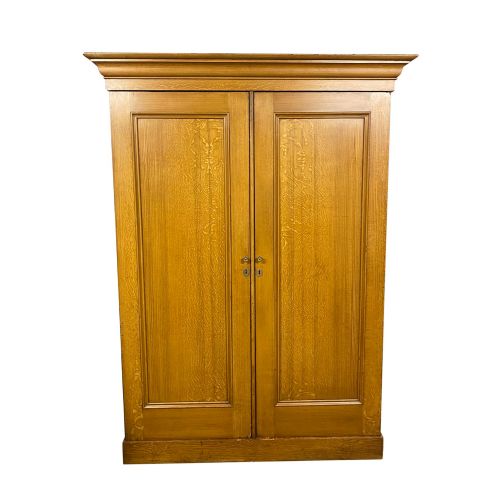
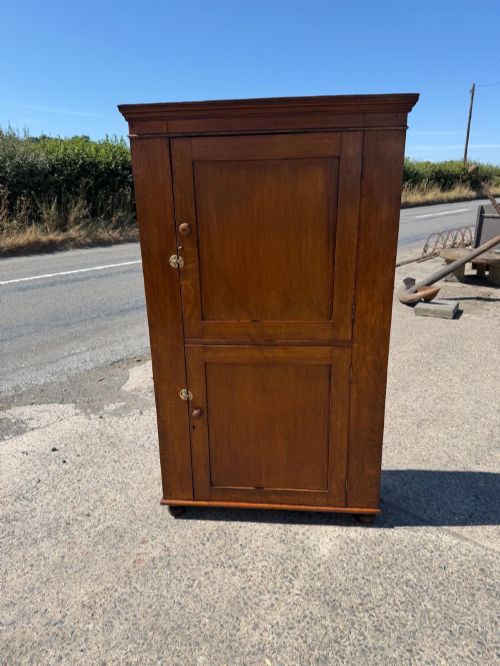
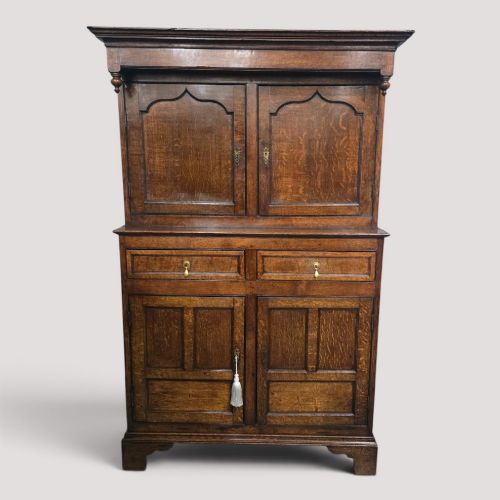
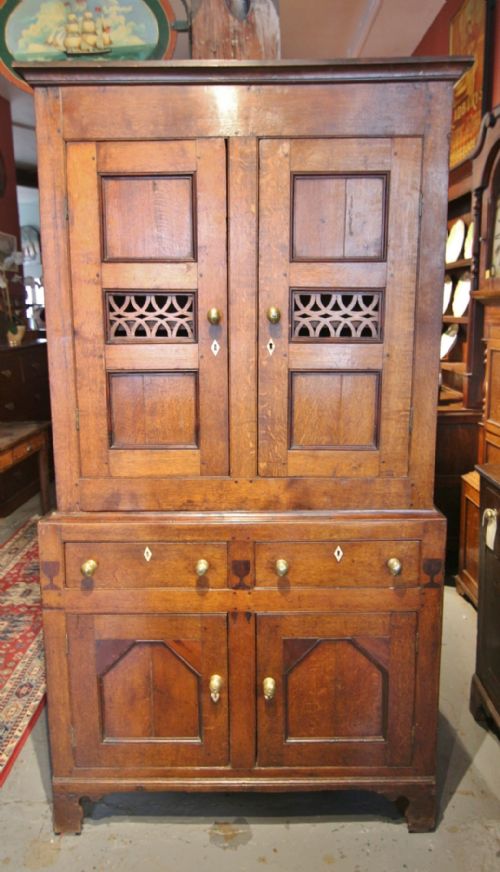
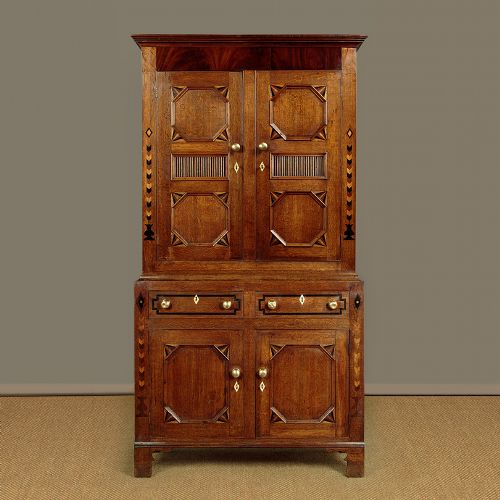

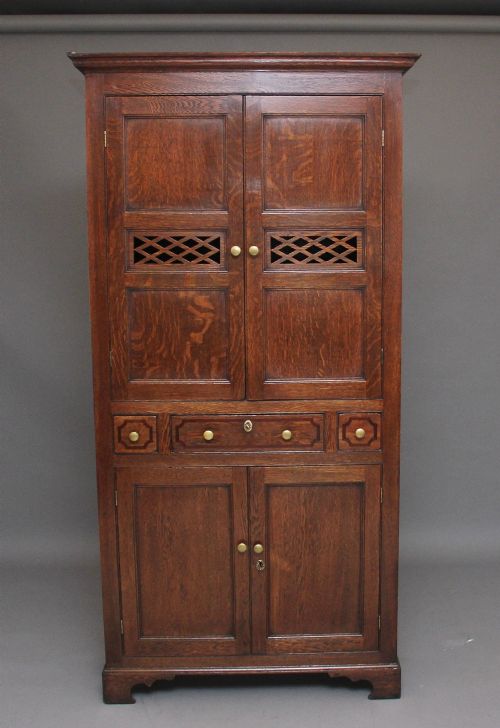
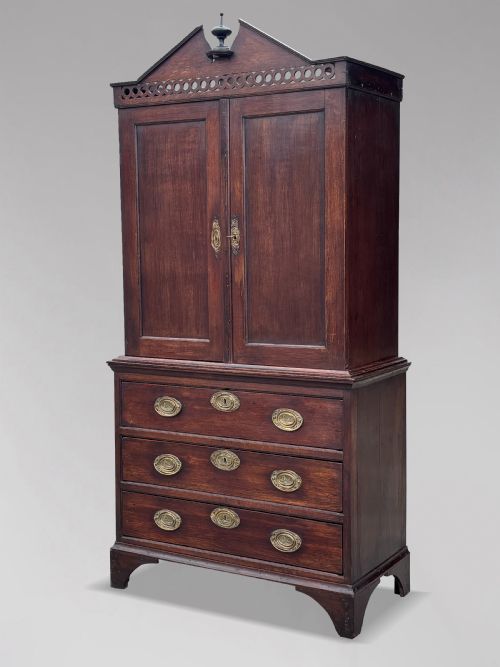
Oak Housekeepers Cupboard
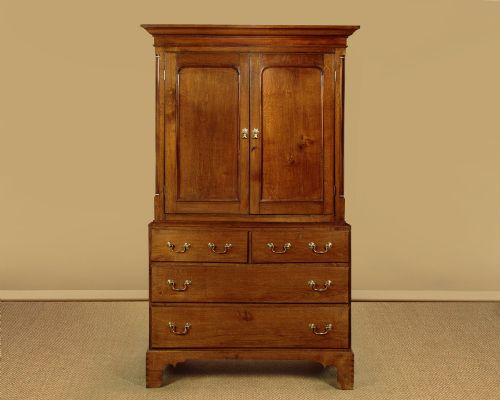
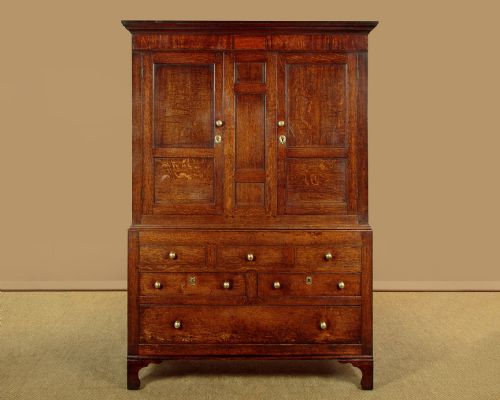
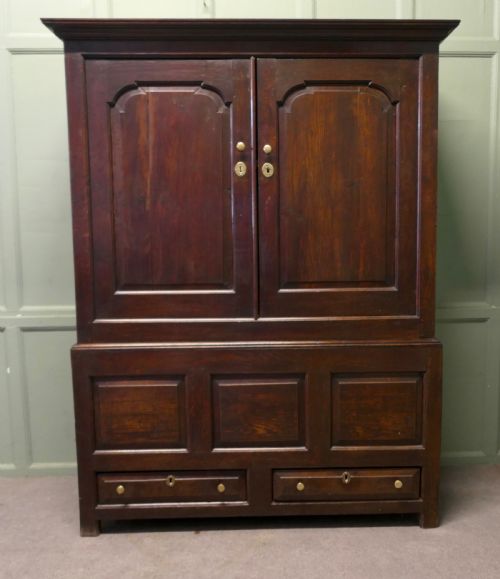
An oak housekeepers cupboard offers substantial country house storage, built to hold household linens and provisions.
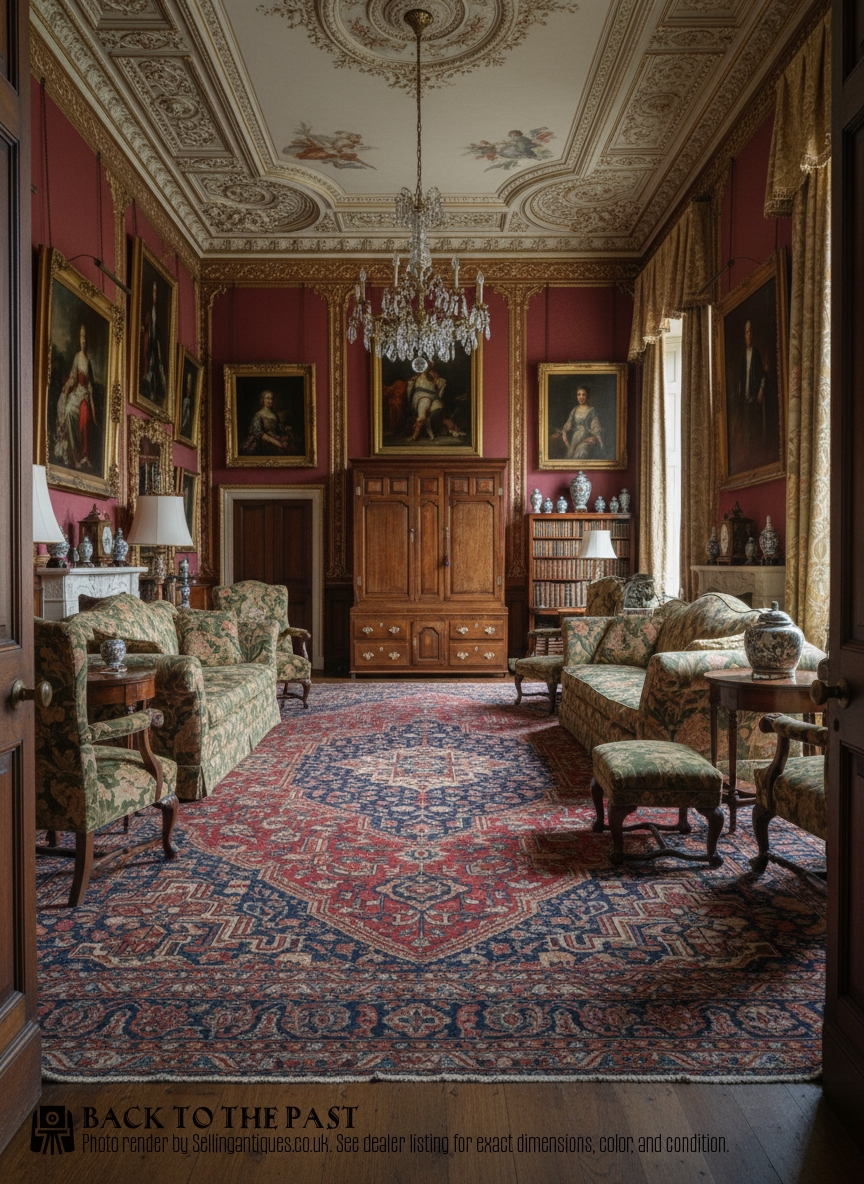
What an oak housekeepers cupboard is
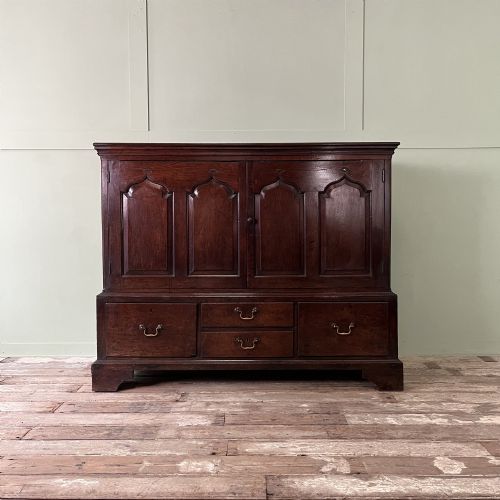
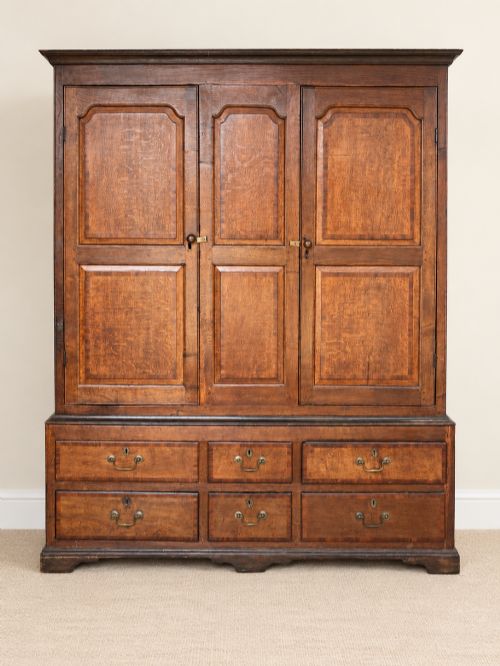
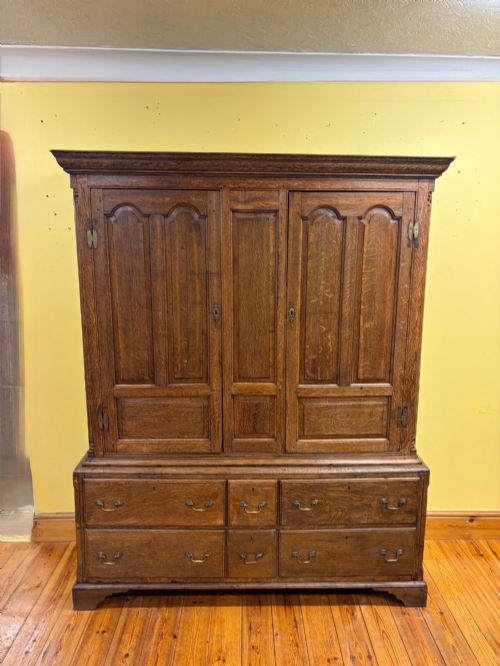
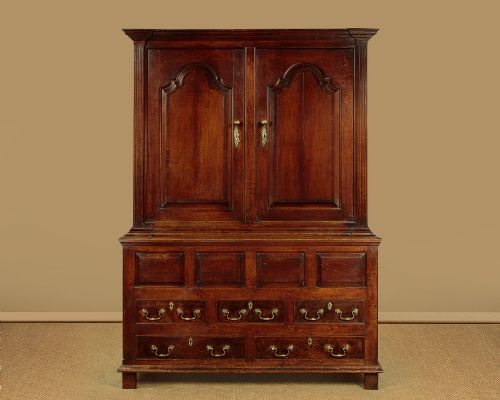
When you search for an oak housekeepers cupboard, you encounter large storage furniture originating from country houses and farmhouses. These pieces serve primarily to store household linens, clothes, and provisions, taking the form of tall standing units with panelled doors. The design often splits into two stages or parts, making transport and placement manageable despite their imposing scale.
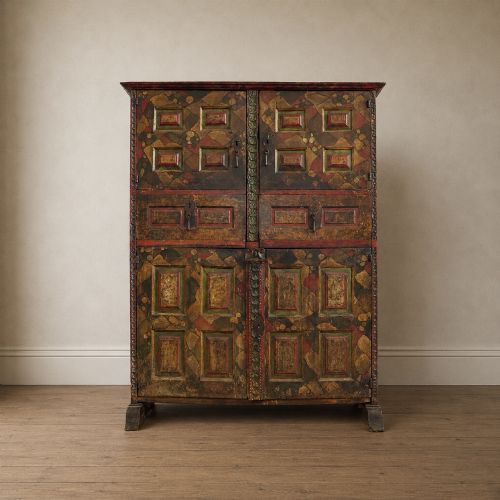
The examples on this page span several centuries, with 18th century and Georgian pieces appearing alongside 17th century, Victorian, and Edwardian variants. Many examples hail from Wales and regional England, sometimes bearing alternative regional names such as livery cupboards, press cupboards, or bread and cheese cupboards. You also find forms that combine hanging space with linen presses or dressers.
Georgian and 18th century examples dominate the selection, often displaying rich golden tones or deep patination built up over generations. These earlier pieces frequently utilise two-part construction, separating an upper cupboard from a lower base fitted with drawers or smaller doors. Later Victorian and Edwardian iterations maintain the sturdy utilitarian character while adjusting to more domestic room proportions.
How they were made
Cabinet makers constructed these large storage units using solid timber, relying on oak as the primary material for its durability and strength. Carpenters built frames with pegged mortise and tenon joints, hanging heavy doors on robust iron or brass hinges. Panels were left to float within grooves to accommodate seasonal wood movement.
Surface detailing on these cupboards typically includes fielded panels, moulded cornices, and occasionally brass hardware such as escutcheons and handles. Some regional Welsh pieces incorporate marquetry inlay or carved decorative motifs into the upper frieze. Two-part models required careful alignment so the upper carcass sat securely upon the lower chest base.
Retail Price Guide 2026
Typical UK retail prices for oak housekeepers cupboard, calculated from the Sellingantiques database of over a million retail prices indexed since 2003. This retail price guide relies exclusively on Sellingantiques data; no external sources or auction records are used, so the figures do not describe the wider market.
What varies in quality
The distinction between standard utility storage and finer country house examples rests on timber selection, proportion, and surface patination. Superior pieces exhibit carefully matched oak grain across the facade and rich, undisturbed wax finishes developed through decades of polishing. The depth of colour and warmth in the wood tell a story of careful custodial maintenance.
Structural integrity and original joinery dictate the standing of a piece within its category. Cupboards retaining their original brass hardware, internal shelving arrangements, and well-fitting two-part sections hold greater architectural harmony. Regional details, such as crisp carving or distinct regional vernacular styling, elevate specific variants above plain utilitarian output.
Lambs
The Oak Housekeepers Cupboard Glossary
- Livery Cupboard
- A traditional term for a large storage cupboard or wardrobe historically used to keep food, wine, or clothing. These pieces often feature deep hanging spaces or internal shelves.
- Linen Press
- A tall piece of furniture designed specifically to store sheets, tablecloths, and garments, usually featuring internal sliding trays or shelves behind large upper doors. Many housekeepers cupboards double as presses.
- Two Stage
- A construction method where the cupboard divides horizontally into an upper and lower carcass for ease of transport and installation in domestic rooms.
- Fielded Panel
- A wooden panel with bevelled edges that sit recessed within a heavier surrounding frame, adding depth and shadow lines to the cabinet doors.
- Patination
- The deep, lustrous surface sheen and colour change acquired by timber over centuries of handling, exposure to light, and waxing.
Frequently Asked Questions
What is an oak housekeepers cupboard used for?
These large pieces functioned historically as central storage hubs in large houses and farmhouses. They held household linens, blankets, clothing, and dry provisions.
Today, they adapt well to modern living spaces as generous wardrobes, linen stores, or kitchen larders. Their deep internal capacity accommodates bulky items while concealing clutter behind solid timber doors.
How do I tell an 18th century cupboard apart from a later one?
Earlier 18th century and Georgian pieces usually display hand-planed surfaces, pegged joinery, and deep natural patination. The timber often shows rich golden or dark brown tones unique to age-old wax polishing.
Later Victorian and Edwardian examples tend to feature more uniform machine-sawn timber and standardised hardware. Examining the internal construction reveals hand-cut joints versus later mechanical production methods.
Are housekeepers cupboards difficult to move?
Because many examples utilise a two-part or two-stage construction, you can separate the upper section from the lower base. This clever historical design makes transportation through doorways much simpler.
Despite this separation, these pieces remain heavy due to the solid oak construction. Professional furniture movers with experience handling antique timber are recommended for relocation.
Where should I place a housekeepers cupboard in my home?
These substantial cupboards require adequate wall space and a room with balanced humidity. Placing them away from direct heat sources prevents the solid oak from drying out and splitting.
They sit comfortably in large hallways, dining rooms, or bedrooms where their architectural presence anchors the interior. Ensure you measure ceiling height before purchase, as older cupboards often reach toward period proportions.