




Oak Dining Table Set
An oak dining table set gathers people around timber built to endure centuries of daily meals.
Oak Dining Table Set
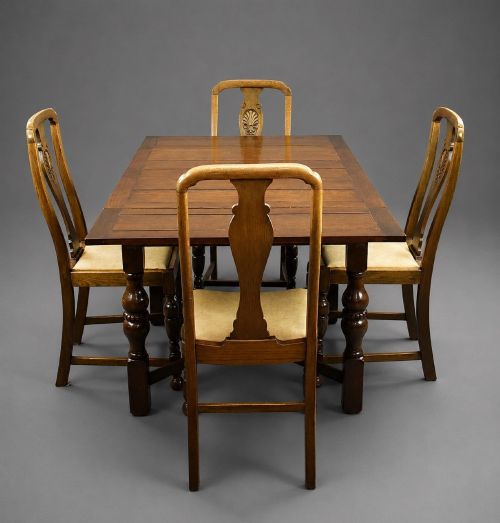
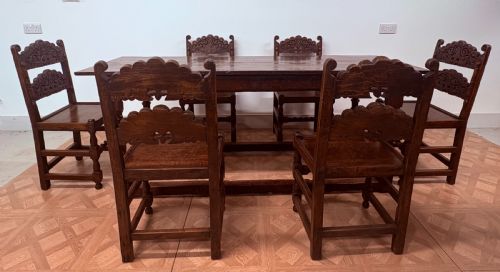
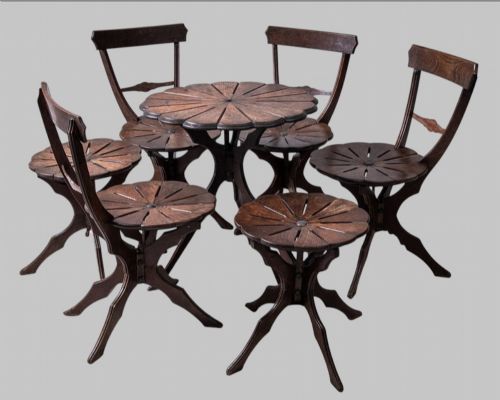
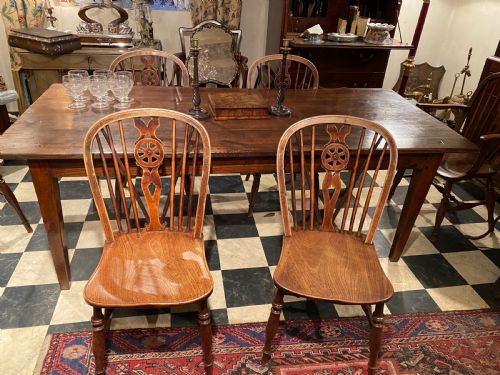
An oak dining table set pairs a substantial timber table with a coordinated group of seating, creating a unified gathering space for meals. Buyers searching for an oak dining table set encounter configurations ranging from compact draw leaf tables with four chairs to large refectory tables accompanied by ten or more high-back seats.
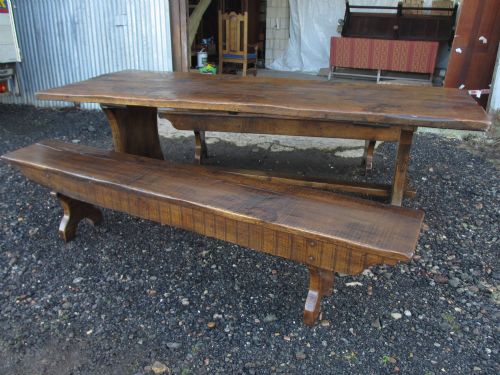
The selections span distinct periods, featuring Edwardian refectory forms, 1920s draw leaf designs, and seventeenth-century Charles II tables alongside matching benches or carved chairs. These arrangements often include ancillary pieces such as sideboards, side tables, or parlour suites that share identical timber and stylistic details.
Makers such as Heals appear among the twentieth-century examples, offering limed finishes and clean modernist lines that contrast with heavily carved Victorian Gothic or Jacobean Revival interpretations. Every set provides a complete dining solution rooted in solid timber construction and period craftsmanship.
Materials and Construction
Construction relies heavily on solid oak, selected for its density, visible medullary rays, and resilience under daily use. Craftsmen utilise traditional joinery methods, incorporating draw leaves, trestle ends, and sturdy tapering columns to support expansive tabletops.
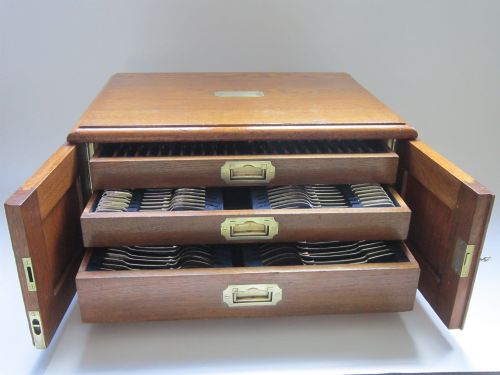
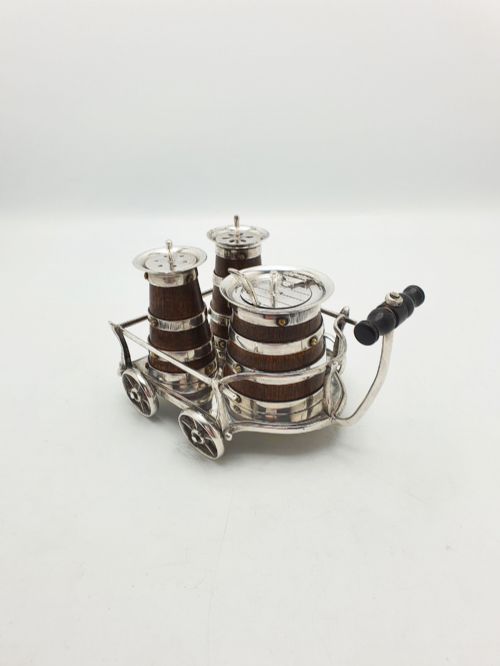
Seating components frequently integrate secondary materials like leather, fabric, velvet, cane, and upholstery for comfort, secured with brass studs. Metal hardware appears on extension mechanisms, casters, and associated silver-plated or sterling silver condiment cruet sets and cutlery canteens.
Evidence shows oak furniture production across this category ranges from seventeenth-century Charles II refectory boards to twentieth-century limed oak suites by Heals.
Distinctions in Quality
Quality rests in the harmony between the table and its accompanying chairs, where matched timber grain and consistent period carving elevate a group above assembled substitutes. Sets retaining their original upholstery, leather seats, and manufacturer marks command greater interest from collectors.
The depth and execution of the carving - ranging from Flemish Green Man motifs to restrained Jacobean strapwork - distinguishes standard production from master workshop output. Structural integrity in the table frame and leg joints ensures the weight of heavy oak tops remains stable over decades of use.
Heals·Waring
The Oak Dining Table Set Glossary
- Refectory table
- A long, narrow dining table traditionally used in monasteries and large halls, characterised by substantial legs and a central stretcher.
- Draw leaf table
- A table equipped with sliding extension leaves stored beneath the main surface, which pull out to lengthen the table instantly.
- Green Man
- A decorative architectural motif depicting a human face carved with leaves, vines, and foliage emerging from the mouth.
- Cane
- Woven rattan or plant material utilised for chair backs and seats, providing lightweight flexibility.
- Medullary rays
- Natural ribbon-like flecks visible across quartersawn oak timber, prized for creating distinctive figuring on tabletops.
Oak Dining Table Set: Frequently Asked Questions
How do I date an oak dining table set?
Dating relies on examining the construction joints, tool marks, and stylistic clues such as Jacobean revival carving or Art Deco clean lines.
Hardware, timber preparation methods, and the presence of maker stamps or labels also help establish the exact period of manufacture.
Are oak dining sets suitable for everyday use?
Solid oak offers exceptional durability, making these sets well-suited for daily family meals and heavy household traffic.
Regular maintenance with appropriate wax or oil protects the timber surface from moisture and daily wear without diminishing the antique patina.
What is the difference between a refectory and an extending table?
Refectory tables maintain a fixed, substantial length supported by trestles or sturdy legs with stretchers, designed to seat large gatherings permanently.
Extending tables feature mechanical leaves that adjust the surface area depending on the number of guests dining.
Do matching chairs always belong to the table originally?
Many period sets were produced together as a unified suite by makers, ensuring identical timber selection and stylistic carving across every chair.
Some dining groups are assembled later based on matching timber species, period style, and upholstery to recreate a cohesive dining arrangement.