


Antique Oak Dining Suite
These antique oak dining suite pieces bring enduring timber and traditional craftsmanship straight into the modern home.
Antique Oak Dining Suite
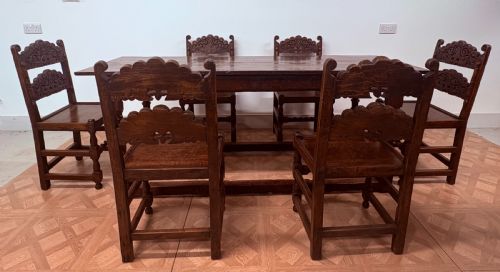
An antique oak dining suite encompasses matched tables and chairs spanning periods from the 17th century through the early 20th century. Buyers searching for an antique oak dining suite encounter robust refectory tables, Jacobean Revival chairs, and expansive Edwardian or Victorian dining sets.
The assortment includes sets featuring armchairs, carvers, sideboards, and side tables fashioned in styles such as Arts and Crafts, Charles II, and Art Deco. Oak remains the steadfast material uniting these diverse historical periods and regional designs.
Most examples hail from the 19th and early 20th centuries, offering substantial seating capacity alongside matching tables. These groupings provide a complete period interior solution for formal or farmhouse dining spaces.
Materials and construction
The primary material is solid oak, frequently supplemented by decorative pollard oak, elm, fabric, leather, cane, brass, iron, and velvet upholstery. Carpenters utilised traditional joinery techniques to frame heavy tabletops and high-back seating.
Carving defines much of the ornamentation, seen in elaborate panels, lion motifs, and barley twist supports on 19th-century and revival pieces. Upholstered elements rely on durable textiles and leather secured with brass or iron details to withstand daily use.
Styles span Charles II, Alpine Folk Art, Arts and Crafts, and Art Deco within various dining configurations.
Distinguishing quality across the range
Quality differentiates by the crispness of the hand-carving and the integrity of the structural timber. Superior suites display harmonious grain matching across extended table surfaces and cohesive design integration between chairs and sideboards.
The condition of secondary materials like leather, cane, and specialised woods such as pollard oak influences the overall standard. Original upholstery elements and well-preserved structural joinery elevate individual pieces above standard production.
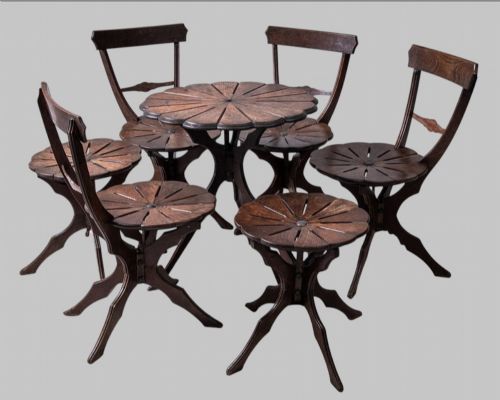
George Henry Walton
The Antique Oak Dining Suite Glossary
- Refectory table
- A long, narrow dining table traditionally used in monasteries and large halls, characterised by sturdy legs and a central stretcher.
- Carver
- An armchair designed to match a set of dining chairs, typically positioned at the head of the table.
- Jacobean Revival
- A 19th-century stylistic movement emulating the heavy, carved oak furniture of the early 17th century.
- Pollard oak
- Timber taken from trees that have been pollarded, producing a distinctive, highly figured burr grain used for decorative veneer.
Antique Oak Dining Suite: Frequently Asked Questions
How do I care for antique oak?
Maintain the timber by keeping it away from direct heat sources and applying appropriate natural waxes periodically.
Avoid synthetic polishes that build up residue and dull the historic grain over time.
Can I mix chairs with tables?
While matching suites offer visual harmony, mixing period pieces of similar wood tones is a traditional approach.
Ensure seat heights and arm clearances align comfortably with the underside of the table apron.
What defines a refectory table?
Refectory tables feature elongated proportions supported by substantial legs linked with low stretchers for stability.
These heavy oak surfaces were originally built to accommodate communal dining in large halls.
How do I identify revival styles?
Revival pieces copy earlier historical motifs, such as Jacobean carving or Elizabethan proportions, but utilise 19th-century construction methods.
Examine the secondary woods, tool marks, and hardware to distinguish them from authentic early period items.