



Oak Desk Three Drawers
These oak desk three drawers pieces are sturdy writing tables and lowboys built to last, offering practical workspace and rich period character for any room.
Oak Desk Three Drawers
When you search for oak desk three drawers, you encounter a selection of historic writing tables, side tables, and lowboys primarily originating from the seventeenth, eighteenth, and nineteenth centuries. These items serve multiple practical functions, often acting as writing desks, dressing tables, or general side tables depending on their proportions and layout.
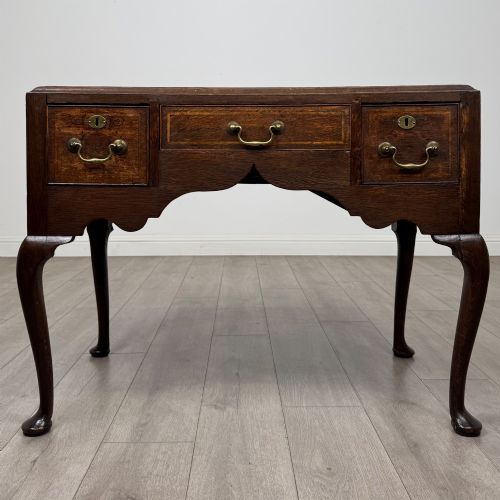
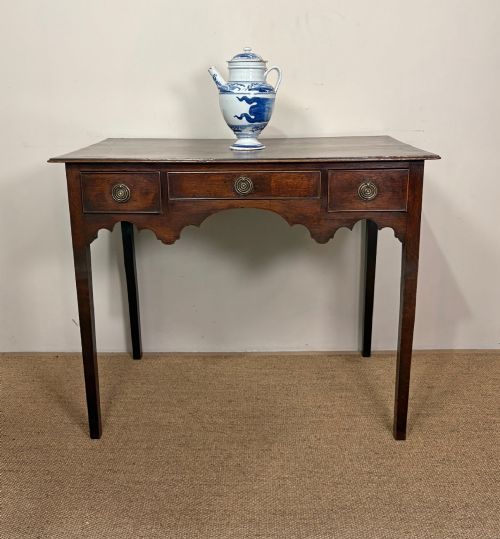
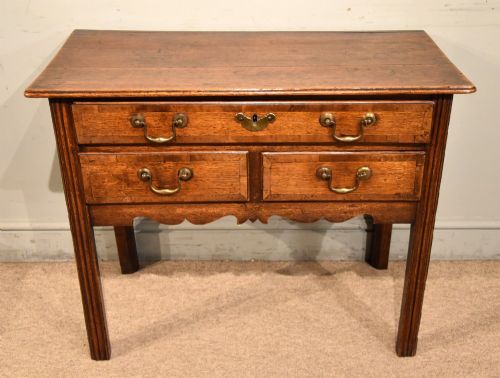
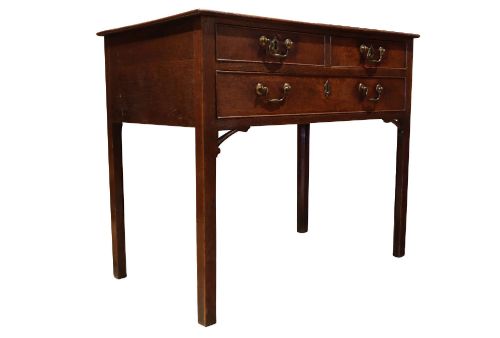
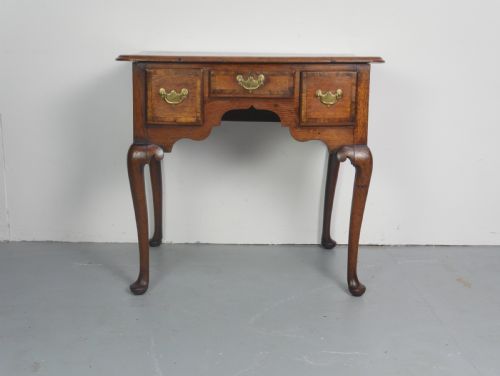
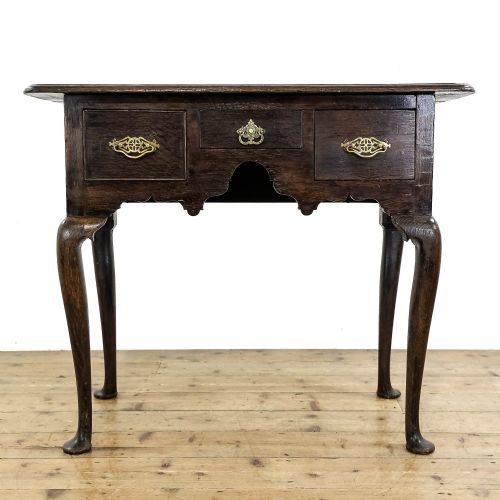
The most common form you will meet on this page is the eighteenth century Georgian lowboy, frequently constructed from solid oak and featuring a bank of three drawers beneath a rectangular top. Alongside these classic lowboys, you find occasional variants incorporating leather writing surfaces, walnut veneers, or fruitwood timbers.
Many of these tables bridge the gap between formal regional furniture and country craftsmanship, spanning eras from the reign of Queen Anne through the Georgian period and into later nineteenth century revivals. Their compact footprint and useful under-drawer storage make them enduringly popular for contemporary domestic interiors.
How they were made
Makers relied principally on solid oak, supplemented occasionally by walnut, fruitwood, and secondary timbers for drawer linings, building tables designed to withstand daily use. Boards were selected for their grain and strength, then joined using traditional framing techniques that allowed the timber to move naturally with changes in temperature and humidity.
Hardware played an essential functional and aesthetic role, with brass drop handles and drawer pulls mounted on brass backplates securing the drawer fronts. Selected examples incorporated secondary materials such as inset leather writing surfaces on top or delicate feather banding to highlight the drawer perimeters.
Some bible boxes hide internal drawers behind carved friezes, guarding secrets long after the sermons were read.
What varies in quality
The distinction between standard examples and the finest pieces often lies in the choice of timber and the crispness of the cabinetmaker's joinery. Superior items display well-figured timber selection, balanced proportions, and careful integration of drawer dividers that remain square and true over centuries of use.
Surface finish and the survival of original patination significantly influence the character of each piece. Tables that retain their early surface patination without excessive modern intervention demonstrate greater historical integrity and visual depth.
The Oak Desk Three Drawers Glossary
- Lowboy
- A small table with drawers, typically used as a dressing table or writing desk in the seventeenth and eighteenth centuries. These tables usually stand on four legs and feature one to three drawers beneath the main surface.
- Feather banding
- A decorative inlay technique using small pieces of veneer arranged in a herringbone pattern to frame drawer fronts or table tops. Cabinetmakers employed this method on finer walnut and hardwood furniture.
- Frieze
- The horizontal band situated directly beneath the top surface of a table or desk, often housing the drawer configuration. On older pieces, this area may feature carved ornamentation or simple moulded edges.
- Patina
- The deep, lustrous surface sheen developed on wood and metal over decades and centuries through handling, waxing, and exposure to light. A good patina reflects the age and history of the piece.
- Bible box
- A small tabletop chest used originally for storing sacred texts and writing materials, sometimes fitted with internal drawers. These boxes represent early forms of desktop storage before dedicated writing tables became common.
Oak Desk Three Drawers: Frequently Asked Questions
What is an oak lowboy used for?
These tables served historically as small dressing desks or writing surfaces in bedchambers and parlours. Their modest proportions allowed them to fit into smaller rooms while providing essential storage.
Today, they function well as compact writing desks, hallway console tables, or dressing surfaces in modern bedrooms.
How do I date an oak desk?
Dating relies on examining construction methods, timber choices, and hardware styles. Early pieces often feature hand-cut dovetails and pegged frame joints rather than modern mechanical fasteners.
Secondary woods inside the drawers and the style of the brass handles provide further clues to whether a piece belongs to the seventeenth, eighteenth, or nineteenth century.
Are these desks suitable for daily work?
Many historic lowboys and writing tables offer a comfortable height and adequate surface area for laptop use or occasional paperwork. Their three drawer layouts provide convenient storage for modern stationery.
Care should be taken to protect antique timber surfaces with appropriate blotters or pads if used intensively every day.