
Oak Leather Writing Table
An oak leather writing table brings a steady, working presence to a room, offering a tactile leather surface set within solid timber.
Oak Leather Writing Table
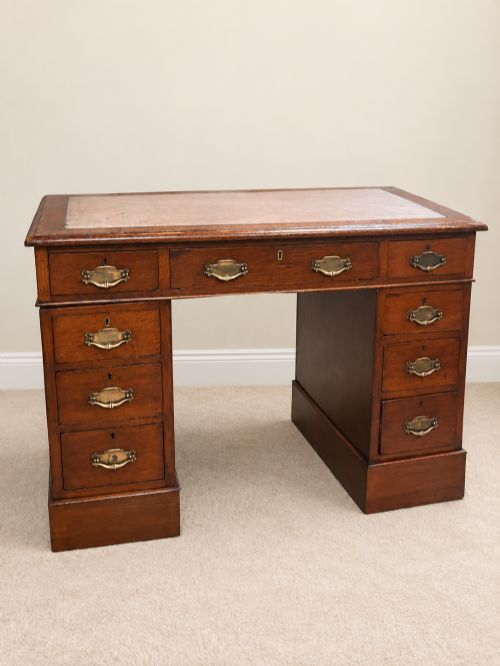
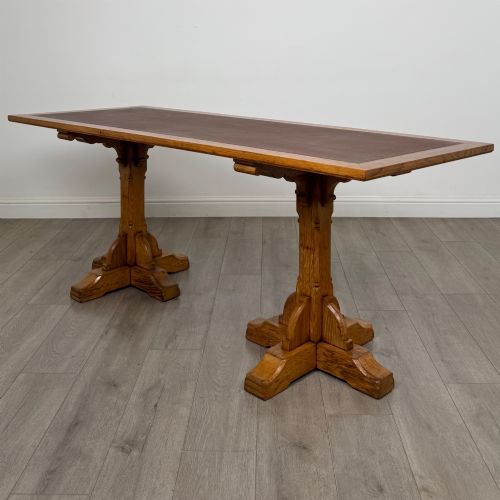
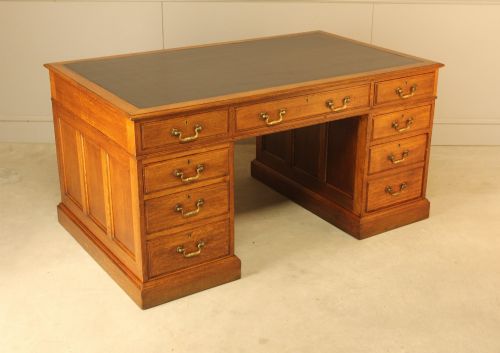
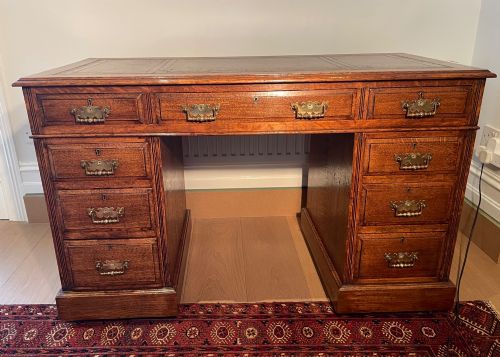
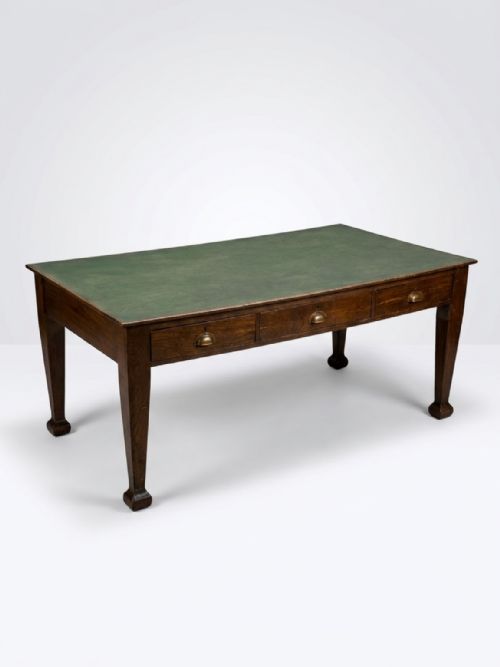
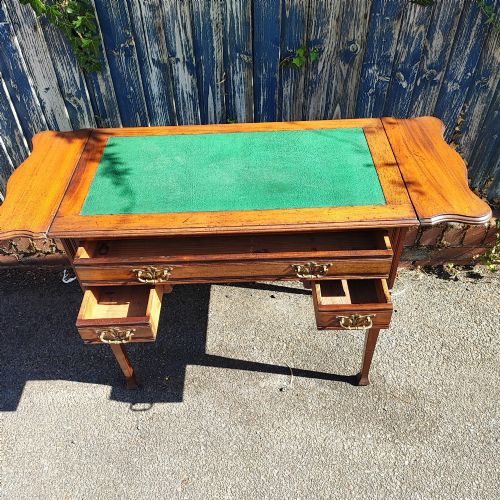
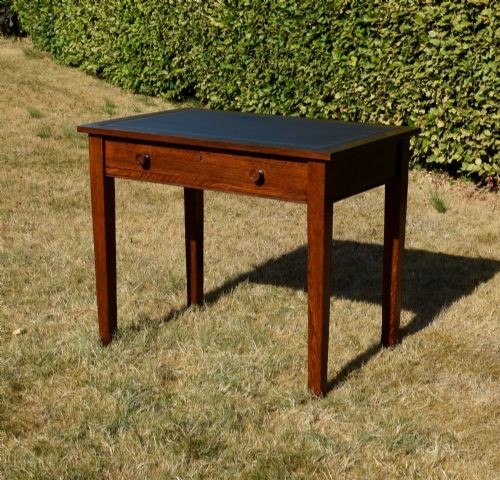
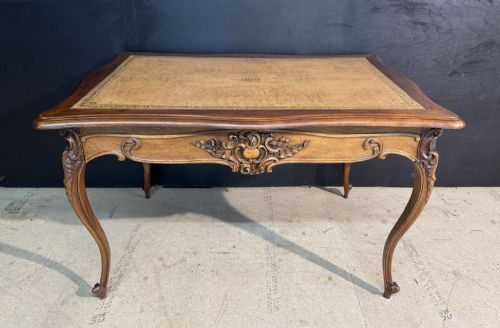
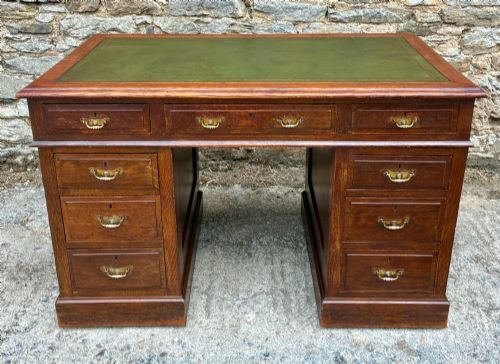
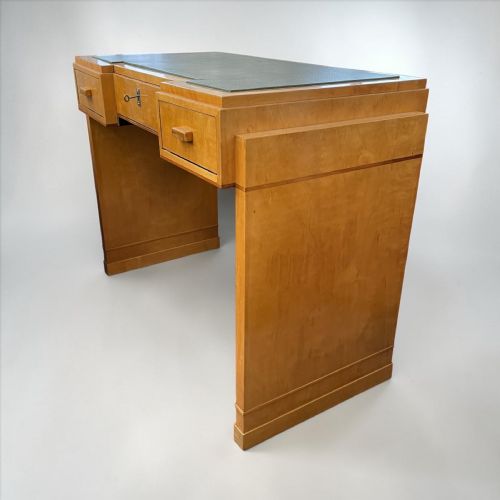
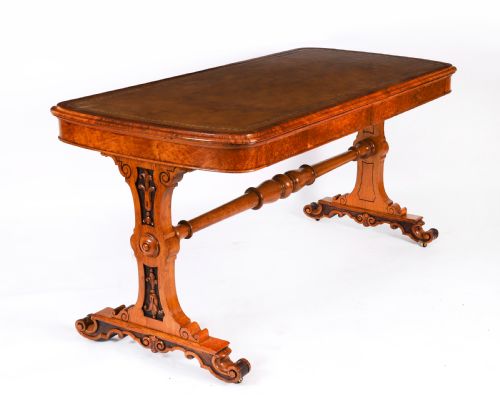
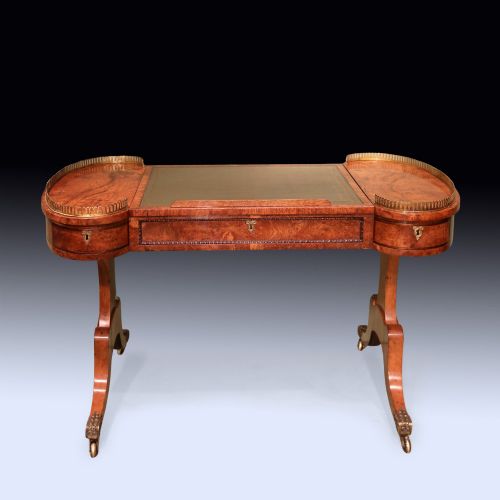
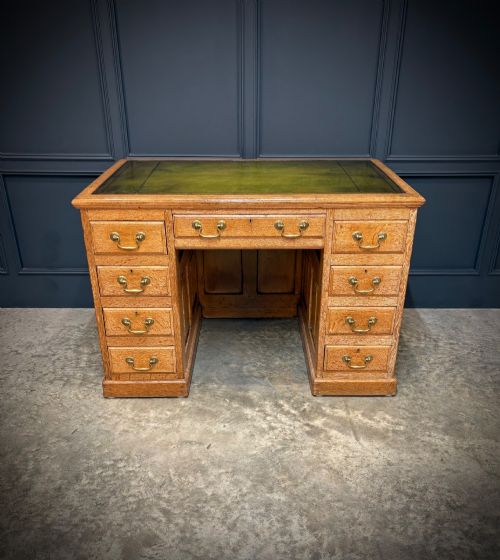
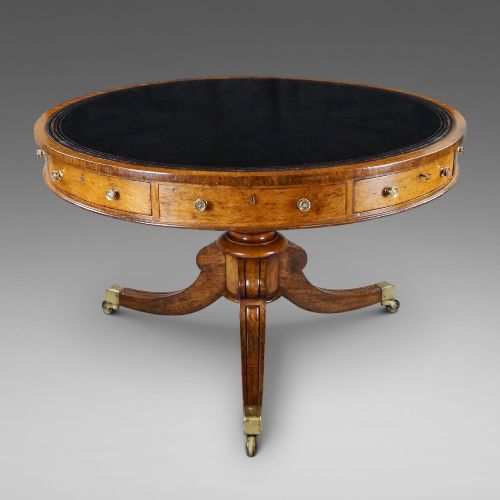
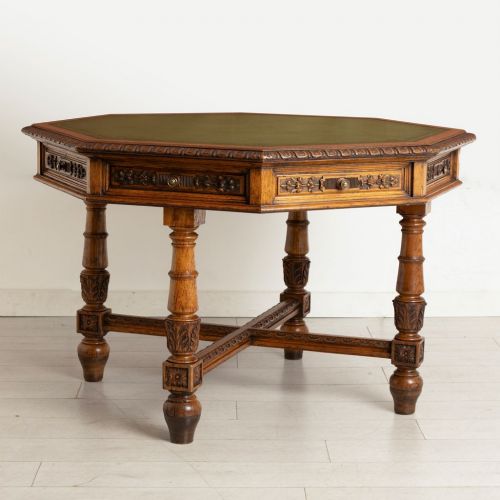
An oak leather writing table provides a sturdy surface designed for correspondence, study, and administration, appearing primarily in Victorian, Edwardian, and nineteenth-century formats. These pieces range from compact single-pedestal desks and side tables to large partners desks and freestanding library tables equipped with inset leather writing surfaces.
How they were made
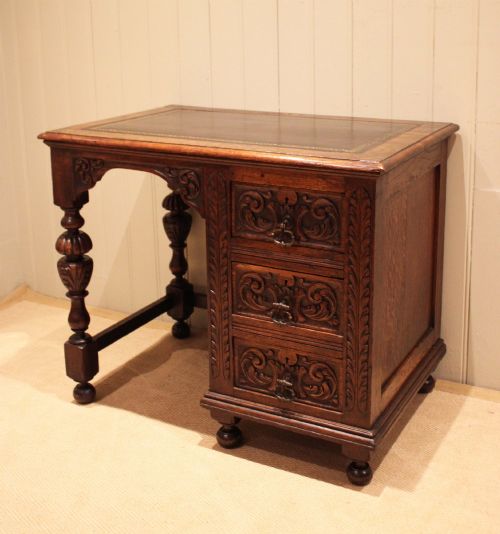
Cabinet makers constructed these tables using solid oak, sometimes accented with burr oak, pollard oak, walnut, or birch veneers to create varied grain patterns on drawer fronts and panels. Brass hardware, including drop handles, escutcheons, and casters, appears frequently across the pieces.
The writing surfaces feature inset leather, often decorated with blind or gold tooling along the perimeter, fitted into recessed channels within the timber top. Frames utilise traditional joinery methods to support heavy pedestals, drawers, and freestanding legs.
Several desks include hidden secret compartments behind dummy drawer fronts, built for concealing private ledgers and personal correspondence.
What varies in quality
The standard of an oak leather writing table depends on the selection of timber, the crispness of any hand-carved ornamentation, and the preservation of original materials. Pieces retaining their initial fitted leather, period brass handles, and solid timber backboards command greater regard than those with later replacements.
Structural integrity and proportion distinguish everyday utility items from exhibition-grade pieces made by prominent cabinet makers. The refinement of drawer linings, dovetailed joints, and the balance of pedestals to top surfaces define the upper tier of the range.
James Shoolbred & Co·Blyth & Son·T Wilson·Gillows
The Oak Leather Writing Table Glossary
- Partners desk
- A large double-sided desk designed for two people to work opposite one another, featuring drawers and cupboards on both faces.
- Pedestal desk
- A heavy table comprising a top surface resting on two separate stacks of drawers or cupboards.
- Library table
- A freestanding large table intended for the centre of a room rather than against a wall, frequently finished on all four sides.
- Kneehole desk
- A compact desk with a central recess for the user's legs, flanked by narrow banks of drawers.
- Tooling
- Impressed decorative patterns, often gilt, applied around the outer borders of leather writing surfaces.
- Pollard oak
- Timber taken from trees that have been pollarded, producing dense, highly figured burr clusters favoured for decorative veneers.
Oak Leather Writing Table: Frequently Asked Questions
What is a partners desk?
A partners desk is a wide, double-sided piece designed so two people can sit opposite each other and work independently. They incorporate drawers and cupboards on both long sides.
These tables were traditionally used in libraries, banking halls, and estate offices where multiple staff required workspace.
How do I care for the leather top?
The leather writing surface benefits from occasional cleaning with a damp cloth followed by a neutral leather cream to keep the hide supple. Avoid using harsh chemical solvents or excessive water.
Keeping the room humidity stable prevents the leather from drying out and cracking around the edges.
Are these desks suitable for daily computer work?
Many of these tables provide ample surface area and sturdy construction to support modern desktop equipment and laptops. Pedestal models and large library tables offer robust support for daily office tasks.
Drawer depths and knee clearance vary by period, so interior measurements should be checked against seating requirements.
How can I tell a Victorian desk from an Edwardian one?
Victorian examples frequently display heavier proportions, darker finishes, and deeper carved detailing such as linenfold panels or Gothic tracery. Edwardian pieces often lean towards lighter oak tones and simpler, cleaner silhouettes influenced by the Arts and Crafts movement.
Construction details inside the drawers, such as hand-cut versus machine-cut dovetails, also offer clues to the decade of manufacture.