

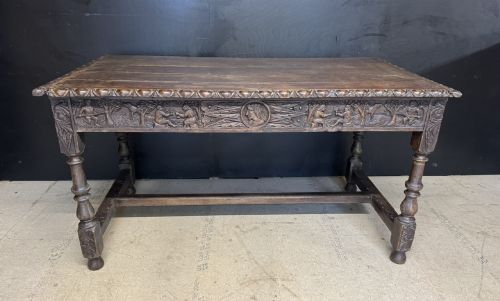
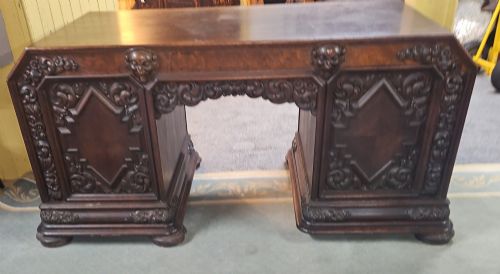
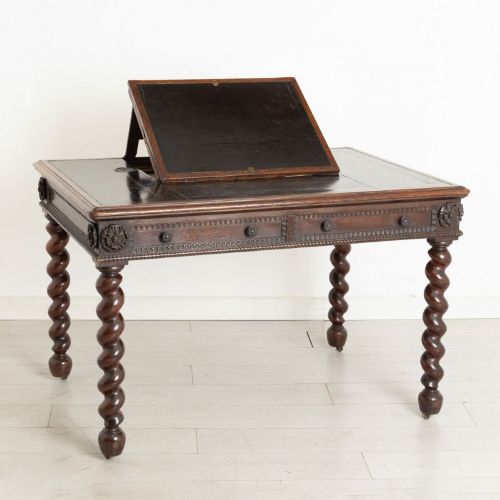


Jacobean Revival Writing Desk
A jacobean revival writing desk brings heavy carved timber and period character into a study.
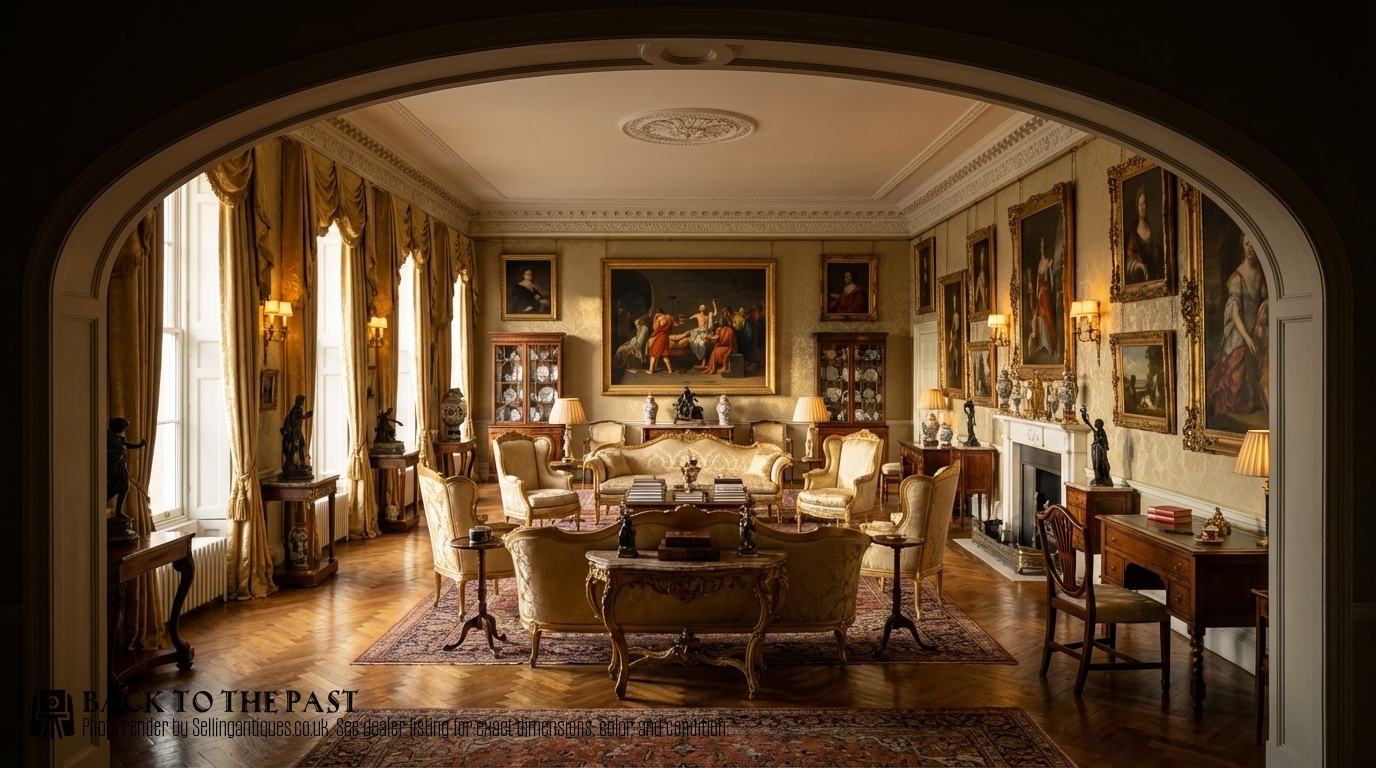
Jacobean Revival Writing Desk
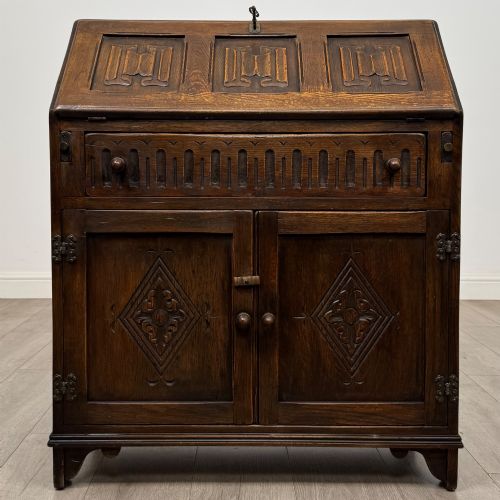
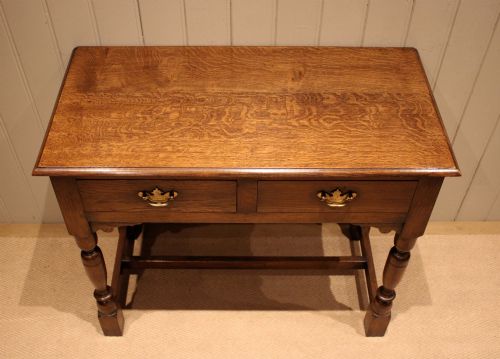
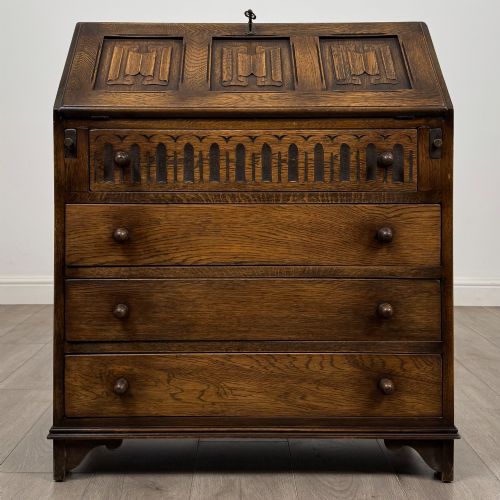
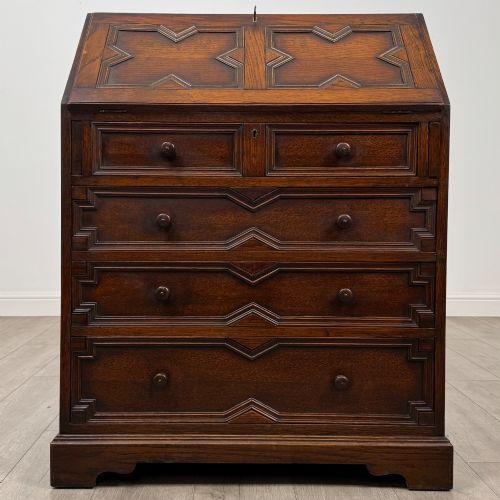
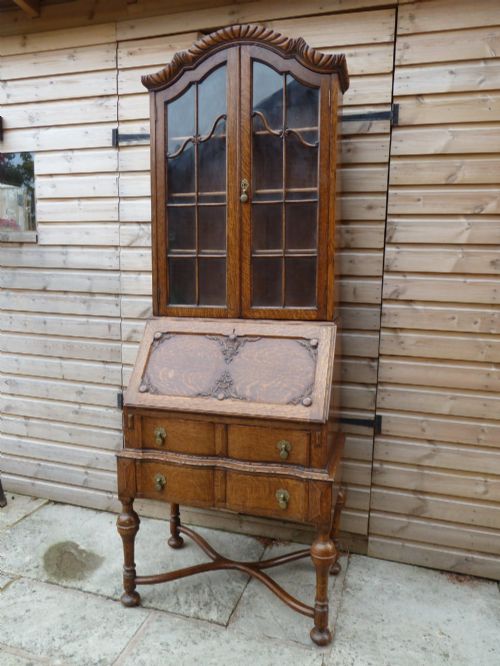
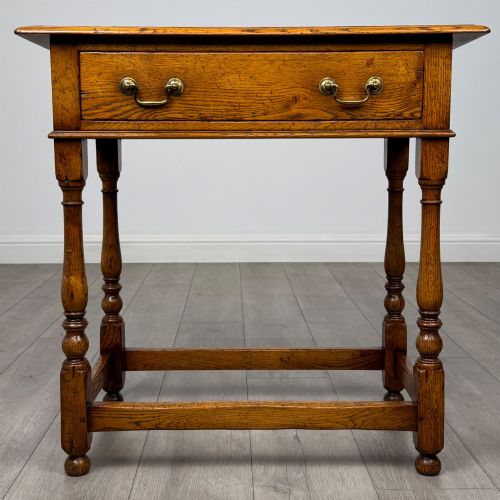
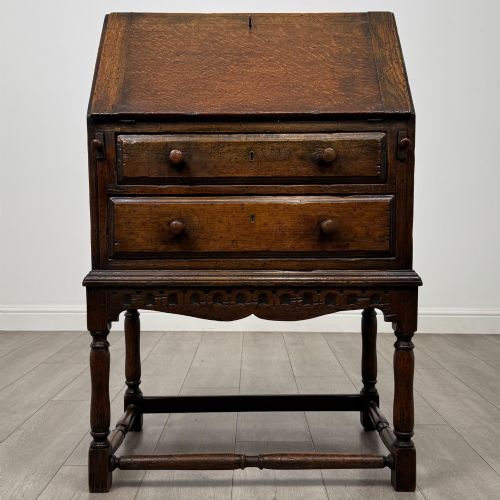
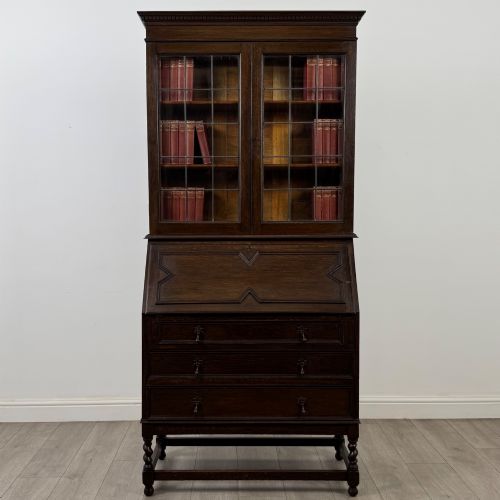
A jacobean revival writing desk embodies the sturdy forms and ornamental carving associated with seventeenth-century English furniture, reinterpreted during the Victorian and Edwardian eras. Buyers encounter various formats on this page, including side tables with drawers, writing tables, fall-front bureaux, and tall bureau bookcases.
The material palette centres on solid oak and oak veneer, often embellished with linenfold panels, geometric mouldings, and figurative details such as greenman carvings. Many examples date from the early twentieth century and the late nineteenth century, spanning periods from eighteen-fifty to nineteen-thirty.
These pieces function as practical workspaces while anchoring a room with dark wood tones and traditional craftsmanship. The selection ranges from compact writing desks to large kneehole desks and elaborate bureau bookcases fitted with moving interiors.
How they were made
Makers constructed these pieces primarily from solid oak and oak veneer, utilising brass hardware for handles and escutcheons, and occasionally incorporating leather writing inserts. Structural integrity relied on robust timber frames designed to support heavy carved ornamentation.
Surface decoration involved hand carving, featuring linenfold motifs, religious panels, and architectural mouldings typical of the revival styles. Interior compartments often included moving parts and smaller drawers tailored for correspondence and stationery.
A greenman carving peers out from the timber, bringing a leafy woodland face straight into the Victorian study.
What varies in quality
The depth and crispness of the hand carving separate standard production pieces from finer examples, as skilled artisans achieved sharper relief and more expressive detail in foliage and figures. Material selection also dictates standard, with superior items employing dense solid oak rather than simpler veneered surfaces.
Proportion and hardware integration influence the overall coherence of the design, ensuring that revival details complement the functional form of the bureau or writing table. Well-executed bureau bookcases and partner desks demonstrate balanced massing and thoughtful interior configuration.
The Jacobean Revival Writing Desk Glossary
- Bureau
- A writing desk featuring a sloping fall-front that opens to reveal internal pigeonholes and small drawers. This form appears frequently in oak across Edwardian and later periods.
- Linenfold
- A carved wood panel motif resembling folded fabric, commonly found on the fronts of desks and bureaux. It forms a key decorative element in revival furniture.
- Kneehole desk
- A large writing table with a recessed central space for the user's legs, flanked by pedestals of drawers. These pieces provide substantial surface area and storage.
- Bureau bookcase
- A combination furniture piece featuring a writing bureau base beneath an upper shelving section enclosed by doors. They offer vertical storage alongside a fold-down writing surface.
- Greenman
- A sculptural motif representing a human face entwined with leaves and vines, appearing in nineteenth-century oak carvings. This detail adds a distinct folkloric element to revival pieces.
Jacobean Revival Writing Desk: Frequently Asked Questions
What periods do these desks date from?
The pieces listed originate predominantly from the Victorian and Edwardian eras, alongside items dated between eighteen-fifty and nineteen-thirty. Revival styles reimagined older seventeenth-century aesthetics during these later decades.
Craftsmen drew upon Tudor and Carolean design elements, resulting in substantial oak furniture that spans the nineteenth and twentieth centuries.
What materials are used in these desks?
Oak is the primary timber across the inventory, supplemented by oak veneer on specific surfaces. Accompanying materials include brass for handles, glass for bookcase doors, and leather for writing inserts.
Iron hardware and wood inlay also appear in selected pieces to accent the dark timber construction.
How do I identify revival styles?
Revival pieces display characteristic decorative vocabulary such as heavy carved panels, linenfold motifs, and geometric mouldings inspired by earlier centuries. Makers reinterpreted these historical motifs during the Victorian and Edwardian periods.
Examining the construction methods and timber characteristics helps distinguish these nineteenth and twentieth-century interpretations from original antiques.