
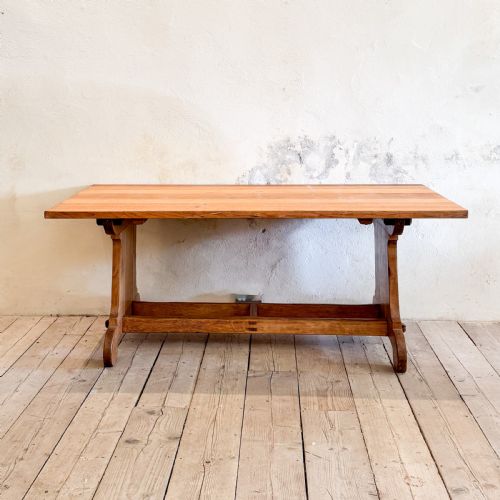
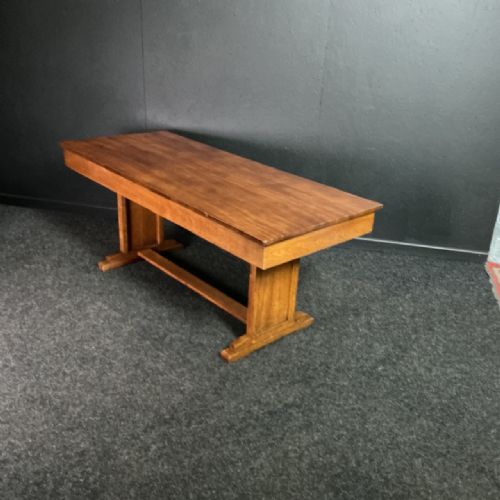


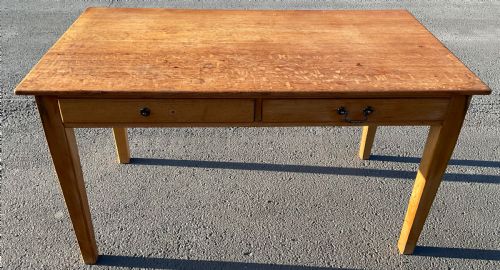

Solid Oak Library Table
A solid oak library table brings honest weight and working surface into a room, built to hold heavy volumes without flinching.
Solid Oak Library Table
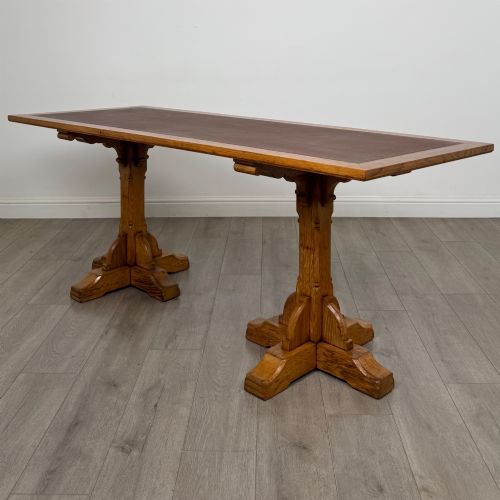
When you search for a solid oak library table, you are looking at substantial pieces designed for serious study, public service, or domestic reading rooms. These tables appear across Victorian, Edwardian, and later twentieth-century periods, carrying styles from Arts and Crafts and Jacobean Revival to Gothic Revival.
The version you are most likely to meet on this page is a substantial writing table or centre table formed from sturdy timber, occasionally fitted with leather inserts or brass hardware. Their origins span public school rooms and private studies, offering deep timber grain and enduring utility.
How they were made
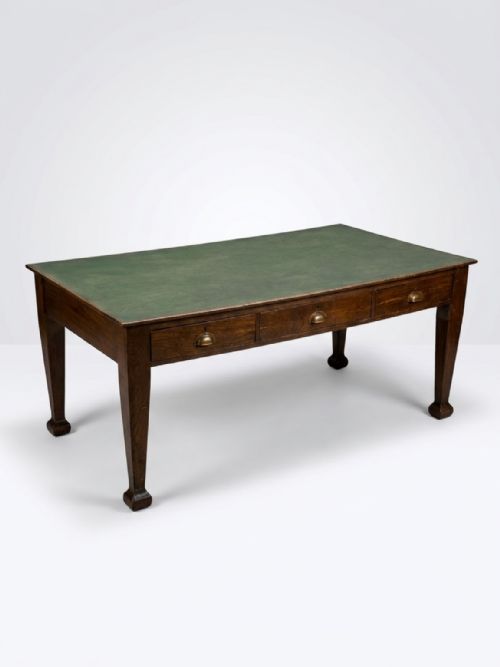
These pieces rely on heavy oak timber framed with traditional joinery, often showing the warm golden tones of the wood or deeper period polishes. Selected examples incorporate supple leather tops for writing surfaces, bordered by subtle blind tooling.
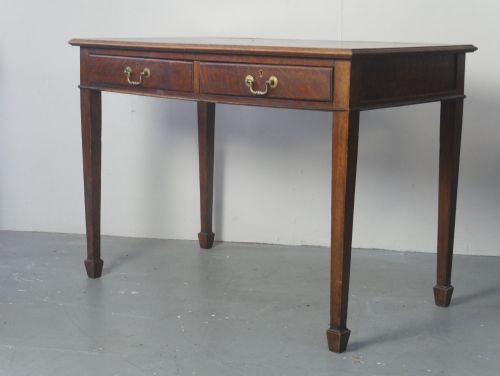
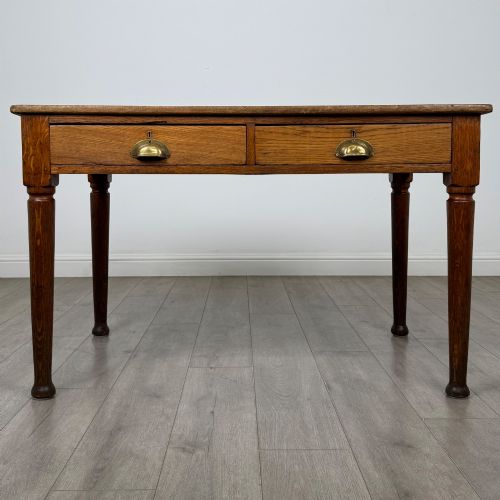
Makers integrated brass handles, castors, and drawer pulls where utility demanded, while structural joints relied on sturdy pegs and solid framing rather than veneers. Carved details occasionally appear along skirts and legs, drawing upon Gothic and Jacobean revivals.
Several examples carry the quiet ink stains of past scholars who clearly fell asleep over their papers.
What varies in quality
Quality rests in the selection of the timber grain and the integrity of the structural joinery, where heavy oak frames meet without movement or wobble. Tables boasting finely carved details or balanced proportions stand apart from simpler utilitarian pieces.
The presence of original leather inserts, patinated brass fittings, and clean drawer construction separates standard workshop output from exceptional commissions intended for institutional libraries and grand houses.
The Solid Oak Library Table Glossary
- Arts and Crafts
- A design movement prioritising simple forms, visible construction, and honest materials over machine-made ornamentation. This style values traditional craftsmanship and utility.
- Centre table
- A freestanding piece designed to be viewed from all four sides, typically placed in the middle of a room rather than pushed against a wall.
- Gothic Revival
- An architectural and decorative style drawing inspiration from medieval buildings, featuring pointed arches, heavy mouldings, and robust carved oak details.
- Leather top
- A writing surface inset into the wooden top of a desk or table, usually panelled with coloured hide and finished with gold tooling.
Solid Oak Library Table: Frequently Asked Questions
What is a solid oak library table?
A solid oak library table is a heavy timber furnishing originally built for handling large volumes, research, and daily writing tasks in institutional or domestic settings.
These pieces utilise robust construction methods, frequently featuring spacious drawers and expansive wooden surfaces designed to endure generations of heavy use.
How were these tables used originally?
In period settings, these tables served as central hubs for reading, sorting correspondence, and consulting weighty reference books in public schools and private libraries.
Their generous proportions allowed multiple readers to gather around or provided a stable, uncluttered surface for scholarly work and administration.
How do I live with a library table?
Living with a library table involves placing it where its substantial footprint can be appreciated as a freestanding centrepiece rather than tucked into a corner.
Treat the timber and leather surfaces with breathable waxes to maintain the grain, allowing daily use to contribute to the patina of the wood.
How do I tell the periods apart?
Victorian examples often lean towards heavier revival styles like Gothic or Jacobean influences, featuring darker finishes and pronounced carving along the rails.
Edwardian and later twentieth-century pieces frequently embrace simpler Arts and Crafts lines, showing lighter golden oak tones and straightforward structural honesty.