


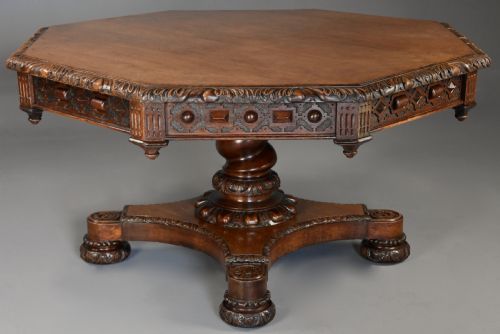


Oak Barley Twist Desk
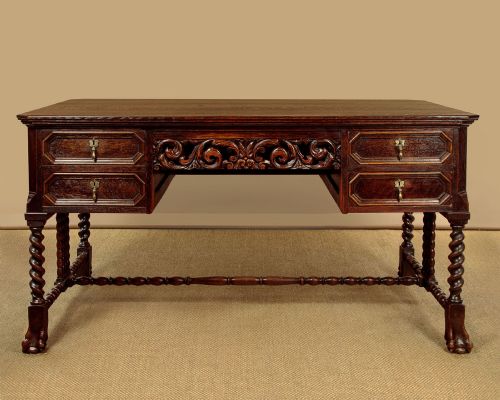
These oak barley twist desks bring tactile turnings and rich timber grain to a study, offering sturdy writing surfaces shaped by revivalist cabinet-makers.
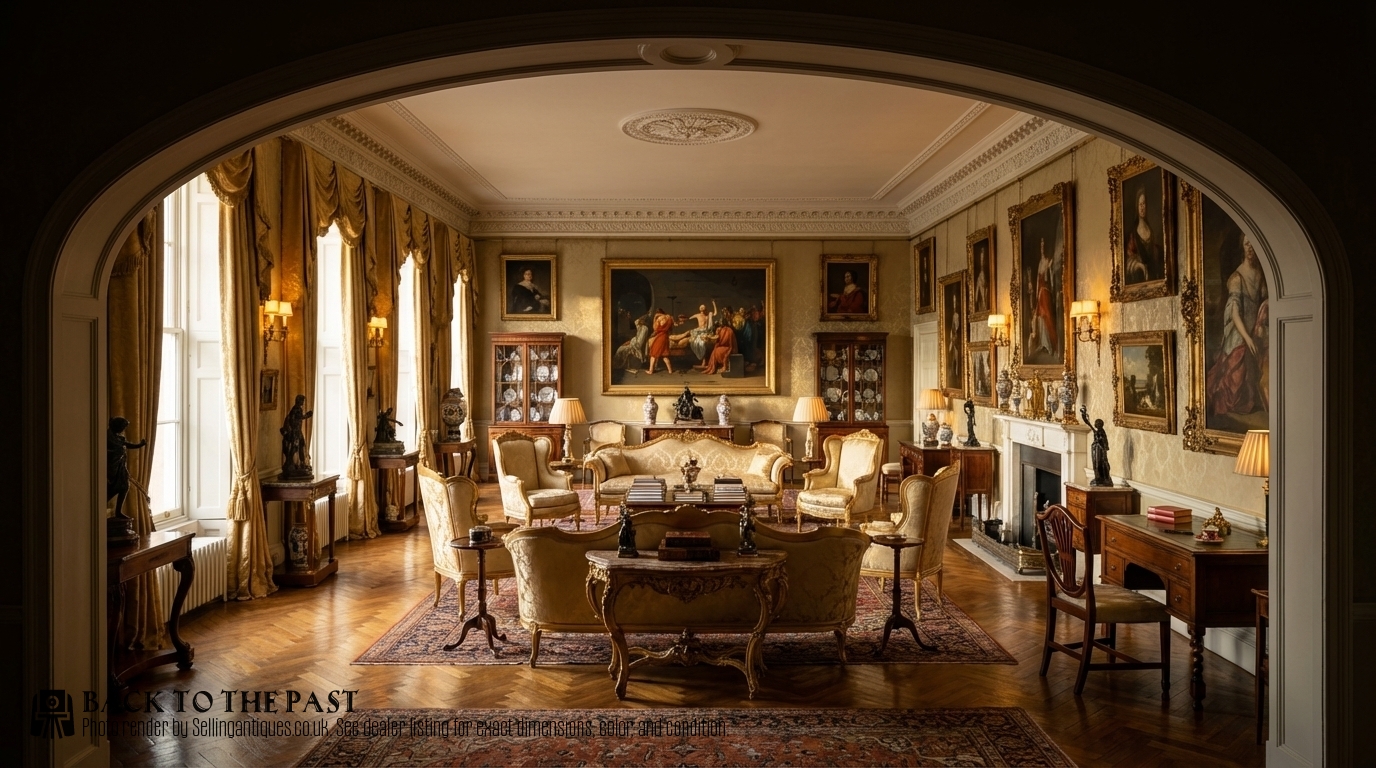
Oak Barley Twist Desk
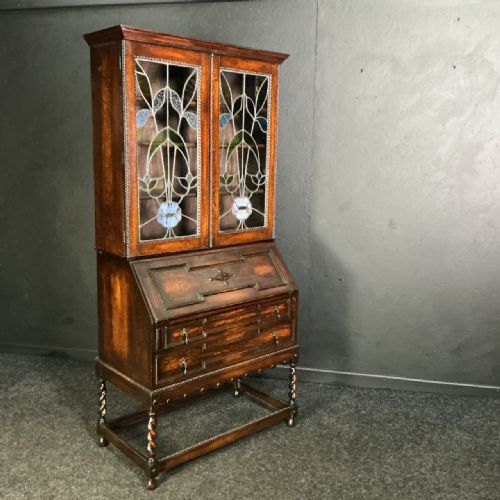
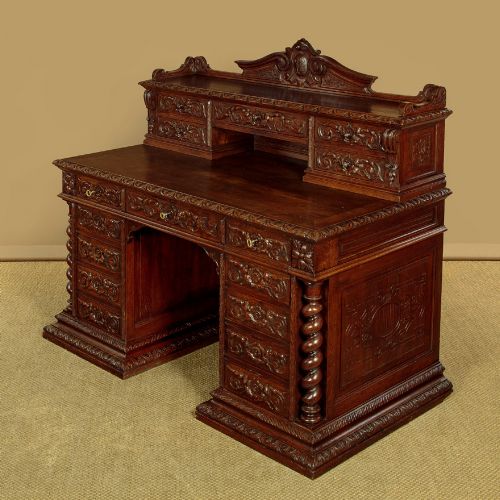
When searching for an oak barley twist desk, you encounter sturdy writing tables, fitted bureaux and library desks grounded in nineteenth-century and early twentieth-century revival movements. These pieces range from substantial Victorian library tables to compact Edwardian writing desks, all united by turned spiral timber supports.
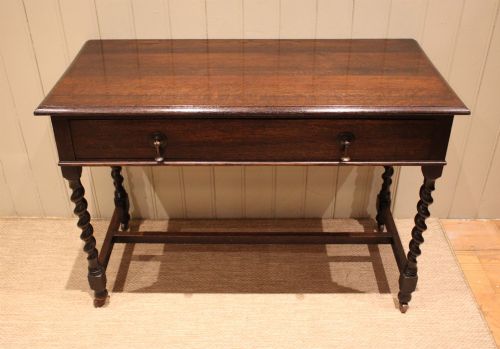
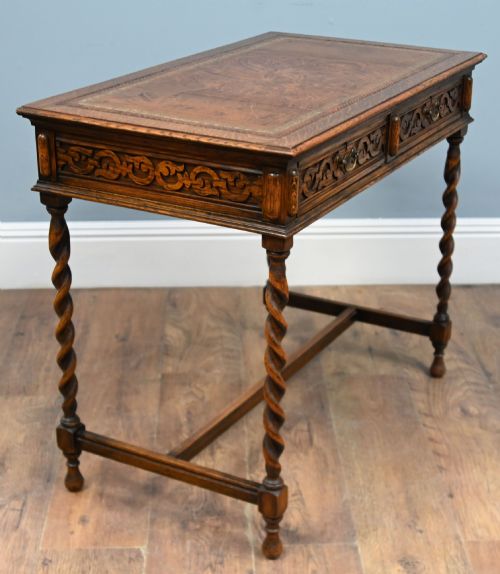
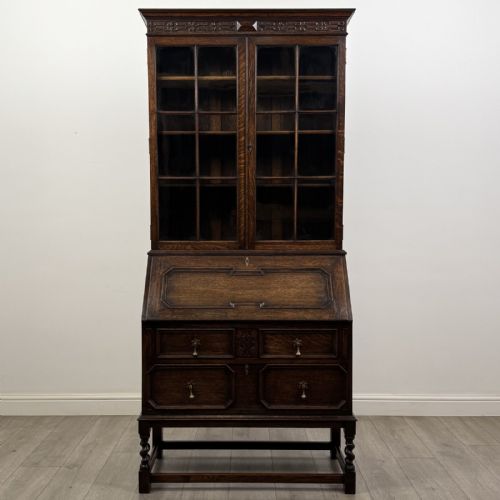
The most common forms on this page pair a rectangular solid timber top with characteristic twisted legs, often joined by matching stretchers. You meet variations spanning simple writing tables with inset leather surfaces and drop-front bureaux housing internal stationery compartments.
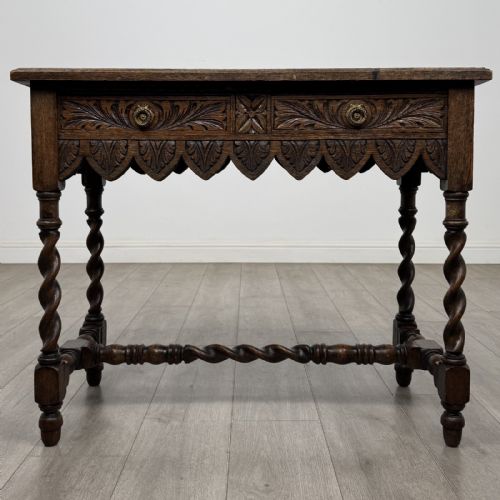
Originating structurally from seventeenth-century joinery traditions seen in Charles II and Jacobean styles, the examples available today predominantly reflect Victorian Gothic Revival and later Edwardian interpretations. These later iterations combine heavy carved detail with the distinctive spiral turning that defines the genre.
How they were made
Cabinet-makers relied heavily on solid oak, selected for its dense grain and durability, complemented by secondary timbers for drawer linings and internal fittings. Turners produced the spiral legs using lathes and hand chisels, ensuring each twist possessed a uniform rhythm.
Surfaces frequently integrated inset leather writing panels, bordered by blind tooling, alongside brass drop handles fixed to dovetailed drawers. Structural stability was maintained through mortise and tenon joinery, reinforced by turned stretchers positioned between the legs.
Oak Barley Twist Desk Retail Price Guide 2026
Typical asking prices for oak barley twist desk among the pieces listed under this phrase on Sellingantiques today, from the lower quarter to the upper quarter. They describe what is for sale here now, not the wider market.
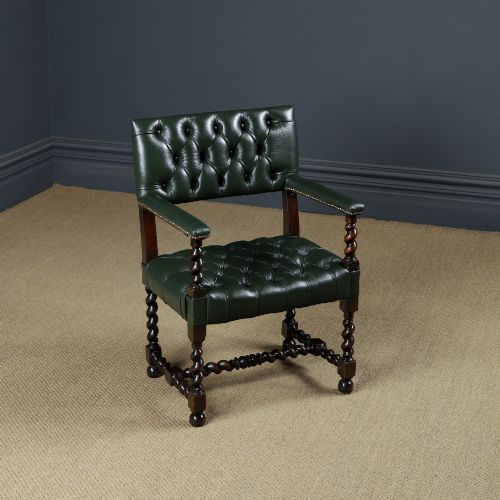
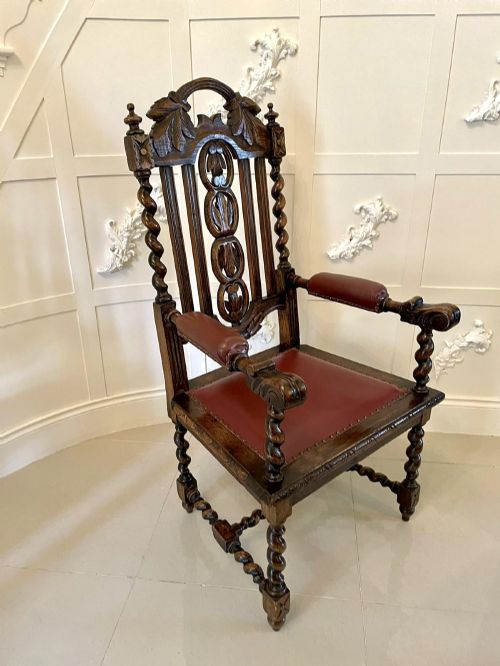
Several armchairs disguised as library seating include folding writing arms designed for discreet Victorian correspondence.
What varies in quality
Quality rests in the crispness of the timber turning and the depth of hand-carving applied to the friezes and drawer fronts. Superior pieces display harmonious proportions where the spiral twist complements the scale of the desk top without appearing overly chunky.
Material selection dictates longevity, with quarter-sawn oak revealing attractive medullary rays that elevate the visual weight of the furniture. Finer examples also feature well-figured leather surfaces and original brass hardware rather than later replacements.
Edwards & Roberts
The Oak Barley Twist Desk Glossary
- Barley twist
- A spiral turning resembling a twisted rope, carved into furniture legs and supports during the seventeenth century and revived in the Victorian and Edwardian eras. This decorative form adds dynamic vertical movement to heavy oak furniture.
- Bureau
- A sloping front desk that opens to reveal a fitted interior of small drawers and pigeonholes for correspondence. It stands on legs or a chest base, often featuring barley twist supports.
- Jacobean Revival
- A nineteenth-century style imitating the heavy, rectilinear furniture of the early seventeenth century, typically characterised by dark oak, geometric moulding and deep carving. Pieces often incorporate panelled effects and turned details.
- Library table
- A large freestanding table designed for reading and writing, finished on all four sides so it could sit in the centre of a room. These sturdy tables frequently feature expansive oak tops and robust underframes.
Oak Barley Twist Desk: Frequently Asked Questions
How do I date an oak desk?
Dating relies on examining construction methods, timber selection and hardware styles. Early pieces show hand-cut dovetails and pegged joinery, whereas later revival items utilise machine-cut elements.
Style indicators also help narrow the period. Victorian and Edwardian revival desks frequently borrow heavily from Jacobean or Gothic motifs, combining older carving techniques with modern manufacturing conveniences.
What is a barley twist leg?
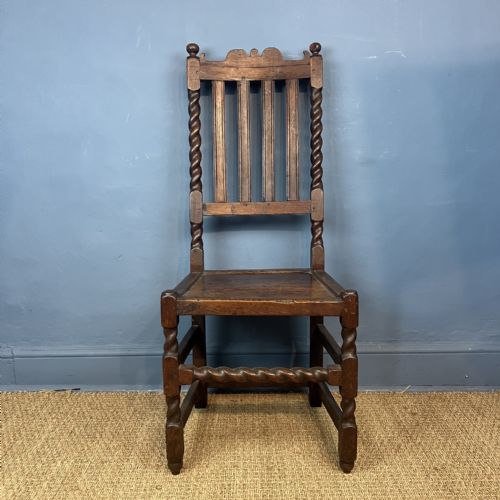
A barley twist leg is a structural support shaped into a continuous spiral, resembling a twisted stalk of barley or rope. Master turners carved these forms on lathes to catch the light and add texture to heavy timber furniture.
This decorative turning gained popularity in seventeenth-century English interiors and experienced a significant revival during the Victorian and Edwardian periods on desks, tables and chairs.
Are these desks suitable for daily use?
Solid oak construction makes these desks exceptionally robust and well-suited for everyday writing and computer work. Their sturdy frames easily handle modern demands while providing a generous workspace.
Care should be taken with antique leather writing surfaces, which benefit from blotting pads or protective blotters to prevent ink stains and surface wear.
How should I maintain oak furniture?
Regular dusting with a soft, dry cloth preserves the natural sheen of the timber without building up greasy residues. Avoid placing antique oak near direct heat sources or strong sunlight, which can dry out and split the wood.
Occasional applications of appropriate beeswax feed the timber and protect the grain. This keeps the antique finish rich and resilient against minor knocks.