

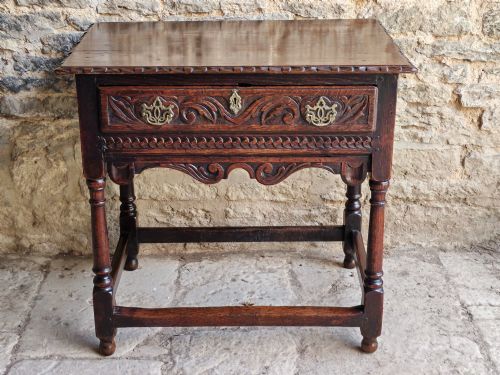
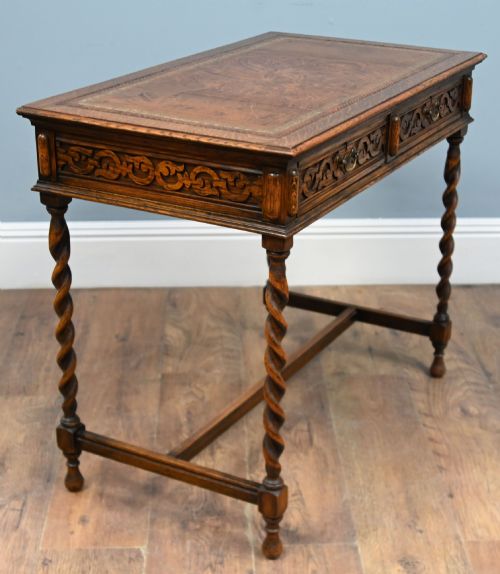
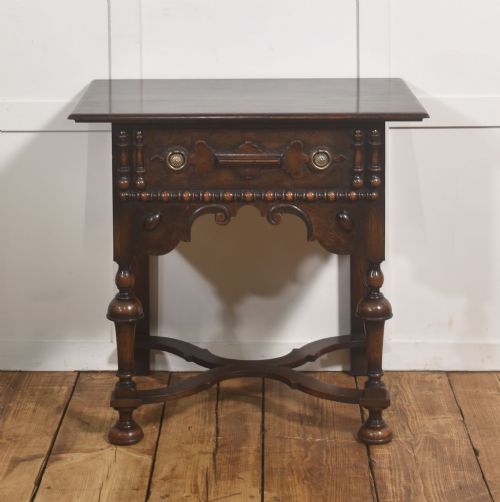
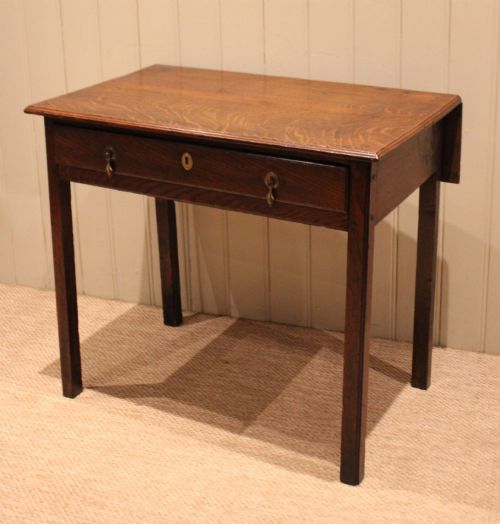
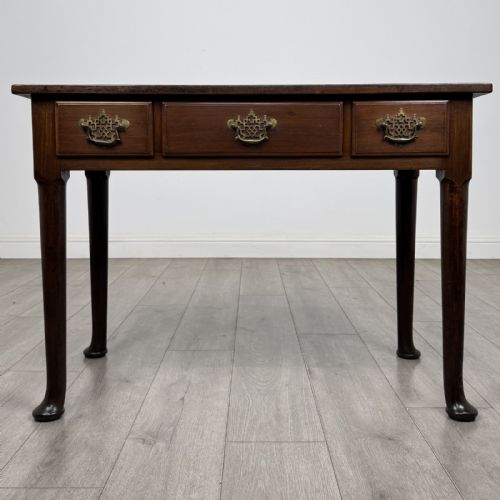
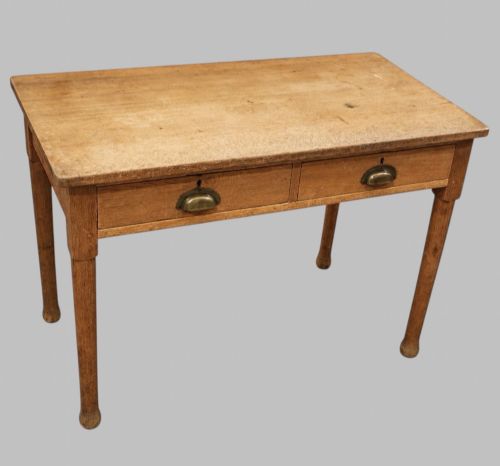
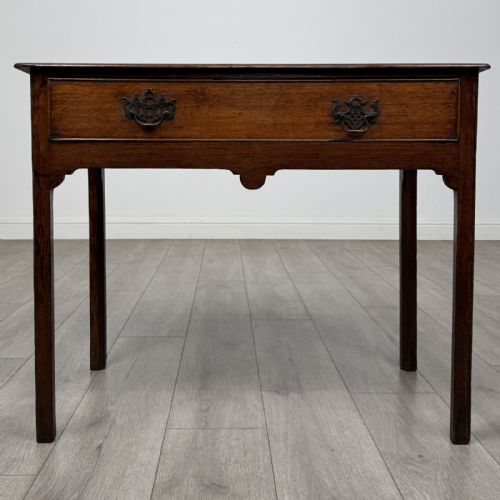
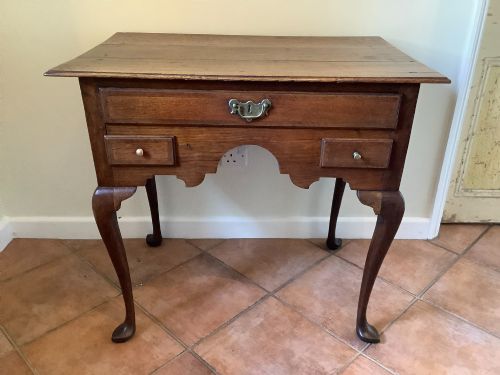
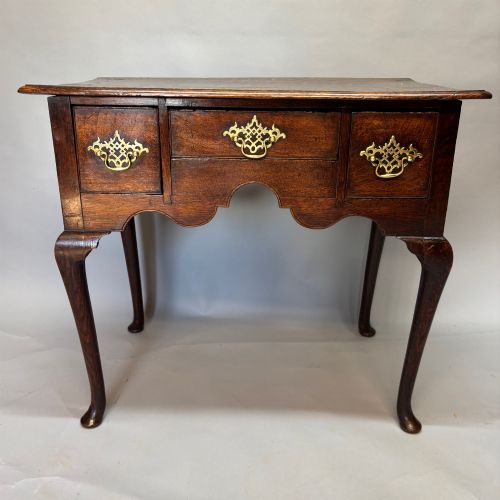
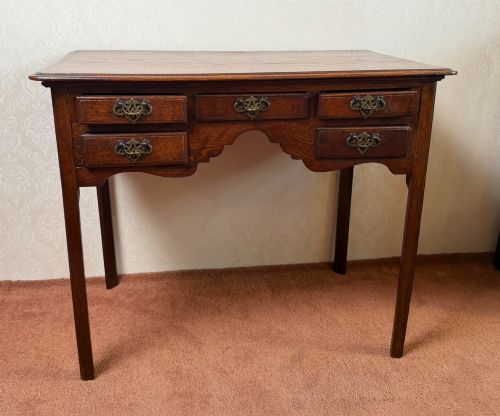
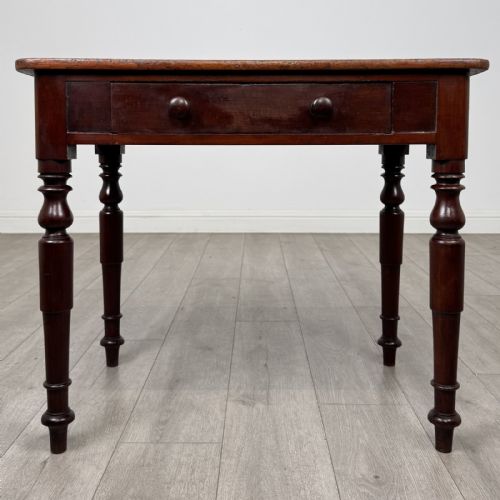
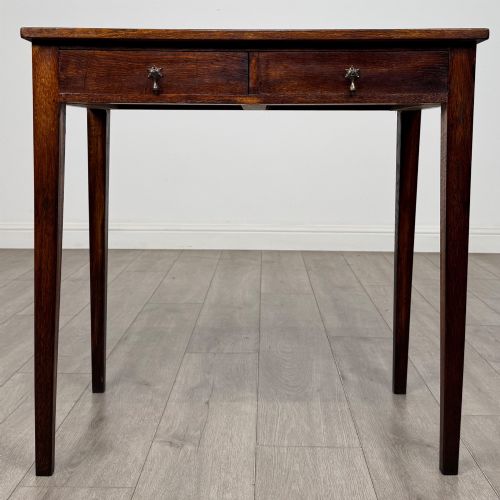
Oak Console Writing Desk
An oak console writing desk provides a sturdy workspace, and you will find examples here spanning the eighteenth to the twentieth centuries in various regional English and continental styles.
Oak Console Writing Desk
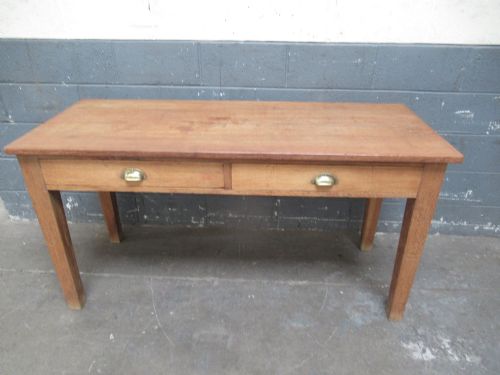
An oak console writing desk brings together forms traditionally catalogued as side tables, lowboys, and writing tables. When searching this phrase, you encounter pieces that function both as narrow hallway consoles and as functional writing surfaces.
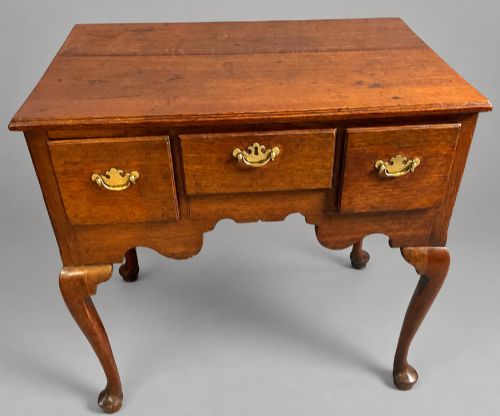
The most common versions on this page date from the Georgian period through to the Edwardian era and the 1920s. These pieces often feature fitted drawers, turned legs, or lowboy proportions suited to domestic use.
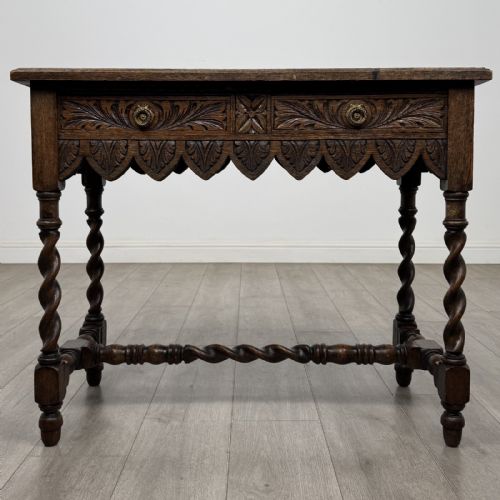
Makers and regional workshops produced these tables in solid timber, incorporating secondary woods such as elm and yew alongside primary oak. Their forms range from simple country house furniture to carved Victorian and Arts and Crafts designs.
Assessing craftsmanship and condition
Quality rests upon the selection of timber and the crispness of construction. Pieces utilising dense golden oak or figured burr oak with intact fitted drawers represent the upper end of the range.
Hand carving depth and structural integrity differentiate everyday utility pieces from finer country house examples. The retention of original brass hardware and untouched surface patination indicates superior preservation.
Oak Console Writing Desk Retail Price Guide 2026
Typical asking prices for oak console writing desk among the pieces listed under this phrase on Sellingantiques today, from the lower quarter to the upper quarter. They describe what is for sale here now, not the wider market.
Several pieces carry the ink stains and drawer wear of actual historical correspondence.
Hubert Simpson of Kendal·Heals·Jenners
The Oak Console Writing Desk Glossary
- Lowboy
- A small table with one or more drawers, typically dating from the eighteenth century. These low tables served various domestic writing and dressing purposes.
- Console table
- A table designed to stand against a wall, frequently supported by brackets or legs. They occupy minimal depth in hallways and living rooms.
- Side table
- A versatile small table intended to stand against a wall. They appear frequently in eighteenth and nineteenth-century domestic interiors.
- Writing table
- A freestanding desk equipped with drawers for writing supplies. These tables prioritise a comfortable knee clearance and a functional top surface.
Oak Console Writing Desk: Frequently Asked Questions
How do I date an oak writing table?
Dating relies upon examining construction methods, timber selection, and hardware. Eighteenth-century examples display hand-cut joinery and pegged joints, whilst later Victorian pieces often incorporate machine-cut elements and heavier carved ornamentation.
Secondary woods also provide clues, as earlier country pieces frequently combine oak with elm or yew. Hardware such as brass drop handles changes in profile across the Georgian and Edwardian periods.
Where should I place a console desk?
These narrow tables suit hallways, landings, or reception rooms where floor space is restricted. Their shallow depth allows them to function as display consoles while remaining accessible for occasional writing.
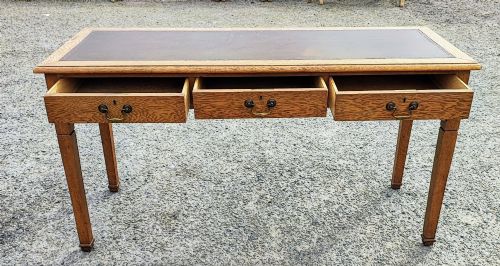
Pairing the desk with a low chair or stool ensures the writing surface remains functional. Placing the piece away from direct heat sources protects the solid timber and leather inserts from drying out.
What is the difference between a lowboy and a side table?
A lowboy is a specific form of low side table featuring one or more rows of drawers, originating predominantly in the eighteenth century. They typically stand at a lower height than standard dining or writing tables.
Standard side tables encompass a broader range of heights and drawer configurations, spanning Georgian, Victorian, and later twentieth-century production.
How do I care for antique oak furniture?
Maintaining antique oak involves keeping the timber away from direct sunlight and fluctuating radiator heat. Regular dusting with a dry lint-free cloth preserves the surface without building up excessive wax residues.
Applying a traditional beeswax polish occasionally nourishes the dry grain and enhances the natural colour of the wood. Avoid modern silicone sprays, which can penetrate the pores and damage the historic finish.