



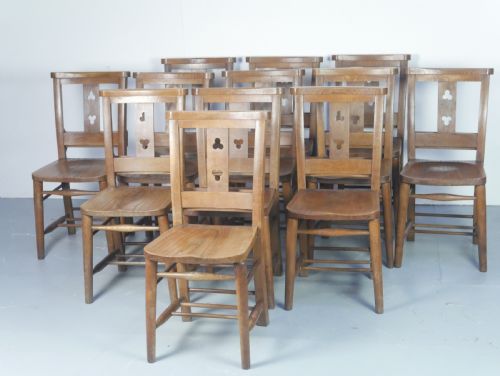


Oak Church Chairs
These oak church chairs bring architectural heft and centuries of devotional craft directly into modern domestic interiors.
Oak Church Chairs
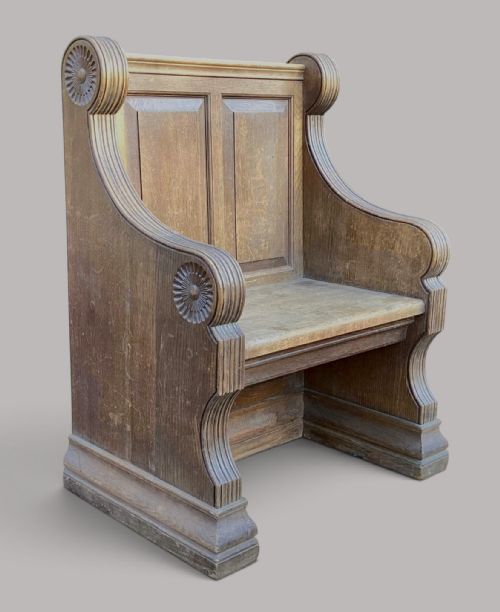
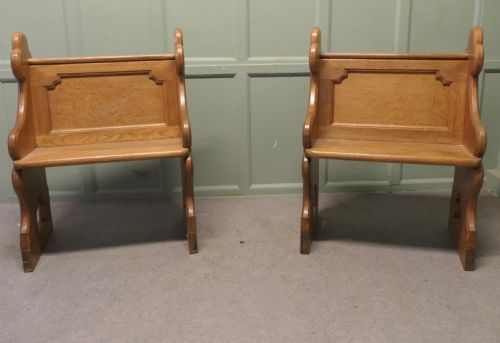
When you search for oak church chairs, you enter a field defined by solid timber construction and ecclesiastical forms spanning from pre-reformation centuries through the Victorian Gothic revival and into the early twentieth century. These pieces encompass everything from modest chapel seating and prayer desks to architectural thrones and box settles originally housed in cathedrals and parish churches.
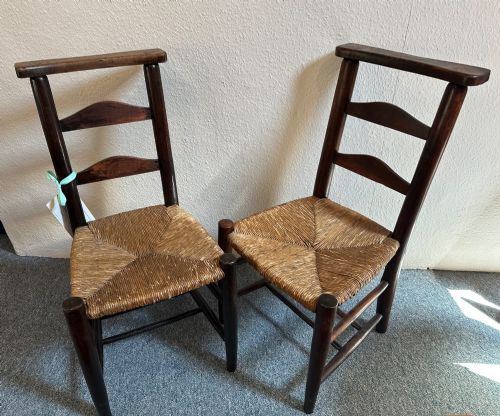
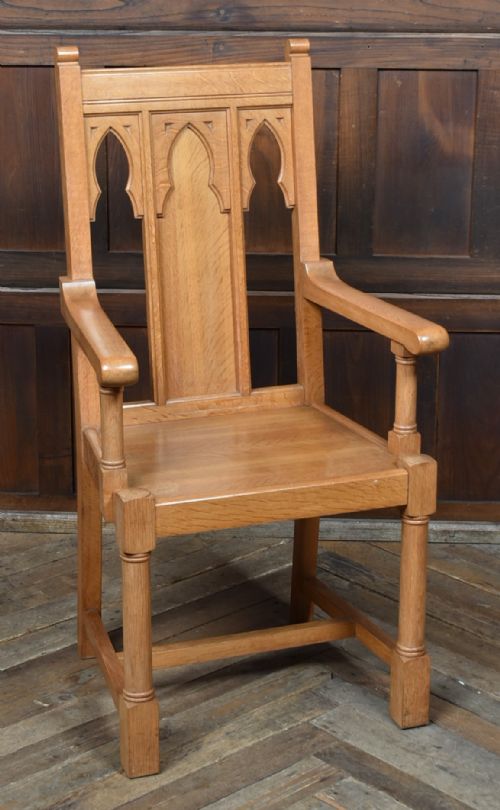
The versions most commonly met here lean heavily into nineteenth-century Gothic revivalism, featuring pointed arch details, solid plank construction, and occasional maker marks or engraved plaques. Alongside these dedicated ecclesiastical seats, the selection often includes sturdy elm box settles, rush-seated country variants, and oak hall chairs adapted from church furniture.
Originating largely from British workshops and European traditions, these chairs serve as both functional seating and sculptural reminders of historical ecclesiastical architecture. Buyers select them for their honest construction, aged patination, and the distinct sense of gravity they lend to a hallway, dining table, or study.
What varies in quality
Quality in these chairs rests upon the integrity of the timber, the depth and clarity of the hand-carving, and the retention of original surface patination developed through decades of handling. Pieces retaining original ecclesiastical markings, such as cathedral stamps or engraved presentation plaques, command particular interest for their documented provenance.
Construction methods also separate standard commercial seating from bespoke ecclesiastical commissions, with heavier gauge oak, pegged joints, and sophisticated architectural proportions marking out the finer examples. Alterations to height, stripped surfaces, or replaced timber elements distinguish utilitarian workshop repairs from pieces preserved in their original state.
Oak Church Chairs Retail Price Guide 2026
Typical asking prices for oak church chairs among the pieces listed under this phrase on Sellingantiques today, from the lower quarter to the upper quarter. They describe what is for sale here now, not the wider market.
The selection includes pieces spanning from pre-reformation centuries through the Regency, Victorian, and Edwardian eras, constructed primarily from solid oak, elm, and rush.
J. W. Cook & Sons
The Oak Church Chairs Glossary
- Gothic Revival
- An architectural and decorative style popular during the nineteenth century that revived medieval forms including pointed arches, trefoils, and heavy structural framing. This aesthetic heavily influences the majority of Victorian ecclesiastical seating.
- Prie-Dieu
- A devotional chair featuring an integrated low shelf or padded ledge designed for kneeling during prayer. These specialised seats often include high backs and raised elbow rests.
- Box Settle
- A heavy wooden bench featuring a high solid back, enclosed arms, and a lift-up seat lid concealing a storage compartment. They were traditionally placed near church entrances or in rectories.
- Tracery
- Openwork or surface carving composed of intersecting geometric patterns, derived from medieval stone window designs. It frequently appears on the crest rails and backs of church chairs.
Oak Church Chairs: Frequently Asked Questions
Are oak church chairs comfortable for daily dining?
Most of these chairs feature upright wooden backs and solid seats designed for architectural presence and posture rather than lounging. Adding loose cushions can make them suitable for regular dining use.
Their sturdy proportions and supportive backs actually encourage an upright seating position, making them practical for long dinners or as desk chairs.
How do I date an antique church chair?
Dating relies on examining the joinery techniques, tool marks, and stylistic clues such as the severity of the Gothic revival motifs or specific Victorian ecclesiastical forms. Pegged joints and hand-sawn timber generally point to earlier production.
Documented provenance, such as cathedral inventory marks or engraved brass plaques, can also provide a precise year or location of origin.
Can these chairs be used in modern minimalist interiors?
The strong architectural lines and rich grain of aged oak allow these pieces to anchor contemporary spaces by introducing texture and historical contrast. They function effectively as single statement pieces in hallways or paired with simple tables.
The restrained, unadorned surfaces of plain country church variants blend particularly well with neutral palettes and modern materials.