

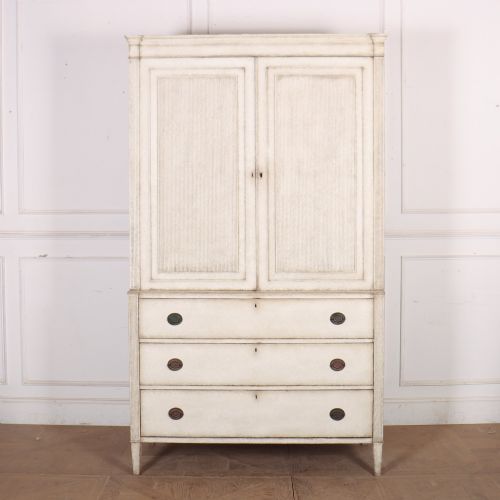


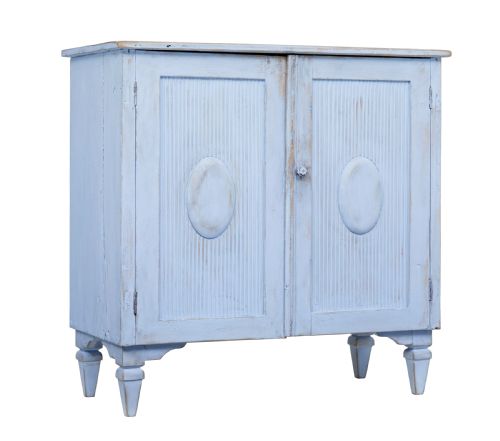
Nordic Painted Cabinet
A nordic painted cabinet brings light and colour into a room, offering practical storage with distinct Scandinavian character.
Nordic Painted Cabinet
When searching for a nordic painted cabinet, buyers encounter pieces originating from nineteenth-century Scandinavia, including examples from Sweden and Finland. These items take several forms across the listings, such as wall cupboards, linen presses, commodes, enfilades, and bonnet top cabinets.
The aesthetic leans towards Scandinavian country and folk art traditions, often displaying rustic qualities. Most examples date from the Victorian era and the mid-nineteenth century, specifically around eighteen-fifty.
Forms vary from compact wall-mounted units to large cupboards and sideboards. Buyers frequently meet pieces finished in scraped paint, highlighting the regional decorative history.
Construction and Materials
Makers constructed these pieces primarily using pine and softwood, selected for accessibility and workability. Surfaces received layers of paint, often applied to pine substrates in muted or traditional palettes.
Hardware elements incorporate iron and brass for hinges, locks, and pulls, whilst glass appears in relevant door panels. These material combinations reflect nineteenth-century rural and provincial workshop practices.
Nordic Painted Cabinet Retail Price Guide 2026
Typical asking prices for nordic painted cabinet among the pieces listed under this phrase on Sellingantiques today, from the lower quarter to the upper quarter. They describe what is for sale here now, not the wider market.
Even a modest pine cupboard might hide decades of Nordic winter stories beneath its scraped paint.
Assessing Quality
Distinctions in quality often rest upon the originality of the surface treatment, such as scraped paint finishes versus later decoration. The integrity of the pine construction and the retention of original iron or brass fittings also influence the character of each piece.
Proportion and regional stylistic execution separate standard provincial furniture from finer workshop items, such as bonnet top forms or matched pairs of enfilades.
The Nordic Painted Cabinet Glossary
- Pine
- A softwood commonly used throughout nineteenth-century Scandinavian furniture making. It provides a stable base for painted finishes.
- Enfilade
- A long sideboard or cabinet designed to stand against a wall, frequently associated with dining rooms or large reception spaces.
- Bonnet top
- An arched or hooded upper section found on certain tall cabinets and cupboards. This architectural shape adds height and presence to the piece.
- Commode
- A low chest of drawers or cabinet. In Scandinavian contexts, these pieces often feature decorative painted surfaces.
- Scraped paint
- A finish where layers of historic paint are partially revealed through careful scraping. This technique exposes earlier decorative schemes.
Nordic Painted Cabinet: Frequently Asked Questions
What is a nordic painted cabinet?
A nordic painted cabinet is a nineteenth-century storage piece originating from regions like Sweden and Finland, finished in decorative paint. These items include wall cupboards, linen presses, and commodes.
They reflect Scandinavian country and folk art traditions, constructed largely from pine and softwood with iron or brass hardware.
How were these cabinets used?
These pieces served practical storage functions in nineteenth-century homes, holding linens, tableware, and household provisions. Wall cabinets kept essentials off the floor, whilst larger cupboards and enfilades managed bulkier items.
Their painted surfaces also contributed to the interior decoration of rural and provincial Scandinavian dwellings.
How do I live with a painted cabinet?
Integrating a painted cabinet into a modern interior relies on placing it against a neutral wall to let the historic colour and finish stand out. These pieces function well in kitchens, hallways, or living rooms for everyday storage.
Keep them away from direct heat sources to protect the pine and historic paint layers from drying out.
How do I tell periods apart?
Dating relies on construction methods, hardware types, and stylistic indicators associated with the nineteenth century and the Victorian era. Pieces from around eighteen-fifty often display specific regional characteristics linked to Swedish or Finnish workshops.
Examining the paint layers and timber ageing helps distinguish nineteenth-century examples from later reproductions.