


Nomadic Saddlebag Cushion Cover
These nomadic saddlebag cushion cover pieces bring authentic tribal textiles into modern interiors.
Nomadic Saddlebag Cushion Cover
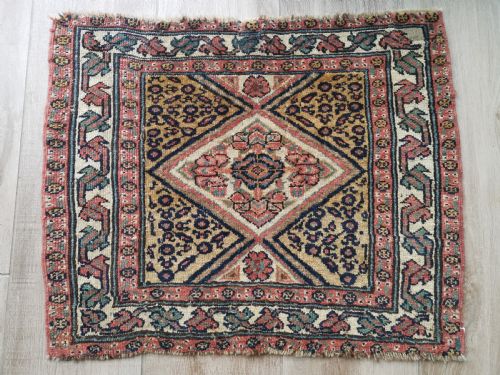
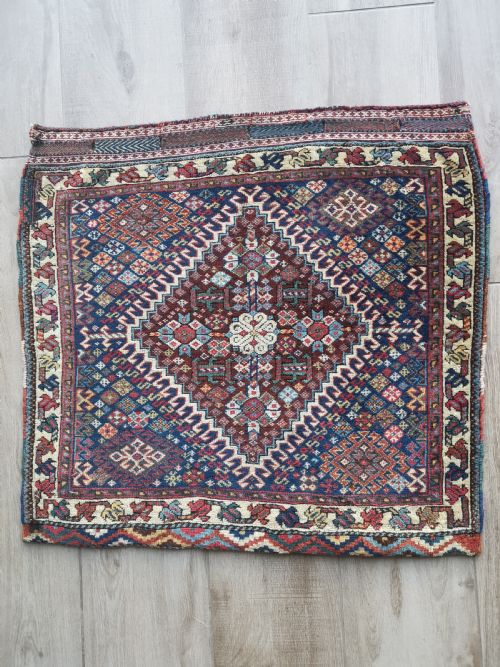
A nomadic saddlebag cushion cover originates from tribal groups weaving practical transport containers for animal use, which later transform into decorative furnishings. The pieces appearing here comprise bag faces, half-saddlebags, complete pairs, and storage bags adapted into cushions.
Tribal makers across Persia, Azerbaijan, and Central Asia create these textiles. The styles represented span Qashqai, Shahsavan, Baluch, Afshar, Khamseh, Jaf, Bakhtiari, and Uzbek traditions.
Dating ranges from the mid-nineteenth century through to the early twentieth century. Buyers encounter single bag faces alongside paired configurations and double-sided vanity pieces.
How they were made
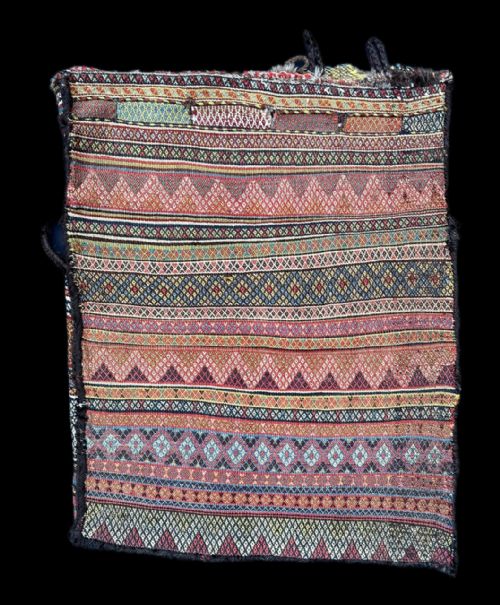
Weavers utilise hand-spun wool and cotton foundation materials to construct these durable textiles. Natural dyes provide the colour palette across soumac, kilim, and banded weft work techniques.
Nomadic groups construct structural elements using flatweave backs or integrate piled wool surfaces for distinct texture. Individual tribal workshops employ specific geometric and boteh designs tied to their regional heritage.
Listings feature wool, natural dyes, and cotton across nineteenth and early twentieth-century periods.
What varies in quality
The handle and lustre of the wool dictate much of the visual impact. Lustrous, luminous wool demonstrates superior fibre selection by the original weaver.
Knot density and precision in flatweave or soumac execution separate standard utility items from exceptionally fine examples. The integrity of the natural dyes and survival of complete backs or original paired formats influence desirability.
The Nomadic Saddlebag Cushion Cover Glossary
- Bagface
- The decorative front panel of a nomadic saddlebag, which is often separated and adapted for use as a small cushion. This panel displays the primary tribal motifs and design work.
- Soumac
- A flatweave technique involving coloured supplementary weft threads wrapping around the warp yarns to create a textured, durable surface. This method produces raised geometric patterns.
- Boteh
- A stylised almond or pear-shaped motif of Persian origin that represents a floral cluster or cypress tree. Artisans frequently repeat this design across tribal bag faces.
- Kilim
- A flatwoven textile produced by tightly interweaving warp and weft strands without creating a pile. These structures form the lightweight backs and body of nomadic storage bags.
- Khorjin
- The traditional Persian term for a double saddlebag used by nomads for carrying household goods on animals. Surviving examples often separate into individual bag faces or halves.
Nomadic Saddlebag Cushion Cover: Frequently Asked Questions
What is a nomadic saddlebag cushion cover?
A nomadic saddlebag cushion cover is made from antique tribal woven bags originally used by pastoral nomads for transport and storage. Artisans adapt these sturdy wool textiles into decorative home furnishings.
The pieces preserve traditional regional patterns woven by groups such as the Qashqai, Shahsavan, and Afshar. Each cover retains historical weaving techniques from nineteenth and early twentieth-century Anatolian and Persian regions.
How were these bags originally used?
Nomads hung pairs of large woven bags across the backs of horses, donkeys, or camels during seasonal migrations. These containers held personal belongings, grain, salt, and household utensils.
Over time, individual bag faces or damaged pairs were repurposed into smaller items. Today, these textiles function primarily as cushion covers or decorative wall hangings.
How do I care for an antique wool cushion?
Antique wool textiles require gentle maintenance to preserve the natural fibres and organic dyes. Light vacuuming without a rotating brush helps remove surface dust.
Professional specialist cleaning is recommended for heavier soil. Direct sunlight should be avoided to prevent fading of the natural dye colours.
How do I identify different tribal styles?
Tribal styles are distinguished by specific geometric layouts, colour palettes, and structural weaving methods. Qashqai and Afshar pieces often feature intricate medallion or boteh layouts using rich reds and blues.
Shahsavan textiles frequently display crisp soumac techniques with sharp linear patterns. Examining the wool texture and weave structure helps determine the specific regional origin.